
In the landscape of modern biotechnology and computational biology, understanding the fundamental building blocks of life is equivalent to mastering the source code of a sophisticated operating system. When we ask, “What is the cell type for archaebacteria?” we are not merely engaging in a taxonomic exercise. We are investigating a unique prokaryotic architecture that has become a cornerstone for high-tech industrial applications, genomic sequencing advancements, and the burgeoning field of synthetic biology. Archaebacteria, now formally known as Archaea, represent a distinct domain of life that challenges our traditional binary view of “simple” versus “complex” biological systems.
Defining the Prokaryotic Framework: The Operating System of Archaea
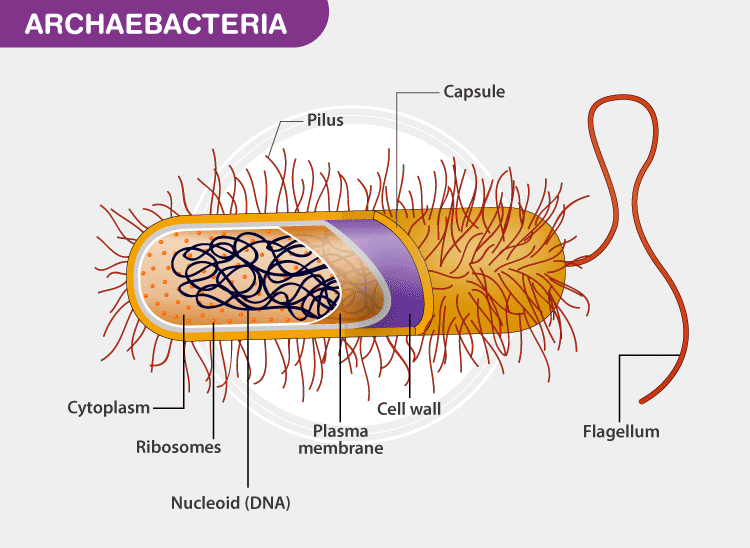
To understand the cell type of archaebacteria, one must first identify its classification as a prokaryote. In technical terms, a prokaryotic cell type is characterized by the absence of a membrane-bound nucleus and other specialized organelles like mitochondria or chloroplasts. However, viewing Archaea simply as “primitive” cells is a mistake equivalent to calling a high-performance command-line interface “primitive” because it lacks a graphical user interface.
Archaea utilize a streamlined cellular design that allows for rapid replication and metabolic efficiency. Their genetic material—the “core data”—is contained within a nucleoid region, typically consisting of a single, circular chromosome. From a tech perspective, this is a highly optimized data storage system. Unlike eukaryotes, which require complex transport protocols to move mRNA from a nucleus to the cytoplasm, Archaea perform transcription and translation simultaneously. This “real-time processing” allows them to respond with incredible speed to environmental stimuli, a trait that is highly prized in industrial bioprocessing.
Molecular Hardware: Ether-Linked Lipids and Structural Resilience
One of the most significant technological “specs” of the archaeal cell type lies in its plasma membrane. While both Bacteria and Eukarya utilize ester-linked lipids to build their cellular walls, Archaea utilize ether-linked lipids. This might seem like a minor chemical nuance, but in the world of bio-engineering, it is a revolutionary hardware upgrade.
The Stability of Ether Linkages
Ether bonds are chemically more stable than ester bonds. This allows the archaeal cell to maintain structural integrity under conditions that would “crash” any other biological system—extreme heat, high acidity, or high salinity. In the context of industrial technology, these cells are the “ruggedized laptops” of the biological world. Bio-engineers are currently studying these ether-linked membranes to develop new types of liposomes for drug delivery that can survive the harsh environment of the human digestive tract or provide long-term stability for vaccines without the need for a constant cold chain.
Isoprenoid Chains vs. Fatty Acids
Furthermore, while other life forms use fatty acids to build their membranes, Archaea use branched isoprenoid chains. In some species, these chains fuse together to form a monolayer instead of a bilayer. This creates a hyper-stable molecular “chassis” that can withstand temperatures exceeding 100 degrees Celsius. For the tech sector, this provides a biological template for creating new materials and lubricants that function in extreme industrial environments where synthetic polymers might fail.
Bioinformatics and the Discovery of the Third Domain
The identification of Archaea as a distinct cell type was perhaps the first major victory for the field of bioinformatics. For decades, these organisms were misclassified as bacteria because they looked identical under a microscope. It wasn’t until Carl Woese and his colleagues utilized molecular sequencing—specifically of the 16S ribosomal RNA (rRNA)—that the digital fingerprint of Archaea was revealed to be entirely unique.
16S rRNA as Version Control
In the tech world, we think of 16S rRNA as a universal version control system for life. By sequencing these specific genetic markers, researchers could see that the “source code” of Archaea was more similar to eukaryotes in its information-processing machinery (transcription and translation) than it was to bacteria. This discovery necessitated the creation of a third domain of life, effectively repartitioning the biological “hard drive” of the planet.

High-Throughput Sequencing and Metagenomics
Today, the study of the archaeal cell type is driven by high-throughput DNA sequencing and metagenomic analysis. Tech firms specializing in genomic data processing are constantly refining algorithms to identify new archaeal lineages from “dark matter” DNA found in extreme environments like deep-sea hydrothermal vents or volcanic springs. This data-driven approach to biology has expanded our library of known archaeal cell types from a handful of laboratory cultures to thousands of virtual genomes, each offering unique metabolic pathways that could be harnessed for green energy or waste processing.
Archaea in Synthetic Biology: Building Resilient Bio-Circuits
The unique cell type of archaebacteria provides an ideal “chassis” for synthetic biology. Synthetic biology treats cells as programmable hardware, inserting “circuits” (sequences of DNA) to perform specific tasks, such as producing biofuels or detecting toxins.
CRISPR-Cas: An Archaeal Security Protocol
It is often forgotten that the revolutionary CRISPR-Cas9 gene-editing technology has its roots in the immune systems of bacteria and archaea. In the archaeal cell type, CRISPR functions as a sophisticated biological firewall, identifying and “deleting” the genetic code of invading viruses. By studying the specific variants of these systems in Archaea, tech researchers have discovered new enzymes like Cas12 and Cas13, which offer even higher precision for human gene therapy and diagnostic tools.
Metabolic Engineering and Carbon Capture
Because many Archaea are methanogens—meaning they produce methane as a metabolic byproduct—their cell type is being leveraged in the development of carbon capture technologies. Tech-driven startups are currently engineering archaeal cells to act as biological “carbon sinks,” converting industrial CO2 emissions into usable methane or other bioplastics. This involves remapping the cell’s metabolic pathways using sophisticated CAD (Computer-Aided Design) software for biology, allowing scientists to simulate how changes in the cell’s “software” will impact its physical output.
The Digital Twin of the Domain Archaea: Simulating Life at the Edge
As we move further into the decade, the focus on the archaeal cell type is shifting from physical observation to digital simulation. The concept of a “Digital Twin”—a virtual model of a physical process or system—is now being applied to the Archaea.
Computational Protein Folding
One of the greatest challenges in understanding the archaeal cell type is determining how their proteins maintain functionality at extreme temperatures. Utilizing AI tools like AlphaFold, researchers are decoding the protein-folding patterns of thermophilic Archaea. This is not just a biological curiosity; it is a quest for “heat-stable” enzymes. These enzymes are the “processors” of the biotech world, used in everything from PCR (Polymerase Chain Reaction) tests for COVID-19 to the high-heat laundry detergents that reduce energy consumption in households.
Systems Biology and Predictive Modeling
By creating digital models of the archaeal cell, tech companies can predict how these organisms will behave in large-scale bioreactors. This reduces the need for expensive trial-and-error experimentation and accelerates the “design-build-test-learn” cycle in biotechnology. The archaeal cell type, with its specialized lipids and unique transcriptional machinery, serves as a high-performance benchmark for these models. If an AI can accurately predict the behavior of an organism living in a boiling undersea volcano, it can likely model any biological system with ease.

The Future of the Archaeal Technology Stack
The investigation into “what is the cell type for archaebacteria” has led us far beyond the pages of a biology textbook and into the forefront of the global technology sector. From the hardware-level stability of their ether-linked membranes to the software-level sophistication of their CRISPR immune systems, Archaea represent a masterclass in biological engineering.
As we continue to merge the biological and digital worlds, the archaeal cell will remain a primary source of inspiration for ruggedized biotechnology. Whether we are looking for more efficient ways to sequence DNA, more stable platforms for drug delivery, or new methods for sequestering atmospheric carbon, the “prokaryotic-plus” architecture of the Archaea provides the blueprints. In the future, we may not just be studying these cells; we will be “compiling” them to solve the most pressing technical challenges of our age. The cell type of the archaebacteria is not just a relic of the ancient earth—it is a sophisticated toolkit for the future of technological innovation.
aViewFromTheCave is a participant in the Amazon Services LLC Associates Program, an affiliate advertising program designed to provide a means for sites to earn advertising fees by advertising and linking to Amazon.com. Amazon, the Amazon logo, AmazonSupply, and the AmazonSupply logo are trademarks of Amazon.com, Inc. or its affiliates. As an Amazon Associate we earn affiliate commissions from qualifying purchases.