
The Casper test, officially known as the Computer-Based Situational Judgement Test, has emerged as a significant component in the admissions processes for a growing number of highly competitive academic and professional programs worldwide. Moving beyond traditional metrics like GPA and standardized test scores, the Casper test aims to assess the non-cognitive skills and personal attributes deemed crucial for success in professions that heavily involve human interaction and ethical decision-making. This article delves into the intricacies of the Casper test, exploring its purpose, structure, scoring, and the essential skills it evaluates, offering valuable insights for prospective applicants navigating this unique admissions hurdle.
Understanding the Purpose and Philosophy Behind the Casper Test
At its core, the Casper test is designed to provide admissions committees with a more holistic understanding of an applicant’s suitability for a given program and profession. While academic achievements are undoubtedly important, the demands of fields like medicine, nursing, pharmacy, education, and even some business leadership roles require more than just intellectual prowess. They necessitate individuals who can demonstrate empathy, integrity, professionalism, resilience, and strong ethical reasoning – qualities that are difficult to quantify through conventional testing methods.
Addressing the Limitations of Traditional Admissions Metrics
Traditional admissions processes heavily rely on objective measures. Grade Point Averages (GPAs) and standardized test scores (like the MCAT, LSAT, or GMAT) are excellent indicators of academic aptitude and knowledge acquisition. However, they offer little insight into how an individual might behave in real-world, often stressful, and ethically complex situations. For instance, a high GPA doesn’t guarantee that a medical student will exhibit compassion towards a distressed patient, nor does a strong LSAT score ensure a future lawyer will act with unwavering integrity.
The Casper test was developed to bridge this gap. It recognizes that success in many professions hinges on an individual’s ability to navigate interpersonal dynamics, handle difficult conversations, manage their emotions, and make sound ethical judgments under pressure. By presenting applicants with realistic scenarios, the test allows institutions to gauge these vital personal qualities, which are often predictive of future performance and professional conduct.
The Rise of Competency-Based Admissions
The increasing adoption of the Casper test reflects a broader trend towards competency-based admissions. Institutions are moving away from a singular focus on academic achievements and embracing a more multifaceted approach that considers a wider range of skills and attributes. This shift is driven by a desire to select candidates who are not only academically capable but also possess the character and interpersonal skills necessary to excel in their chosen fields and contribute positively to their respective professions and communities. The Casper test, by its very design, aligns perfectly with this philosophy, offering a standardized yet personal assessment of these crucial competencies.
Deconstructing the Casper Test Format and Structure
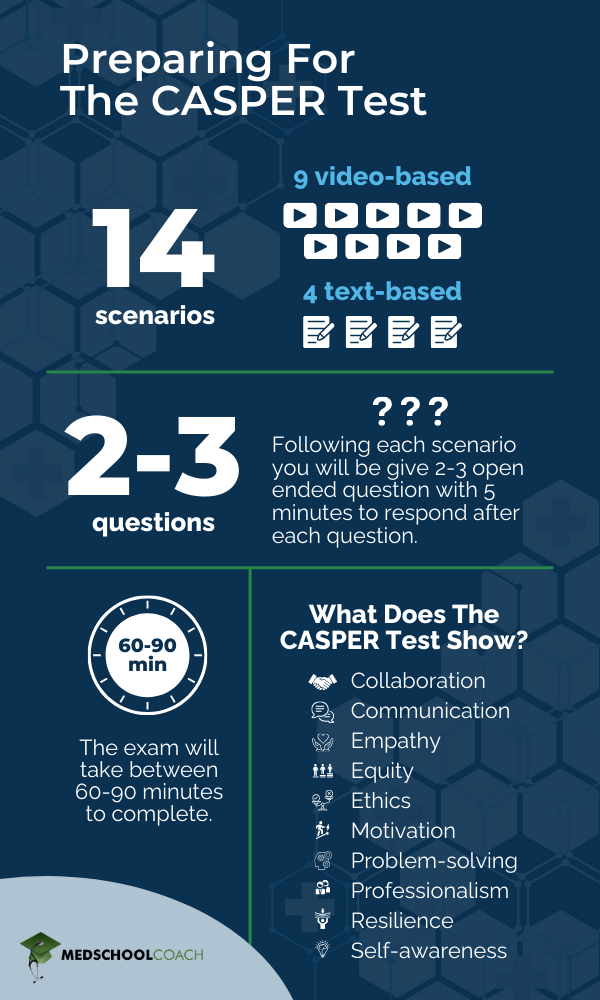
The Casper test is a timed, online assessment that presents candidates with a series of video and text-based scenarios. Applicants are then required to respond to questions related to these scenarios, demonstrating their thought process and decision-making abilities. The test is designed to simulate real-world situations that individuals in these professions might encounter.
Video-Based Scenarios: Real-World Simulations
A significant portion of the Casper test comprises video-based scenarios. These short videos depict common situations that applicants might face in their future careers. For example, a medical school applicant might see a video of a patient expressing frustration with their treatment, or a nursing applicant might witness a conflict between two colleagues. These scenarios are intentionally ambiguous, designed to elicit a range of possible responses. The goal is not to identify a single “correct” answer, but rather to understand the applicant’s reasoning and approach to conflict resolution, empathy, and ethical dilemmas.
Text-Based Scenarios: Textual Comprehension and Response
In addition to video scenarios, the Casper test also includes text-based prompts. These scenarios present written descriptions of situations and require applicants to provide written responses. These can range from ethical dilemmas to situations requiring clear communication and problem-solving. Text-based scenarios test an applicant’s ability to comprehend complex situations, articulate their thoughts clearly and concisely, and apply ethical principles to textual information.
The Question Types: Exploring Rationales and Actions
Following each scenario, applicants are typically presented with two types of questions:
- Standard Questions: These questions require applicants to provide a free-response answer, detailing how they would handle the situation. This is where applicants can elaborate on their reasoning, outlining the steps they would take, the considerations they would prioritize, and the underlying principles guiding their decisions.
- Reflection Questions (in some versions): Some iterations of the Casper test include reflection questions. After providing their initial response, applicants are given a brief period to reflect on their answer and can edit or add to it. This element is designed to encourage applicants to critically evaluate their initial reactions and refine their responses, showcasing their ability to self-assess and improve.
The timed nature of the test (typically around 60-90 minutes, with each section having strict time limits) is a critical aspect of the assessment. It mirrors the pressure of real-world situations and encourages spontaneous, genuine responses rather than overly rehearsed or strategically crafted answers.
Evaluating Performance: Scoring and Interpretation of the Casper Test
The scoring of the Casper test is a complex, multi-layered process that aims to standardize evaluation across a large number of candidates. It involves both quantitative and qualitative assessments, with trained raters evaluating the responses based on established criteria.
The Role of Trained Raters and Scoring Rubrics
Casper responses are evaluated by trained raters who have undergone rigorous training to ensure consistency and objectivity. These raters utilize detailed scoring rubrics that outline specific criteria for evaluating responses. These criteria typically focus on aspects such as:
- Ethical Reasoning: Does the response demonstrate an understanding of ethical principles and apply them appropriately?
- Empathy and Compassion: Does the response show an ability to understand and acknowledge the feelings and perspectives of others?
- Professionalism: Does the response reflect an understanding of professional conduct and appropriate behavior?
- Communication Skills: Is the response clear, concise, and well-articulated?
- Problem-Solving: Does the response offer practical and effective solutions to the presented challenges?
- Self-Awareness: Does the response indicate an understanding of one’s own strengths and limitations?
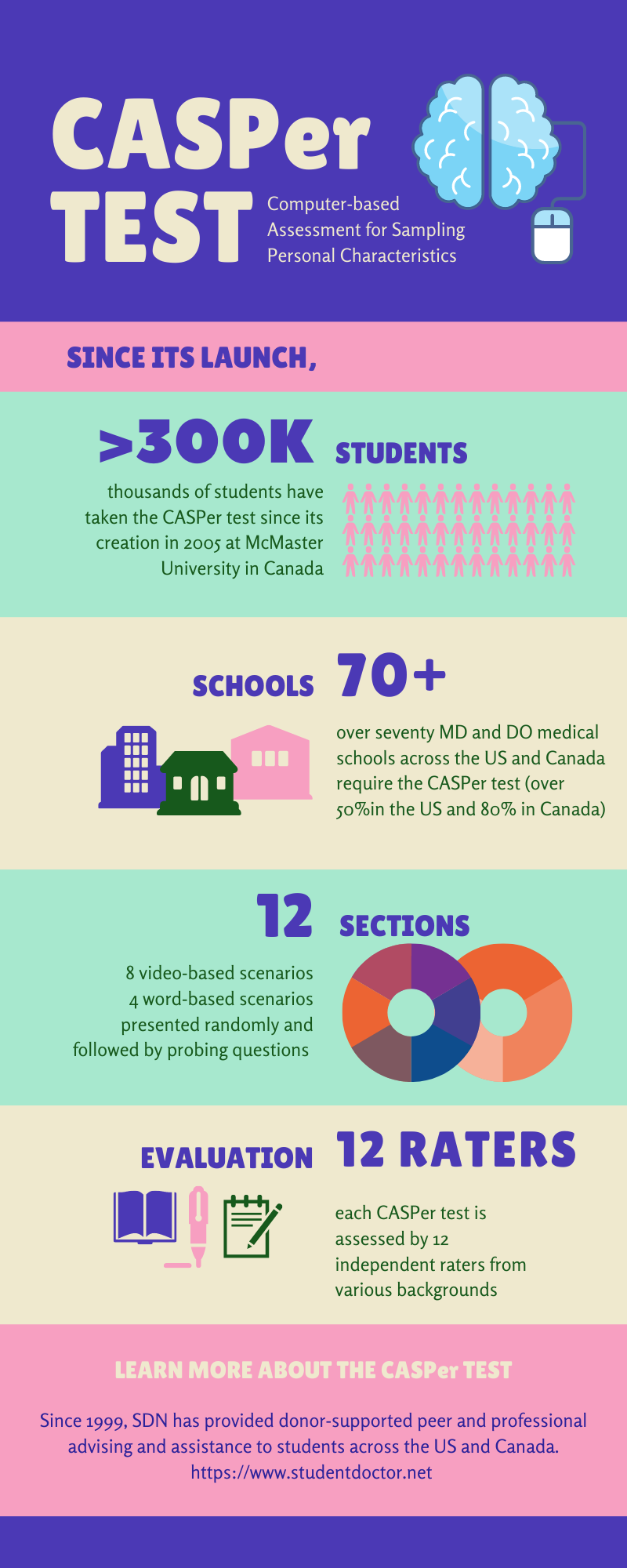
Raters assign scores to each response based on how well it aligns with these criteria. The scoring is not based on identifying a single “right” answer but rather on the quality of the reasoning, the demonstration of key attributes, and the overall approach to the scenario.
Identifying Key Competencies Assessed
The Casper test is designed to measure a specific set of non-cognitive skills and personal attributes, often referred to as “soft skills” or “character traits.” These are considered vital for success in professions that require significant interaction with people and often involve high-stakes decision-making. The key competencies assessed include:
- Professionalism: Demonstrating a commitment to ethical conduct, integrity, and appropriate behavior in professional settings. This includes respecting boundaries, maintaining confidentiality, and acting with accountability.
- Empathy: The ability to understand and share the feelings of another person. In practice, this translates to showing compassion, active listening, and a genuine concern for the well-being of others.
- Resilience: The capacity to recover quickly from difficulties; toughness. This involves managing stress, adapting to challenging circumstances, and persevering in the face of adversity.
- Ethical Reasoning: The ability to identify ethical dilemmas, analyze them from multiple perspectives, and make sound moral judgments based on established principles.
- Communication: Effectively conveying information, ideas, and feelings to others. This includes both verbal and written communication, as well as the ability to listen actively and empathetically.
- Collaboration: Working effectively with others towards a common goal. This involves respecting diverse viewpoints, contributing constructively, and resolving conflicts amicably.
- Self-Awareness: Understanding one’s own emotions, strengths, weaknesses, values, and motivations. This allows for personal growth and more effective interaction with others.
- Situational Judgement: The ability to make sound decisions and judgments in various situations, often under pressure. This involves considering all relevant factors and anticipating potential outcomes.
By assessing these competencies, the Casper test aims to provide admissions committees with a more predictive measure of an applicant’s potential for success and their suitability for the demanding and often people-centric environments of professions like healthcare and education.
Preparing for the Casper Test: Strategies for Success
While the Casper test assesses inherent personal attributes, preparation can significantly enhance an applicant’s performance. The goal of preparation is not to “game” the test but rather to understand its format, practice articulating responses, and reflect on one’s own approach to ethical and interpersonal challenges.
Understanding the Test’s Nature and Objectives
The first step in preparing for the Casper test is to fully understand its purpose and format. Prospective applicants should visit the official Casper test website (usually provided by the testing organization, such as Acuity Insights) to familiarize themselves with the test structure, the types of scenarios presented, and the scoring criteria. Understanding that the test evaluates non-cognitive skills and ethical reasoning, rather than factual knowledge, is crucial. Applicants should embrace the opportunity to showcase their character and decision-making process.
Practicing with Sample Scenarios and Timed Responses
Familiarity with the test format can be gained through practice. Many resources, including official sample tests, are available to help applicants get a feel for the timed nature of the scenarios and questions. Practicing responding to various situational judgment prompts, both in writing and potentially by recording oneself (to simulate video responses), can be beneficial. It’s important to focus on articulating the reasoning behind choices, rather than just stating a decision. Time management is paramount; applicants should practice crafting concise yet comprehensive responses within the strict time limits.
Reflecting on Personal Values and Experiences
The Casper test often touches upon common ethical dilemmas and interpersonal challenges. Applicants can benefit from reflecting on their own values, principles, and past experiences that have shaped their decision-making. Considering how they would approach situations involving conflict, ethical ambiguity, or the need for empathy can help them formulate more authentic and well-reasoned responses. This internal reflection is key to providing genuine answers that reflect their character.
Developing a Framework for Response Generation
While spontaneity is important, having a general framework can help organize thoughts during the test. A common approach involves:
- Acknowledge the Situation: Briefly state understanding of the scenario and its complexities.
- Identify Key Stakeholders and Perspectives: Consider who is involved and their potential viewpoints or feelings.
- Prioritize Ethical Principles/Values: What core values (e.g., fairness, honesty, patient well-being) are most relevant?
- Outline Action Steps: Clearly state what actions would be taken, explaining the rationale for each.
- Consider Potential Outcomes and Mitigations: Briefly think about the consequences of the actions and how to address any negative outcomes.
- Emphasize Communication and Empathy: Where relevant, highlight the importance of clear communication and understanding of others’ feelings.
This framework is flexible and should be adapted to the specific scenario. The ultimate goal is to demonstrate a thoughtful, ethical, and professional approach.
The Future of Admissions: Casper and Beyond
The Casper test represents a significant evolution in admissions processes, moving towards a more comprehensive evaluation of candidates. As educational and professional institutions continue to prioritize well-rounded individuals with strong interpersonal and ethical skills, the role of such assessments is likely to expand.
Impact on Program Selection and Diversity
The Casper test has the potential to democratize admissions to some extent. By evaluating non-cognitive skills, it can provide a more equitable pathway for applicants who may not have had access to certain extracurricular opportunities or resources that boost traditional metrics. This can lead to more diverse cohorts in demanding professions, bringing a wider range of perspectives and experiences to the field. Furthermore, it allows institutions to select individuals who are not only academically gifted but also possess the essential humanistic qualities that are critical for effective patient care, client advocacy, and community leadership.

The Growing Importance of Situational Judgement Tests
As the success of the Casper test is recognized, other forms of situational judgment tests (SJTs) are being developed and implemented across various industries and academic disciplines. This indicates a broader trend towards assessing how individuals apply their knowledge and skills in realistic contexts. The focus is shifting from what a candidate knows to what a candidate does or would do when faced with complex, real-world challenges. This growing emphasis on practical application and ethical comportment suggests that SJTs like Casper will become increasingly integral to admissions and hiring processes.
In conclusion, the Casper test is a sophisticated tool designed to assess crucial non-cognitive skills and ethical reasoning abilities. By moving beyond traditional academic metrics, it offers admissions committees a more holistic view of applicants, aiming to identify individuals who are not only academically competent but also possess the character, empathy, and professionalism necessary to thrive in demanding and people-oriented professions. For prospective applicants, understanding the purpose, format, and scoring of the Casper test, coupled with thoughtful preparation, can be a key factor in navigating the path to their desired academic and professional future.
aViewFromTheCave is a participant in the Amazon Services LLC Associates Program, an affiliate advertising program designed to provide a means for sites to earn advertising fees by advertising and linking to Amazon.com. Amazon, the Amazon logo, AmazonSupply, and the AmazonSupply logo are trademarks of Amazon.com, Inc. or its affiliates. As an Amazon Associate we earn affiliate commissions from qualifying purchases.