
In the realm of digital imaging technology, few terms are as fundamental yet frequently misunderstood as ISO. For anyone stepping into the world of photography or videography, mastering the technical nuances of ISO is not just a creative choice; it is a requirement for understanding how digital sensors translate light into data. Along with aperture and shutter speed, ISO forms the “Exposure Triangle,” the foundational framework of every image ever captured. However, unlike aperture (which is a mechanical opening) or shutter speed (which is a measurement of time), ISO is a digital process that determines how your camera’s sensor handles the light it receives.
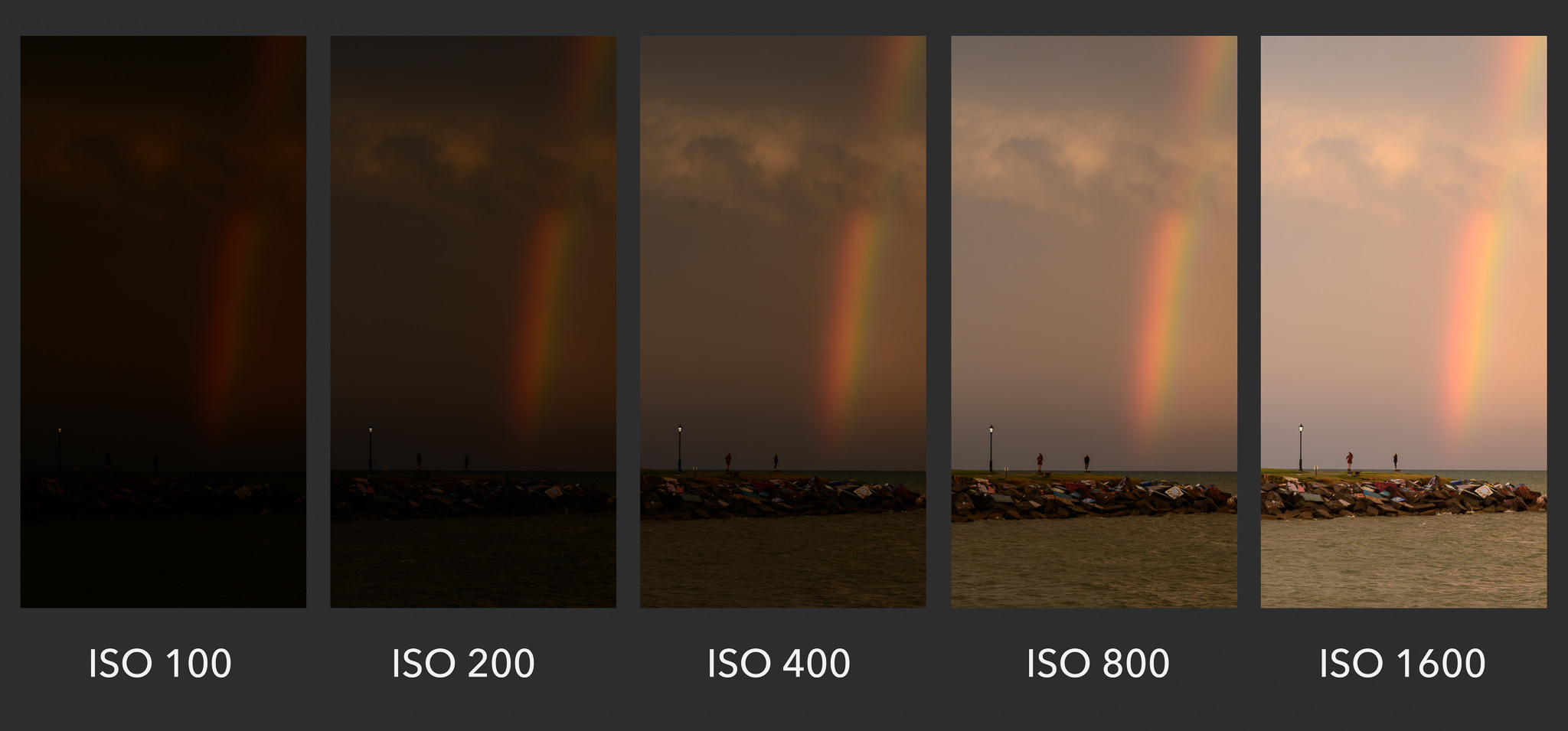
At its core, ISO represents the level of sensitivity your camera has to available light. In the days of analog photography, ISO referred to the “film speed,” or how quickly the chemicals on a roll of film reacted to light. In the modern tech landscape, we have replaced silver halide crystals with silicon-based pixels, but the terminology remains. Today, adjusting your ISO is less about changing the sensor’s physical sensitivity and more about signal amplification. Understanding this distinction is the first step toward high-level technical proficiency in digital media.
The Technical Fundamentals: How ISO Works Within the Sensor
To understand ISO, one must look at the hardware of the digital sensor. A camera sensor is comprised of millions of light-sensitive “photosites” (often called pixels). When you press the shutter button, these photosites collect photons and convert them into an electrical charge. This analog signal is then converted into digital data by the camera’s processor.
From Film Speed to Digital Gain
In analog photography, if you wanted to shoot in low light, you had to physically swap your roll of film for one with a higher ISO rating. High-ISO film had larger, more reactive grains. In digital technology, the sensor remains the same regardless of your settings. When you increase the ISO on a digital camera, you are essentially applying “gain” to the electrical signal generated by the sensor.
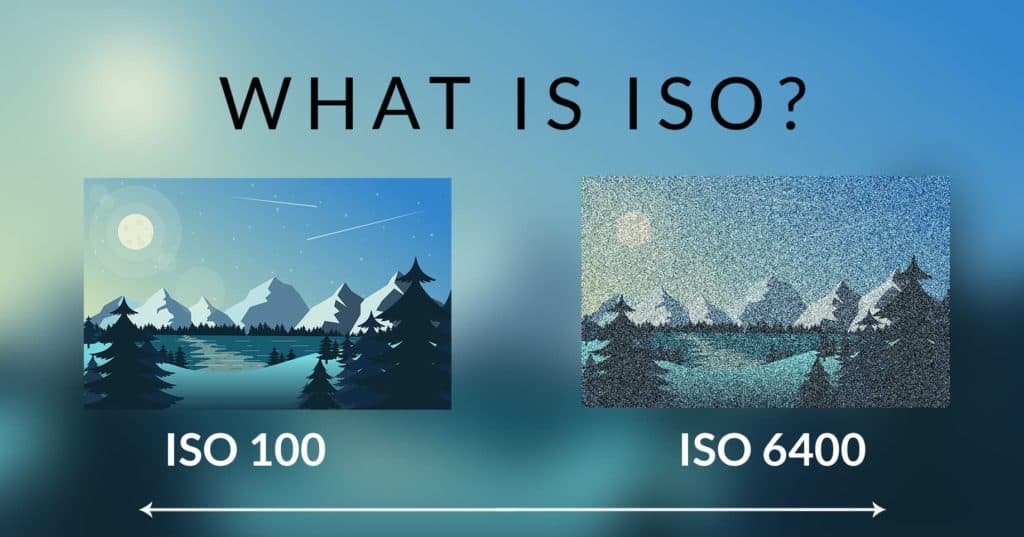
Think of it like a volume knob on an audio amplifier. If the “music” (the light) is too quiet, you turn up the gain to hear it better. However, just as turning a cheap amplifier to its maximum volume creates a background hiss, turning a camera’s ISO up too high introduces “noise.” This noise manifests as grainy, multi-colored speckles that degrade the clarity of the image.
The Signal-to-Noise Ratio (SNR)
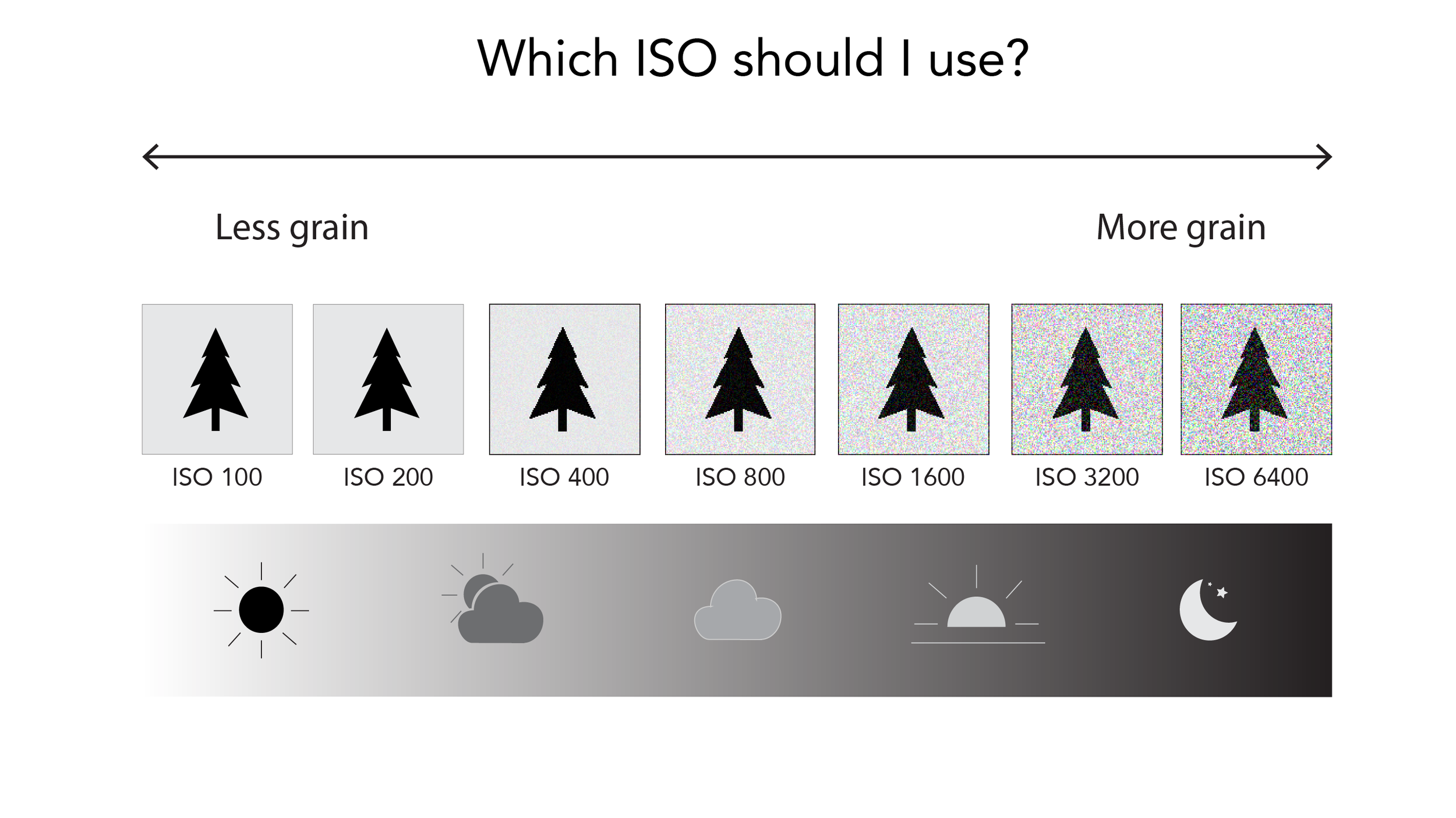
The primary challenge for camera manufacturers—from Sony and Canon to smartphone giants like Apple and Samsung—is managing the Signal-to-Noise Ratio (SNR). In bright conditions, the “signal” (light) is strong, and the “noise” (electronic interference) is negligible. This is why images shot at ISO 100 look incredibly clean. As light levels drop and you are forced to increase the ISO to 3200, 6400, or higher, the signal becomes weak, and the amplification process boosts the background electronic noise along with the image data. The technical goal of modern sensor design is to maintain a high SNR even at extreme amplification levels.
The Impact of ISO on Image Quality and Performance
Every adjustment to your camera’s ISO setting involves a technical trade-off. While increasing ISO allows you to shoot in darker environments or use faster shutter speeds, it directly impacts the structural integrity of the digital file.
Digital Noise and Chrominance Distortion
There are two primary types of noise associated with high ISO settings: luminance noise and chromatic (color) noise. Luminance noise looks like traditional film grain; it is a variation in brightness across pixels that can often be aesthetically pleasing or easily managed. Chromatic noise, however, appears as unsightly purple or green splotches in the shadow areas of an image. This occurs when the sensor’s amplification process begins to misinterpret the color data of specific pixels due to heat or electronic interference.
Dynamic Range and Color Depth
A less discussed but equally important effect of ISO is its impact on dynamic range. Dynamic range is the camera’s ability to capture detail in both the brightest highlights and the darkest shadows simultaneously. At a camera’s “Base ISO” (usually ISO 100 or 160), the sensor is capable of capturing its maximum dynamic range. As the ISO is increased, the floor of the shadows rises due to noise, effectively “clipping” the amount of usable data. For tech-focused professionals in color grading or high-end retouching, shooting at the lowest possible ISO is a non-negotiable rule to ensure the maximum amount of data is preserved for post-processing.
Base ISO vs. Native ISO Range
Most cameras have a “Base ISO,” which is the setting that requires no amplification to produce a clean image. This is the hardware’s “native” state. The “Native ISO Range” refers to the span of settings the manufacturer has calibrated the camera to handle effectively (e.g., ISO 100 to 51,200). Beyond this, many cameras offer “Extended ISO” settings. These are software-based boosts that push the sensor beyond its physical limits, often resulting in significant quality loss and should generally be avoided for professional work.
Strategic Application: When to Adjust Your ISO
Navigating the ISO settings is a constant balancing act between light, motion, and quality. In a professional workflow, the ISO is typically the last of the three exposure variables to be adjusted.
Low ISO Scenarios: Prioritizing Clarity
In environments with controlled lighting—such as a professional studio—or in bright outdoor settings, an ISO of 100 or 200 is the standard. This ensures the cleanest possible image with the highest color accuracy. Landscape photographers, even when shooting in low light (like dusk), will often use a tripod to allow for a long shutter speed, specifically so they can keep their ISO at 100. This technical choice ensures that the intricate details of the landscape are not lost to digital grain.
High ISO Scenarios: Freezing Action in Low Light
There are moments where noise is a necessary evil. In sports photography or photojournalism, light is often scarce, but the action is fast. To “freeze” a basketball player in mid-air, a fast shutter speed (like 1/1000th of a second) is required. This fast shutter speed lets in very little light. To compensate and get a visible image, the photographer must push the ISO to 3200 or 6400. In these tech-heavy environments, a grainy but sharp image is infinitely more valuable than a clean but blurry one.
Dual Native ISO: A Cinema Tech Revolution
Recent breakthroughs in sensor technology have introduced “Dual Native ISO.” This is particularly prevalent in high-end cinema cameras and some mirrorless models like the Panasonic GH series or the Sony A7S III. Essentially, the sensor has two distinct analog circuits for every pixel. One circuit is optimized for low light (low gain), and the other is optimized for high light (high gain). This allows a filmmaker to jump from ISO 800 to ISO 12,800 and see a dramatic reduction in noise compared to a traditional single-native sensor. This hardware-level innovation has revolutionized the ability to shoot “available light” documentaries and films.
Managing ISO in the Modern Software Stack
The conversation about ISO doesn’t end when the shutter closes. In the modern tech ecosystem, software plays a massive role in how we perceive and manage sensor sensitivity.
In-Camera Processing and JPEG Engines
When shooting in JPEG mode, your camera’s internal processor applies a “noise reduction” algorithm to high-ISO images. While this can make the image look cleaner, it often results in a “waxy” texture where fine details—like skin pores or fabric textures—are smeared away. For this reason, tech-savvy users shoot in RAW format. A RAW file contains the unprocessed data from the sensor, allowing the user to decide exactly how much noise reduction to apply during the editing phase.
The Rise of AI-Powered Noise Reduction
We are currently in a golden age of post-processing technology. AI tools and machine learning models, such as those found in Adobe Lightroom, Topaz Photo AI, and DxO PureRAW, have fundamentally changed the “rules” of ISO. These tools analyze the pattern of noise in an image and use neural networks to reconstruct missing detail while removing grain. This means that an ISO 12,800 image that was considered “unusable” five years ago can now be cleaned up to look like it was shot at ISO 800. This marriage of sensor hardware and AI software is pushing the boundaries of what is possible in digital imaging.
The Future of Sensor Technology and Low-Light Performance
As we look toward the future, the limitations of ISO are being challenged by new materials and sensor architectures. The industry is moving toward “Stacked Sensors,” which place the light-collecting pixels, the logic circuits, and the memory in a three-dimensional stack. This reduces the distance the electrical signal has to travel, decreasing heat and electronic interference, which in turn reduces noise.
Furthermore, research into “Organic Sensors” and “Quantum Dot” technology promises to increase the “Quantum Efficiency” of sensors. Currently, even the best sensors only convert a fraction of the photons they hit into electrons. If we can reach a point where nearly 100% of photons are captured, the need for high-ISO amplification will plummet, leading to a future where “noise” might become a relic of the past.
In conclusion, understanding ISO is about more than just knowing a setting on a dial. It is an understanding of how light interacts with silicon, how signals are amplified, and how data is preserved. Whether you are a technologist analyzing sensor benchmarks or a creator trying to capture a perfect moment in a dimly lit room, mastering ISO is the key to unlocking the full potential of digital imaging hardware. By balancing the physical limitations of the sensor with the power of modern software, you can achieve professional results in any lighting condition.
aViewFromTheCave is a participant in the Amazon Services LLC Associates Program, an affiliate advertising program designed to provide a means for sites to earn advertising fees by advertising and linking to Amazon.com. Amazon, the Amazon logo, AmazonSupply, and the AmazonSupply logo are trademarks of Amazon.com, Inc. or its affiliates. As an Amazon Associate we earn affiliate commissions from qualifying purchases.