
California is often characterized by its stunning coastline, technological innovation, and vibrant economy. However, for those earning a living within its borders, it is also known for having one of the most complex and highest-reaching tax systems in the United States. Navigating the California state income tax landscape is a critical component of personal finance for residents and business owners alike. Understanding how these rates are applied, the nuances of the progressive bracket system, and the various ways to mitigate liability can make a significant difference in one’s long-term financial health.
Understanding California’s Progressive Income Tax Structure
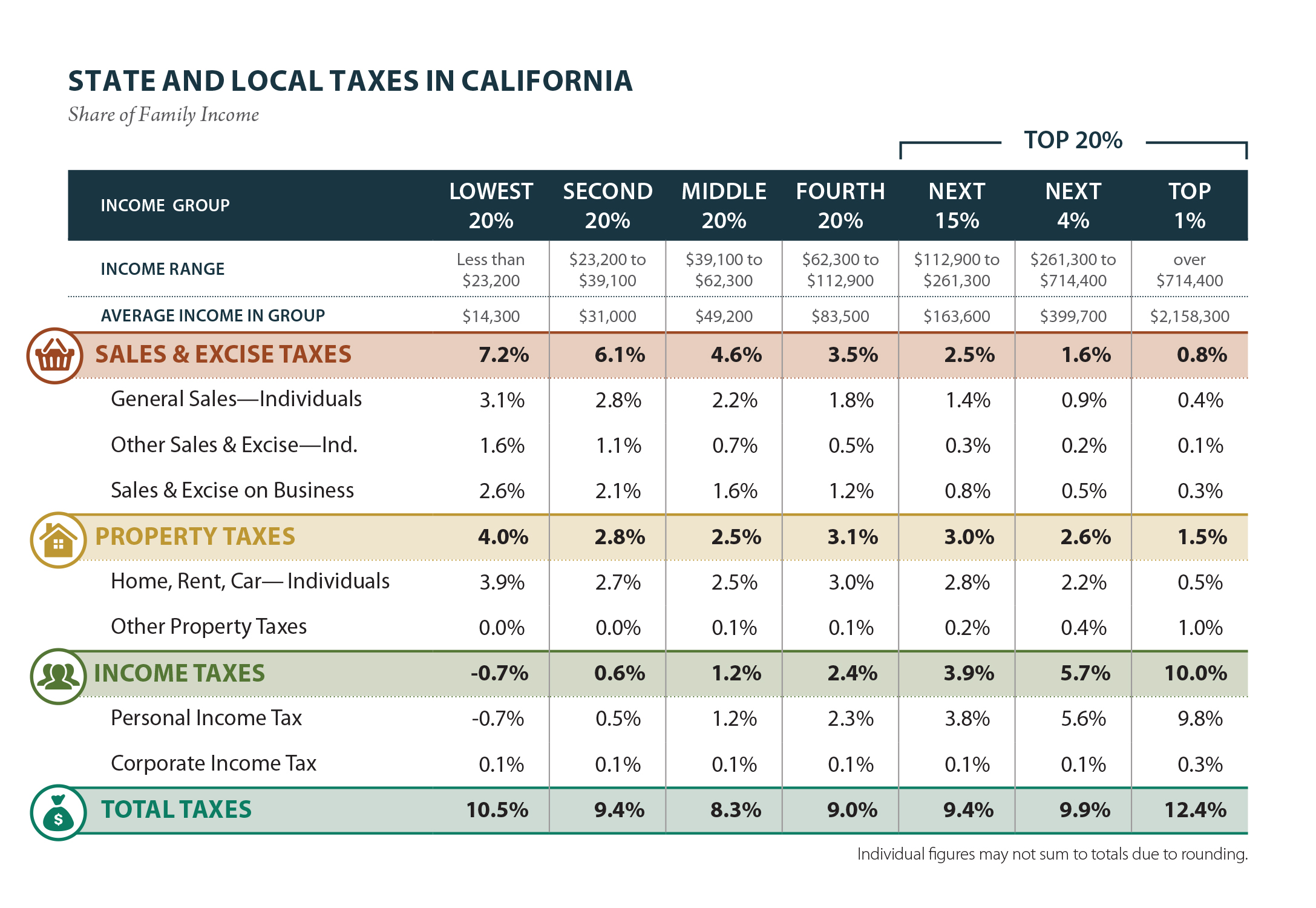
California employs a progressive tax system, which means that as your taxable income increases, the rate at which you are taxed on additional dollars also rises. This “graduated” approach is designed to place a higher tax burden on high-income earners while providing relief to those in lower income brackets. Unlike states with a flat tax rate, California’s system requires a more nuanced calculation to determine your effective tax rate—the actual percentage of your total income that goes to the state.
The Graduated Bracket System
For the current tax year, California features nine primary tax brackets. These rates range from a low of 1% to a high of 12.3%. It is important to distinguish between your marginal tax rate (the rate applied to your last dollar of income) and your effective tax rate.
The brackets are adjusted annually for inflation. For most single filers, the 1% rate applies to the first several thousand dollars of taxable income, with the rates stepping up to 2%, 4%, 6%, 8%, 9.3%, 10.3%, and 11.3%, before hitting the 12.3% threshold. For many middle-class professionals in California, the 9.3% bracket is where a significant portion of their income resides, making the state’s tax burden substantially higher than the national average.
The Mental Health Services Act Surcharge
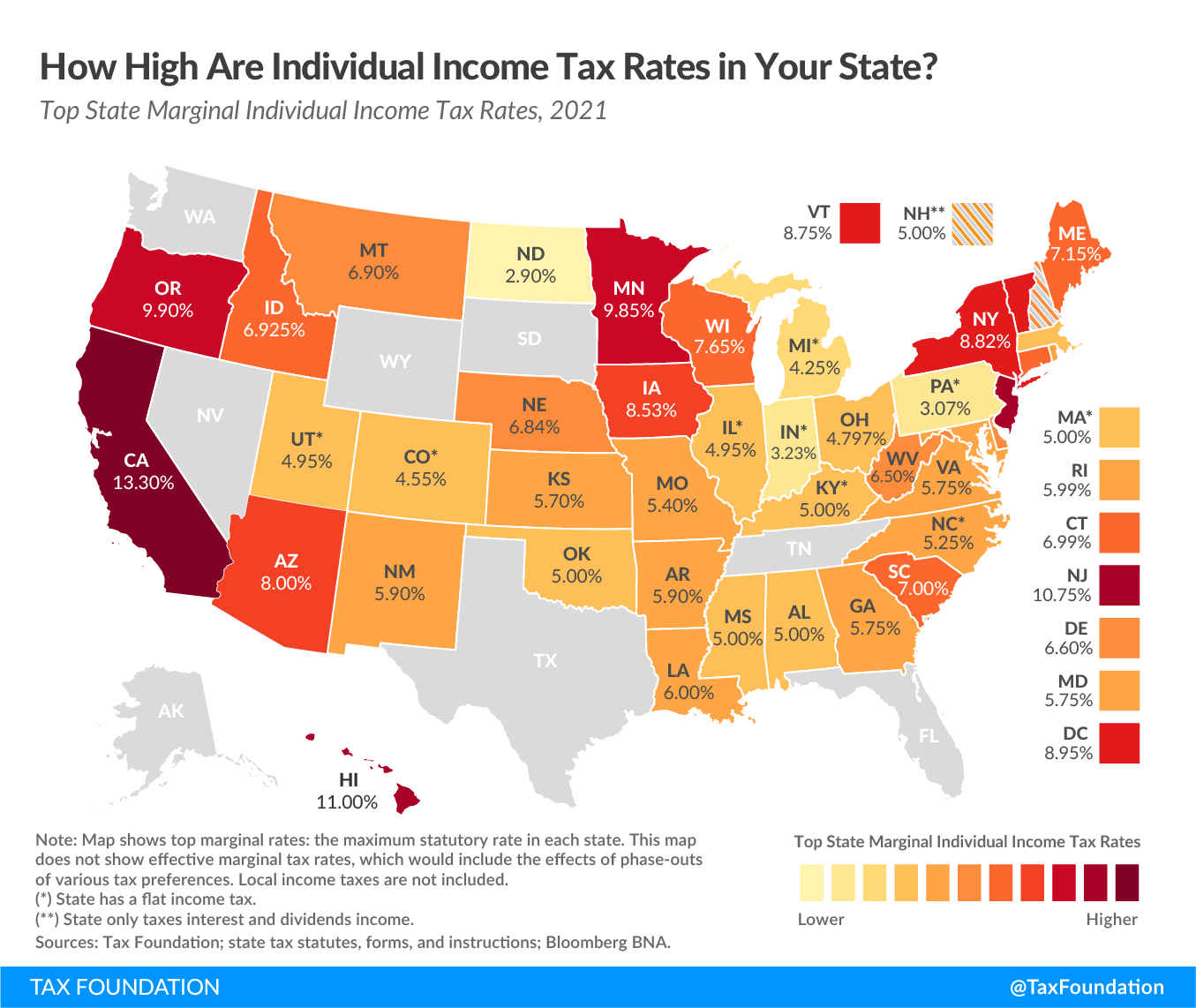
One of the most unique aspects of the California tax code is the Mental Health Services Act (MHSA), often referred to as the “Millionaire’s Tax.” This is a 1% surcharge on all taxable income in excess of $1 million. When added to the top marginal bracket of 12.3%, it creates a combined top tax rate of 13.3%.
This 13.3% figure is frequently cited in national discussions because it represents the highest state-level income tax rate in the country. For high-net-worth individuals, professional athletes, and successful entrepreneurs, this surcharge is a major factor in financial planning and relocation decisions.
Inflation Adjustments and Tax Brackets
The Franchise Tax Board (FTB) of California adjusts the tax brackets, the standard deduction, and the personal exemption credits every year based on the California Consumer Price Index. This prevents “bracket creep,” a phenomenon where inflation pushes taxpayers into higher brackets even though their real purchasing power has not increased. For a savvy financial planner, staying updated on these annual adjustments is vital for accurate quarterly estimated tax payments.
Calculating Your Liability: Deductions, Exemptions, and Credits
The “sticker price” of the tax brackets does not tell the whole story. Your actual tax bill is determined after applying various deductions and credits that the state allows. In the realm of personal finance, understanding the difference between a deduction (which lowers your taxable income) and a credit (which lowers your tax bill dollar-for-dollar) is essential.
Standard vs. Itemized Deductions
California provides a standard deduction that is significantly lower than the federal standard deduction. For many taxpayers, this makes itemizing on state returns more attractive than it might be on their federal returns.
Common itemized deductions in California include:
- Medical and Dental Expenses: Subject to certain percentage thresholds of your Adjusted Gross Income (AGI).
- Charitable Contributions: Generally following similar guidelines to federal law, allowing you to support non-profits while reducing your tax burden.
- Mortgage Interest: Given the high cost of real estate in California, mortgage interest remains a primary deduction for many homeowners, though there are limits on the amount of debt covered.
- State and Local Taxes (SALT): While the federal government caps SALT deductions at $10,000, California has different rules regarding the deductibility of other local taxes, though you cannot deduct California income tax from your California return.
Personal and Dependent Exemptions
Instead of the exemptions found in some other state systems, California utilizes personal exemption credits. These are flat dollar amounts subtracted directly from the tax you owe. There are specific credits for the filer, their spouse, and each dependent. Furthermore, there is an additional credit for individuals who are blind or over the age of 65, providing a modest level of relief for seniors on fixed incomes.
Valuable California Tax Credits
Beyond the standard exemptions, California offers several targeted credits designed to incentivize certain behaviors or provide relief to specific demographics:
- California Earned Income Tax Credit (CalEITC): A refundable credit for low-to-moderate-income working individuals and families.
- Young Child Tax Credit (YCTC): An additional credit for those who qualify for CalEITC and have a child under the age of six.
- Renter’s Credit: A non-refundable credit for residents who meet certain income requirements and paid rent for at least half of the year. While the amount is relatively small, it is a rare acknowledgment of the high cost of living for California tenants.
Residency Status and Tax Obligations
One of the most litigated and complex areas of California tax law involves residency. Because the tax rates are so high, the state is rigorous in determining who qualifies as a resident for tax purposes.
Determining Residency
Under California law, a resident is any individual who is in the state for other than a temporary or transitory purpose, or any individual domiciled in California who is outside the state for a temporary or transitory purpose. The “Closest Connection Test” is often used by the FTB to determine residency. They look at factors such as:
- The location of your primary residence.
- Where your family lives.
- Where you are registered to vote and where your vehicles are registered.
- The location of your banks and professional ties (doctors, lawyers, accountants).
Part-Year Residents and Non-Residents
If you moved into or out of California during the year, you are considered a part-year resident. You are taxed on all income received while a resident and only on income from California sources while a non-resident. Non-residents who earn income within the state (such as through rental property located in California or performing work while physically present in the state) must also file a California return and pay taxes on that specific “source income.”
Business Income and Investment Considerations
For investors and business owners, California’s tax treatment of capital gains and business entities presents unique challenges that differ significantly from federal standards.
Capital Gains Treatment
Unlike the federal government, which offers preferential lower tax rates for long-term capital gains, California treats capital gains as ordinary income. This means if you sell stock or real estate for a profit, that gain is added to your total income and taxed at your top marginal bracket—potentially as high as 13.3%. This lack of a “long-term” discount makes California one of the most expensive states in which to realize large investment gains.
Pass-Through Entities and the PTE Tax
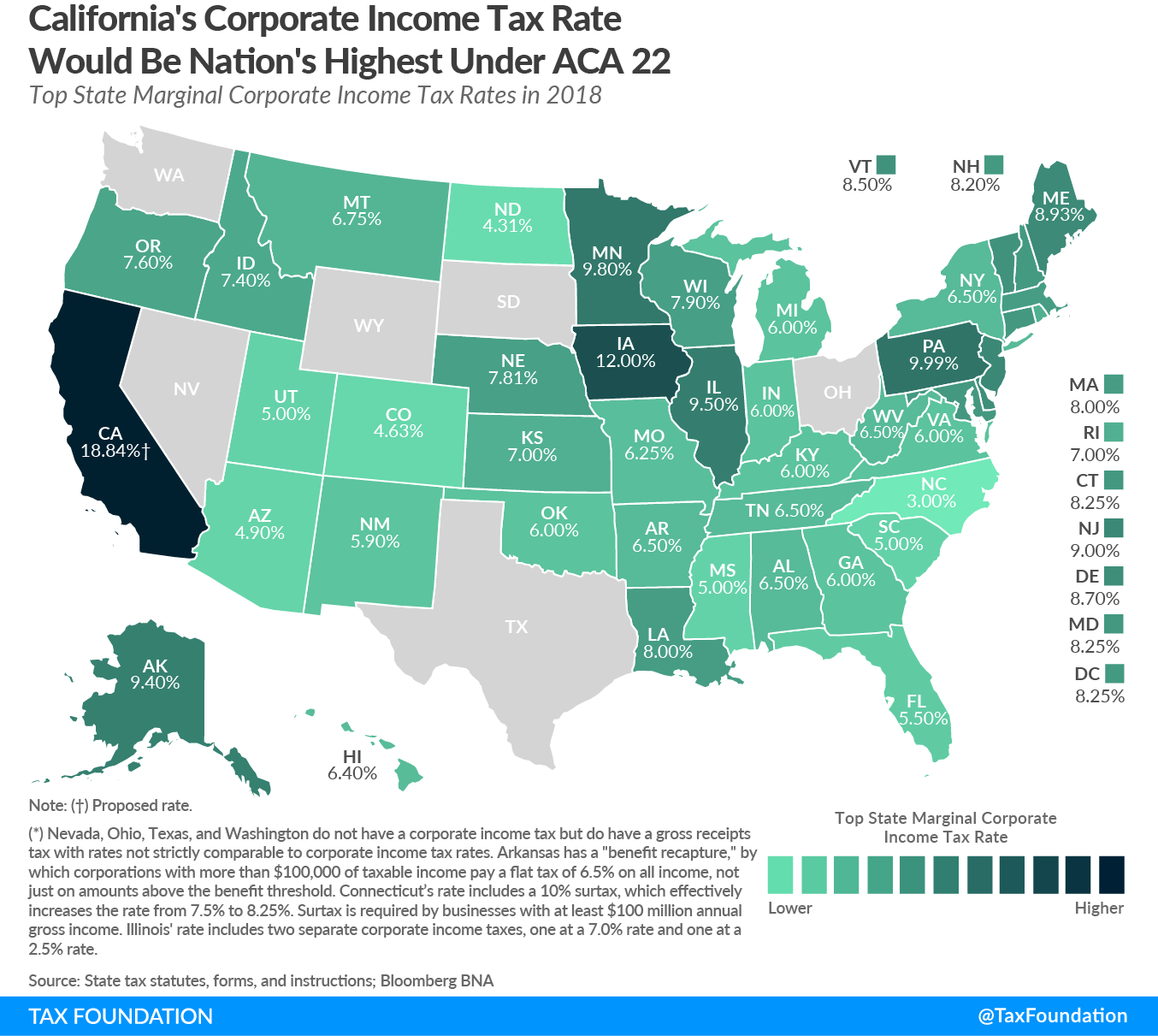
For small business owners operating as S-Corporations, LLCs, or Partnerships, income “passes through” to the individual’s personal return. California has recently introduced the Pass-Through Entity (PTE) Elective Tax. This allows certain businesses to pay state income tax at the entity level. The primary benefit of this is a “workaround” for the federal SALT cap, allowing the individual owners to claim a federal deduction for the state taxes paid by the business, which can result in significant federal tax savings.
The Alternative Minimum Tax (AMT)
While the federal AMT was significantly scaled back in recent years, California maintains its own version of the Alternative Minimum Tax. This system is designed to ensure that wealthy individuals who use various deductions do not end up paying zero tax. If your tentative minimum tax is higher than your regular tax, you must pay the difference.
Strategies for Minimizing California Tax Liability
Given the high rates, tax planning is a cornerstone of personal finance for Californians. While evasion is illegal, avoidance—the legal optimization of your tax situation—is a prudent financial strategy.
Tax-Advantaged Retirement Savings
Contributions to a traditional 401(k) or 403(b) reduce your federal Adjusted Gross Income and your California taxable income. For an individual in the 9.3% or 10.3% bracket, a $22,500 contribution can lead to immediate state tax savings of over $2,000, in addition to federal savings. However, it is important to note that California does not recognize the tax-exempt status of Health Savings Accounts (HSAs) at the state level; contributions are taxed, and earnings within the account may also be subject to state tax.
Municipal Bonds
Interest earned on U.S. Treasury bonds is exempt from state tax. More importantly for high-earners, interest from California municipal bonds is generally exempt from both federal and California state income tax. For those in the highest brackets, the “tax-equivalent yield” of a California muni-bond can often outperform higher-yielding taxable corporate bonds.
Strategic Timing of Income and Deductions
For those with fluctuating income, such as freelancers or commission-based professionals, timing is everything. Accelerating deductions into a high-income year or deferring bonuses into a year where you expect to be in a lower bracket can smooth out the tax burden. Additionally, charitable “bunching”—donating several years’ worth of contributions to a Donor Advised Fund in a single high-income year—can help exceed the standard deduction threshold and maximize the tax benefit.
Final Thoughts on California’s Tax Landscape
The California state income tax rate is undeniably high, but it is also predictable for those who take the time to understand the rules. By integrating tax planning into your broader personal finance strategy, you can navigate the progressive brackets, take full advantage of available credits, and ensure that you are not paying more than your fair share. Whether you are a first-time filer or a high-net-worth investor, staying informed about the Franchise Tax Board’s shifting regulations is the best way to protect your wealth in the Golden State.
aViewFromTheCave is a participant in the Amazon Services LLC Associates Program, an affiliate advertising program designed to provide a means for sites to earn advertising fees by advertising and linking to Amazon.com. Amazon, the Amazon logo, AmazonSupply, and the AmazonSupply logo are trademarks of Amazon.com, Inc. or its affiliates. As an Amazon Associate we earn affiliate commissions from qualifying purchases.