
The Ford F-150 is a legendary name in the automotive world, renowned for its durability, capability, and versatility. Whether you’re a seasoned off-roader, a weekend warrior tackling DIY projects, or simply someone who appreciates a robust truck, understanding the nuances of your F-150 is crucial. One of the most fundamental, yet often overlooked, aspects of a vehicle’s wheel and tire setup is its bolt pattern. This seemingly simple specification dictates compatibility between wheels and the vehicle’s hubs, playing a vital role in safety, performance, and aesthetic customization. For Ford F-150 owners, knowing the correct bolt pattern is the first step in a multitude of upgrade and maintenance decisions.
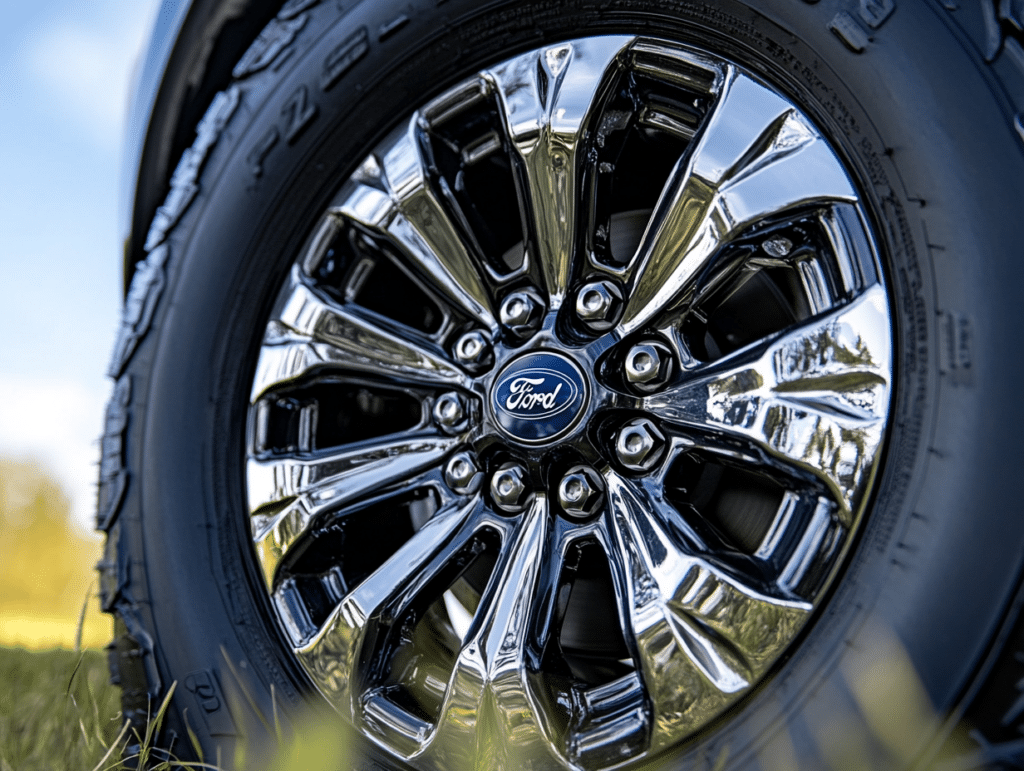
Understanding Wheel Bolt Patterns: The Foundation of Compatibility
At its core, a wheel bolt pattern, also known as a lug pattern or bolt circle, is a geometrical measurement that describes the arrangement of the bolt holes on a wheel. This pattern is critical because it directly determines whether a particular aftermarket wheel can be safely and securely mounted onto your F-150’s hub assembly. While the F-150 has a consistent history with its bolt patterns, variations can occur across different generations and even specific model years, making accurate identification paramount.
The Anatomy of a Bolt Pattern: Numbers and Measurements
A bolt pattern is typically expressed in two numbers: the number of lug bolts (or studs) and the diameter of the bolt circle. For instance, a 5×5.5 bolt pattern signifies that the wheel has five lug bolts arranged in a circle with a diameter of 5.5 inches.
Counting the Lugs: A Simple Distinction
The first number in the bolt pattern designation is straightforward: it’s simply the count of the bolt holes. Most Ford F-150s feature a 5-lug or 6-lug configuration. The transition to different lug counts has historically been tied to specific eras of F-150 production, often correlating with changes in the truck’s suspension and braking systems. Older, lighter-duty F-150s often utilized a 5-lug pattern, while heavier-duty variants or those from later generations might employ a 6-lug setup to accommodate increased load capacities and robust braking components.
Measuring the Bolt Circle: Precision is Key
The second number, the diameter of the bolt circle, requires a bit more precision to measure. This diameter is the distance across the wheel hub from the center of one bolt hole to the center of the bolt hole directly opposite it. If the wheel has an odd number of bolt holes, like five, you measure from the center of one bolt hole to the center of the bolt hole farthest away, and then you divide that measurement by two to get the bolt circle diameter.
For the Ford F-150, the most common and historically prevalent bolt pattern is 5×5.5 inches (or 5×139.7mm). This pattern has been a staple for many F-150 generations, offering a balance of strength and widespread wheel availability. However, it’s not the only pattern that has graced the F-150 lineage, and understanding these variations is essential to avoid costly mistakes.
Identifying the Correct Bolt Pattern for Your Ford F-150
With the general understanding of bolt patterns in place, the next logical step is to pinpoint the exact pattern for your specific Ford F-150. This is where generational differences and model-specific details become crucial. Ignorance here can lead to purchasing incompatible wheels, wasting time and money, and potentially compromising the safety of your vehicle.
The Dominant Pattern: 5×5.5 Inches (5×139.7mm)
As mentioned, the 5×5.5 inch (5×139.7mm) bolt pattern is the most common and enduring for the Ford F-150. This pattern has been utilized across a vast number of F-150 model years and generations. It’s a robust and widely supported pattern, meaning you’ll find an extensive selection of aftermarket wheels available in this specification. If you own a Ford F-150 from the late 1990s through many of the 2000s and even into some more recent models, there’s a high probability that your truck uses this bolt pattern.
Generations Embracing the 5×5.5 Pattern
The 5×5.5 bolt pattern has been a faithful companion to several F-150 generations. This includes, but is not limited to:
- Ninth Generation (1997-2003): Many F-150s from this era, especially the popular F-150 models, will feature the 5×5.5 bolt pattern.
- Tenth Generation (2004-2008): This redesigned generation largely continued with the 5×5.5 pattern.
- Eleventh Generation (2009-2014): While some specific configurations or heavier-duty options might differ, the 5×5.5 pattern remained prevalent for many F-150s.
- Twelfth Generation (2015-2020): For the majority of F-150 models in this generation, the 5×5.5 bolt pattern is the standard.
It’s important to note that even within these generations, there can be subtle variations, particularly if you’re looking at special editions, specific trim levels, or older models where production practices might have evolved. Always double-check for your specific year.
Less Common but Important Variations
While 5×5.5 inches is the king of F-150 bolt patterns, it’s crucial to be aware of other possibilities, especially if you own an older or an unusually configured F-150. Ignoring these could lead to significant compatibility issues.
The 6-Lug Conundrum: When More is More
In certain F-150 models, particularly those designed for heavier hauling or towing, or in some older generations, you might encounter a 6-lug bolt pattern. The most common 6-lug bolt pattern associated with Ford trucks, including some F-150 variants, is 6x135mm. This pattern offers increased strength and load-bearing capability, making it suitable for more demanding applications.
It’s vital to understand that a 5-lug wheel will never fit a 6-lug hub, and vice-versa, without specialized adapters. Attempting to force such a fit would be extremely dangerous.
Older Generations and Potential Anomalies
For F-150s predating the late 1990s, there’s a slightly higher chance of encountering less common or superseded bolt patterns. While 5×5.5 was often in use, some earlier trucks might have had variations that are less prevalent today. Researching the specific year of an older F-150 is therefore even more critical.
Practical Methods for Verifying Your F-150’s Bolt Pattern
Knowing the common patterns is helpful, but the ultimate goal is to definitively confirm the bolt pattern on your specific Ford F-150. Fortunately, there are several straightforward methods to achieve this, ranging from simple visual checks to consulting official documentation.

Method 1: The Visual Inspection and Counting Method
This is the most direct and often the easiest way to determine your bolt pattern.
- Locate the Lug Nuts: Identify the lug nuts that hold your wheels onto the hub.
- Count the Lug Nuts: Simply count how many lug nuts are present on one wheel. Most F-150s will have either 5 or 6.
- Measure the Bolt Circle:
- For an Even Number of Lugs (e.g., 6): Use a measuring tape or ruler to measure the distance from the outer edge of one lug nut to the outer edge of the lug nut directly opposite it. Then, subtract the width of two lug nuts to get an approximate diameter. Alternatively, and more accurately, measure from the center of one stud hole to the center of the opposite stud hole.
- For an Odd Number of Lugs (e.g., 5): Measure from the outer edge of one lug nut to the outer edge of the lug nut farthest away from it. Then, divide this measurement by two and subtract the width of one lug nut for an approximation. A more precise method involves measuring from the center of one stud hole to the center of the stud hole that is most diametrically opposed, and then multiplying that measurement by a conversion factor based on the number of bolts (for 5 bolts, it’s roughly 1.176).
- The Easier Way (for 5 Lugs): Measure from the center of one bolt hole directly across to the center of another bolt hole. If it’s a 5-lug pattern, this measurement isn’t directly the bolt circle diameter. Instead, measure from the center of one bolt hole to the center of an adjacent bolt hole. Then, use a conversion chart or online calculator to determine the bolt circle diameter. For the common 5×5.5 pattern, the distance between the centers of adjacent bolt holes is approximately 3.25 inches (82.55mm).
Important Note: Be sure to measure from the center of the bolt holes for the most accurate results, especially if you are using a ruler. If you are measuring lug nuts, account for their diameter. Many online resources and bolt pattern calculators can help you convert measurements if you’re unsure.
Method 2: Consulting Your Vehicle’s Documentation
The most reliable source of information for your F-150’s specifications is its official documentation.
The Owner’s Manual: A Wealth of Information
Your Ford F-150 owner’s manual is an invaluable resource for all things related to your truck. Within its pages, you’ll find a section dedicated to wheels and tires, which should clearly state the factory bolt pattern. This is the definitive answer straight from the manufacturer. If you no longer have the physical manual, most manufacturers provide digital versions on their official websites, which can be easily downloaded.
The Tire and Loading Information Label
Another key location is the Tire and Loading Information label, typically found on the driver’s side doorjamb or inside the fuel filler door. While this label primarily details tire sizes, inflation pressures, and load capacities, it may also contain information related to wheel specifications or confirm the lug nut size and torque, which indirectly points to the bolt pattern.
Method 3: Online Resources and VIN Decoders
In the digital age, a wealth of information is at your fingertips.
Dedicated Automotive Databases and Forums
Numerous automotive websites and forums are dedicated to specific makes and models. Searching for “Ford F-150 bolt pattern by year” on a reputable automotive enthusiast site or a general search engine will often yield specific charts and discussions detailing the bolt patterns for different F-150 generations. Many of these sites will also have community members who can offer direct advice based on their own F-150 ownership experiences.
Vehicle Identification Number (VIN) Decoders
While VIN decoders are primarily used to identify a vehicle’s manufacturing details, options, and history, some advanced decoders might offer insights into wheel specifications. Inputting your F-150’s VIN into a comprehensive VIN decoder tool can sometimes reveal the factory wheel size and, by extension, the bolt pattern. This is particularly useful if you are dealing with a vehicle where documentation is missing or unclear.
Why the Bolt Pattern Matters: Beyond Simple Fitment
Understanding your F-150’s bolt pattern is not just about ensuring a wheel fits; it’s a fundamental aspect of vehicle integrity, performance, and customization. The correct bolt pattern ensures that the wheel is mounted flush against the hub, allowing the lug nuts to seat properly and apply even pressure. This is critical for the safe transfer of power from the engine to the road, as well as for the reliable operation of the braking system.
Safety and Structural Integrity
The primary reason for adhering to the correct bolt pattern is safety. A wheel that is not properly seated due to an incorrect bolt pattern can lead to:
- Vibrations and Instability: An improperly mounted wheel will cause significant vibrations, especially at higher speeds, compromising steering control and overall vehicle stability.
- Lug Nut Loosening: The uneven pressure distribution can cause lug nuts to loosen over time, potentially leading to the wheel detaching from the vehicle, a catastrophic failure.
- Brake Rotor Damage: The brake rotors are mounted to the hub, and an improperly seated wheel can put undue stress on them, leading to warping or other damage.
- Bearing Wear: Excessive play or improper mounting can accelerate wear on the wheel bearings.
Performance and Handling
While not as immediately obvious as safety concerns, the correct bolt pattern also impacts your F-150’s performance and handling.
- Wheel Balance: A properly fitted wheel contributes to a balanced wheel and tire assembly. An improperly fitted wheel can be difficult to balance accurately, leading to a rougher ride and uneven tire wear.
- Suspension Integrity: The wheels are a crucial interface between the suspension system and the road. An incorrect fit can alter the forces acting on the suspension components, potentially leading to premature wear or suboptimal performance.

Customization and Aesthetics
For many F-150 owners, upgrading wheels is a primary way to personalize their truck and enhance its aesthetic appeal.
- Wheel Selection: Knowing your bolt pattern opens the door to a vast array of aftermarket wheels. Whether you’re looking for aggressive off-road wheels, sleek street wheels, or something in between, the bolt pattern is the first filter. Using the wrong bolt pattern severely limits your options.
- Maintaining Vehicle Dynamics: While not directly related to the bolt pattern itself, choosing wheels that are the correct size and offset in conjunction with the proper bolt pattern ensures that your F-150’s handling characteristics are not adversely affected by aftermarket modifications.
In conclusion, understanding and correctly identifying the bolt pattern on your Ford F-150 is a fundamental step for any owner looking to maintain, repair, or customize their vehicle. The dominant 5×5.5 inch (5×139.7mm) pattern has served the F-150 well across many generations, but awareness of potential variations, especially for older or specific models, is crucial. By utilizing simple measurement techniques, consulting your owner’s manual, or leveraging online resources, you can confidently determine your truck’s bolt pattern, ensuring safe operation, optimal performance, and the freedom to explore the wide world of wheel customization.
aViewFromTheCave is a participant in the Amazon Services LLC Associates Program, an affiliate advertising program designed to provide a means for sites to earn advertising fees by advertising and linking to Amazon.com. Amazon, the Amazon logo, AmazonSupply, and the AmazonSupply logo are trademarks of Amazon.com, Inc. or its affiliates. As an Amazon Associate we earn affiliate commissions from qualifying purchases.