
In the intricate world of personal finance, understanding the true worth of your assets is paramount. Among the most significant assets for many individuals is their vehicle, and few terms are as synonymous with vehicle valuation as “Blue Book value.” Far from being a mere colloquialism, the “Blue Book value” represents an authoritative benchmark, guiding millions of consumers, dealers, and financial institutions in the complex transactions surrounding automotive ownership. It is, at its core, a sophisticated financial tool that translates a myriad of data points into a tangible monetary estimate, empowering individuals to make informed decisions whether buying, selling, or insuring a car.

This concept, predominantly associated with Kelley Blue Book (KBB), serves as a critical compass in navigating the often-opaque waters of the automotive market. It provides a standardized framework, injecting transparency into a process that could otherwise be fraught with uncertainty and potential disadvantage. For anyone looking to understand the financial implications of their vehicle, grasping the nuances of the Blue Book value is not just beneficial—it’s essential for sound money management.
The Genesis and Authority of the Blue Book
The concept of the “Blue Book value” isn’t an arbitrary invention; it’s the product of decades of meticulous data collection and market analysis. Its enduring authority in the financial landscape of vehicle ownership is rooted in a commitment to accuracy and impartiality.
A Legacy of Valuation: Kelley Blue Book’s Origins
The story of the Blue Book begins in 1926, when Les Kelley, a Los Angeles car dealer, started compiling a list of used car prices. What began as a simple internal guide for his dealership quickly evolved into a trusted resource, first for other dealers and then for the general public. This rudimentary list, printed on blue paper, soon became known as the “Blue Book,” a name that has since become almost generic for any reliable valuation guide.
Kelley Blue Book’s innovation lay in systematizing the valuation process at a time when information was scarce and fragmented. By meticulously tracking sales data, analyzing market trends, and incorporating various factors influencing a vehicle’s worth, KBB established itself as the preeminent authority on vehicle pricing. Over nearly a century, KBB has continuously refined its methodologies, leveraging advanced data analytics and economic modeling to provide valuations that are not only comprehensive but also responsive to the dynamic nature of the automotive market. This long-standing legacy and commitment to rigorous methodology have cemented its status as a foundational financial tool for vehicle transactions.
More Than Just Cars: Expanding the “Blue Book” Concept
While Kelley Blue Book is undeniably the most recognized “Blue Book” in the automotive sector, the term itself has transcended its origins to become a broader descriptor for authoritative valuation guides across various asset classes. For instance, there are “Blue Books” for firearms, classic cars, motorcycles, recreational vehicles (RVs), and even boats. In each instance, the underlying principle remains the same: to provide a reliable, data-driven estimate of an item’s market value, often factoring in condition, rarity, and specific attributes.
However, in common parlance and particularly concerning consumer finance, “Blue Book value” almost exclusively refers to the valuation provided by Kelley Blue Book for mass-market cars, trucks, and SUVs. Its ubiquity in vehicle transactions means that when discussing personal finance, investing in vehicles, or understanding the monetary worth of an automobile, KBB’s metrics are the primary reference point. This singular focus on the automotive market allows KBB to maintain a highly specialized and deeply insightful approach to valuation, making it an indispensable tool for anyone engaging with the financial aspects of vehicle ownership.
Deconstructing the Valuation Factors
Understanding the “Blue Book value” is not just about knowing a number; it’s about comprehending the complex interplay of factors that contribute to that figure. KBB’s sophisticated algorithms consider a vast array of data to arrive at an accurate valuation.
Key Determinants of a Vehicle’s Value
Several core attributes of a vehicle are meticulously analyzed to determine its Blue Book value, each playing a significant role in the final assessment:
- Make, Model, Year, and Trim: These are the foundational identifiers. Popular models, specific trims with desirable features, and newer model years generally command higher values. The reputation of the manufacturer for reliability and resale value also plays a part.
- Mileage: Perhaps one of the most significant depreciating factors, higher mileage typically correlates with lower value, as it suggests more wear and tear. KBB benchmarks average mileage for a given year and adjusts value accordingly for vehicles above or below that average.
- Condition: This is a subjective yet critical factor, broken down by KBB into categories like “Excellent,” “Very Good,” “Good,” and “Fair.” These categories encompass the vehicle’s aesthetic (paint, interior wear) and mechanical health (engine, transmission, tires, brakes). A vehicle in “Excellent” condition is free of dents, scratches, and mechanical issues, signifying it’s ready for immediate resale. Conversely, a “Fair” condition vehicle likely requires significant reconditioning. Accurate self-assessment of condition is crucial for getting a realistic estimate.
- Vehicle History: A clean title is paramount. Any history of accidents (especially severe ones), flood damage, salvaged titles, or significant repairs can dramatically reduce value. Service records demonstrating regular maintenance can, conversely, bolster confidence and value.
- Location: Automotive markets are regional. Supply and demand, local economic conditions, and even climate can influence prices. For example, SUVs and 4x4s might hold value better in snowy regions, while convertibles might fetch more in sunnier climes.
- Features and Options: Premium packages, advanced safety features, desirable infotainment systems, sunroofs, leather seats, and unique wheel upgrades can significantly enhance a vehicle’s appeal and value. Conversely, a stripped-down base model will naturally have a lower valuation.
Market Dynamics and Economic Influences
Beyond the inherent characteristics of a specific vehicle, broader market forces and economic conditions exert considerable influence on its Blue Book value. KBB’s models are constantly updated to reflect these external pressures:
- Supply and Demand: The fundamental economic principle is critical. If a particular model is in high demand and short supply (e.g., during chip shortages for new cars, which drive up used car prices), its value will increase. Conversely, an oversupply or dwindling interest will depress prices.
- Seasonality: Certain vehicle types experience seasonal demand fluctuations. Convertibles might sell better in spring/summer, while SUVs might see a bump in fall/winter.
- Fuel Prices: Spikes in fuel prices can shift consumer preference towards more fuel-efficient vehicles, increasing their value while potentially decreasing the value of larger, less efficient models.
- New Vehicle Incentives: Aggressive discounts or financing offers on new cars can put downward pressure on the prices of comparable used vehicles.
- Economic Conditions: Broader economic health, including interest rates, inflation, and consumer confidence, directly impacts purchasing power and willingness to buy vehicles, influencing overall market values. A robust economy often sees higher demand for vehicles, while downturns can lead to depressed values.
Understanding Different Blue Book Values
It’s a common misconception that there’s just one “Blue Book value.” In reality, KBB provides several distinct valuations, each relevant to a specific transaction scenario and reflecting different financial realities. Recognizing these distinctions is crucial for effective financial planning and negotiation.
Trade-in Value: What a Dealership Offers
The trade-in value represents the amount a dealership is typically willing to pay for your vehicle when you are simultaneously purchasing another vehicle from them. This value is generally the lowest of the KBB estimates for several reasons. Dealerships operate as businesses with overheads, and they need to recondition the vehicle, potentially perform repairs, and market it for resale, all while aiming for a profit margin. The trade-in value inherently accounts for these costs and risks. While convenient, trading in often means receiving less cash for your vehicle compared to a private sale. Financial savvy dictates that you understand this figure to negotiate effectively when purchasing your next car.
Private Party Value: Selling Directly to a Buyer
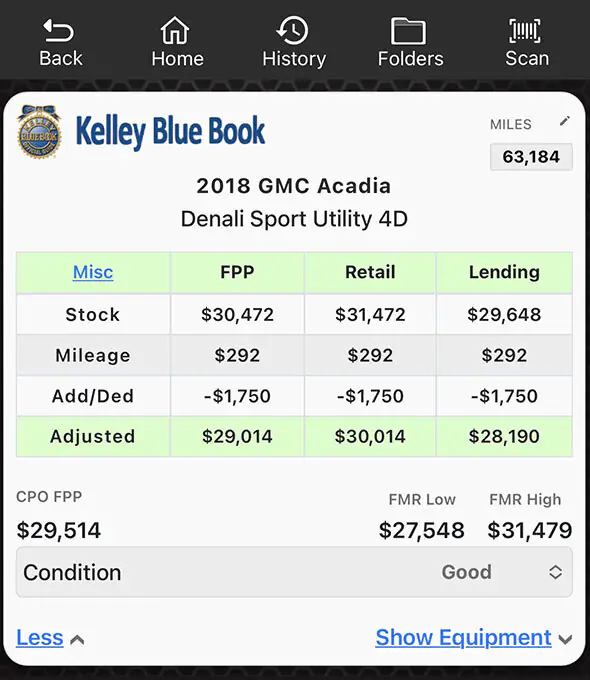
The private party value is the estimated price you can expect to receive when selling your car directly to another individual. This value is typically higher than the trade-in value but lower than the retail value. The reason is simple: when selling privately, you eliminate the dealership’s overhead and profit margin. The buyer gets a better deal than at a dealership, and you, as the seller, retain more of your car’s value. However, selling privately requires more effort: marketing the car, handling inquiries, coordinating test drives, and managing the paperwork and financial transactions. This value is a strong benchmark for setting a competitive asking price that balances maximizing your return with attracting buyers.
Retail Value: Buying from a Dealership
The retail value is the estimated price a consumer can expect to pay when purchasing a vehicle from a dealership. This is generally the highest of KBB’s valuations. This higher price reflects the added value and services a dealership provides, such as reconditioning the vehicle to a sales-ready standard, offering warranties (implied or extended), facilitating financing, handling title and registration, and providing a professional sales experience. When buying a car from a dealer, understanding the KBB retail value helps you assess if the asking price is fair and provides a solid foundation for negotiation.
Certified Pre-Owned (CPO) Value
While not a separate core “Blue Book value” category in the same vein as trade-in or private party, KBB does provide guidance on Certified Pre-Owned (CPO) vehicles. CPO vehicles are late-model, low-mileage used cars that have undergone a rigorous multi-point inspection and often come with an extended manufacturer-backed warranty. These additional assurances and benefits mean CPO vehicles typically command a premium over their non-CPO counterparts, often approaching new car prices. For buyers, the added peace of mind can justify the higher cost, representing a specific financial decision point for those seeking new-car reliability at a used-car price point.
Leveraging the Blue Book for Financial Advantage
The “Blue Book value” is more than just a number; it’s a powerful financial tool that, when understood and applied correctly, can significantly enhance your financial position in various automotive transactions.
Buying a Vehicle: Informed Negotiations
For buyers, KBB is an indispensable resource. Before stepping onto a dealership lot or meeting a private seller, consulting the Blue Book allows you to:
- Set Realistic Expectations: Understand what a fair price is for the vehicle you’re interested in, based on its specific attributes and condition.
- Empower Negotiations: Armed with objective data, you can confidently negotiate prices, challenging inflated asking prices or justifying your offer. Knowing the KBB retail value helps you determine if the dealer’s price is competitive, while knowing the private party value for similar cars can inform your offer to a private seller.
- Identify Overpriced or Underpriced Deals: Quickly spot vehicles priced significantly above KBB value, prompting further investigation or avoiding them altogether. Conversely, a vehicle priced well below KBB might warrant caution (e.g., potential hidden issues) or represent a genuine bargain.
Selling Your Vehicle: Maximizing Your Return
When it’s time to sell your vehicle, the Blue Book provides the crucial benchmarks needed to maximize your financial return:
- Price Competitively: Use the KBB private party value as your guide to set an attractive yet profitable asking price. A well-researched price attracts serious buyers and prevents you from leaving money on the table.
- Understand Trade-in Offers: If considering a trade-in, compare the dealer’s offer against the KBB trade-in value. This helps you determine if the offer is fair or if you might be better off selling privately, even factoring in the convenience a trade-in provides.
- Strategic Vehicle Preparation: Knowing the factors that influence KBB value can guide your preparation efforts. Investing in a professional detail, addressing minor cosmetic flaws, and ensuring all maintenance is up to date can improve your vehicle’s condition rating, potentially boosting its value. Keep meticulous records of all service and repairs, as this history adds tangible value and trust for potential buyers.
Insurance and Loan Implications
Beyond buying and selling, KBB values play a critical role in other financial aspects of vehicle ownership:
- Insurance Companies: Insurers often refer to KBB or similar valuation guides to determine a vehicle’s actual cash value (ACV) in the event of a total loss. Understanding this can help you ensure your vehicle is adequately insured and that you’re fairly compensated should a claim arise.
- Lenders and Loan-to-Value (LTV) Ratios: When securing an auto loan, lenders use valuation guides to assess the vehicle’s collateral value. This influences the loan amount they are willing to offer and the loan-to-value (LTV) ratio. A lower LTV ratio (meaning the loan amount is well below the car’s value) often translates to better interest rates.
- Gap Insurance: If your vehicle is totaled and you owe more on your loan than the car’s ACV, gap insurance covers the difference. KBB values help establish the ACV, making it a critical component in understanding your potential exposure and the necessity of such coverage.
Beyond the Blue Book: Other Valuation Tools and Considerations
While the “Blue Book value” is an indispensable financial tool, it’s not the sole arbiter of a vehicle’s worth. A holistic approach to valuation involves consulting multiple resources and factoring in the human element.
Competitors and Complementary Resources
Several other reputable sources offer vehicle valuations that can complement KBB’s data, providing a more rounded financial picture:
- NADA Guides (National Automobile Dealers Association): Widely used by dealerships and lenders, NADA values often reflect a slightly higher retail price point compared to KBB, but their methodology is similarly rigorous.
- Edmunds: Offers a comprehensive pricing tool that provides estimated trade-in, private party, and dealer retail prices, often with a slightly different market perspective than KBB.
- CarGurus and AutoTrader: These popular online marketplaces allow you to search for similar vehicles currently for sale in your area. This provides real-time market data, showing what buyers are currently asking and what sellers are receiving, which can be invaluable for fine-tuning your pricing strategy.
- Black Book: Primarily a resource for dealers, Black Book provides auction values and wholesale pricing, offering insight into what dealers pay for vehicles, which can be particularly useful when considering trade-in scenarios.
By cross-referencing values from several sources, you can gain a more robust understanding of your vehicle’s market position and enhance your negotiation power, ensuring you make the most financially advantageous decision.

The Human Element: Test Drives and Inspections
No matter how sophisticated the algorithms or how extensive the data, valuation guides are, by their nature, estimates. They cannot fully account for every nuance of a specific vehicle or the emotional factors involved in a purchase. This is where the human element becomes paramount:
- Physical Inspection: For buyers, a thorough physical inspection of the vehicle is non-negotiable. Scratches, dents, interior wear, tire condition, and any signs of mechanical issues that might not be fully captured by a general condition rating can significantly impact the true value and your satisfaction.
- Test Drive: A test drive allows you to assess the vehicle’s performance, handling, and any unusual noises or vibrations, which are critical for gauging its mechanical health and your comfort.
- Professional Mechanic’s Inspection: Especially for used car purchases, investing in a pre-purchase inspection by an independent mechanic is a wise financial decision. They can identify hidden problems that even a diligent buyer might miss, potentially saving you thousands in future repairs or providing leverage for price negotiation.
- Seller/Buyer Interaction: The personal interaction can also influence perceived value. A transparent, honest seller with detailed service records inspires confidence, while a hesitant or evasive one raises red flags.
These human-centric steps complement the data-driven “Blue Book value” by providing a comprehensive assessment, ensuring that your financial decisions are based on both quantitative analysis and qualitative verification.
In conclusion, the “Blue Book value” stands as a cornerstone in the financial ecosystem of vehicle ownership. Its methodical approach to valuation, factoring in everything from a car’s inherent characteristics to broad market dynamics, empowers individuals to navigate the complexities of buying, selling, and insuring vehicles with confidence. By understanding the different types of Blue Book values and knowing how to leverage this information, consumers can ensure they are making financially astute decisions, protecting their assets, and maximizing their investment in one of life’s most significant purchases. While complementary tools and personal diligence add further depth, the Blue Book remains an essential and trusted financial compass for any automotive transaction.
aViewFromTheCave is a participant in the Amazon Services LLC Associates Program, an affiliate advertising program designed to provide a means for sites to earn advertising fees by advertising and linking to Amazon.com. Amazon, the Amazon logo, AmazonSupply, and the AmazonSupply logo are trademarks of Amazon.com, Inc. or its affiliates. As an Amazon Associate we earn affiliate commissions from qualifying purchases.