
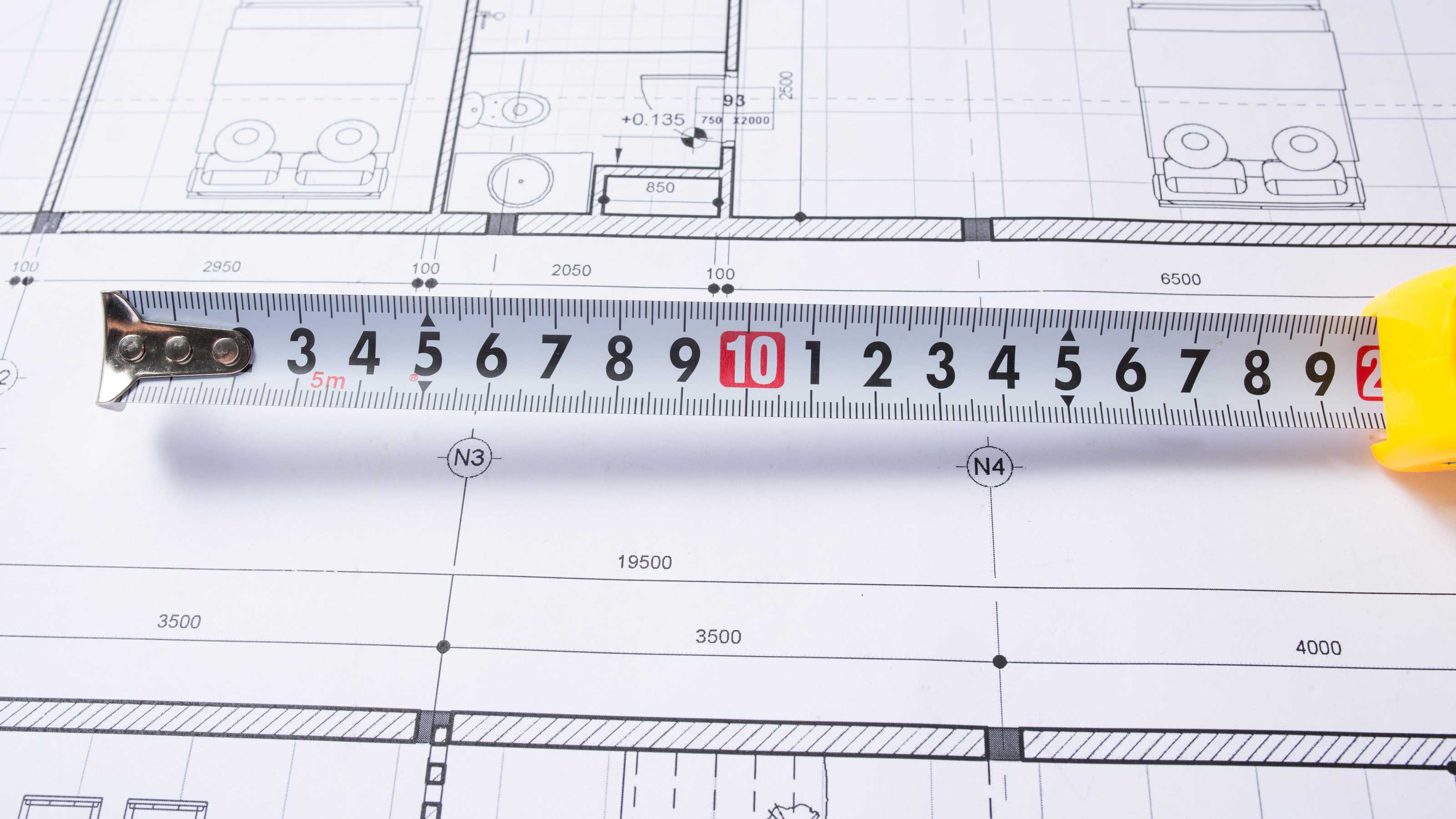
In the world of hardware and precision engineering, some of the most sophisticated “technology” isn’t found in a silicon chip or a cloud-based algorithm, but in the analog tools that have been refined over centuries. The tape measure is a quintessential example of a high-utility gadget—a piece of mechanical engineering that houses hidden features designed to solve complex mathematical problems instantly. Among the most misunderstood of these features is the small black diamond, or sometimes a small black triangle, located at specific intervals along the blade. While many DIY enthusiasts and tech-focused consumers overlook these markings as mere design flair, they represent a critical integration of structural engineering and geometric optimization.

Understanding the black diamond requires shifting our perspective from viewing the tape measure as a simple ruler to seeing it as a specialized analog computer designed for architectural efficiency. These markings are not arbitrary; they are the “19.2-inch marks,” and they represent a specialized measurement standard that bridges the gap between material science and construction speed.
The Engineering Logic of the 19.2-Inch Interval
To understand why the black diamond exists, one must first understand the “Math of Five.” In the tech and construction sectors, standardizing measurements is essential for the mass production of materials and the speed of assembly. Most modern building materials—specifically sheet goods like plywood, OSB (oriented strand board), and drywall—are manufactured in 8-foot (96-inch) lengths.
Standard framing typically uses 16-inch or 24-inch centers. These are clean divisors of 96 inches. However, in high-performance structural engineering, builders often require a spacing that is denser than 24 inches but more material-efficient than 16 inches. This is where the 19.2-inch interval comes into play. If you divide an 8-foot sheet of plywood (96 inches) by five, you get exactly 19.2 inches.
Optimization and Material Science
The black diamond is a physical manifestation of an optimization algorithm. By placing a structural member (like a floor joist or a roof truss) at every black diamond, a builder can fit exactly five spans under a single 8-foot sheet of material. This provides a specific structural rigidity that is mathematically superior for certain load-bearing scenarios compared to the wider 24-inch spacing, without the “over-engineering” and extra weight of 16-inch spacing.
This 19.2-inch spacing is often referred to as “engineered” spacing. In the evolution of tool tech, the inclusion of these diamonds allowed workers to perform complex structural layouts without needing to pull out a calculator or perform long division on a dusty job site. It is a “pre-programmed” shortcut built directly into the hardware of the tool.
The Physics of Load Distribution
From a mechanical engineering standpoint, the black diamond allows for a more granular distribution of weight. When designing floor systems, engineers must account for “deflection”—the amount a floor bends under weight. By using the 19.2-inch spacing indicated by the diamonds, tech-forward builders can use slightly thinner joists while maintaining the same deflection limits as thicker joists spaced further apart. This is a classic example of using “tech” (in this case, precise measurement layout) to reduce material costs and carbon footprints.
The Tape Measure as a Mechanical Gadget: Beyond the Diamond
While the black diamond is perhaps the most cryptic feature of the tape measure, it is only one part of the device’s overall engineering. To truly appreciate the tape measure as a piece of technology, one must look at the other “features” that have been precision-engineered over decades of refinement.
The Floating Hook: Calibration Technology
If you examine the metal hook at the end of a high-quality tape measure, you will notice it is slightly loose. To a novice, this might look like a manufacturing defect. In reality, it is a sophisticated mechanical calibration system. The thickness of the hook itself is exactly 1/16th of an inch. When you hook the tape onto the edge of a board (an “outside” measurement), the hook pulls out to account for its own thickness. When you press the hook against a wall (an “inside” measurement), it slides in.

This “floating” mechanism ensures that the zero point of your measurement is always accurate, regardless of whether the hook is included in the span or not. It is an automated error-correction system that requires no batteries and no software updates, yet it maintains tolerances that are essential for precision engineering.
Blade Stand-Out and Curvature Physics
The “stand-out” of a tape measure—how far the blade can extend before it buckles—is a feat of structural physics. The blade is not flat; it is manufactured with a concave curve. This curvature is a technological choice that utilizes the principles of “stiffness through geometry.” By curving the steel, engineers increase the “second moment of area,” which allows the blade to resist gravity. Modern premium tapes compete heavily on this “tech spec,” with some blades now reaching 14 to 17 feet of stand-out, allowing a single operator to take massive measurements that would have previously required two people or a laser distance meter.
The Evolution of Coating Technology
The durability of a tape measure’s blade is another area where “low-tech” meets “high-tech.” Early tape measures were prone to rusting and the numbers frequently rubbed off. Today, the tech behind blade coatings involves Mylar polyesters and high-performance blade armors. Some manufacturers even use thermoplastic coatings on the first few inches of the tape—the area most prone to kinking and snapping—to extend the tool’s lifecycle. This focus on material durability reflects the same principles found in the hardware design of modern smartphones and ruggedized laptops.
Analog Precision vs. Digital Measurement Tools
As we enter the era of LIDAR-equipped smartphones and Bluetooth-enabled laser distance measurers, many wonder if the analog tape measure and its black diamonds are becoming obsolete. However, in the professional tech and trade space, the analog tape remains the “gold standard” for several reasons that highlight the limitations of current digital tools.
The Reliability of “Edge-of-Device” Logic
Digital laser measures are excellent for calculating the distance between two walls, but they struggle with “edge-to-edge” measurements on a single piece of material. A laser requires a reflective surface to bounce back to the sensor. If you are trying to mark a cut on a piece of lumber in the middle of an open field, a $500 laser tool is often useless. The physical tape measure, with its mechanical hook and tangible blade, allows for tactile interaction with the material that sensors cannot yet replicate with 100% reliability.
Latency and Workflow Efficiency
In software development, we talk about “latency”—the delay between an input and a result. In the physical world of construction and engineering, the tape measure has zero latency. You pull, you see, you mark. There is no boot-up time, no battery failure, and no screen glare issues in direct sunlight. The black diamond is a “hard-coded” UI element that is always visible, providing an immediate reference point for structural layouts that would require several steps to program into a digital layout app.
The Integration of Smart Tech
That said, we are seeing a convergence of these worlds. “Smart” tape measures now exist that feature digital OLED displays on the housing. These devices use optical sensors to track the movement of the blade, providing digital readouts that can be beamed via Bluetooth to a CAD (Computer-Aided Design) program on a tablet. Even on these high-tech hybrids, the black diamonds remain printed on the physical blade—a testament to the enduring utility of this analog shortcut.
Architectural Standards: Why the Tech Matters
The inclusion of features like the black diamond on a tape measure is a reminder that technology is often about the standardization of knowledge. Just as the USB-C port or the 5G protocol allows different devices to communicate and work together, the 19.2-inch mark allows architects, engineers, and builders to speak the same language.
When an architect specifies “engineered spacing” in a blueprint, they are relying on the fact that every carpenter on the job site has a tool with a black diamond on it. This standardization reduces the margin for human error. In the tech industry, we call this “interoperability.” In the construction world, we call it a reliable layout.
The black diamond isn’t just a mark; it is a legacy of the industrial revolution’s drive toward efficiency. It represents the moment when tool manufacturers realized they could bake mathematical solutions directly into the hardware of the tool, freeing the user to focus on the craftsmanship rather than the calculation. Whether you are building a server farm or a backyard deck, the principles of precision, efficiency, and standardization remain the same. The next time you pull out a tape measure and see that small black diamond, recognize it for what it is: a sophisticated piece of engineering tech that has been hiding in plain sight for decades.
aViewFromTheCave is a participant in the Amazon Services LLC Associates Program, an affiliate advertising program designed to provide a means for sites to earn advertising fees by advertising and linking to Amazon.com. Amazon, the Amazon logo, AmazonSupply, and the AmazonSupply logo are trademarks of Amazon.com, Inc. or its affiliates. As an Amazon Associate we earn affiliate commissions from qualifying purchases.