
The birth rate of a nation is far more than a simple demographic statistic; it is a foundational pillar that underpins its economic health, social structure, and long-term financial trajectory. In the United States, understanding the birth rate involves examining not just the raw number of births, but also the underlying trends, the societal factors influencing them, and the profound financial ripples they send across individual households, corporate balance sheets, and the national economy. For anyone concerned with personal finance, investing, business strategy, or the broader economic outlook, a grasp of U.S. birth rate dynamics is indispensable.
The U.S. birth rate has been a topic of increasing scrutiny, particularly as it has trended downwards for decades. This persistent decline presents a complex web of financial challenges and opportunities that demand careful analysis and strategic adaptation. From the sustainability of social security to the future of consumer markets, and from labor force availability to housing demand, the implications are vast and touch virtually every facet of the money niche. This article delves into the current state of the U.S. birth rate, explores its extensive macroeconomic repercussions, details the financial impacts on individuals and businesses, and discusses strategies for navigating this evolving demographic landscape.
Understanding the Current U.S. Birth Rate Landscape
To appreciate the financial significance of the U.S. birth rate, one must first understand its current status and the historical context that frames it. The narrative is one of a long-term decline, marked by various social, economic, and cultural shifts that have collectively reshaped American family planning.
Declining Trends and Historical Context
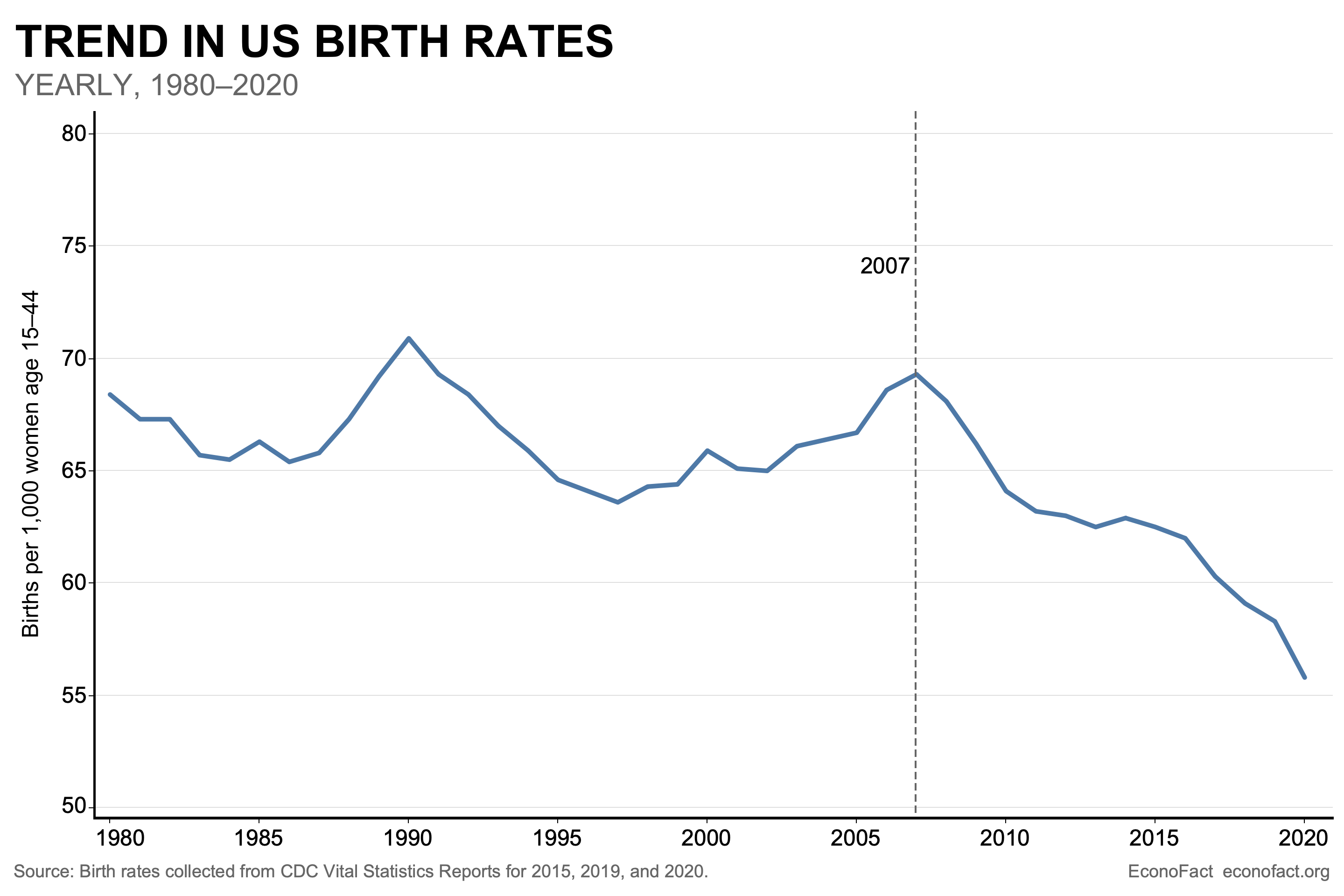
The U.S. birth rate has been on a general downward trend since the post-World War II baby boom, with particular acceleration in recent decades. Data from the Centers for Disease Control and Prevention (CDC) and the National Center for Health Statistics (NCHS) consistently show a decrease in the number of births and a corresponding drop in key fertility measures. In 2023, the U.S. recorded its lowest number of births in decades, continuing a trend that has seen the birth rate fall by more than 20% since 2007.
Several factors contribute to this persistent decline:
-
Economic Uncertainty and Costs of Raising Children: Rising living costs, student loan debt, stagnant wages for some demographics, and the astronomical expenses associated with childcare and education make prospective parents delay or reconsider having children.
-
Changing Social Norms and Women’s Roles: Increased educational attainment and labor force participation among women have led to delayed childbearing, as women prioritize careers and personal development.
-
Access to Contraception and Family Planning: Widespread access to effective contraception gives individuals greater control over family size and timing.
-
Later Marriages and Partnerships: People are marrying later in life, which often correlates with starting families later or having fewer children.
-
Cultural Shifts: A growing emphasis on individual autonomy, environmental concerns, and a less traditional view of family structures can also influence fertility decisions.
Historically, the U.S. experienced a significant peak in birth rates during the “baby boom” years (1946-1964), followed by a “baby bust” in the 1970s. While there were brief upticks, the overarching trend since the 1960s has been a gradual, and at times sharp, descent, bringing the nation to historically low levels.
Key Demographic Indicators
To accurately measure and interpret birth rate trends, demographers rely on specific indicators:
-
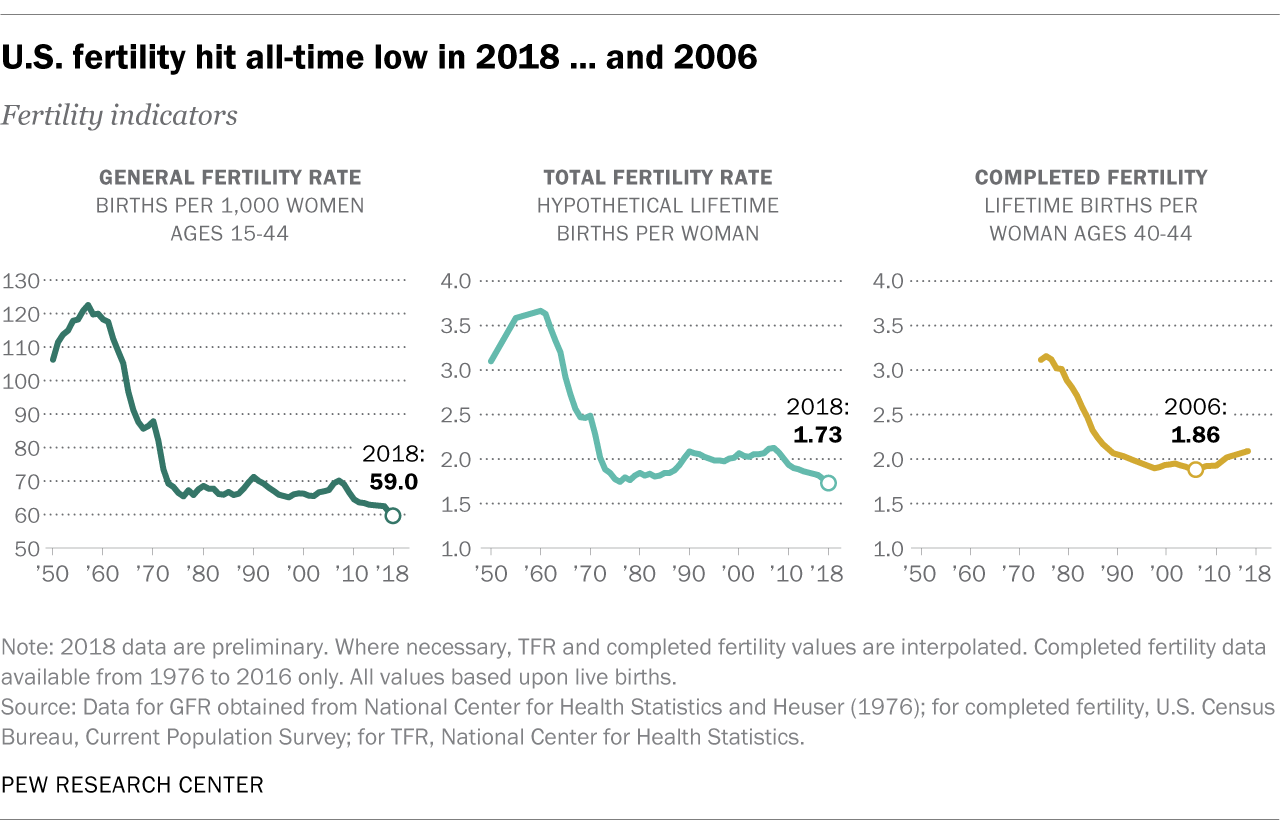
Total Fertility Rate (TFR): This is the average number of children a woman would have over her lifetime if she were to experience the current age-specific fertility rates throughout her childbearing years. The U.S. TFR has been consistently below the replacement level for many years.
-
General Fertility Rate (GFR): The number of live births per 1,000 women aged 15-44 years. This provides a more immediate snapshot of fertility within the prime childbearing age group.
-
Age-Specific Fertility Rates: These rates show births per 1,000 women in specific age groups (e.g., 20-24, 25-29, 30-34). Analysis often reveals that while fertility rates for younger women have fallen dramatically, rates for women in their late 30s and early 40s have remained relatively stable or even slightly increased, reflecting the trend of delayed childbearing.
-
Regional Variations: Birth rates are not uniform across the U.S. Some states and regions, often those with younger populations, higher immigration rates, or more conservative social norms, tend to have higher fertility rates than others. These regional differences can impact local economies and planning.
Comparing to Replacement Level
A critical benchmark in demographic analysis is the replacement level fertility rate. This is the TFR required for a generation to exactly replace itself, assuming no net migration. In most developed countries, including the U.S., the replacement level is approximately 2.1 children per woman. The extra 0.1 accounts for children who do not survive to adulthood and women who do not have children.
The U.S. TFR has been below 2.1 since 2007, consistently hovering around 1.6 to 1.7 children per woman in recent years. This means that, without immigration, the U.S. population would eventually decline. While immigration has historically helped offset this deficit and maintain population growth, a sustained low birth rate still has profound long-term implications for the nation’s demographic structure and, by extension, its financial future.
Macroeconomic Repercussions of a Changing Birth Rate
The trajectory of the U.S. birth rate is not merely a social phenomenon; it is a powerful economic force that reshapes the entire macroeconomic landscape. A persistently low and declining birth rate impacts national productivity, fiscal sustainability, and the fundamental structure of economic demand.
Labor Force Dynamics and Economic Growth
A shrinking or stagnating young population directly translates to a smaller incoming labor force in the future. As fewer young people enter the workforce to replace retiring older workers, several issues arise:
-
Labor Shortages: Critical sectors may face shortages of skilled and unskilled labor, potentially leading to wage inflation but also hindering production and economic expansion.
-
Reduced Innovation and Productivity: Historically, younger populations have been drivers of innovation and entrepreneurship. A dearth of new entrants could dampen this vital economic engine.
-
Aging Workforce: The average age of the workforce increases, potentially impacting physical labor-intensive industries and requiring greater investment in retraining and workplace adaptations for older workers.
-
Slower Economic Growth: With fewer workers and potentially reduced innovation, the overall productive capacity of the economy can slow, leading to lower GDP growth rates in the long run. Economic growth is often fueled by increases in labor, capital, and productivity – a declining labor input directly challenges this.
Social Security and Entitlement Programs
Perhaps one of the most immediate and widely discussed financial consequences of a low birth rate is its impact on pay-as-you-go social welfare systems like Social Security and Medicare. These programs rely on contributions from current workers to pay benefits to current retirees.
-
Dependency Ratio: A declining birth rate increases the “old-age dependency ratio” – the number of retirees per worker. As fewer workers pay into the system to support a growing number of beneficiaries, the financial solvency of these programs comes under severe strain.
-
Funding Challenges: Without significant policy changes (e.g., raising the retirement age, increasing payroll taxes, or reducing benefits), these programs face projections of depletion within decades, necessitating difficult political and economic choices.
-
Healthcare Costs: An aging population also means higher healthcare expenditures, further straining government budgets and individual finances, particularly through Medicare.
Housing and Infrastructure Planning
Demographic shifts profoundly influence demand for housing and public infrastructure.
-
Housing Market Shifts: A shrinking number of young families entering the market could temper demand for starter homes and family-sized residences in the long run. Conversely, demand for smaller, age-restricted housing or accessible properties for seniors may increase. The location of demand might also shift from suburban areas with good school districts to urban cores or retirement communities.
-
School Closures and Educational Investment: Fewer children lead to declining school enrollments, potentially resulting in school closures, consolidations, and a reallocation of educational resources. Investments in new schools may decrease, while existing infrastructure may become underutilized.
-
Transportation and Urban Development: Infrastructure planning (roads, public transit, utilities) must adapt to a potentially smaller, older population with different mobility needs and settlement patterns. Investment priorities may shift from family-centric amenities to those serving an older demographic.
Consumer Spending Patterns

The age structure of a population dictates the types of goods and services demanded. A low birth rate gradually reshapes the entire consumer landscape:
-
Shift in Demand: Demand for baby products, toys, children’s clothing, and family-oriented entertainment may stagnate or decline. Conversely, sectors catering to an aging population – healthcare, pharmaceuticals, retirement communities, travel for seniors, financial planning for retirement, and home modification services – will likely see increased demand.
-
Retail Adaptations: Retailers and manufacturers must pivot their product development, marketing, and inventory management strategies to align with these demographic shifts. Failure to do so can lead to market irrelevance.
-
Investment Implications: Investors looking for long-term growth opportunities will increasingly favor sectors poised to benefit from an older consumer base and those that can adapt to a smaller, more mature market for traditional goods.
Financial Implications for Individuals and Businesses
The broad macroeconomic consequences of the U.S. birth rate translate into tangible financial impacts for both individual citizens and corporate entities. Navigating these shifts requires foresight, strategic planning, and adaptability.
Personal Finance and Family Planning
For individuals, the decision to have children, or how many, is increasingly intertwined with financial considerations.
-
Cost of Raising Children: The U.S. Department of Agriculture estimated the cost of raising a child to age 18 (excluding college) to be over $300,000 in 2015. With inflation, this figure is now significantly higher. This immense financial burden, encompassing childcare, food, healthcare, and education, often leads individuals to delay childbearing or choose smaller families.
-
Retirement Savings: The financial strain of raising children can impact an individual’s ability to save adequately for retirement. Conversely, individuals who choose not to have children or have fewer children may have more disposable income to allocate towards savings and investments, potentially leading to earlier or more comfortable retirements.
-
Educational Expenses: The escalating cost of college education is another major factor. Parents face the daunting task of saving for their children’s higher education, which can compete with their own retirement planning or other financial goals.
-
Intergenerational Wealth Transfer: Fewer children per family could mean more wealth per child in terms of inheritance, but it could also mean less family support for aging parents, placing a greater burden on individual savings and government programs.
Investment Opportunities and Sectoral Shifts
For investors, understanding birth rate trends is crucial for identifying long-term growth sectors and avoiding those facing headwinds.
-
Growth Sectors:
-
Healthcare and Pharmaceuticals: Demand for age-related medical treatments, chronic disease management, and senior care facilities will surge.
-
Automation and Robotics: To offset labor shortages, industries will increasingly invest in automation, creating opportunities in related technologies.
-
Financial Planning and Wealth Management: An aging population will require more sophisticated retirement planning, estate planning, and wealth preservation services.
-
Leisure and Travel for Seniors: Companies catering to active retirees may see increased demand.
-
Real Estate (Age-Restricted): Communities and housing designed for seniors will likely experience growth.
-
-
Challenged Sectors:
-
Early Childhood Products and Services: While demand won’t disappear, growth rates may slow considerably.
-
Traditional Education (K-12): School supply companies and publishers may need to adapt to shrinking student populations.
-
Youth-Oriented Entertainment: Industries solely focused on younger demographics may face a shrinking market.
-
Business Strategy and Workforce Management
Businesses must adapt their strategies to a changing demographic reality.
-
Talent Acquisition and Retention: Companies will face stiffer competition for a shrinking pool of young talent. Strategies will need to focus on retaining older workers, investing in reskilling, and potentially drawing from a wider global talent pool through immigration.
-
Product Development and Marketing: Businesses must pivot their offerings and marketing messages to appeal to an older consumer base and potentially smaller family units. This might involve developing products for single households, accessible designs for seniors, or services catering to health and wellness in later life.
-
Automation and Efficiency: To combat rising labor costs and potential shortages, businesses will increasingly invest in automation, artificial intelligence, and process optimization to maintain productivity.
-
Workplace Flexibility: Offering flexible work arrangements, remote work options, and benefits that support both childcare and eldercare can become crucial for attracting and retaining employees.
The Role of Government Policy
Government policies play a significant role in influencing birth rates and mitigating their financial consequences.
-
Family Support Policies: Tax credits for children, affordable childcare subsidies, paid family leave, and universal preschool programs can help alleviate the financial burden of raising children, potentially influencing fertility decisions.
-
Immigration Policies: Strategic immigration policies can help replenish the labor force, contribute to the tax base, and diversify the age structure of the population, thereby cushioning the impact of low native birth rates on social security and economic growth.
-
Retirement Reform: Adjustments to social security (e.g., increasing the retirement age, modifying benefit formulas) will be necessary to ensure its long-term solvency.
-
Healthcare Funding: Policies to control healthcare costs and ensure access for an aging population are critical.
Navigating the Future: Strategies and Adaptations
The demographic shifts driven by a declining U.S. birth rate are long-term trends, not fleeting fads. Consequently, proactive strategies and continuous adaptation are essential for ensuring financial stability at all levels of society.
Policy Responses to Demographic Shifts
Governments at federal and state levels are increasingly examining policies to address demographic challenges.
-
Incentivizing Childbearing: While direct financial incentives often have limited impact on TFR, comprehensive support systems, including subsidized childcare, enhanced child tax credits, and robust parental leave programs, can make having children more financially feasible and less disruptive to careers.
-
Investing in Human Capital: Policies that promote education, skills training, and lifelong learning can enhance the productivity of the existing workforce and help older workers remain active longer.
-
Reforming Social Programs: Difficult but necessary conversations about the long-term solvency of Social Security and Medicare must lead to reforms that ensure these programs can support future generations of retirees.
-
Thoughtful Immigration Reform: Crafting immigration policies that meet economic needs for skilled and unskilled labor, while also ensuring social integration, can be a vital component of demographic adaptation.
Business Innovation and Adaptation
Businesses that thrive in the coming decades will be those that foresee and strategically respond to demographic changes.
-
Market Diversification: Companies reliant on youth demographics should consider diversifying their product lines and services to appeal to older consumers or other market segments.
-
Technological Adoption: Investing heavily in automation, AI, and other productivity-enhancing technologies will be crucial to offset potential labor shortages and maintain competitiveness.
-
Workforce Flexibility and Inclusion: Creating inclusive workplaces that value experience and offer flexible arrangements can help businesses retain older employees and attract a broader range of talent.
-
Global Market Focus: As domestic growth slows, businesses may increasingly look to international markets, particularly those with younger and growing populations, for expansion opportunities.
Personal Financial Preparedness
Individuals must also adjust their financial planning in light of these demographic realities.
-
Robust Retirement Planning: Given the potential strain on social security and the increased lifespan, individuals must prioritize and aggressively save for retirement through diverse investment vehicles.
-
Healthcare Savings: Planning for rising healthcare costs in old age, potentially through Health Savings Accounts (HSAs) or long-term care insurance, is becoming ever more critical.
-
Diversified Investments: Investors should consider diversifying their portfolios to include sectors that are resilient to demographic shifts or are positioned to benefit from an aging population.
-
Continuous Learning: Maintaining marketable skills and adapting to new technologies can ensure continued employability in an evolving labor market.
The Interplay with Immigration
Immigration serves as a critical counterbalance to declining birth rates in many developed nations, including the U.S. Immigrants typically have higher fertility rates than native-born populations and, importantly, contribute to the labor force and tax base, helping to support social security and economic growth. Understanding and thoughtfully managing immigration policy is therefore intertwined with the financial health of the nation in the face of low birth rates. While not a complete solution, it represents a significant lever in addressing demographic challenges.
Conclusion
The U.S. birth rate is a powerful, yet often overlooked, driver of the nation’s financial destiny. Its sustained decline is not merely a statistical footnote but a fundamental reshaping of the economic landscape, presenting both formidable challenges and distinct opportunities across the money niche. From the sustainability of federal entitlement programs to the evolving dynamics of the labor market, and from the shifting demands of consumer spending to the crucial decisions individuals make about their own financial futures, the ramifications are profound.
Navigating this demographic transformation requires a multi-faceted approach. Governments must consider proactive policies that support families and reform social programs. Businesses must innovate, adapt their strategies, and leverage technology to thrive in a changing market. And individuals must engage in disciplined, forward-looking financial planning to ensure their own security and prosperity. By understanding and strategically responding to the ongoing shifts in the U.S. birth rate, stakeholders across the economic spectrum can better prepare for, and even capitalize on, the financial realities of the future. The conversation about “what is the birth rate of the U.S.” is, at its core, a conversation about the nation’s financial resilience and its long-term economic health.
aViewFromTheCave is a participant in the Amazon Services LLC Associates Program, an affiliate advertising program designed to provide a means for sites to earn advertising fees by advertising and linking to Amazon.com. Amazon, the Amazon logo, AmazonSupply, and the AmazonSupply logo are trademarks of Amazon.com, Inc. or its affiliates. As an Amazon Associate we earn affiliate commissions from qualifying purchases.