
In the rapidly evolving landscape of consumer electronics, the quest for the ultimate home theater experience has led to a dramatic increase in screen real estate. For decades, a 50-inch screen was considered the pinnacle of luxury; today, it is often seen as the baseline for a secondary bedroom. As display technology advances, the boundary between a traditional television and a commercial cinema screen continues to blur. If you have the budget and the wall space, the options available today are nothing short of gargantuan.
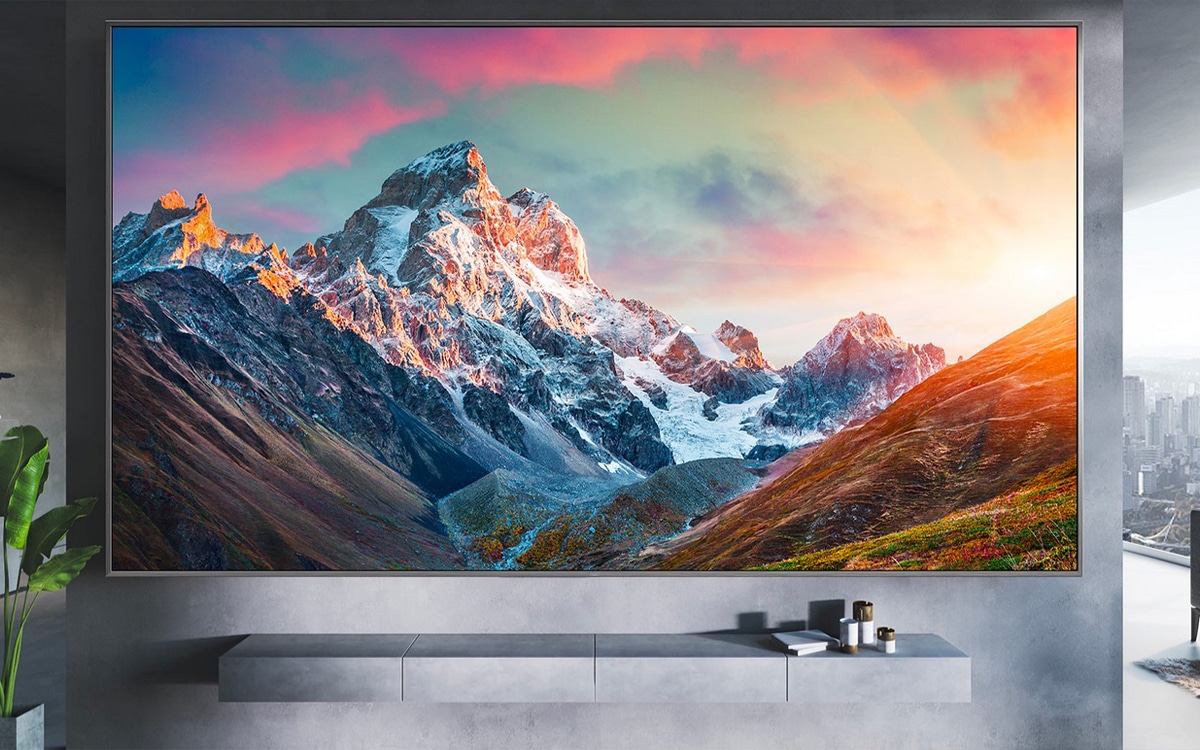
To answer the question of what the “biggest” television is, one must distinguish between standard consumer models found in retail stores and professional-grade modular systems that can scale to the size of a garage door. From the massive 115-inch LED panels to the nearly 300-inch MicroLED installations, the technology powering these giants is as impressive as their physical dimensions.
The Pinnacle of Scale: MicroLED and Modular Displays
When discussing the absolute largest screens available, we move beyond the traditional “fixed-frame” televisions and into the realm of MicroLED technology. Unlike standard LED-LCD TVs, MicroLED is self-emissive, meaning each pixel produces its own light. This allows for infinite contrast and stunning brightness without the risk of burn-in associated with OLED. More importantly for size, MicroLED displays are modular.
Samsung’s “The Wall” and the 292-Inch Frontier
Samsung’s “The Wall” represents the current ceiling of residential display technology. Because it is composed of smaller, bezel-less modules, it can technically be configured to almost any size. However, for residential applications, Samsung offers “Luxury” iterations that typically top out at a staggering 292 inches diagonally. At this scale, the television offers 8K resolution, ensuring that even at such a massive size, the pixel density remains high enough to provide a crisp, immersive image. This is not a product you pick up at a local electronics store; it requires professional architectural integration and a dedicated power infrastructure.
LG MAGNIT: The Professional Cinema Experience at Home
Not to be outdone, LG’s MAGNIT series utilizes its own proprietary MicroLED technology to compete in the ultra-luxury market. LG offers a 136-inch 4K model as a “standard” large-scale unit, but like Samsung, their MicroLED COB (Chip-on-Board) technology allows for custom installations that can span entire walls. These displays are designed to overcome the primary weakness of projectors: ambient light. With peak brightness levels often exceeding 2,000 nits, these massive screens provide a vivid, HDR-rich experience even in sun-drenched living rooms, a feat no traditional projector can match.
Consumer-Grade Behemoths: The 98-inch to 115-inch Revolution
While MicroLED represents the “money is no object” tier of technology, the most significant shift in the tech industry recently has been the mass production of ultra-large LCD panels. Thanks to advancements in panel cutting at “Generation 10.5” fabrication plants, screens that were once prototypes are now commercially available products.
TCL and Hisense: Breaking the 100-Inch Barrier
In recent years, Chinese tech giants TCL and Hisense have aggressively pushed the limits of what constitutes a “standard” TV. TCL’s QM891G, for instance, features a 115-inch Mini-LED display. This is currently the largest single-panel LED television available for general purchase. Unlike the modular MicroLED screens, this is a single, cohesive unit. It utilizes thousands of local dimming zones to maintain deep blacks and high contrast, proving that you don’t need a modular system to achieve a screen size that rivals a projection setup.
The 98-inch Sweet Spot
For many tech enthusiasts, the 98-inch segment has become the new frontier of high-end home entertainment. Major players like Sony, Samsung, and LG have all entered this space. The Sony X90L and Samsung’s Neo QLED 98-inch models offer a balance of massive scale and manageable installation. These units are designed to fit through standard door frames (barely) and use existing mounting standards (VESA), making them the largest practical televisions for most luxury homes. They represent the limit of what “traditional” manufacturing can deliver before moving into the specialized world of modular panels.
Technical Challenges and Innovations in Ultra-Large Displays
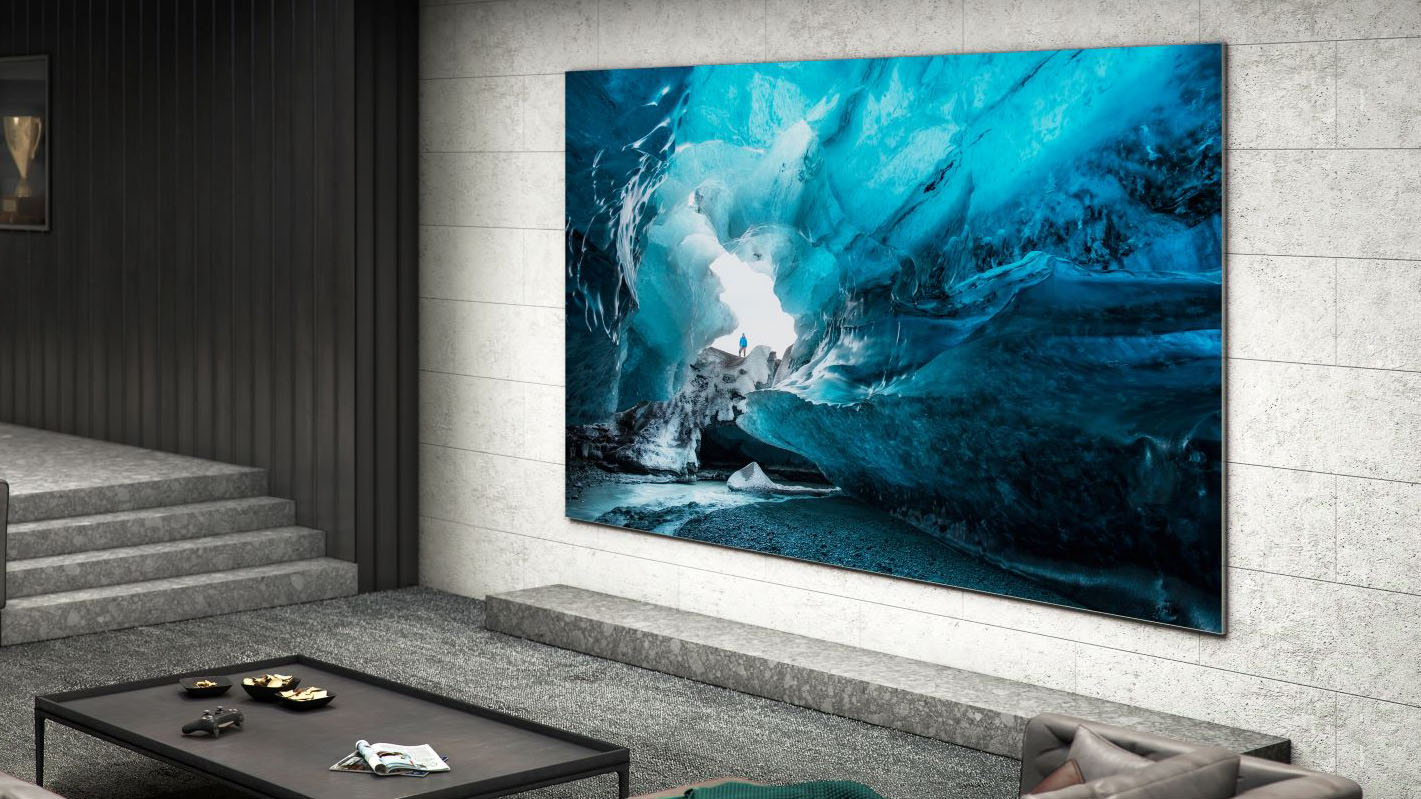
Creating a television that spans 100 inches or more is not simply a matter of making a smaller screen bigger. It introduces a host of engineering hurdles that require cutting-edge technological solutions to ensure the image remains high-quality.
The Necessity of 8K Resolution
On a 55-inch screen, the difference between 4K and 8K resolution is often negligible to the human eye at standard viewing distances. However, as the screen size increases to 115 inches or 292 inches, pixel density (Pixels Per Inch or PPI) drops significantly. A 100-inch 4K screen has the same pixel density as a 50-inch 1080p screen. Therefore, for the biggest televisions, 8K resolution becomes a functional necessity rather than a marketing gimmick. Higher resolution ensures that the “screen door effect”—where the viewer can see the individual pixels—is eliminated, even when sitting relatively close to the display.
Processing Power and Upscaling
Because 8K native content is still rare, the technology inside these massive TVs must rely heavily on AI-driven upscaling. High-end processors, such as Sony’s Cognitive Processor XR or Samsung’s Neural Quantum Processor, use machine learning to analyze every frame and inject detail where it is missing. On a 115-inch screen, any imperfection in the source material is magnified. Sophisticated noise reduction, motion smoothing, and color mapping are essential to prevent a massive screen from simply looking like a blurry, low-resolution mess.
Managing Heat and Power Consumption
The sheer amount of electricity required to light up millions of LEDs across a 100-plus-inch surface is substantial. Massive TVs require robust cooling systems to dissipate the heat generated by the backlights. This is particularly true for Mini-LED and MicroLED systems, which use thousands (or millions) of tiny light sources to achieve high brightness. Engineers must design specialized heat sinks and airflow patterns within the chassis to ensure the panel doesn’t degrade over time due to thermal stress.
Practical Considerations for Integrating a Tech Behemoth
Owning the biggest television in the world involves more than just the purchase price. The logistical and technical requirements for installing a screen of this magnitude are significant factors that any tech-forward homeowner must consider.
Installation Logistics: Weight and Structural Integrity
A 115-inch television can weigh well over 200 pounds without its stand. When wall-mounting such a device, standard drywall and studs are often insufficient. Professional installers frequently need to reinforce the wall with plywood backing or steel bracing. Furthermore, the sheer physical dimensions mean that these TVs often cannot fit in standard elevators or navigate tight stairwells, sometimes requiring cranes to lift them through balconies or large windows.
Optimal Viewing Distances and Room Acoustics
To truly benefit from a giant screen, the room’s geometry must be considered. According to the Society of Motion Picture and Television Engineers (SMPTE), a 30-degree field of view is ideal for general viewing, while a 40-degree field is best for a “cinematic” feel. For a 115-inch screen, the “sweet spot” is approximately 11 to 15 feet away. Additionally, large flat surfaces—like a massive glass TV screen—can create acoustic reflections that ruin a home theater’s sound. Integrating these screens usually requires a parallel investment in room calibration and high-end audio systems to match the visual scale.
The Future of Large-Scale Visual Technology
As we look toward the future, the definition of the “biggest” television may shift from rigid panels to flexible and transparent technologies. The tech industry is currently experimenting with ways to make massive screens less intrusive when they are not in use.
Rollable and Foldable Displays
LG has already pioneered the rollable OLED (the Signature OLED R), which disappears into a base when turned off. While currently limited to 65 inches, the technology suggests a future where 150-inch OLED “tapestries” could roll down from a ceiling, providing a massive screen without permanently dominating a room’s aesthetic. Similarly, folding MicroLED technology is being developed to allow massive screens to be transported more easily and unfolded to their full size upon installation.

Transparent and Aesthetic Integration
Samsung and LG have both showcased transparent OLED and MicroLED displays. These allow the “television” to act as a piece of glass or a window when not in use. As these technologies scale, the biggest TV you can buy might not look like a TV at all, but rather a smart glass partition that can transform into a 200-inch cinema at the touch of a button.
The pursuit of the largest television is a testament to the incredible strides made in semiconductor manufacturing and display science. Whether it is a commercial-grade 292-inch MicroLED wall or a consumer-ready 115-inch Mini-LED panel, the technology has finally reached a point where the dream of a true cinema experience in the home is no longer limited by screen size, but only by the dimensions of one’s imagination—and their living room wall.
aViewFromTheCave is a participant in the Amazon Services LLC Associates Program, an affiliate advertising program designed to provide a means for sites to earn advertising fees by advertising and linking to Amazon.com. Amazon, the Amazon logo, AmazonSupply, and the AmazonSupply logo are trademarks of Amazon.com, Inc. or its affiliates. As an Amazon Associate we earn affiliate commissions from qualifying purchases.