
In the complex landscape of global finance, the scale of an institution often dictates its influence, security, and the breadth of services it can offer to both retail and institutional clients. When asking which bank is the biggest in America, the answer is definitive: JPMorgan Chase & Co. stands as the undisputed titan of the U.S. banking industry. As of the current fiscal landscape, JPMorgan Chase manages a balance sheet that exceeds $3.9 trillion in total assets, a figure that not only places it at the top of the domestic leaderboard but also positions it as a systemic pillar of the global economy.

However, “biggest” can be a multifaceted term in the world of finance. While total assets are the standard metric for size, investors and consumers often look at market capitalization, deposit totals, branch density, and technological reach to determine which bank truly dominates the market. Understanding the hierarchy of American banking requires looking beyond a single number to see how these institutions shape the way we save, invest, and manage money.
Measuring the Titans: JPMorgan Chase and the Hierarchy of Assets
The primary metric used by the Federal Reserve and international regulatory bodies to rank banks is “total consolidated assets.” This includes everything the bank owns, from cash and government securities to loans and physical real estate. By this measure, JPMorgan Chase has maintained its lead for over a decade.
The Rise of JPMorgan Chase
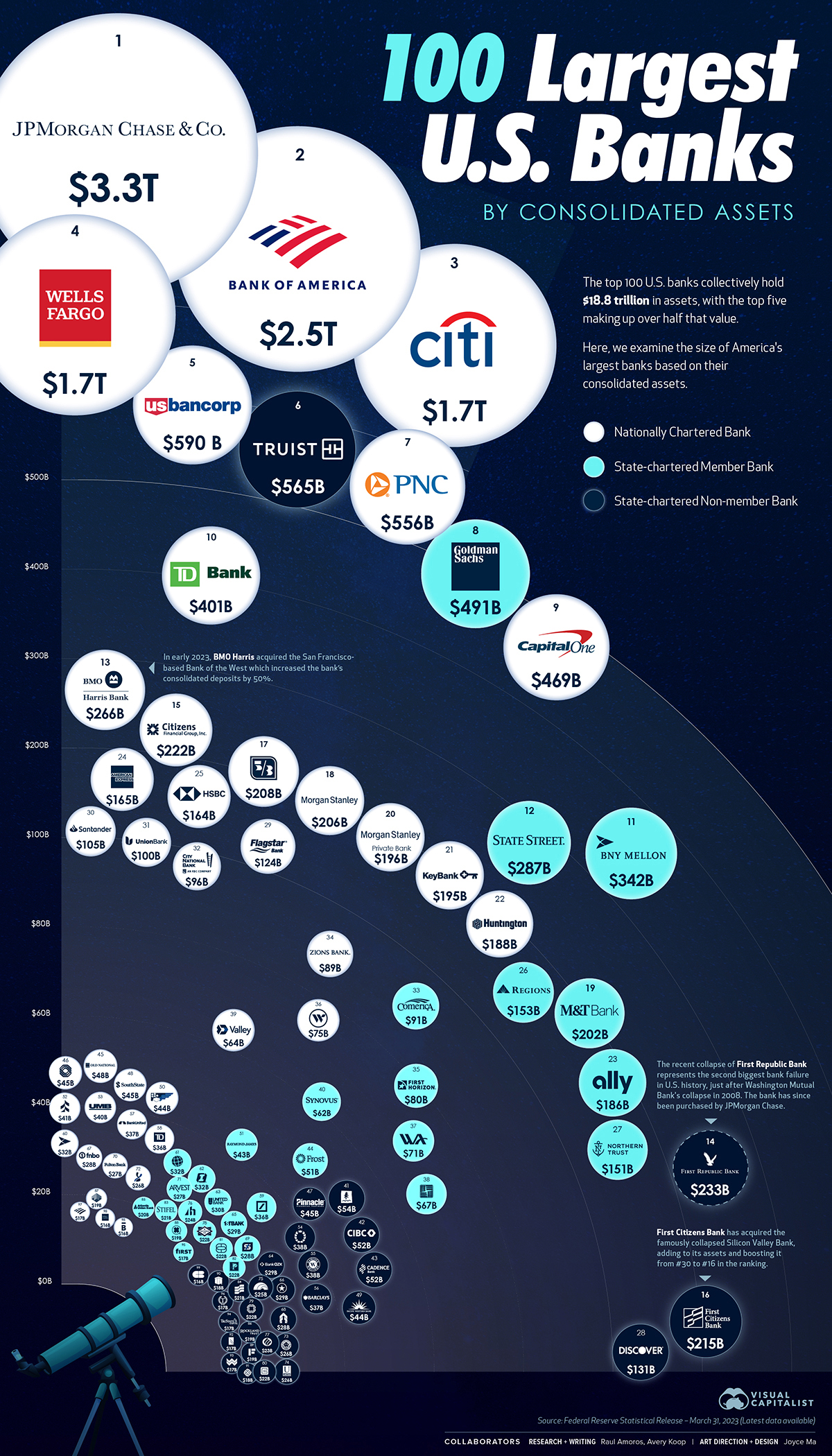
The dominance of JPMorgan Chase is not merely a result of organic growth but a century-long saga of strategic mergers and acquisitions. The modern iteration of the bank is the result of the union of the Chase Manhattan Bank and J.P. Morgan & Co. in 2000, followed by the acquisition of Bank One, Bear Stearns, and Washington Mutual during the 2008 financial crisis. Most recently, the acquisition of First Republic Bank in 2023 further solidified its lead. This expansion has created a “fortress balance sheet,” a term often used by CEO Jamie Dimon to describe the bank’s ability to withstand economic volatility while maintaining massive liquidity.
The Impact of Scale on Personal Finance
For the average consumer, the sheer size of JPMorgan Chase translates into a massive ecosystem of financial tools. Through its retail arm, Chase Bank, it serves nearly half of all U.S. households. The scale allows the bank to invest billions of dollars annually into its digital infrastructure, resulting in a mobile app and online platform that consistently rank at the top of industry reviews. When a bank is this large, it can afford to offer high-tier rewards programs, such as the Sapphire line of credit cards, which leverage the bank’s massive merchant relationships to provide value to consumers.
The “Big Four” and Their Influence on the American Economy
While JPMorgan Chase holds the top spot, it is part of an elite group known as the “Big Four.” Together, JPMorgan Chase, Bank of America, Citigroup, and Wells Fargo hold nearly 40% of all U.S. customer deposits. Each of these institutions plays a specific role in the financial ecosystem.
Bank of America: The Consumer Powerhouse
Bank of America is the second-largest bank in the U.S., with assets hovering around $3.2 trillion. While it trails JPMorgan in total assets, it is often a neck-and-neck competitor in terms of domestic deposits. Bank of America has positioned itself as a leader in “Relationship Banking.” Through its Preferred Rewards program and the integration of Merrill Lynch (now Merrill) for investment services, the bank incentivizes customers to keep their entire financial life—checking, savings, mortgages, and brokerage accounts—under one roof. This strategy has made it a favorite for individuals looking for a seamless, all-in-one financial experience.
Wells Fargo: The Leader in Lending and Mortgages
With roughly $1.9 trillion in assets, Wells Fargo ranks third. Despite regulatory challenges in recent years, Wells Fargo remains a cornerstone of the American housing market. It has historically been one of the largest mortgage originators and servicers in the country. For many Americans, Wells Fargo is the “neighborhood bank,” boasting one of the most extensive physical branch networks in the United States. Its focus remains heavily on the traditional “bricks and mortar” banking model, supplemented by a modernized digital presence to compete with its peers.
Citigroup: The Global Financial Bridge
Citigroup, with assets near $2.4 trillion, rounds out the top tier. Unlike its peers, Citigroup has a significantly larger international footprint. It operates in over 160 countries and jurisdictions, making it the bank of choice for multinational corporations and high-net-worth individuals with global interests. While its retail presence in the U.S. is more concentrated in major metropolitan areas like New York and Los Angeles, its influence on the global flow of capital is immense. For investors, Citigroup represents a gateway to emerging markets and international trade finance.
Understanding Bank Size: Assets vs. Market Cap vs. Deposits
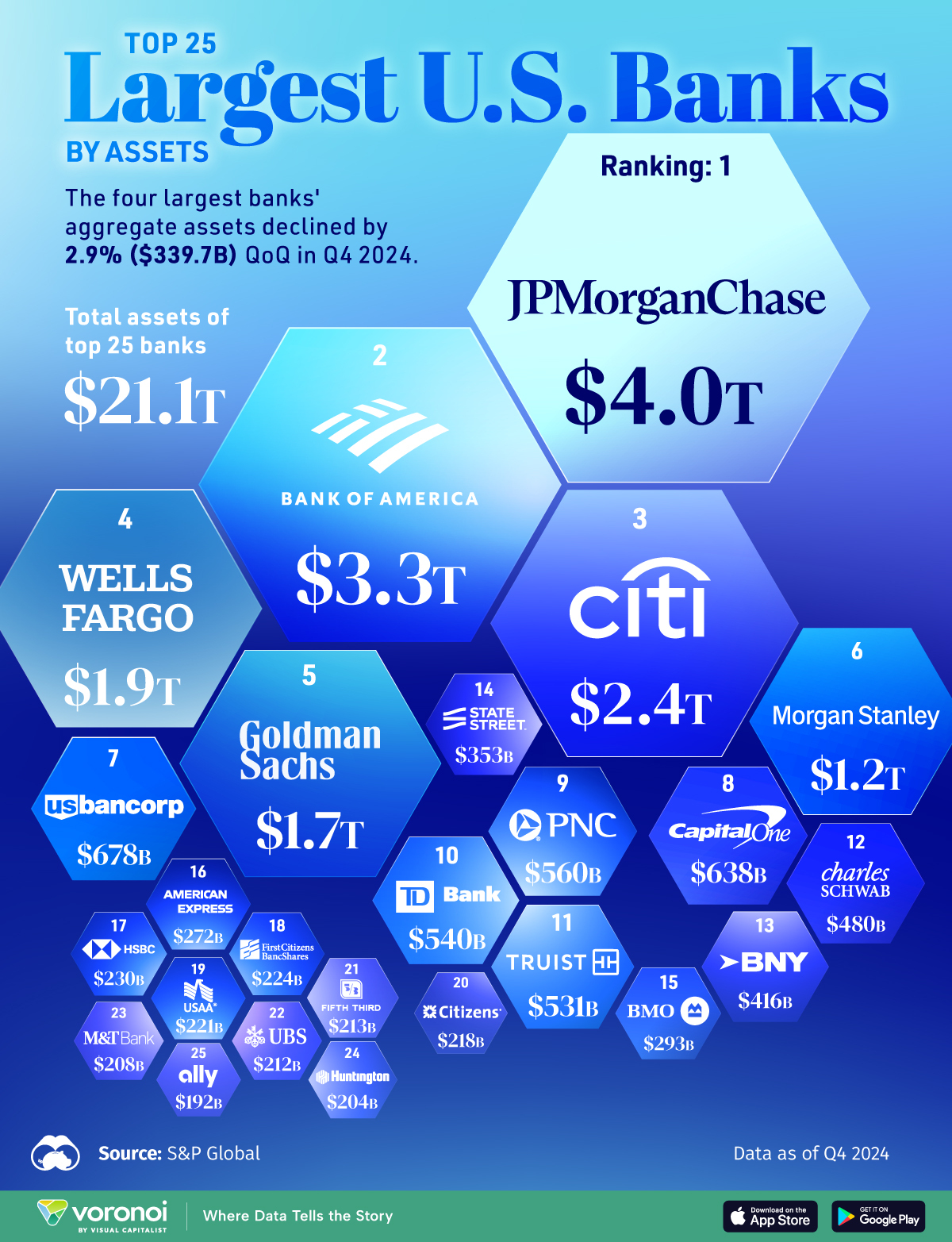
To truly grasp the scale of these institutions, one must distinguish between different financial metrics. A bank can be the largest in assets but not necessarily the most valuable in the eyes of the stock market.
Total Assets vs. Market Capitalization
Total assets represent the size of the bank’s “engine”—its loans, investments, and cash. Market capitalization (Market Cap), however, is the total value of the company’s shares as traded on the stock market. JPMorgan Chase typically leads in both, but the gap can fluctuate. Market cap is a reflection of investor confidence and future earnings potential. A high market cap allows a bank to use its stock as “currency” for further acquisitions, ensuring its continued growth.
The Role of Domestic Deposits
For the everyday saver, deposits are the most relevant metric. Domestic deposits represent the amount of money Americans have entrusted to these banks in checking and savings accounts. Bank of America and JPMorgan Chase are often in a close race for this title. High deposit levels are a double-edged sword for banks; while they provide cheap capital to fund loans, they also require the bank to maintain high capital reserves to ensure they can meet withdrawal demands, especially during times of economic stress.
Why the “Biggest” Bank Matters for Your Money
Choosing a bank based on its size is a common strategy for many consumers, but it comes with distinct advantages and disadvantages that every individual should weigh.
The “Too Big to Fail” Safety Net
The largest banks in America are designated as Systemically Important Financial Institutions (SIFIs). This designation means that their failure would pose a significant risk to the entire global economy. As a result, they are subject to much stricter regulatory oversight, including annual “stress tests” conducted by the Federal Reserve. For a personal finance enthusiast, banking with a SIFI provides a layer of psychological security; these institutions are backed by massive capital buffers and are under the constant watchful eye of federal regulators.
Technological Superiority and Convenience
The biggest banks have the biggest budgets for R&D. In a world where banking is increasingly mobile-first, the Big Four offer features that smaller regional banks or credit unions often struggle to match. This includes advanced fraud detection powered by AI, integrated peer-to-peer payments (like Zelle), and sophisticated budgeting tools within their apps. For those who prioritize convenience and tech-forward solutions, the biggest banks are often the best choice.
The Cost of Size: Interest Rates and Fees
The primary downside to the largest banks is often found in their interest rates. Because JPMorgan Chase and Bank of America have such a massive influx of deposits, they have little incentive to offer high interest rates on traditional savings accounts. While a digital-only “challenger bank” might offer a High-Yield Savings Account (HYSA) with a 4.00% APY or higher, a Big Four bank might offer a meager 0.01% APY. Furthermore, these institutions often have more complex fee structures for monthly maintenance, unless certain balance requirements are met.
The Future of Big Banking: Can Fintech Challenge the Giants?
The landscape of American banking is shifting. While the Big Four currently hold the crown, the rise of financial technology (Fintech) firms and digital-first banks is challenging the traditional definition of a “big bank.”
The Rise of Digital-Only Institutions
Companies like SoFi, Ally Financial, and Chime have seen explosive growth by targeting the pain points of big banking: high fees and low interest rates. By operating without the overhead of physical branches, these entities can pass savings onto the consumer. However, in terms of total assets, they still pale in comparison to the trillions managed by JPMorgan Chase. The current trend is not necessarily the replacement of big banks, but rather a forced evolution where the giants adopt fintech-style innovation to retain their market share.
Integration of Wealth Management and Commercial Banking
The biggest banks are responding to competition by diversifying. They are no longer just places to keep cash; they are comprehensive financial ecosystems. By integrating wealth management (like Chase Private Client or Merrill) and business banking services, they create a “sticky” environment where it becomes inconvenient for a customer to leave. As long as these institutions continue to innovate and acquire smaller competitors, the largest banks in America are likely to maintain their dominant positions for the foreseeable future.
In conclusion, while several institutions vie for the title, JPMorgan Chase & Co. remains the biggest bank in America by almost every standard financial metric. For the consumer, this size offers unparalleled security and technological convenience, though it often requires a trade-off in the form of lower interest yields on savings. Understanding this hierarchy allows individuals to make more informed decisions about where to park their capital and how to navigate the complex world of American finance.
aViewFromTheCave is a participant in the Amazon Services LLC Associates Program, an affiliate advertising program designed to provide a means for sites to earn advertising fees by advertising and linking to Amazon.com. Amazon, the Amazon logo, AmazonSupply, and the AmazonSupply logo are trademarks of Amazon.com, Inc. or its affiliates. As an Amazon Associate we earn affiliate commissions from qualifying purchases.