
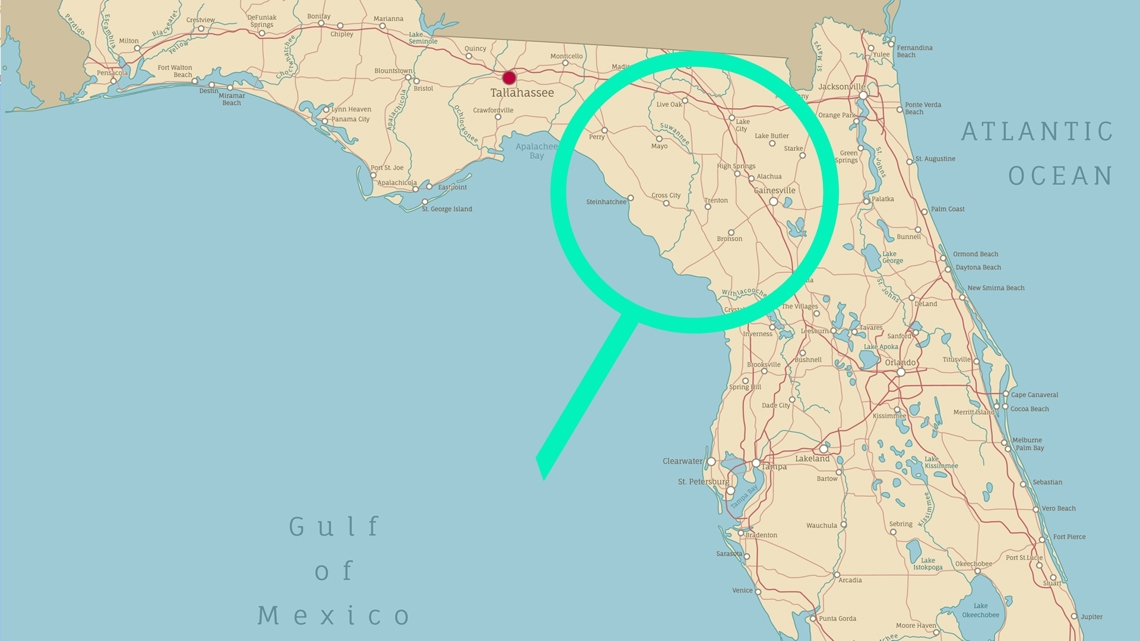
The “Big Bend” of Florida is a term that has long described the geographic transition where the state’s panhandle curves into the peninsula. While historically known for its marshlands, timber tracts, and quiet coastal villages, the Big Bend is undergoing a significant transformation in the eyes of savvy investors and financial analysts. From a fiscal perspective, this region represents one of the final frontiers of undervalued coastal and inland real estate in the Sunshine State. For those focused on personal finance, corporate expansion, and long-term capital appreciation, understanding the Big Bend is no longer a matter of geography—it is a matter of strategic asset allocation.

The Economic Topography of the Big Bend
To understand the Big Bend through a financial lens, one must first identify its boundaries and the economic engines that drive them. Stretching from the Apalachicola River to the St. Marks River and down toward the Nature Coast, the region encompasses counties such as Leon, Wakulla, Taylor, Jefferson, and Franklin. Unlike the saturated markets of South Florida or the high-velocity tech corridors of Orlando, the Big Bend offers a different kind of value proposition: stability and untapped potential.
The “Forgotten Coast” and Its Real Estate Potential
The coastal portion of the Big Bend, often marketed as the “Forgotten Coast,” offers a unique investment profile. While markets like Naples or Miami have seen property values reach stratospheric levels, Franklin and Wakulla counties still offer entry points for residential and commercial development that provide high yield-on-cost. Investors are increasingly looking at these areas for short-term rental conversions and luxury eco-lodges, betting on the growing national trend toward secluded, nature-centric tourism.
Understanding the Regional Economic Drivers
The fiscal heartbeat of the Big Bend is anchored by Tallahassee, the state capital located in Leon County. The presence of state government and two major research universities—Florida State University and Florida A&M University—creates a recession-resistant “Knowledge Economy.” This provides a stable employment base that supports the surrounding counties. For a business owner or a real estate investor, this proximity to a stable, high-skilled workforce is a critical factor in mitigating the risks typically associated with rural or semi-rural investments.
Real Estate and Land Acquisition Strategies
The Big Bend is currently witnessing a shift in land use that mirrors the early stages of Florida’s previous boom cycles. Historically dominated by the timber industry, large tracts of land are now being re-evaluated for their highest and best use, ranging from residential master-planned communities to industrial logistics hubs.
Commercial Development vs. Residential Expansion
As the population migrates north from Central Florida to escape rising costs of living, the Big Bend’s residential sector is seeing an uptick in demand. Investors are focusing on “path of growth” strategies, acquiring land on the outskirts of Tallahassee and Crawfordville. Commercially, there is a distinct lack of “Class A” retail and office space in the outlying counties, representing a significant opportunity for developers who can provide modern infrastructure to a growing suburban population.
The Impact of Tallahassee’s Proximity on Property Values
In real estate finance, the “halo effect” of a major metropolitan hub is well-documented. As Tallahassee expands, the surrounding counties of the Big Bend are seeing a natural appreciation in property values. For individual investors, purchasing secondary homes or land in Jefferson or Gadsden counties allows for participation in this growth at a fraction of the cost of traditional urban investing. The focus here is on long-term equity builds rather than quick flips, leveraging the steady 3-5% annual appreciation seen in the region’s stable market.
Diversified Economic Sectors and Industry Growth
Beyond real estate, the Big Bend offers a diverse portfolio of industries that are attracting private equity and venture capital. The region’s economy is moving away from a pure reliance on agriculture and timber toward more sophisticated, high-margin sectors.
The Blue Economy: Aquaculture and Maritime Commerce
The Big Bend’s vast coastline is the foundation for a burgeoning “Blue Economy.” Aquaculture, particularly oyster farming in Alligator Harbor and Apalachicola Bay, has become a high-growth sector. With the decline of wild harvesting, commercial aquaculture operations are attracting significant investment as they scale to meet national demand. These businesses offer a unique niche for ESG (Environmental, Social, and Governance) investors who are looking for profitable ventures that also contribute to coastal restoration.
Ecotourism as a High-Margin Business Model
Tourism in the Big Bend is not characterized by high-volume theme parks, but by high-margin, low-impact ecotourism. The financial model here relies on the scarcity of “Old Florida” landscapes. Boutique hotels, guided excursion companies, and luxury camping (glamping) ventures are seeing increased revenue as travelers seek premium experiences away from crowded metros. For the entrepreneur, the Big Bend offers a lower barrier to entry for hospitality ventures compared to the competitive coastal markets of the Atlantic or Gulf beaches.
Navigating the Fiscal Landscape and Risk Management
No investment is without risk, and the Big Bend requires a nuanced understanding of Florida’s unique fiscal and environmental challenges. From tax structures to climate resilience, managing a portfolio in this region requires specialized knowledge.
Tax Incentives and Opportunity Zones
Several areas within the Big Bend are designated as federal Opportunity Zones. These are economically distressed communities where new investments, under certain conditions, may be eligible for preferential tax treatment. For high-net-worth individuals and corporations, directing capital gains into Big Bend Opportunity Zones can lead to significant tax deferrals and eliminations. This makes the region particularly attractive for long-term industrial or multi-family housing projects that might otherwise be less viable in more expensive markets.
Climate Resilience and Insurance Considerations
From a financial planning perspective, the Big Bend faces the reality of being a coastal region in a hurricane-prone state. The landfall of Hurricane Idalia in 2023 highlighted the importance of resilient infrastructure. For investors, this means that insurance premiums and construction costs for “hardened” buildings are a major line item in any pro forma. However, this risk also creates a “moat” for sophisticated investors; those who understand how to navigate the Florida building codes and the private insurance market can find distressed assets or undeveloped land that others are too risk-averse to touch.
The Future Outlook: Long-Term ROI in North Florida
The Big Bend is no longer a sleepy corner of the state; it is a region in the midst of an economic awakening. As the rest of Florida becomes increasingly dense and expensive, the Big Bend offers the one thing money usually can’t buy in the Sunshine State: space.
Infrastructure Projects and Connectivity
State and local governments are currently pouring capital into infrastructure projects designed to increase connectivity within the Big Bend. Improvements to the Suncoast Parkway and enhancements to regional airports are making the area more accessible to both commerce and tourism. For the forward-thinking investor, these infrastructure plays are a clear “buy” signal, indicating that the region is being prepared for a higher density of economic activity over the next decade.
Final Investment Thesis for the Big Bend
The Big Bend area of Florida represents a rare “value play” in a state known for “growth plays.” It offers a blend of stability via the government and education sectors, combined with the explosive potential of untapped coastal real estate and emerging green industries. Whether one is looking to diversify a personal finance portfolio with raw land, launch a maritime-based startup, or develop commercial assets in the path of progress, the Big Bend provides a unique landscape where capital can still find a foothold. In the grand scheme of Florida’s economic story, the Big Bend is not just a place on a map; it is a high-potential asset class waiting for the right deployment of capital.
aViewFromTheCave is a participant in the Amazon Services LLC Associates Program, an affiliate advertising program designed to provide a means for sites to earn advertising fees by advertising and linking to Amazon.com. Amazon, the Amazon logo, AmazonSupply, and the AmazonSupply logo are trademarks of Amazon.com, Inc. or its affiliates. As an Amazon Associate we earn affiliate commissions from qualifying purchases.