
For decades, the cultural narrative surrounding career success was singular: graduate high school, attend a four-year university, and secure a white-collar office job. However, the economic landscape has shifted dramatically. As student loan debt reaches record highs and the saturation of traditional degrees dilutes their immediate market value, the “Money” perspective on career planning has refocused on the trades. Skilled trades are no longer just “fallback” options; they are high-yield investments in human capital that offer a direct path to six-figure incomes, job security, and entrepreneurial opportunities.
When evaluating the “best” paying trade job, one must look beyond the starting hourly wage. Total compensation includes benefits, the cost of entry (education vs. debt), and the ceiling for business ownership. In this comprehensive guide, we analyze the highest-paying trade sectors and the financial strategies required to turn technical skills into long-term wealth.
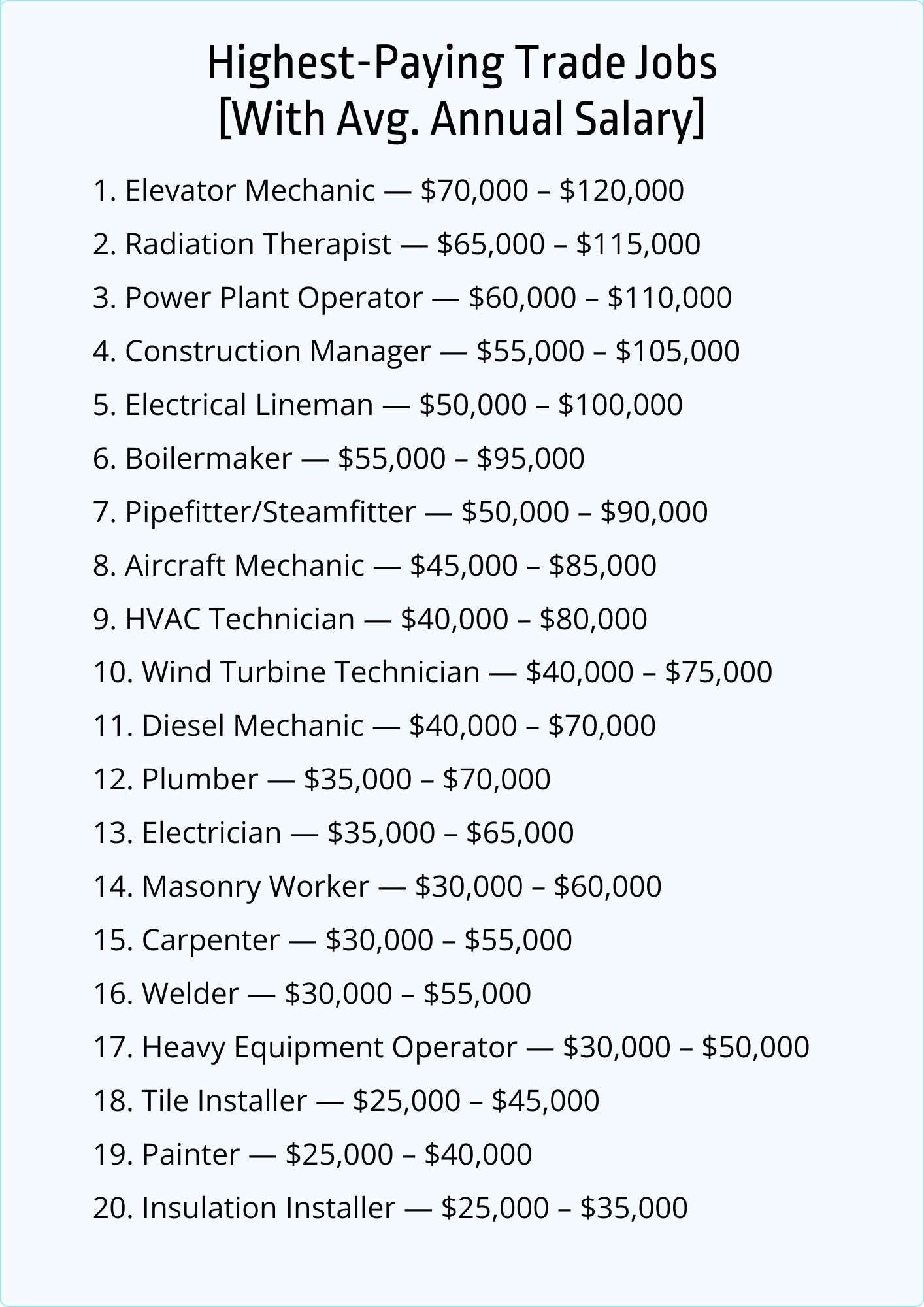
The Elite Tier: Top-Earning Trade Industries in the Modern Economy
The highest-paying trades often share three characteristics: high risk, specialized technical knowledge, or extreme demand-supply imbalances. These roles require more than just manual labor; they demand critical thinking and a commitment to ongoing certification.
Elevator Constructors and Mechanics
Consistently ranking at the top of the pay scale, elevator constructors specialize in the installation, maintenance, and repair of elevators, escalators, and moving walkways. According to the Bureau of Labor Statistics (BLS), the median annual wage for this profession often exceeds $95,000, with top earners in metropolitan areas comfortably clearing $130,000 before overtime.
The financial appeal of this trade lies in its niche nature. Because the work is highly regulated and dangerous, the barrier to entry is high, keeping the labor supply low. Furthermore, this is a heavily unionized field, meaning the “Money” aspect extends to robust pension plans and premium health insurance—factors that significantly increase a worker’s net worth over time.
Power Plant Operators and Power Line Technicians
The energy sector remains one of the most lucrative hubs for trade professionals. Power plant operators, particularly those in nuclear or hydroelectric facilities, manage complex machinery that powers entire regions. The responsibility is immense, and the pay reflects that, with median salaries often hovering around $90,000.
Similarly, Electrical Power-Line Installers and Repairers (Linemen) are essential to infrastructure. While the work is physically demanding and involves working in hazardous conditions, the financial rewards are substantial. Linemen frequently utilize overtime and “storm pay” to push their annual earnings well into the $150,000 range. From a personal finance standpoint, the energy sector offers a level of recession-proofing that few other industries can match.
Aircraft Mechanics and Avionics Technicians
As global travel continues to expand, the demand for certified aircraft mechanics remains at an all-time high. These professionals are responsible for the structural and electronic integrity of aircraft. While entry-level roles may start in the $60,000 range, specialized technicians working for major commercial airlines or private aerospace firms can earn well over $100,000.
The financial trajectory in aviation is steep. By obtaining specific FAA certifications (Airframe and Powerplant), a technician increases their “market rate” significantly. This is a classic example of how specialized education within a trade can yield a higher Return on Investment (ROI) than a generalist business degree.
The Financial Advantage: ROI and the Debt-Free Entry Model
When discussing the best-paying trade jobs, the conversation must include the “cost of goods sold”—in this case, the cost of the education required to earn the salary. This is where the trades hold a massive advantage over traditional academic paths.
Comparing Trade School vs. University Costs
The average cost of a four-year private university degree in the United States can exceed $150,000, often resulting in decades of high-interest debt. In contrast, most trade school programs cost between $5,000 and $15,000 and take two years or less to complete.
From a “Money” and cash-flow perspective, the trade professional enters the workforce 2 to 3 years earlier than a university student and carries a fraction of the debt. This allows for earlier contributions to retirement accounts (like a 401k or Roth IRA), which, thanks to the power of compound interest, can lead to a significantly larger nest egg by age 60.
The “Earn While You Learn” Apprenticeship Model
Many of the highest-paying trades, such as plumbing, electrical work, and HVAC, utilize the apprenticeship model. This is perhaps the most efficient financial vehicle in the professional world. An apprentice is a paid employee from day one.
Instead of paying tuition, the apprentice receives a paycheck while gaining the hours required for licensure. As they move from apprentice to journeyman and finally to master status, their earning power increases incrementally. This “zero-debt” entry allows trade professionals to build capital and invest in assets like real estate or brokerage accounts much earlier in life than their white-collar counterparts.
Factors That Influence Trade Salaries and Wealth Accumulation
Not all trade jobs pay the same in every location. Understanding the variables that influence income is essential for any tradesperson looking to maximize their financial potential.
Geographic Location and Economic Demand
In the world of personal finance, your “cost of living vs. income” ratio is the most important metric. A plumber in San Francisco may earn $120,000, while a plumber in Texas earns $80,000. However, the Texas-based plumber may have a higher “disposable income” after accounting for taxes and housing costs.
High-growth states with massive infrastructure projects—such as Florida, Texas, and Arizona—currently offer the best balance of high wages and manageable living expenses. For those seeking the absolute highest paychecks, “traveling” roles in the trades (such as traveling welders or industrial electricians) often include per diem payments that cover living expenses, allowing the worker to save nearly 100% of their base salary.
The Impact of Specialization and Certifications
The “best paying” job is often the one that requires the most specific license. For example, a general welder may earn a respectable $50,000, but an underwater welder or a specialized pipeline welder can earn $150,000+.
Investors often talk about “moats”—barriers that protect a business from competition. In the trades, your “moat” is your certification. Obtaining a Master Plumber license, a NATE certification for HVAC, or a specialized CWI (Certified Welding Inspector) credential creates a barrier to entry that allows you to command premium rates.
From Technician to Tycoon: The Business Ownership Path
While the hourly wages for skilled trades are impressive, the true “best-paying” trade job is not a job at all—it is owning the company. The trades provide a unique bridge to entrepreneurship that is often absent in the corporate world.
Transitioning to Scaling and Management
A master electrician who works for a large firm may cap out at $120,000. However, that same electrician, by starting their own contracting business, can scale their income to seven figures. By hiring other journeymen and apprentices, the owner moves from trading “time for money” to generating “profit from systems.”
The business finance side of the trades is incredibly lucrative. Because the overhead for a service-based trade business (like residential HVAC or plumbing) can be kept relatively low compared to retail or manufacturing, the profit margins are often between 15% and 25%. For a business doing $2 million in annual revenue, this results in a high six-figure take-home pay for the owner.
Investing the Surplus for Financial Independence
Because many trade professionals reach their peak earning years in their late 20s or early 30s, they have a unique opportunity to achieve “Financial Independence, Retire Early” (FIRE).
The strategy is simple:
- Minimize Debt: Use the low cost of trade education to remain debt-free.
- Maximize Early Savings: Direct the high early-career wages into diversified index funds.
- Asset Acquisition: Many tradespeople find success in real estate investing, as their technical skills allow them to renovate and maintain properties at a fraction of the cost of a typical investor.

Conclusion: The New Definition of “High-Paying”
The question of “what is the best paying trade job” cannot be answered with a single job title. If you value immediate high wages and union benefits, Elevator Construction or Power Line Work are the gold standards. If you value long-term wealth and the ability to scale an enterprise, Plumbing, HVAC, and Electrical offer the most robust paths to business ownership.
Ultimately, the trades represent a sophisticated financial decision. They offer a high-floor, high-ceiling career path that rewards technical mastery and financial discipline. In an era of economic uncertainty, the ability to build, repair, and maintain the physical world remains the most valuable currency one can possess. By focusing on ROI, specialization, and eventual ownership, a career in the trades can be the most profitable “Money” move a person can make.
aViewFromTheCave is a participant in the Amazon Services LLC Associates Program, an affiliate advertising program designed to provide a means for sites to earn advertising fees by advertising and linking to Amazon.com. Amazon, the Amazon logo, AmazonSupply, and the AmazonSupply logo are trademarks of Amazon.com, Inc. or its affiliates. As an Amazon Associate we earn affiliate commissions from qualifying purchases.