
In the landscape of digital entertainment, few software franchises have maintained the longevity and cultural footprint of Nintendo’s Mario Party series. Since its debut on the Nintendo 64 in 1998, the series has served as a benchmark for local multiplayer software, blending board game mechanics with high-speed mini-game challenges. However, with over a dozen entries spanning multiple hardware generations, the question of which title represents the “best” experience is a complex debate involving software design, user interface (UI) evolution, and hardware-software synergy.
Determining the definitive entry requires an analysis of game balance, technical innovation, and the refinement of the “party game” loop. From the analog-heavy roots of the late 90s to the high-definition, online-integrated experiences of the modern era, the series has undergone significant architectural shifts. To find the best Mario Party game, we must look at how specific titles optimized their technical constraints to create the most engaging user experience.
The Modern Gold Standard: Mario Party Superstars
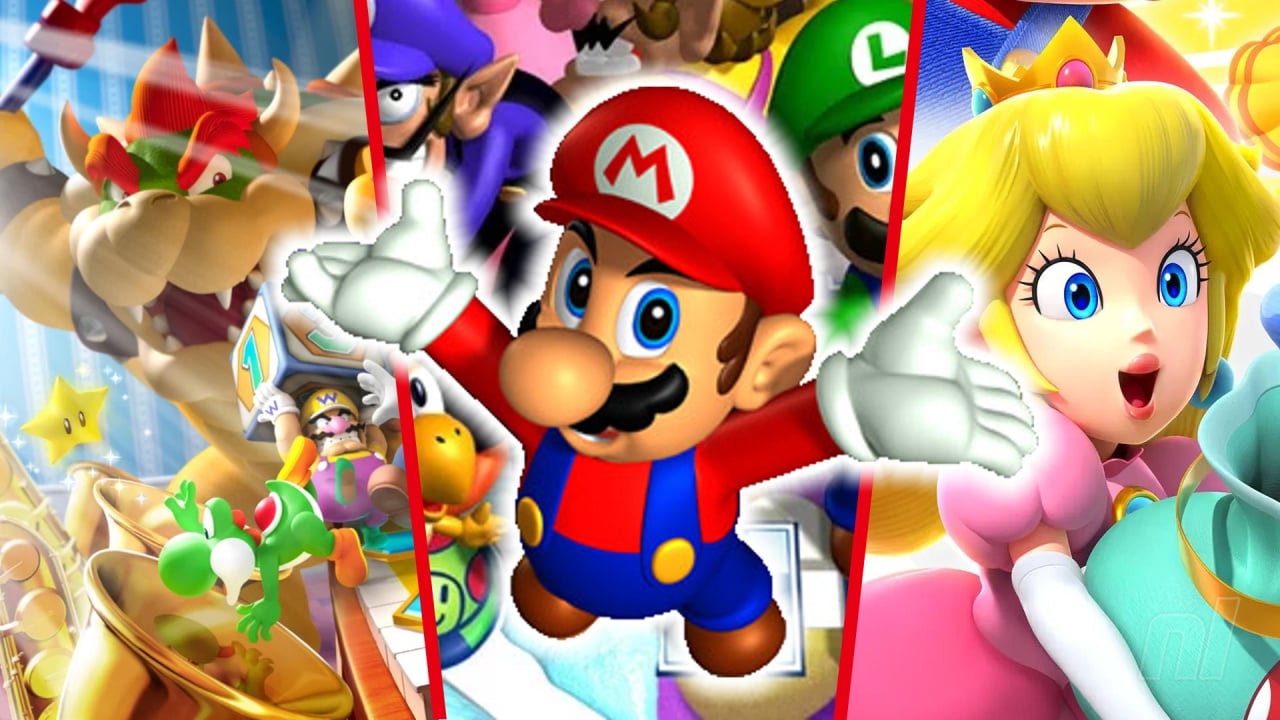
When evaluating the series through a contemporary lens, Mario Party Superstars (2021) for the Nintendo Switch stands out as the most refined software package. Unlike its predecessor, Super Mario Party, which experimented with hardware-specific features like Joy-Con motion sensing, Superstars returned to the series’ core mechanical roots while leveraging modern hardware capabilities.
Technical Refinement and Legacy Integration
Mario Party Superstars functions as a “best-of” compilation, but it is much more than a simple port of legacy assets. The developers rebuilt iconic boards from the Nintendo 64 era and 100 mini-games from across the franchise using a modern engine. From a technical perspective, this provided a level of visual fidelity and framerate stability that the original hardware could never achieve. The shift to a high-definition 1080p output (docked) allows for intricate environmental details and clearer UI elements, which are crucial for fast-paced mini-games.
Online Connectivity and Stability
One of the most significant hurdles for the franchise historically was the lack of robust online play. Superstars corrected this by implementing a functional netcode that supports full board play with friends or strangers. The software includes “Save” functionality during online sessions, a critical technical feature that acknowledges the long-form nature of board game sessions. By prioritizing button-based controls over motion controls, the game ensured compatibility across the entire Switch family, including the Switch Lite, broadening its accessibility and user base.
The Peak of Creative Innovation: Mario Party 6
While modern titles offer the best technical polish, many purists point to the GameCube era—specifically Mario Party 6—as the creative zenith of the series. During this period, Nintendo and developer Hudson Soft were aggressively experimenting with software mechanics to differentiate each annual release.
The Day and Night Cycle Logic
The defining technical feature of Mario Party 6 is its Day/Night cycle. Every three turns, the software logic triggers a global state change across the board. This isn’t merely a visual aesthetic shift; it fundamentally alters the board’s topology, the cost of items, and the rules of specific mini-games. This layer of complexity forced players to engage in long-term strategic planning, a depth often missing from more recent, simplified entries.
Hardware Peripherals and Input Diversity
Mario Party 6 was also notable for its integration of the Nintendo GameCube Microphone. While voice-command software in 2004 was relatively primitive, its implementation in “Mic Mini-games” represented a bold attempt to expand the ways users interacted with the console. Although some found it gimmicky, it showcased the developer’s commitment to using the hardware’s I/O capabilities to create unique gameplay loops. Coupled with some of the most balanced board designs in the series, such as “E. Gadd’s Garage” and “Faire Square,” Mario Party 6 remains a high-water mark for mechanical depth.
The Foundation of the Franchise: Mario Party 2
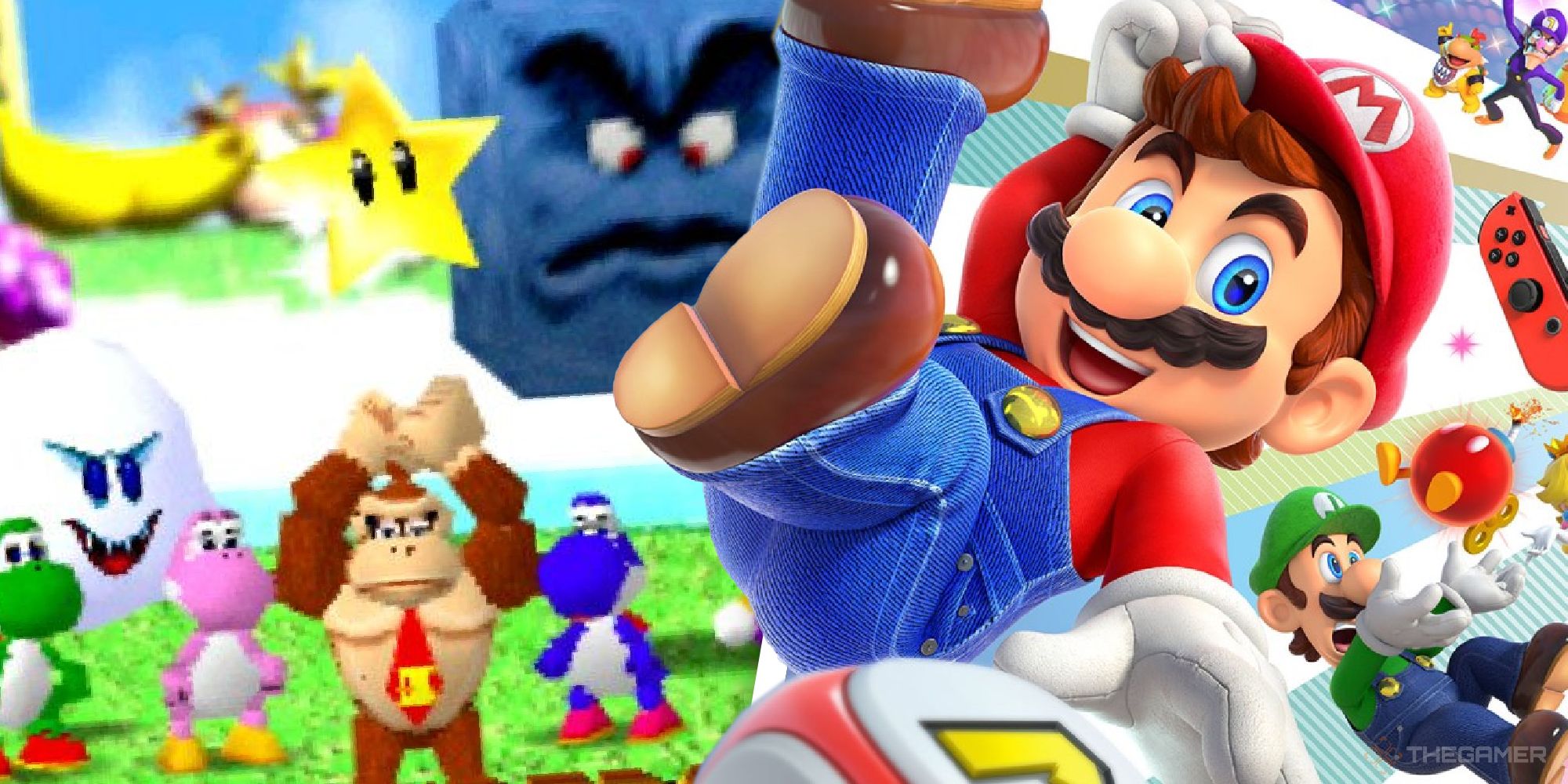
To understand the “best” in the series, one must acknowledge the title that perfected the original blueprint. Mario Party 2 on the Nintendo 64 took the raw, somewhat unpolished code of the first game and refined it into a stable, iconic experience.
Iterative Design and UX Improvements
The original Mario Party was infamous for mini-games that required rapid rotation of the analog stick, which frequently led to hardware damage and physical discomfort for players. Mario Party 2 represents a significant iterative leap in software design by phasing out those problematic mechanics in favor of timed button presses and precision movement. This was an early lesson in “User Experience” design within the gaming industry—recognizing that the physical interaction with the hardware must be sustainable.
Thematic Immersion and “Item” Logic
Mario Party 2 introduced the concept of collectible items (Plunder Chests, Dueling Gloves, etc.), which added a layer of tactical resource management. Furthermore, it was the only game in the series where the character models changed outfits to match the theme of the board (e.g., Western Land, Pirate Land). While this seems like a minor cosmetic detail, from a development standpoint, it required unique assets for every playable character across every map, contributing to a level of thematic immersion that later titles often bypassed in favor of generic assets.
Analyzing the Software Logic: RNG and Fairness
A recurring critique of the Mario Party series involves the “Random Number Generator” (RNG) and how it affects the competitive integrity of the game. The “best” game in the series must strike a delicate balance between skill-based mini-games and the chaotic, luck-based elements of the board.
The “Bonus Star” Algorithm
In older entries, “Bonus Stars” were awarded at the end of the game based on specific metrics: most mini-games won, most coins collected, and most “Happening” spaces landed on. This provided a predictable incentive structure. In later titles, the software began selecting random metrics for Bonus Stars, which many technical analysts argue cheapened the strategic element of the game. Titles like Mario Party Superstars allow users to toggle “Classic” or “Random” bonus stars, a software feature that caters to both competitive and casual audiences.
AI Difficulty Scaling
The technical implementation of AI opponents is another factor in game quality. In lower-quality entries, the AI often feels “cheating” or “clueless,” with little middle ground. The best titles in the series feature nuanced AI scaling that adjusts mini-game performance without making the board movement feel rigged. Mario Party 6 and Superstars are often cited for having the most consistent AI logic, providing a challenging experience for solo players without the frustration of illogical software behavior.
The Legacy of Motion Controls: A Technical Divide
The introduction of the Wii brought a paradigm shift to the series with Mario Party 8. This transition highlighted the tension between traditional software design and new hardware capabilities.
The Impact of the Wii Remote
Mario Party 8 was a massive commercial success, but it faced technical criticism for its 4:3 aspect ratio (despite running on a console that supported 16:9) and its reliance on pointer controls. However, its successor, Mario Party 9, attempted to revitalize the series with a “car” mechanic where all players moved together. While this was a technical attempt to solve the “downtime” problem in multiplayer sessions, it was widely rejected by the core audience for stripping away individual agency.
This era taught the industry an important lesson: technological “innovation” (like forced motion controls or vehicle-based movement) can sometimes hinder the core user experience if it overrides the fundamental logic that made the software successful in the first place.

Conclusion: The Definitive Choice
When selecting the absolute best Mario Party game, the answer depends on whether one values historical significance or modern technical excellence.
From a Technical and Accessibility standpoint, Mario Party Superstars is the superior product. It offers the highest resolution, the most stable online infrastructure, and a curated selection of the series’ best software logic. It removes the friction of outdated hardware and provides a streamlined, high-performance experience that is accessible to all demographics.
However, from a Design and Depth standpoint, Mario Party 6 remains the pinnacle for enthusiasts. Its Day/Night cycle is a sophisticated piece of game logic that has never been fully replicated, offering a level of strategic complexity that modern entries have simplified for broader appeal.
Ultimately, the Mario Party franchise serves as a masterclass in how software must evolve alongside hardware. Whether it is through the refinement of input methods, the scaling of online networking, or the balancing of complex RNG algorithms, the “best” game is the one that successfully bridges the gap between chaotic fun and technical precision. For most modern players, that bridge is Mario Party Superstars, a title that proves that the best way to move forward is often to perfectly recalibrate the successes of the past.
aViewFromTheCave is a participant in the Amazon Services LLC Associates Program, an affiliate advertising program designed to provide a means for sites to earn advertising fees by advertising and linking to Amazon.com. Amazon, the Amazon logo, AmazonSupply, and the AmazonSupply logo are trademarks of Amazon.com, Inc. or its affiliates. As an Amazon Associate we earn affiliate commissions from qualifying purchases.