
The transition from traditional linear cable to Over-the-Top (OTT) streaming platforms represents one of the most significant shifts in consumer technology over the last decade. Gone are the days of proprietary set-top boxes and rigid coaxial infrastructure. In their place, a sophisticated ecosystem of cloud-based delivery systems and high-bandwidth applications has emerged. For the modern consumer, the question is no longer just “what is on television,” but rather “which application provides the most seamless, high-fidelity, and feature-rich viewing experience?”
Determining the “best” live TV streaming service requires a rigorous analysis of software architecture, user interface (UI) design, device interoperability, and the technical robustness of their delivery networks. As we move further into the era of fiber-optics and 5G, the competition between tech giants has reached a fever pitch, resulting in platforms that are faster, smarter, and more integrated than ever before.
Understanding the OTT Landscape: The Technology Behind Live Streaming
To evaluate these services, one must first understand the underlying technology that allows live broadcasts to travel across the open internet with minimal latency. Unlike traditional cable, which uses a dedicated physical line, live TV streaming services utilize internet protocol (IP) to deliver content via “Unicast” or “Multicast” streams.
The Shift from Linear Cable to IP-Based Delivery
The core technical advantage of live TV streaming lies in its flexibility. Cable television relies on QAM (Quadrature Amplitude Modulation) to transmit signals, which limits the number of channels based on the physical bandwidth of the wire. Streaming services, however, utilize Adaptive Bitrate Streaming (ABS). This technology detects a user’s bandwidth and CPU capacity in real-time, adjusting the quality of the video stream dynamically to prevent buffering. When you see a video start in low resolution and suddenly snap into crisp 4K, you are witnessing an ABS algorithm at work, optimizing the data packets for your specific hardware environment.
Cloud DVR: Technical Capabilities and Limitations
One of the most transformative features of modern streaming tech is the Cloud DVR. In the previous generation, recording a show meant writing data to a physical hard drive inside a noisy box in your living room. Today, recording happens on the server side. When you “record” a program on YouTube TV or Hulu, you aren’t actually saving a file to your device; you are simply flagging a specific broadcast stream on the provider’s server to be associated with your account. This allows for “infinite” storage capacities and the ability to access recordings from any device—be it a smartphone in a different state or a smart TV in your bedroom.
Evaluating the Top Contenders: Features and User Interface (UI)
When we look at the leading platforms, the distinction between them often comes down to the quality of the software engineering and the intuitiveness of the user experience (UX).
YouTube TV: The Gold Standard for Interface and Performance
YouTube TV, a subsidiary of Google, is widely considered the technical leader in the space. Its primary strength lies in its search functionality and backend stability. Leveraging Google’s vast server infrastructure, YouTube TV offers the lowest latency in the industry—a critical factor for live sports fans who don’t want to hear their neighbors cheer for a goal ten seconds before it appears on their own screen.
Furthermore, YouTube TV’s “Key Plays” feature uses machine learning to identify significant moments in a sports broadcast, allowing users to catch up on highlights before jumping into the live stream. This level of algorithmic integration sets it apart from competitors that offer a more static, “grid-guide” experience.
Hulu + Live TV: Integration with the Disney Ecosystem
Hulu + Live TV takes a different architectural approach by merging a massive Video-On-Demand (VOD) library with live linear channels. This creates a technical challenge: how to design a UI that balances thousands of hours of static content with real-time broadcasts. Hulu’s recent redesigns have focused on “Hulu Hubs,” which use metadata to categorize content by genre rather than by channel number. For users who are already deep into the Disney/ESPN+/Hulu bundle, the technical synergy between these apps allows for a more unified login and billing experience via the Disney+ “OneID” system.
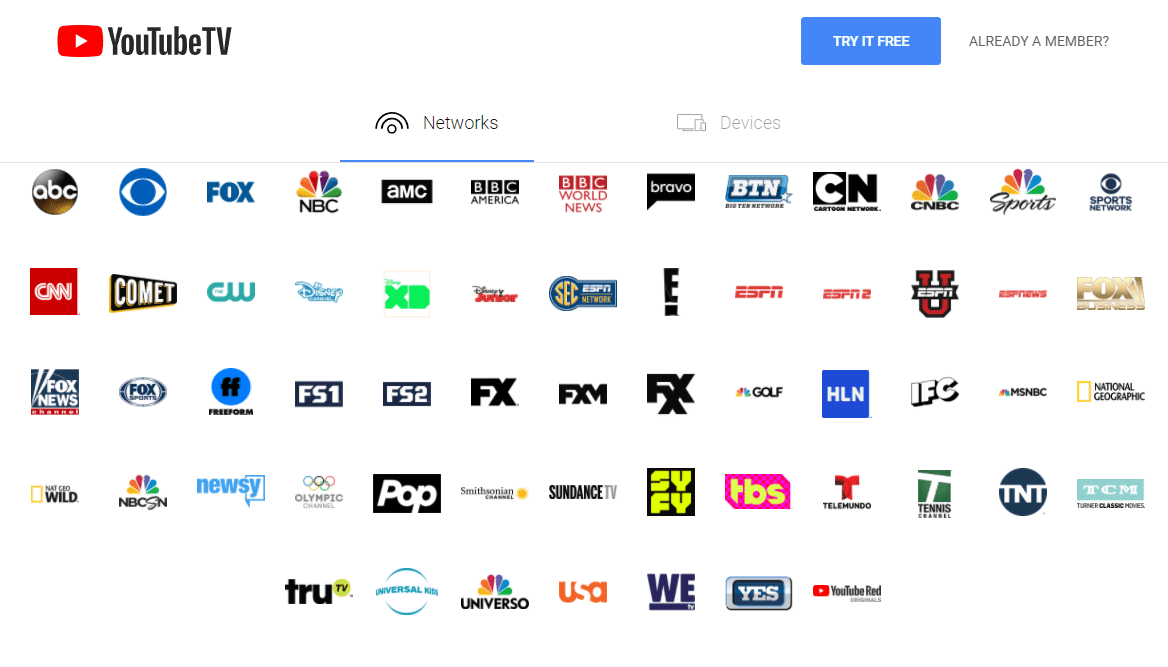
Sling TV: The Modular Approach to Streaming
Sling TV, owned by Dish Network, represents the “lightweight” option in the tech stack. Its application is designed to run efficiently even on lower-end hardware, such as older smart TVs or budget streaming sticks. Technically, Sling is unique because of its integration with AirTV hardware. This allows users to merge over-the-air (OTA) broadcast signals from a physical antenna directly into the Sling app’s digital interface. This hybrid approach—combining local hardware signals with cloud-based streams—is a sophisticated solution for users looking to optimize their signal reliability.
Technical Requirements: Bandwidth, Codecs, and Hardware Compatibility
No streaming service can perform at its peak without the proper hardware and network environment. The efficacy of a service is often limited by the “last mile” of the user’s internet connection and the processing power of the client device.
Internet Speed and Latency Demands for 4K Streaming
While standard definition streaming requires only 3-5 Mbps, the push toward 4K (Ultra HD) live streaming has changed the requirements. A stable 4K live stream typically requires a consistent 25 Mbps per stream. However, it isn’t just about raw speed; latency (or “ping”) is vital for live events. High latency can cause “rubber-banding,” where the stream jumps forward and backward in time as the app attempts to sync the audio and video buffers. To mitigate this, many high-end services are now utilizing the H.265 (HEVC) codec, which offers significantly better data compression than the older H.264 standard, allowing for higher quality at lower bitrates.
Device Ecosystems: Smart TVs vs. Streaming Sticks
The hardware you choose to run these apps on significantly impacts the user experience. Dedicated streaming devices like the Apple TV 4K, NVIDIA Shield, or Roku Ultra feature powerful processors specifically optimized for video decoding. Smart TVs, while convenient, often feature underpowered processors that can lead to sluggish menu navigation and frequent app crashes. From a technical perspective, utilizing a dedicated “puck” or “stick” is almost always superior, as these devices receive more frequent firmware updates and support a wider range of HDR (High Dynamic Range) formats, such as Dolby Vision and HDR10+.
The Role of AI and Personalization in Content Discovery
The sheer volume of content available on live TV streaming services can lead to “choice paralysis.” To combat this, platforms are increasingly relying on sophisticated Artificial Intelligence and recommendation engines.
Recommendation Engines and Machine Learning
The “Home” screen of a modern streaming app is not a static image; it is a dynamically generated interface tailored to your viewing habits. Using collaborative filtering—the same technology that powers Amazon’s “customers who bought this also bought” feature—streaming apps analyze your watch history, the time of day you view certain channels, and even how long you hover over a specific title. This data is fed into a neural network that predicts what you are most likely to watch next, reducing the “time to content” and increasing user retention.
Voice Control and Smart Home Integration
The integration of voice assistants like Alexa, Google Assistant, and Siri has changed how we interact with live TV. Technically, this involves complex Natural Language Processing (NLP). When you say, “Find the Yankees game,” the request is sent to a cloud server, translated into a search query, cross-referenced with the live sports metadata, and then executed as a command to the streaming app. This level of interoperability between the smart home ecosystem and the entertainment hub is now a baseline expectation for the “best” services.
Future Trends: The Convergence of Sports, 5G, and Interactivity
As we look toward the future, the technology powering live TV streaming is poised for another leap forward. The rollout of 5G technology is particularly promising for mobile streaming, offering speeds and latencies that rival home fiber connections. This will likely lead to an increase in “multi-view” capabilities, where users can stream four or more live camera angles simultaneously on a single screen—a feature already being piloted by YouTube TV and FuboTV.
Furthermore, we are seeing the rise of “Interactive TV.” Future iterations of live streaming apps may include real-time sports betting integration, live polls, and e-commerce links embedded directly into the video stream. This requires an even more robust metadata layer and lower latency to ensure that the interactive elements stay perfectly synced with the live action.
In conclusion, the “best” live TV streaming service is a moving target, defined by its ability to harness cutting-edge technology to deliver a frictionless experience. Whether it is the infrastructure-heavy prowess of YouTube TV, the content-rich ecosystem of Hulu, or the hardware-integrated flexibility of Sling, the winners in this space will be the companies that continue to push the boundaries of what is possible within the digital stream. For the consumer, the result is a golden age of television where the power of a broadcast studio is delivered through a simple, elegant app on any screen they choose.
aViewFromTheCave is a participant in the Amazon Services LLC Associates Program, an affiliate advertising program designed to provide a means for sites to earn advertising fees by advertising and linking to Amazon.com. Amazon, the Amazon logo, AmazonSupply, and the AmazonSupply logo are trademarks of Amazon.com, Inc. or its affiliates. As an Amazon Associate we earn affiliate commissions from qualifying purchases.