
In the rapidly evolving world of consumer electronics, the beauty and personal care sector has undergone a profound digital transformation. No longer relegated to simple manual blades or chemical depilatories, the quest for the best facial hair remover for women is now a journey through high-end engineering, photonic science, and smart hardware. For the tech-savvy consumer, selecting a device is not just about aesthetics; it is about understanding the underlying technology—ranging from Intense Pulsed Light (IPL) to micro-oscillation and advanced diode lasers—that offers precision, safety, and long-term efficacy.

As we analyze the current market, the “best” device is defined by its ability to integrate sophisticated sensors, ergonomic hardware design, and intelligent software to provide a professional-grade experience within a domestic environment. This article explores the high-tech landscape of facial hair removal, dissecting the gadgets that are currently leading the industry.
The Evolution of Hair Removal Technology: From Mechanical to Electronic Precision
The history of hair removal gadgets is a testament to the miniaturization of industrial technology for personal use. Early electric shavers for women were often simplified versions of men’s grooming tools, but today’s facial-specific devices are marvels of micro-engineering designed to handle the unique contours and sensitivity of the female face.
The Rise of Micro-Oscillation and Epilation Hardware
Mechanical hair removal tech has progressed from basic rotating discs to high-frequency micro-oscillation systems. Modern epilators designed for the face now feature precision heads with dozens of micro-tweezes that can perform thousands of grabbing actions per minute. The engineering challenge here lies in the “catch rate”—the ability of the device to grip hairs as short as 0.5mm without irritating the surrounding epidermis.
High-end models now incorporate “SensoSmart” technology, an integrated pressure sensor system that provides haptic or visual feedback (usually via LED indicators) to ensure the user doesn’t apply too much force. This prevents mechanical trauma to the skin, a common issue with older, non-intelligent hardware. Furthermore, the motors in these devices have moved toward brushless DC (BLDC) technology, which offers higher torque-to-weight ratios and longer lifespans, ensuring that the device maintains consistent RPMs even when encountering denser hair patches.
Advanced Shaving Mechanics and Skin Protection Sensors
For those who prefer non-root-removal methods, the technology behind electric facial trimmers and shavers has pivoted toward hypoallergenic foil systems and sonic vibration. These gadgets often utilize dual-track cutters and ultra-thin foils (measured in microns) to allow for a close cut while maintaining a physical barrier between the blade and the skin.
The integration of sonic technology allows the head of the device to vibrate at high frequencies—sometimes up to 10,000 micro-vibrations per minute. This high-frequency oscillation helps to lift the hair and glide the device across the skin with minimal friction. From a tech perspective, the focus is on reducing the coefficient of friction through specialized coatings (like titanium or gold-plated heads) and maximizing the efficiency of the cutting block.
Laser and IPL: The Frontier of Photonic Hair Removal
The most significant leap in facial hair removal technology is the transition from mechanical removal to light-based energy. Intense Pulsed Light (IPL) and Diode Laser gadgets represent the pinnacle of home-use beauty tech, utilizing specific wavelengths of light to target hair follicles at the root.
Understanding Intense Pulsed Light (IPL) Logic
IPL devices operate on the principle of selective photothermolysis. The gadget emits a broad spectrum of light (typically ranging from 500 to 1200 nanometers) that is absorbed by the melanin in the hair shaft. This light energy is converted into heat, which thermally damages the follicle, inhibiting future growth.
The “best” IPL devices on the market are distinguished by their “fluence” levels—the amount of energy delivered per square centimeter (measured in Joules/cm²). While professional machines operate at much higher levels, top-tier home gadgets are now achieving 6-7 J/cm², which is the sweet spot for safety and efficacy. High-end hardware also utilizes xenon flash lamps capable of producing up to 400,000 flashes, effectively giving the device a lifetime of use without the need for replacement cartridges.
Diode Laser Technology for Precision Targeting
While IPL uses a broad spectrum, home-use diode lasers use a single, concentrated wavelength (usually 810nm). This tech is considered the gold standard for permanent hair reduction because the concentrated beam penetrates deeper into the follicle with more precision.
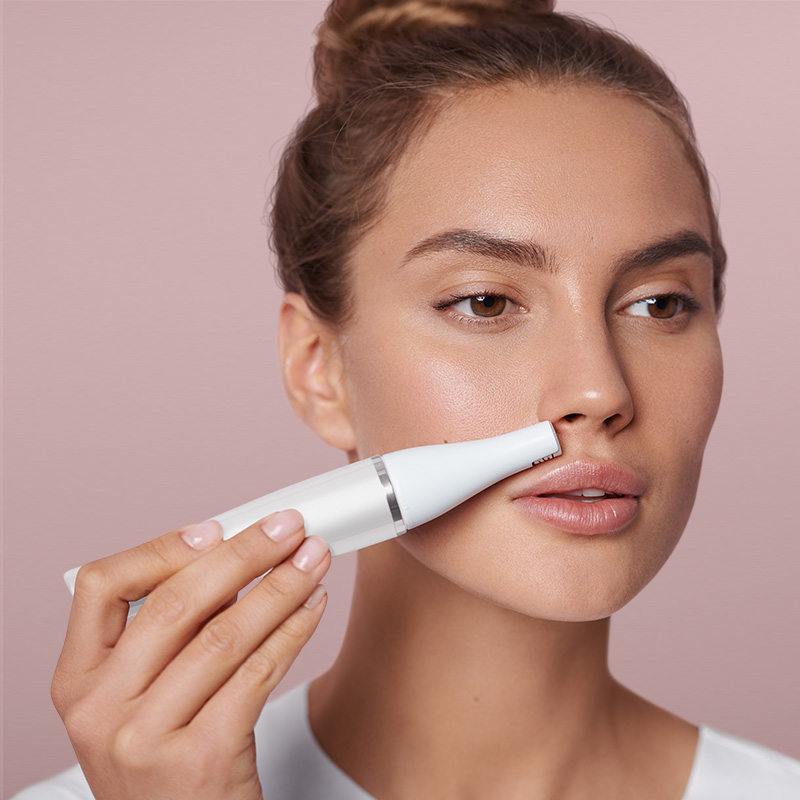
The engineering required to fit a diode laser into a handheld, battery-operated device is immense. It requires sophisticated cooling systems—often utilizing heat sinks or internal fans—to manage the thermal output of the laser diode. For facial use, where precision is paramount, these devices feature smaller “treatment windows” to allow the user to target the upper lip or chin without affecting the surrounding areas.
Smart Skin Sensing and Safety Algorithms
Perhaps the most critical technological advancement in light-based removers is the integration of skin tone sensors. Because IPL and laser tech rely on the contrast between hair pigment and skin pigment, the risk of “mapping” the energy incorrectly is high on darker skin tones.
Modern devices now feature “Intelligent Skin Tone Sensors” that scan the skin up to 80 times per second. These sensors feed data back to the device’s central processor, which then automatically adjusts the light intensity in real-time. If the sensor detects a skin tone that is too dark for the current setting, it will “lock” the flash mechanism to prevent burns. This closed-loop feedback system is a prime example of how safety algorithms are being prioritized in consumer electronics.
Comparative Analysis: Gadget Performance and User Experience
In the tech sector, hardware is only as good as its usability. When evaluating the best facial hair remover, one must look at the interface, power management, and ergonomic design that define the user experience.
Ergonomics and Portability in Modern Design
The industrial design of facial hair removers has shifted toward a “lipstick” or “pen” form factor for maximum portability and discreet use. These devices often utilize a single AA battery or, increasingly, internal lithium-ion (Li-ion) batteries. From a technical standpoint, the move to Li-ion is crucial. It allows for “constant power” circuitry, ensuring that the motor or the light pulse doesn’t weaken as the battery drains—a common flaw in cheaper, alkaline-powered gadgets.
Furthermore, IPX7 water resistance ratings have become a standard for high-quality epilators and trimmers, allowing for “wet/dry” use. This requires precision sealing of the internal electronics and the use of hydrophobic coatings on the circuit boards to prevent corrosion from moisture or steam.
Connectivity and App Integration for Treatment Scheduling
The “Internet of Things” (IoT) has reached the beauty world. Several flagship IPL and laser devices now feature Bluetooth connectivity that syncs with a smartphone app. These apps function as a digital “treatment diary.”
The software tracks the areas treated, the intensity levels used, and—most importantly—utilizes AI to predict when the next session should occur based on the user’s hair growth cycle. By analyzing the data points of previous sessions, the app provides a customized schedule, increasing the probability of long-term success. This shift toward “Connected Beauty” shows that the best facial hair remover is no longer a standalone tool, but part of a wider technological ecosystem.
The Future of Beauty Tech: AI and Personalization in Facial Hair Removal
As we look toward the next generation of gadgets, the integration of Artificial Intelligence and advanced materials is set to redefine what is possible in at-home facial hair removal.
AI-Driven Skin Analysis
Future devices are expected to incorporate hyperspectral imaging or advanced optical sensors that can look beneath the surface of the skin. Instead of just measuring surface melanin, these AI-driven sensors could evaluate follicle depth and thickness, allowing the device to calibrate its energy output (in the case of lasers) or its torque and speed (in the case of epilators) for each individual hair. This level of personalization would drastically reduce the time required for results and minimize the discomfort associated with high-intensity treatments.

Sustainable Hardware and Long-term Efficacy
The tech industry is also facing a push toward sustainability. In the context of facial hair removers, this means moving away from “planned obsolescence.” We are seeing a trend toward modular designs where heads can be replaced or upgraded without discarding the entire motorized handle. Furthermore, the development of more efficient capacitors and energy-storage systems means that future IPL devices will be able to recycle energy faster, allowing for “Glide Mode” features that flash almost instantaneously as the device moves across the skin.
In conclusion, the best facial hair remover for women is a product of rigorous electronic engineering and data-driven design. Whether it is the precision of a micro-oscillating epilator, the photonic power of a diode laser, or the safety-first approach of an intelligent IPL system, today’s devices are powerful computers dedicated to personal grooming. For the tech-forward consumer, the choice comes down to understanding which hardware specifications—wavelength, fluence, RPM, or sensor frequency—align with their specific biological needs and technological preferences. As AI and IoT continue to merge with personal care, the line between professional clinical treatments and at-home gadgetry will continue to blur, offering more power and precision than ever before.
aViewFromTheCave is a participant in the Amazon Services LLC Associates Program, an affiliate advertising program designed to provide a means for sites to earn advertising fees by advertising and linking to Amazon.com. Amazon, the Amazon logo, AmazonSupply, and the AmazonSupply logo are trademarks of Amazon.com, Inc. or its affiliates. As an Amazon Associate we earn affiliate commissions from qualifying purchases.