
For decades, hunters relied on woodsmanship, intuition, and perhaps a basic wall-mounted barometer to predict when whitetail deer would be on the move. Today, the “gut feeling” has been replaced by high-precision sensors, hyper-local weather APIs, and machine learning algorithms. Understanding the best barometric pressure for deer hunting is no longer just about observing the clouds; it is about leveraging a sophisticated tech stack to identify the precise atmospheric windows that trigger peak biological activity.
In the world of precision hunting, barometric pressure—the weight of the air exerted by the atmosphere—is a critical data point. For tech-forward hunters, the question isn’t just “what is the best pressure?” but rather “how can I use hardware and software to track and exploit these fluctuations?”
Understanding the Science: How Sensors and Digital Barometers Quantify Atmospheric Pressure
To use barometric pressure effectively, one must first understand the technology used to measure it. Modern hunting gadgets use MEMS (Micro-Electro-Mechanical Systems) pressure sensors. These tiny silicon chips detect minute changes in atmospheric weight and convert them into digital signals. In hunting terms, we generally measure this in inches of mercury (inHg) or millibars (hPa).
The Transition from Analog to Digital Precision
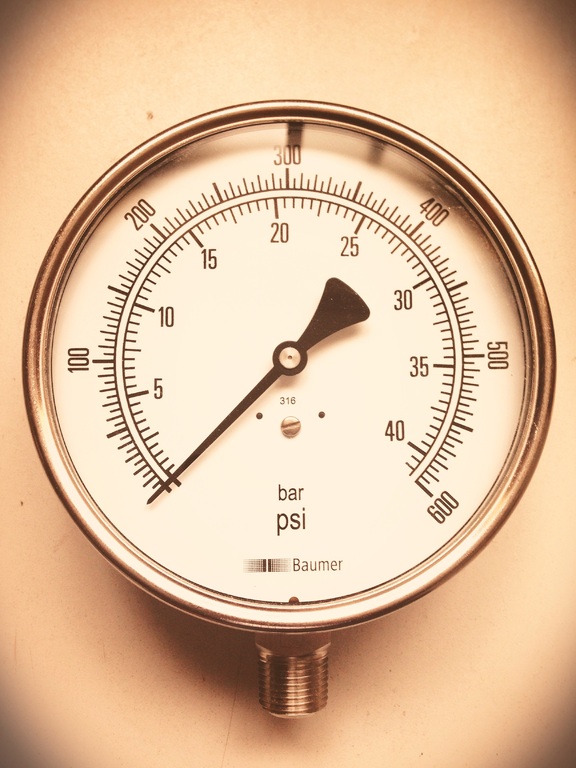
Traditional needle-and-dial barometers were useful for general weather forecasting but lacked the granularity required for modern scouting. Digital sensors, found in everything from smartphones to dedicated handheld weather stations, provide real-time updates with accuracy down to the hundredth of an inch. This precision is vital because deer are sensitive to even slight variations.
The “Goldilocks zone” for deer movement is widely considered to be between 29.90 and 30.30 inHg. However, a static number is rarely the whole story. The tech-savvy hunter looks for “delta P”—the change in pressure over time. Digital logging allows hunters to see if the pressure is steady, rising, or crashing, providing a far more accurate predictive model than a single snapshot in time.
Why the “Rising” or “Falling” Trend Matters More Than the Number
From a technological perspective, the rate of change is the most valuable metric. When a cold front approaches, the pressure drops rapidly. Conversely, as the front passes and high pressure builds in, the barometer rises.
Advanced hunting software categorizes these shifts into “events.” A rapid drop often signals an approaching storm, prompting deer to feed heavily before the weather turns. A rapid rise after a storm—reaching that 30.00 inHg threshold—is often cited by data scientists in the hunting industry as the “high-probability window.” Technology allows us to set alerts for these specific “rate of change” events, ensuring the hunter is in the stand exactly when the atmospheric conditions are optimal.
Leveraging Predictive Analytics and Hunting Software
The modern hunter’s most powerful tool is the smartphone, specifically the suite of hunting-specific applications designed to synthesize meteorological data into actionable insights. These platforms do not just show you the weather; they use proprietary algorithms to rank “deer movement” probability.
Algorithm-Driven Success: How Apps Use Pressure Data
Applications such as Spartan Forge, HuntStand, and OnX Hunt integrate massive datasets, including historical harvest records and movement studies from GPS-collared deer. These apps pull data from the nearest National Oceanic and Atmospheric Administration (NOAA) stations and apply it to your specific GPS coordinates.
The algorithms look for the “High Pressure/Low Temp” correlation. When the barometric pressure crosses above 30.00 inHg while the temperature drops, the software triggers a high-activity rating. For the end-user, this turns complex meteorological physics into a simple 1-10 movement scale. This is the epitome of “Moneyball” for the outdoors—using big data to maximize the return on time invested in the field.
Real-Time Monitoring with IoT Devices
The Internet of Things (IoT) has extended into the deep woods. Cellular trail cameras now frequently include built-in barometric sensors. Instead of simply receiving a photo of a buck, the hunter receives a data packet: the image, the temperature, the moon phase, and the exact barometric pressure at the moment the shutter was triggered.
This creates a localized feedback loop. By analyzing the metadata of thousands of images, a hunter can build a site-specific profile. If a particular mature buck only appears on camera when the pressure is between 30.10 and 30.20 inHg, the hunter can ignore “average” days and strike only when the digital conditions are perfect.
The Hardware of the Hunt: Gadgets That Track Barometric Shifts
Beyond smartphone apps, specialized hardware provides the boots-on-the-ground data necessary for extreme accuracy. While a weather station at an airport ten miles away is helpful, atmospheric pressure can vary significantly based on micro-climates and elevation.
Smartwatches and ABC Sensors
The “ABC” watch (Altimeter, Barometer, Compass) has become a staple in the high-tech hunting kit. Brands like Garmin and Suunto offer wearables that feature dedicated barometric pressure sensors with “Storm Alert” functions. These devices monitor the ambient pressure every few minutes and can vibrate to alert the wearer of a sudden drop, signaling that deer are likely to begin a feeding frenzy before a front.
For a hunter, having this data on the wrist allows for mid-hunt tactical adjustments. If the watch shows the pressure is beginning to stabilize after a low-pressure system, it may be the signal to stay in the stand for an extra two hours, as deer movement typically peaks during the first few hours of a rising barometer.
Remote Weather Stations and Kestrels
For the ultimate in precision, many hunters utilize Kestrel pocket weather meters or install on-property weather stations. These devices offer laboratory-grade accuracy. A Kestrel meter can measure station pressure (the actual pressure at your location) versus barometric pressure (the pressure adjusted for sea level).
For hunters in mountainous terrain, this distinction is vital. As you climb in elevation, the pressure naturally drops. Tech-integrated hunters use these tools to calibrate their expectations based on their specific altitude, ensuring they aren’t misinterpreting a change in elevation for a change in weather patterns.
Integrating Pressure Data into Your Digital Scouting Workflow
Data is only as good as the strategy behind it. Integrating barometric trends into a digital scouting workflow is what separates the modern “techno-hunter” from the traditionalist.
Correlating Historical Harvest Data with Atmospheric Trends
The most advanced hunters maintain digital logs of their hunts, often using spreadsheet software or dedicated hunting journals that automatically sync with weather services. By looking back at three to five years of harvest data, you can begin to see patterns that are invisible to the naked eye.
You might discover that on your specific piece of property, deer don’t move at 30.00 inHg as the “experts” suggest, but rather at 29.85 inHg during a slow fall. This is the power of personal data analytics—customizing a global truth to a local reality.
Building Custom Alerts for High-Probability Windows
Services like IFTTT (If This Then That) or custom features within hunting apps allow users to build automated notifications. A hunter can set a trigger: “If barometric pressure rises more than 0.20 inHg in 3 hours AND temperature is below 40°F, send a push notification.”
This automation ensures that you never miss the “best” barometric pressure window. In a busy modern world, tech acts as the sentry, watching the atmosphere so the hunter only has to head to the woods when the data suggests a high probability of success.
The Future of Precision Hunting: AI and Meteorological Machine Learning
As we look toward the future, the integration of Artificial Intelligence (AI) will further refine our understanding of barometric pressure and deer behavior. We are moving toward predictive modeling that can account for “competing variables.”
Currently, most tech focuses on pressure in a vacuum. Future AI models will likely weigh barometric pressure against real-time satellite imagery of crop cycles, infrared heat maps of forest floors, and even acoustic sensors that track forest activity levels. We may soon see “Heat Maps” of deer movement that fluctuate in real-time as a pressure cell moves across a county.
While the “best” barometric pressure for deer hunting remains centered around the 30.00 inHg mark, the technology used to track, analyze, and predict that number has transformed the sport. By embracing digital sensors, predictive algorithms, and IoT hardware, the modern hunter can move past guesswork and enter the field with a statistically backed advantage. In the digital age, the most important tool in your kit isn’t just your rifle or bow—it’s the data on your screen.
aViewFromTheCave is a participant in the Amazon Services LLC Associates Program, an affiliate advertising program designed to provide a means for sites to earn advertising fees by advertising and linking to Amazon.com. Amazon, the Amazon logo, AmazonSupply, and the AmazonSupply logo are trademarks of Amazon.com, Inc. or its affiliates. As an Amazon Associate we earn affiliate commissions from qualifying purchases.