
The quest to identify the “best bank in the US” is a common one, yet its answer is anything but universal. Much like the perfect car or ideal home, the “best” bank is a deeply personal choice, inextricably linked to an individual’s unique financial habits, goals, and priorities. In a vast and diverse financial landscape populated by everything from venerable national institutions to nimble online challengers and community-focused credit unions, navigating the options can feel overwhelming. This article aims to demystify the process, providing a robust framework for evaluating potential financial partners and empowering you to pinpoint the institution that truly aligns with your specific needs. Understanding that banking is a cornerstone of personal finance, our focus here is squarely on the Money aspects – helping you make an informed decision that supports your financial well-being and aspirations.
Defining “Best”: Key Criteria for Evaluating Banks
To objectively assess any financial institution, it’s crucial to establish a set of criteria that goes beyond superficial branding. The “best” bank for you will excel in the areas that matter most to your financial life.
Account Types and Features
A bank’s core offering begins with its range of accounts. Do they offer the checking, savings, money market, and certificate of deposit (CD) accounts that suit your needs? Beyond the basics, consider specific features:
-
Checking Accounts: Look for free checking options, overdraft protection services, direct deposit capabilities, and online bill pay. Does it offer early access to direct deposits?
-
Savings Accounts: Evaluate annual percentage yield (APY), ease of transfers, and any restrictions on withdrawals. Are there high-yield options available?
-
Specialized Accounts: If you have specific needs, such as accounts for small businesses, joint accounts, or trust accounts, ensure the bank supports them.
-
Lending Products: Does the bank offer competitive rates on mortgages, personal loans, auto loans, and lines of credit, should you need them in the future? This speaks to its potential as a long-term financial partner.
Fees and Minimums
Hidden fees can quickly erode the value of your banking relationship. Scrutinize the fee schedule for:
-
Monthly Maintenance Fees: Are these waived with a minimum balance, direct deposit, or other activity?
-
ATM Fees: Does the bank charge for out-of-network ATMs? Do they offer rebates for such fees?
-
Overdraft and Non-Sufficient Funds (NSF) Fees: These can be hefty, so understand the bank’s policies and whether they offer tools like overdraft protection or alerts.
-
Transaction Fees: Some accounts may charge for excessive transactions or specific types of transfers.
-
Minimum Balance Requirements: Ensure you can comfortably meet these to avoid penalties.
Interest Rates
While checking accounts typically offer negligible interest, savings accounts, money market accounts, and CDs can be significant vehicles for growth.
-
Savings APY: Compare the annual percentage yield (APY) offered on savings accounts. Even a small difference compounded over time can lead to substantial gains.
-
CD Rates: For locked-in savings, compare CD rates across different terms.
-
Loan Rates: If you anticipate needing loans (mortgage, auto, personal), compare interest rates and origination fees. A bank offering competitive rates across its product suite can save you thousands over time.
Accessibility and Convenience
How and where you access your money is a crucial factor.
-
Branch Network: If you prefer in-person banking, a robust local branch presence is key.
-
ATM Network: Does the bank have a wide network of fee-free ATMs, or does it reimburse fees from other ATMs?
-
Online and Mobile Banking: A user-friendly, secure, and feature-rich online portal and mobile app are non-negotiable for most modern users. Can you deposit checks, pay bills, transfer funds, and manage budgets easily on the go?
-
Customer Service Hours: How can you reach support (phone, chat, email) and during what hours? Is it 24/7 or limited to business hours?
Customer Service and Support
When issues arise, prompt and effective customer service is invaluable.
-
Responsiveness: How quickly do they answer calls or respond to messages?
-
Problem Resolution: Do they have a reputation for effectively resolving customer complaints?
-
Support Channels: Do they offer multiple ways to get help, from phone and email to online chat and in-person assistance?
-
Personalization: Do they offer a more personalized touch, especially for complex financial needs, or is it a more standardized, automated experience?
Security and Reliability
Protecting your money is paramount.
-
FDIC Insurance: Ensure the bank is a member of the Federal Deposit Insurance Corporation (FDIC), which insures deposits up to $250,000 per depositor, per institution, for each account ownership category.
-
Fraud Protection: What measures does the bank have in place to prevent and mitigate fraud, such as real-time alerts, secure login protocols, and fraud monitoring?
-
Financial Stability: While FDIC insurance covers deposits, a financially stable institution minimizes concerns about larger market disruptions.
Types of Banks and Their Ideal Users
The US banking sector is incredibly diverse, with different types of institutions catering to distinct customer segments. Understanding these distinctions is key to finding your best fit.
Large National Banks
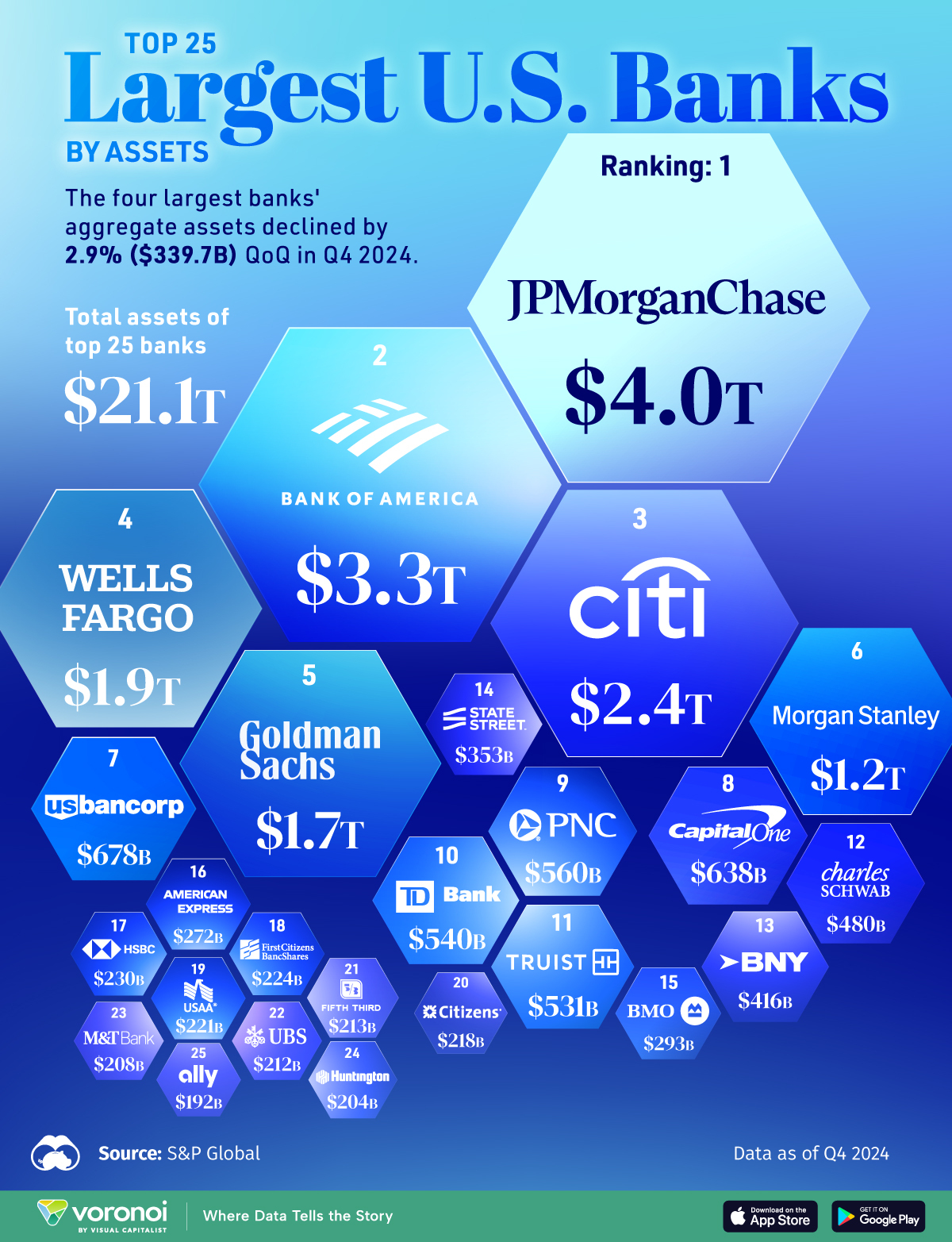
Examples: JPMorgan Chase, Bank of America, Wells Fargo, Citibank.
Pros:
-
Widespread Branch and ATM Network: Ideal for those who travel frequently or prefer in-person banking across different locations.
-
Comprehensive Services: Offer a full suite of products including checking, savings, mortgages, credit cards, investment services, and business banking.
-
Advanced Digital Platforms: Tend to invest heavily in robust online and mobile banking experiences.
Cons:
-
Higher Fees: Often have more complex fee structures and higher minimum balance requirements to avoid fees.
-
Less Personalized Service: With millions of customers, the experience can feel less personal.
-
Lower Interest Rates: Typically offer lower APYs on savings accounts compared to online-only banks.
Ideal for: Individuals who need a large, established bank with a broad physical footprint, diverse financial products, and convenience for travel.
Online-Only Banks
Examples: Ally Bank, Discover Bank, Capital One 360, Chime, SoFi.
Pros:
-
High Interest Rates: Lower overhead costs allow them to offer significantly higher APYs on savings and money market accounts.
-
Low to No Fees: Many offer free checking accounts with no monthly maintenance fees or minimum balance requirements.
-
Excellent Digital Tools: Focus heavily on intuitive mobile apps, online platforms, and innovative financial management tools.
-
24/7 Customer Service: Often provide robust customer support through phone, chat, and email.
Cons:
-
No Physical Branches: This is the primary drawback for those who prefer face-to-face interactions or handling cash transactions.
-
Limited Cash Deposit Options: While some offer solutions like deposits at retail partners or through mail, it’s less convenient than a branch.
Ideal for: Tech-savvy individuals comfortable with digital banking, those prioritizing high interest rates and low fees, and those who rarely need physical branch services.

Credit Unions
Examples: Navy Federal Credit Union, BECU, PenFed Credit Union.
Pros:
-
Member-Owned: As non-profit cooperatives, credit unions return profits to members through lower fees, higher savings rates, and lower loan rates.
-
Personalized Service: Often provide a more community-focused and personalized banking experience.
-
Commitment to Financial Education: Many offer resources to help members improve their financial literacy.
-
NCUA Insured: Deposits are insured by the National Credit Union Administration (NCUA) up to $250,000, similar to FDIC insurance.
Cons:
-
Membership Requirements: You typically need to meet specific eligibility criteria (e.g., live in a certain area, work for a particular employer, or be part of an affinity group) to join.
-
Limited Branch and ATM Network: While some participate in shared ATM networks, their physical presence is generally smaller than national banks.
Ideal for: Individuals seeking a community-oriented institution, better rates, lower fees, and a more personalized banking relationship, and who meet the membership criteria.
Regional and Community Banks
Examples: Various state-specific or local banks.
Pros:
-
Local Focus and Expertise: Deep understanding of local economic conditions and community needs.
-
Personalized Service: Often provide a more hands-on and relationship-driven approach to banking.
-
Flexibility: May be more willing to work with customers on specific financial solutions.
Cons:
-
Limited Reach: Their branch and ATM networks are restricted to their specific operating regions.
-
Fewer Digital Innovations: May not always have the cutting-edge digital tools of larger institutions or online banks.
Ideal for: Local businesses, individuals who value strong community ties, and those who prefer building long-term relationships with their bankers.
The Digital Experience: A Growing Priority
In an increasingly connected world, the quality of a bank’s digital offerings has become a critical differentiator, often outweighing the importance of physical branches for many consumers. The seamless integration of technology into daily financial management is not just a convenience; it’s an expectation.
Mobile Banking Apps
A bank’s mobile app is often its most frequent touchpoint with customers. A top-tier app should offer a comprehensive suite of features:
-
Easy Account Management: View balances, transaction history, and pending transactions with ease.
-
Mobile Check Deposit: Conveniently deposit checks by taking a photo.
-
Bill Pay and Transfers: Schedule payments, transfer funds between accounts, and send money to external accounts.
-
P2P Payments: Integration with Zelle, Venmo, or proprietary peer-to-peer payment systems.
-
Budgeting Tools: Some apps offer integrated budgeting features, spending trackers, and financial insights.
-
Security Features: Biometric login (fingerprint, facial recognition), two-factor authentication, and customizable alerts for account activity.
Online Platforms
While mobile apps are crucial for on-the-go access, the full online banking platform remains vital for more complex tasks and detailed financial oversight.
-
User Interface and Navigation: The platform should be intuitive, well-organized, and easy to navigate, regardless of technical proficiency.
-
Comprehensive Account Access: Ability to manage all types of accounts, including loans and investments, from a single dashboard.
-
Document Access: Secure access to statements, tax documents, and other important financial records.
-
Customer Support Integration: Easy access to chat support, FAQs, and contact information directly within the platform.
-
Robust Security: Strong encryption, secure messaging, and clear policies on data privacy are essential.
Digital Tools and Integrations
Beyond core banking functions, many institutions are now offering advanced digital tools and integrations that enhance the overall financial experience.
-
Budgeting and Financial Planning: Some banks offer in-house tools or seamless integration with popular third-party budgeting apps like Mint or YNAB.
-
Goal Setting: Features that help users set and track financial goals, such as saving for a down payment or retirement.
-
Automated Savings: Tools that round up purchases or automatically transfer small amounts to savings.
-
Virtual Assistants/Chatbots: AI-powered assistance for common queries, account information, and basic transactions.
-
Card Management: Ability to freeze/unfreeze cards, set spending limits, and report lost/stolen cards instantly through the app or online.
Making Your Decision: A Step-by-Step Approach
Choosing the “best” bank is not about finding a single, universally superior option, but rather identifying the perfect match for your specific financial life.
Assess Your Financial Needs and Habits
Start with introspection.
-
How often do you use cash? If daily, a physical branch is more important. If rarely, an online bank might suffice.
-
How frequently do you use ATMs?
-
Do you maintain a high balance, or do funds fluctuate? This impacts minimum balance requirements and fee waivers.
-
Are you tech-savvy, or do you prefer traditional interactions?
-
Do you plan to take out loans (mortgage, auto) in the near future?
-
Do you need investment services alongside banking?
-
What are your savings goals? High-yield savings will be a priority.
-
Are you comfortable with limited physical access for potentially higher returns?
Research and Compare
Once you’ve identified your priorities, it’s time to research.
-
Use Comparison Tools: Websites like Bankrate, NerdWallet, and Consumer Reports offer detailed comparisons of various banks based on fees, rates, and features.
-
Read Reviews: Look at customer reviews on independent sites (Trustpilot, Better Business Bureau) to get a sense of real-world experiences with customer service and problem resolution.
-
Visit Bank Websites: Dive into the specific offerings, fee schedules, and APYs directly from the source.
-
Talk to Representatives: Don’t hesitate to call or visit a few banks to ask specific questions about their products and services.
Consider the Long-Term Relationship
Your banking needs might evolve. Consider if a bank can grow with you.
-
Future Financial Goals: Do they offer products for mortgages, retirement planning, or small business loans?
-
Relationship Benefits: Some banks offer tiered benefits for customers who maintain higher balances or utilize multiple products.
-
Ease of Expansion: If you plan to open investment accounts or credit cards, can you do so seamlessly within the same institution?
Read the Fine Print
This cannot be stressed enough. Always meticulously review:
-
Account Disclosures: Understand all terms and conditions associated with the account.
-
Fee Schedules: Be aware of every potential charge, from monthly fees to wire transfer fees.
-
Interest Rate Disclosures: Understand how APY is calculated and if it’s subject to change.
-
Overdraft Policies: Know exactly how overdrafts are handled and what fees apply.
Don’t Be Afraid to Switch
Your financial needs are dynamic. What was “best” for you five years ago might not be today. Banks also change their policies, fees, and offerings. If your current bank no longer serves you effectively, research alternatives and don’t hesitate to make a change. The process of switching banks has become much smoother with direct deposit and automatic bill pay transfers.
Ultimately, the best bank in the US isn’t a single institution, but rather the one that provides the most value, convenience, and financial advantage for your specific circumstances. By carefully evaluating your needs against the diverse offerings of the banking landscape, you can confidently choose a financial partner that supports your journey toward financial success.
aViewFromTheCave is a participant in the Amazon Services LLC Associates Program, an affiliate advertising program designed to provide a means for sites to earn advertising fees by advertising and linking to Amazon.com. Amazon, the Amazon logo, AmazonSupply, and the AmazonSupply logo are trademarks of Amazon.com, Inc. or its affiliates. As an Amazon Associate we earn affiliate commissions from qualifying purchases.