
Determining the “best” entry in the Assassin’s Creed franchise is a subjective exercise often debated through the lens of narrative or setting. However, when viewed through the perspective of technology, software engineering, and digital innovation, the question becomes much more objective. Since its inception in 2007, the series has served as a benchmark for the gaming industry, pushing the boundaries of what is possible in crowd simulation, architectural rendering, and fluid animation. To identify the best game, one must analyze the evolution of the proprietary Anvil engine and how each installment utilized the hardware of its era to redefine the open-world genre.

The Foundation of the Anvil Engine and Early Technical Feats
The legacy of Assassin’s Creed is inseparable from the development of the Anvil engine (originally named Scimitar). When the first game launched, it was a technical marvel that showcased the potential of the seventh generation of consoles. The primary challenge for the developers at Ubisoft Montreal was creating a seamless environment where the player could interact with every visible surface. This required a robust physics engine and a revolutionary approach to animation.
The Scaffolding of Parkour Mechanics
The “best” Assassin’s Creed from a foundational standpoint is arguably Assassin’s Creed II. While the first game introduced the concept, the sequel refined the IK (Inverse Kinematics) systems. IK allows a character’s limbs to interact realistically with uneven surfaces. In Assassin’s Creed II, the software was optimized to recognize “grab points” across sprawling Italian vistas without traditional loading screens. This was achieved through a sophisticated level-of-detail (LOD) management system that prioritized the rendering of the player’s immediate vicinity while maintaining a low-poly silhouette of the distant skyline, ensuring a consistent frame rate on limited hardware.
Crowd Simulation and Social Stealth Tech
A core technical pillar of the series is “social stealth.” To make this a viable gameplay mechanic, the engine had to manage dozens—and eventually hundreds—of AI NPCs simultaneously. In the early titles, this was handled through basic state machines. Each NPC followed a simple script until a “disruption” event (the player’s action) forced a recalculation of their pathfinding. By the time the series reached Assassin’s Creed Brotherhood, the technical capacity to manage dense urban populations had scaled significantly, allowing for more complex AI interactions and a more believable digital ecosystem.
The Visual and Architectural Peak of Assassin’s Creed Unity
If the “best” game is defined by visual fidelity and the density of on-screen assets, Assassin’s Creed Unity remains the unrivaled champion of the series, despite its rocky launch. Released at the dawn of the eighth generation of consoles, Unity was designed to be a “next-gen” showcase, pushing the AnvilNext 2.0 engine to its absolute limits.
Lighting and Global Illumination
Unity introduced a sophisticated lighting system that many modern titles still struggle to match. The developers utilized pre-baked Global Illumination (GI) for its massive recreations of 18th-century Paris. By baking the way light bounces off surfaces into the textures themselves, they achieved a level of photorealism that dynamic lighting systems of the time could not reproduce. This gave the game a cinematic quality, where the interior of Notre Dame or the sun-drenched streets of the Revolution looked more like a pre-rendered film than a real-time simulation.
The Cost of Ambition: Optimization and Draw Calls
The technical prowess of Unity also serves as a cautionary tale in software development. At launch, the game suffered from severe performance issues, ranging from frame rate drops to the infamous “missing face” glitch. From a technical perspective, these issues were the result of an unprecedented number of “draw calls”—the CPU telling the GPU to render an object. With crowds reaching up to 5,000 NPCs, the consoles of 2014 simply lacked the CPU overhead to process the logic required. However, on modern PC hardware and high-end consoles, Unity has been “rediscovered” as a masterpiece of technical design, proving that its software architecture was simply years ahead of its time.
The Shift to RPG: Redefining the Technical Scope

With the release of Assassin’s Creed Origins, the franchise underwent a total architectural shift. The focus moved from dense urban corridors to vast, seamless continental maps. This required a fundamental rewrite of how the engine handled data streaming and world-building.
Origins and Procedural World-Building
To create the massive landscape of ancient Egypt, Ubisoft moved toward procedural generation tools. Instead of hand-placing every blade of grass or rock, developers used algorithms to populate the world based on topographical rules. This “Best in Class” world-building allowed Origins to offer a map that was both massive and detailed. The technical feat here was the “World-to-Screen” pipeline, which ensured that as a player traveled from the desert to the Nile Delta, the engine was constantly deallocating memory from the previous biome and loading the next without a single loading bar.
AI Systems and Combat Overhauls
The move to an Action-RPG meant the hit-box system had to be rebuilt from scratch. In earlier games, combat was “animation-based”—if the player pressed a button, a specific animation played out. In Assassin’s Creed Odyssey and Valhalla, the system shifted to “hit-box based” combat, where the physical geometry of the weapon must intersect with the physical geometry of the enemy. This required more precise collision detection and a more responsive input-to-output latency, making the technical underpinnings of the newer games much more complex than the legacy titles.
Performance, Platform Parity, and Modern Fidelity Standards
In the current era of gaming, the “best” Assassin’s Creed is often the one that provides the most stable and high-fidelity experience across various hardware configurations. With the advent of the PlayStation 5, Xbox Series X, and high-end NVIDIA/AMD GPUs, the technical focus has shifted to frame rate stability and resolution scaling.
Next-Gen Upgrades and Frame Rate Stability
The recent technical updates to Assassin’s Creed Odyssey and Origins—enabling 60 frames per second (FPS) on consoles—highlight a major shift in software optimization. For many players, the “best” experience is defined by fluidity. Doubling the frame rate reduces input lag and makes the parkour systems feel significantly more responsive. This was achieved by optimizing the multi-threading capabilities of the Anvil engine, allowing it to better utilize the multi-core processors of modern machines.
Ray Tracing and Digital Security
While Assassin’s Creed has been slower than some franchises to adopt full Ray Tracing (RT), the implementation of advanced screen-space reflections and ambient occlusion in Valhalla represents a significant tech milestone. Furthermore, from a software security perspective, Ubisoft has integrated sophisticated anti-tamper technologies like Denuvo and VMProtect. While these are often debated in the community regarding their impact on CPU performance, they represent the cutting edge of digital rights management (DRM) and software protection in the modern gaming industry.
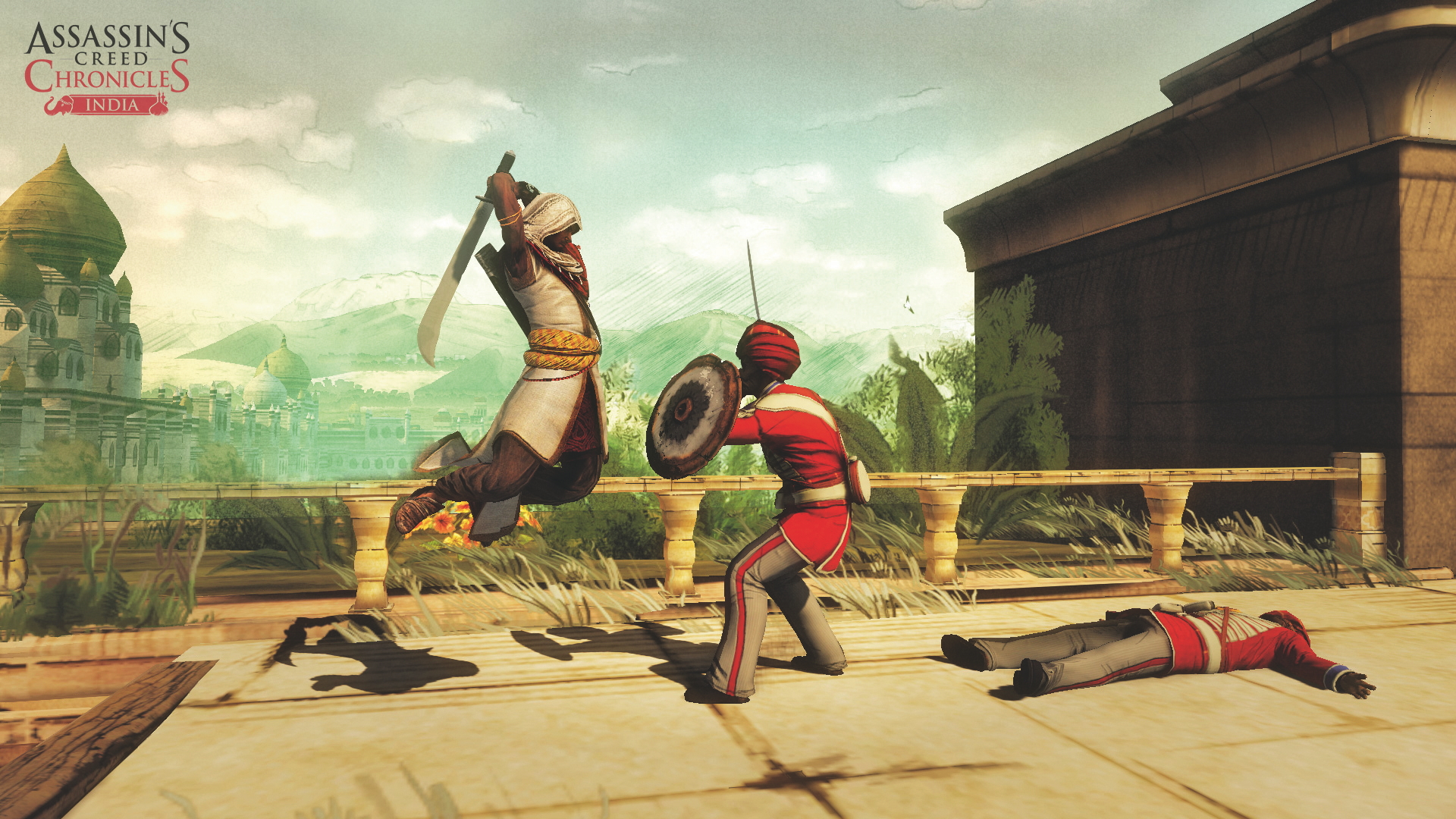
Conclusion: Defining the Technical Winner
When we ask “What is the best Assassin’s Creed?” through a tech-centric lens, the answer depends on which technical achievement you value most.
If you value pure visual ambition and architectural density, Assassin’s Creed Unity is the winner. Its use of global illumination and massive crowd sizes pushed the boundaries of eighth-generation software further than almost any other title. If you value scale and procedural efficiency, Assassin’s Creed Odyssey stands as the peak of the franchise’s “World-Building” era, managing a massive, systemic world with incredible stability.
However, from a holistic technical perspective, the “best” game is arguably Assassin’s Creed Valhalla. It represents the most mature version of the AnvilNext engine, successfully bridging the gap between the RPG scope of the newer titles and the high-fidelity rendering of the previous generation. It offers 4K resolution, 60 FPS performance, and utilizes SSD technology to virtually eliminate the loading times that plagued earlier titles.
Ultimately, the best Assassin’s Creed is a testament to the power of iterative software development. Each game builds upon the code, the assets, and the technical failures of its predecessor, creating a lineage of digital craftsmanship that continues to define the limits of interactive technology.
aViewFromTheCave is a participant in the Amazon Services LLC Associates Program, an affiliate advertising program designed to provide a means for sites to earn advertising fees by advertising and linking to Amazon.com. Amazon, the Amazon logo, AmazonSupply, and the AmazonSupply logo are trademarks of Amazon.com, Inc. or its affiliates. As an Amazon Associate we earn affiliate commissions from qualifying purchases.