
The landscape of digital creation has undergone a seismic shift since the emergence of generative artificial intelligence. In a matter of a few short years, we have transitioned from rudimentary pixelated patterns to hyper-realistic imagery that challenges the boundaries of human photography and digital art. As we navigate this rapidly evolving ecosystem, the question “What is the best AI for image generation?” no longer has a single answer. Instead, the answer depends entirely on the user’s technical proficiency, aesthetic requirements, and intended workflow.
The current market is dominated by a “Big Three”—Midjourney, DALL-E 3, and Stable Diffusion—each representing a different philosophy regarding software architecture and user experience. Beyond these giants, a new wave of specialized models like Flux.1 and Adobe Firefly is carving out niches in realism and professional commercial application. To identify the best tool, one must analyze the underlying technology, the precision of the output, and the flexibility of the platform.

The Industry Leaders: Midjourney, DALL-E 3, and Stable Diffusion
To understand the pinnacle of AI image generation, we must first look at the platforms that defined the medium. These three services represent the benchmarks against which all other software is measured.
Midjourney: The Gold Standard for Aesthetics
For users who prioritize visual “wow factor” and artistic flair, Midjourney remains the undisputed champion. Operating primarily through a Discord interface—and more recently through a dedicated web alpha—Midjourney v6 is renowned for its unparalleled ability to interpret lighting, texture, and composition.
Unlike other models that require exhaustive, technical prompting, Midjourney has an inherent “aesthetic bias.” It is designed to produce beautiful results even with short, vague prompts. Its latest iterations have made significant strides in photorealism and, perhaps more importantly, the rendering of text within images—a feat that was a major hurdle for early generative models. For conceptual artists, photographers, and hobbyists seeking the highest possible fidelity without needing to manage complex software installations, Midjourney is frequently cited as the best in class.
DALL-E 3: Semantic Precision and Ease of Use
Developed by OpenAI and integrated directly into ChatGPT and Microsoft Copilot, DALL-E 3 is the most accessible AI for the general public. Its greatest strength lies in its “semantic understanding.” Because it is tethered to a Large Language Model (LLM), users can speak to it in natural language. If you ask for a specific, complex scene involving multiple characters doing distinct actions, DALL-E 3 is often more likely to follow those instructions accurately than its competitors.
DALL-E 3 removes the “prompt engineering” barrier. It takes a simple user request and expands it into a detailed prompt behind the scenes to ensure high-quality output. While it may lack the granular control and ultra-high resolution of Midjourney, its integration into the broader OpenAI ecosystem makes it the premier choice for quick ideation and users who want a conversational creative partner.
Stable Diffusion: The Open-Source Powerhouse
Stable Diffusion, developed by Stability AI, represents the technical vanguard of the movement. Unlike the closed-source “black box” models of Midjourney and OpenAI, Stable Diffusion is open-source. This means it can be run locally on a user’s own hardware, provided they have a powerful enough GPU.
The “best” aspect of Stable Diffusion is its infinite customizability. Through interfaces like Automatic1111 or ComfyUI, users can utilize ControlNet to dictate the exact pose of a character or the layout of a room. They can train personal models using LoRAs (Low-Rank Adaptation) to maintain consistent characters or specific art styles. For developers and professional power users who require absolute control over the generation process and data privacy, Stable Diffusion has no equal.
Emerging Challengers and Specialized Solutions
The dominance of the Big Three is being challenged by a second generation of models that address specific pain points, such as copyright ethics, anatomical accuracy, and enterprise integration.
Flux.1: The New Benchmark for Realism
Introduced by Black Forest Labs—a team comprising many of the original creators of Stable Diffusion—Flux.1 has recently taken the tech world by storm. It bridges the gap between the accessibility of DALL-E and the raw power of Stable Diffusion. Flux.1 is currently widely considered the best model for rendering human anatomy, particularly hands and feet, which have historically plagued AI generators.
Furthermore, Flux.1 excels at “prompt adherence” and high-definition text rendering. It is available in three versions: [pro], [dev], and [schnell]. The [schnell] version is particularly notable for being a fast, distilled model that can generate high-quality images in just a few steps, making it a favorite for local deployment and rapid prototyping.
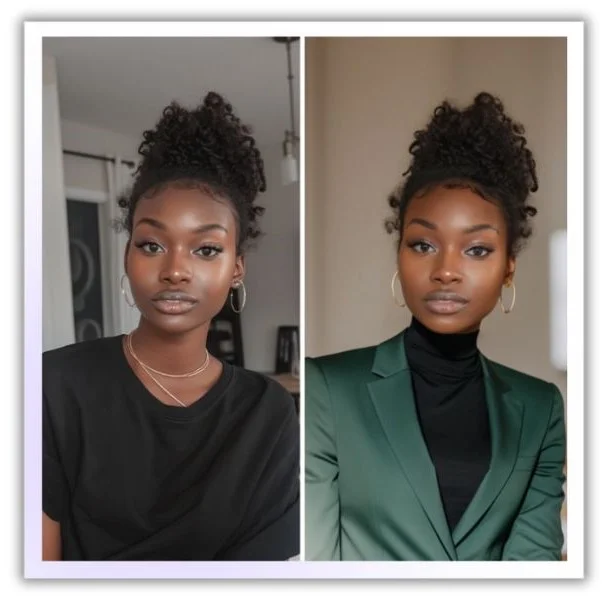
Adobe Firefly: The Professional Workflow Integration
For graphic designers and corporate marketing teams, “best” is often defined by legal safety and workflow efficiency. Adobe Firefly is unique because it is trained exclusively on Adobe Stock images, openly licensed content, and public domain content. This provides a level of commercial “indemnity” that other models cannot offer.
Firefly is integrated directly into the Creative Cloud suite. Tools like Generative Fill in Photoshop allow designers to expand canvases or change outfits on models with a few clicks, staying within the professional ecosystem they already use. While it may not always match the raw artistic creativity of Midjourney, its utility in a professional production pipeline is unmatched.
Leonardo.ai: The All-in-One Web Platform
Leonardo.ai has gained a massive following by providing a user-friendly web interface that sits on top of various models (including Stable Diffusion). It offers “Canvas” features for out-painting and real-time generation features that show the image changing as you type. It strikes a perfect balance for those who want the power of Stable Diffusion without the headache of installing Python scripts and managing local dependencies.
Key Technical Factors in Choosing an AI Tool
When evaluating which AI tool is the “best” for a specific use case, several technical and practical factors must be weighed.
Prompt Adherence vs. Aesthetic Bias
A common trade-off in AI generation is between how well the model follows instructions (prompt adherence) and how good the final image looks regardless of the prompt (aesthetic bias). Midjourney has high aesthetic bias; it wants to make things look “cool.” DALL-E 3 has high prompt adherence; it wants to give you exactly what you described. Users must decide whether they want the AI to take creative liberties or follow a strict blueprint.
Hardware Requirements and Privacy
Cloud-based tools (Midjourney, DALL-E 3, Firefly) require no local processing power but raise questions about data privacy and ownership. Local tools (Stable Diffusion, Flux.1) require a high-end NVIDIA GPU with significant VRAM but offer total privacy and no monthly subscription fees after the initial hardware investment. For many tech enthusiasts, the ability to generate images offline and keep their data private makes local models the superior choice.
Licensing and Commercial Use
The legal landscape regarding AI-generated art is still in flux. Most paid subscriptions for Midjourney and DALL-E 3 grant the user the right to use the images commercially, but the images cannot currently be copyrighted in many jurisdictions. For businesses, Adobe Firefly’s “commercially safe” training data provides a layer of security that is vital for large-scale brand campaigns.
The Future of Visual Synthesis
As we look forward, the distinction between “image generation” and “video generation” is beginning to blur. The technology that powers these static images is being adapted for temporal consistency in video (such as Sora or Runway Gen-3) and 3D object generation for gaming and VR.
We are also seeing a shift toward “real-time” generation. Newer models are capable of generating images at 20-30 frames per second, allowing users to draw a rough sketch on one side of the screen and see it instantly rendered into a masterpiece on the other. This “latent consistency” technology will likely become the standard for creative software in the next year.

Final Verdict: Which is the Best?
The “best” AI for image generation is ultimately a moving target, defined by the user’s specific needs:
- For the Highest Visual Quality: Midjourney v6 is the winner. Its ability to create evocative, gallery-quality art with minimal effort remains unparalleled.
- For Ease of Use and Complex Prompts: DALL-E 3 is the best choice. Its integration with ChatGPT makes it the most intuitive tool for those who aren’t tech-savvy.
- For Professionals and Designers: Adobe Firefly is the superior option due to its seamless integration with Photoshop and its focus on commercial safety.
- For Power Users and Developers: Stable Diffusion and Flux.1 are the top picks. The ability to fine-tune models, run them locally, and use advanced control tools makes them the bedrock of the technical AI community.
As the technology continues to mature, we can expect these tools to converge, with Midjourney adding more control and Stable Diffusion becoming easier to use. For now, the “best” tool is the one that fits into your existing digital workflow and empowers your unique creative vision.
aViewFromTheCave is a participant in the Amazon Services LLC Associates Program, an affiliate advertising program designed to provide a means for sites to earn advertising fees by advertising and linking to Amazon.com. Amazon, the Amazon logo, AmazonSupply, and the AmazonSupply logo are trademarks of Amazon.com, Inc. or its affiliates. As an Amazon Associate we earn affiliate commissions from qualifying purchases.