
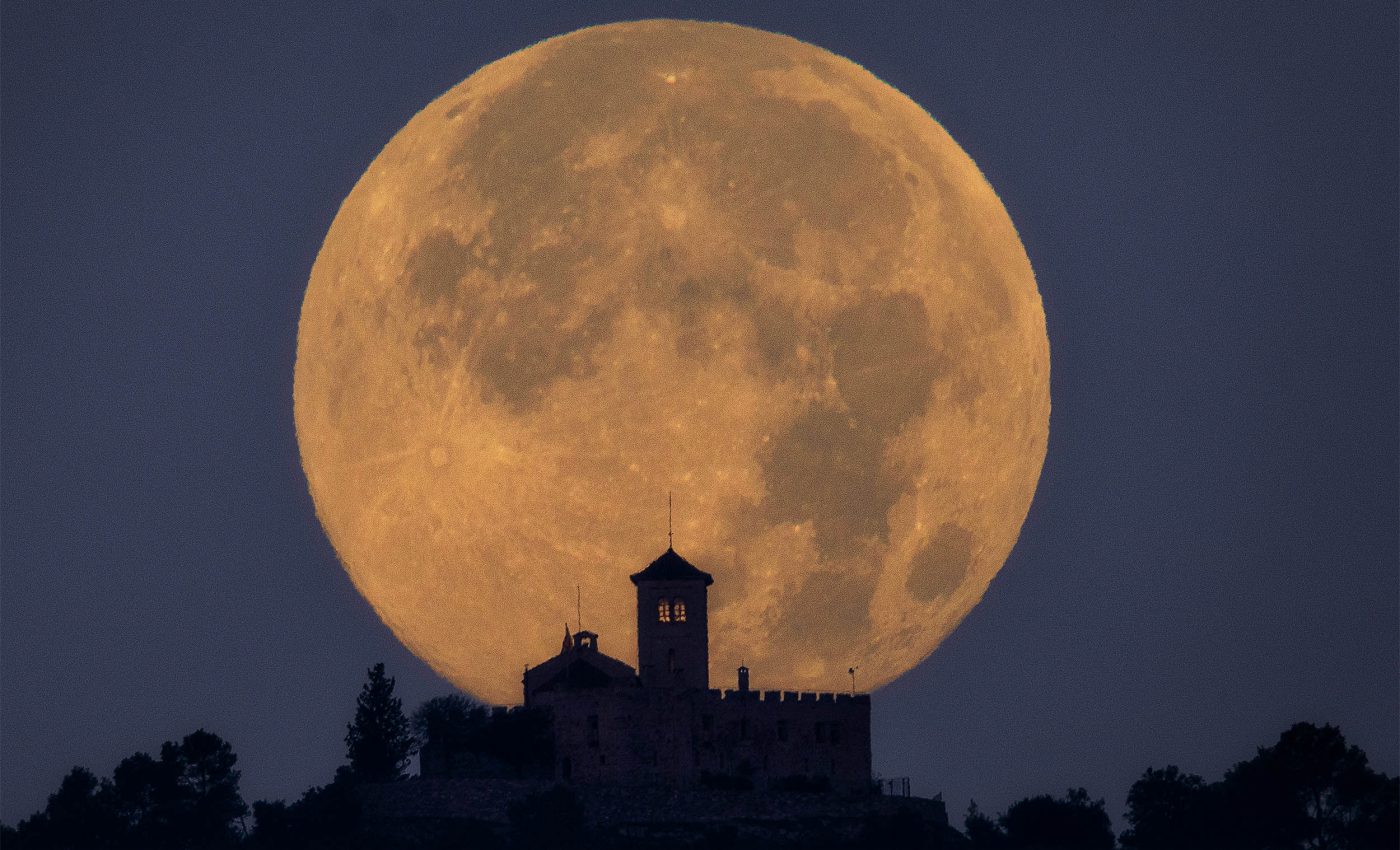
The “Beaver Moon,” traditionally recognized as the full moon occurring in November, serves as more than just a celestial milestone for folklore enthusiasts; it represents a pinnacle event for the technology sector, particularly within the realms of computational photography, satellite tracking, and optical engineering. For tech professionals and hobbyists alike, the Beaver Moon offers a unique high-contrast subject to test the limits of modern sensors, AI-driven image processing, and astronomical software suites.
As we move deeper into an era defined by the democratization of space observation, understanding the Beaver Moon requires looking past the name and focusing on the hardware and software that allow us to capture, analyze, and share this phenomenon with unprecedented clarity. This article explores the technological ecosystem surrounding lunar observation, from the silicon in our smartphone sensors to the machine learning algorithms that reconstruct the lunar surface.
The Evolution of Lunar Imaging Hardware: From Glass to Silicon
The ability to document the Beaver Moon has undergone a radical transformation over the last decade. What was once the exclusive domain of professional observatories equipped with multi-million dollar equipment is now accessible to consumers through advanced optical engineering and sensor innovation.
Smart Telescopes and the Integration of IoT
The rise of the “Smart Telescope” (or EVScope) has changed the landscape of amateur astronomy. Unlike traditional glass-and-mirror setups, these devices are essentially high-end digital sensors integrated with Internet of Things (IoT) capabilities. Companies like Unistellar and Vaonis have pioneered hardware that automates the alignment process using plate-solving technology—a software method that compares the stars in view with an internal database to pinpoint coordinates instantly. During the Beaver Moon, these smart systems use GPS and onboard processors to compensate for the Earth’s rotation, allowing for long-exposure captures that reveal details invisible to the naked eye.
CMOS Sensor Advancements and Signal-to-Noise Ratios
The core of modern lunar photography lies in the Complementary Metal-Oxide-Semiconductor (CMOS) sensor. In recent years, the industry has seen a shift toward Back-Illuminated (BSI) sensors, which reposition the wiring to allow more light to hit the photodiodes. For an event like the Beaver Moon, where the subject is exceptionally bright against a dark sky, managing the “Signal-to-Noise Ratio” (SNR) is critical. Advanced sensors now feature “Dual Native ISO” and “Extreme Dynamic Range” capabilities, ensuring that the bright lunar highlands are not overexposed while maintaining the intricate details of the maria (the dark volcanic plains).
AI and Computational Photography: Redefining the Image
Perhaps the most significant tech trend impacting how we perceive the Beaver Moon is the application of Artificial Intelligence. We are no longer merely “taking a picture”; we are “computing an image.”
Machine Learning for Super-Resolution
Smartphone manufacturers, most notably Samsung and Google, have integrated AI “Scene Optimizers” specifically designed for lunar photography. When the camera detects a full moon, deep learning models—trained on thousands of high-resolution images from NASA’s Lunar Reconnaissance Orbiter—begin to work. These algorithms perform “Super-Resolution” tasks, where the software identifies craters and ridges, filling in pixels that the physical lens might be too small to resolve. While controversial in the photography community, this represents a massive leap in “Edge AI,” where complex neural networks run locally on mobile processors.
Advanced Stacking Software and Frame Interpolation
For professional astrophotographers, the Beaver Moon is captured through a process called “lucky imaging.” Instead of a single photo, the hardware records a high-bitrate video. Software tools such as Autostakkert! and Registax use algorithms to analyze every individual frame of the video, discarding those blurred by atmospheric turbulence (the “twinkling” effect). The software then “stacks” the sharpest frames, mathematically averaging the data to eliminate digital noise. This computational approach allows for 4K and even 8K lunar portraits that rival the output of 20th-century professional observatories.
The Software Ecosystem: Tracking, Mapping, and Prediction
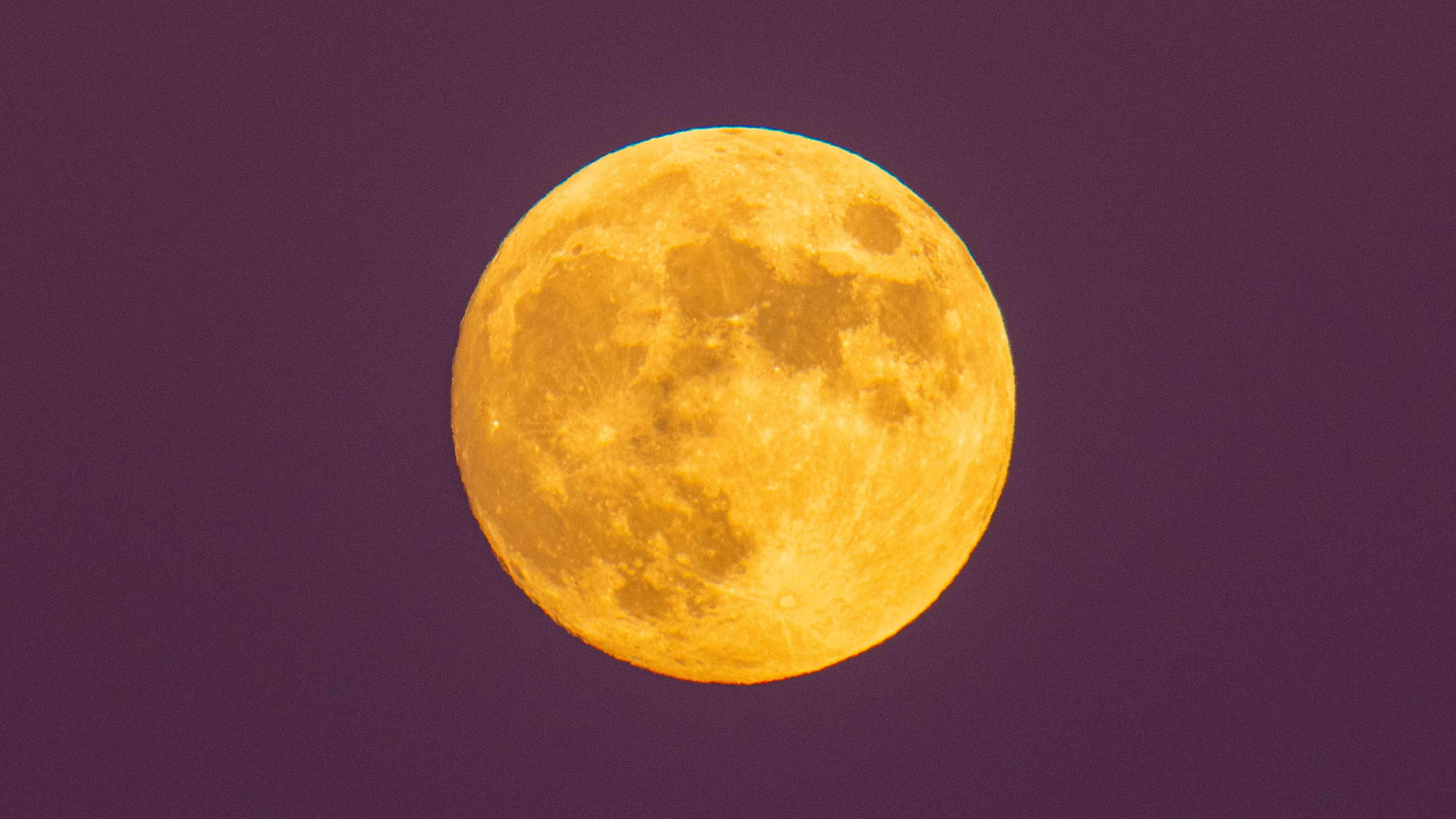
Understanding “what” the Beaver Moon is also involves knowing exactly “where” and “when” it will be. This is facilitated by a robust ecosystem of apps and data streams that bridge the gap between orbital mechanics and user experience.
Ephemeris Engines and Real-Time Mapping
Modern astronomy apps like Stellarium, SkySafari, and PhotoPills rely on high-precision ephemeris data—mathematical tables that provide the positions of celestial objects. These tools use the VSOP87 (Variations Séculaires des Orbites Planétaires) analytical theory to calculate the moon’s position with millisecond accuracy. For a developer or a tech-savvy photographer, these apps offer Augmented Reality (AR) overlays, allowing them to visualize the Beaver Moon’s trajectory through their phone’s viewfinder hours before it rises, accounting for local topography and building heights.
Citizen Science and Data Crowdsourcing
The Beaver Moon serves as a catalyst for large-scale data collection. Platforms like the “Globe at Night” utilize mobile app technology to collect light pollution data from thousands of users simultaneously. By measuring the visibility of stars around the full moon, researchers can build global maps of light pollution. This transformation of the smartphone into a remote sensor turns the Beaver Moon from a visual event into a massive distributed computing project, where metadata (location, time, and sky brightness) contributes to global environmental databases.
Digital Security and Connectivity in Modern Observation
As astronomical equipment becomes more connected, the focus shifts toward the digital infrastructure required to support it. The Beaver Moon is often the most-streamed celestial event of the month, putting significant pressure on content delivery networks (CDNs) and remote observation security.
Securing Remote Observatories and IoT Devices
Many high-end telescopes are now operated remotely via web interfaces. This has introduced a new frontier in digital security for the tech industry: securing the “Internet of Space Things.” Because these devices use Linux-based controllers and are connected to home or university networks, they are susceptible to standard vulnerabilities. Implementing robust API security and encrypted tunnels (like VPNs or SSH) has become a standard practice for institutions providing public Beaver Moon livestreams, ensuring that the data stream remains untampered and the hardware remains under the owner’s control.
The Impact of Satellite Constellations on Observation Tech
A rising tech challenge discussed during every major lunar event is the proliferation of Low Earth Orbit (LEO) satellite constellations, such as Starlink. For software developers in the astronomy space, this has necessitated the creation of “Satellite Streak Removal” algorithms. These software patches automatically identify the linear light trails left by satellites moving across the lunar disk and use temporal interpolation to remove them without losing the underlying lunar data. This ongoing “arms race” between satellite deployment and imaging software defines the current state of astronomical digital toolkits.
The Future of Lunar Tech: Beyond Earth-Based Observation
As we look toward future Beaver Moons, the technology is shifting from Earth-based observation to on-site lunar exploration. The Beaver Moon of the 2030s will likely be documented by hardware located on the lunar surface itself.
The Role of 5G and Lunar Communications
NASA’s Artemis program and private ventures like Nokia’s lunar 4G/5G network are laying the groundwork for high-speed data transmission from the moon. This tech will allow for 360-degree, VR-ready livestreams of the lunar surface. Instead of looking at the Beaver Moon, tech enthusiasts will be able to put on a headset and virtually stand on the lunar plains. This requires massive advancements in low-latency data compression and space-hardened networking hardware.
AI-Driven Autonomous Exploration
The next generation of lunar rovers will use computer vision systems far more advanced than those in current self-driving cars. These rovers must navigate the high-contrast environment of the Beaver Moon—where shadows are pitch black and highlights are blinding—without the aid of GPS. The development of “Visual Simultaneous Localization and Mapping” (VSLAM) specifically for the lunar environment is a major focus for AI researchers today. This tech will eventually trickle down into consumer drones and robotics, proving that the study of the moon remains a primary driver of terrestrial technological innovation.
In conclusion, the Beaver Moon is far more than a naming convention derived from colonial or indigenous history. It is a recurring technical challenge that pushes the boundaries of what our sensors can detect, what our algorithms can process, and what our networks can transmit. Whether you are a software engineer perfecting a noise-reduction script or a gadget enthusiast testing a new telephoto lens, the Beaver Moon serves as a monthly benchmark for the progress of human ingenuity in the digital age.
aViewFromTheCave is a participant in the Amazon Services LLC Associates Program, an affiliate advertising program designed to provide a means for sites to earn advertising fees by advertising and linking to Amazon.com. Amazon, the Amazon logo, AmazonSupply, and the AmazonSupply logo are trademarks of Amazon.com, Inc. or its affiliates. As an Amazon Associate we earn affiliate commissions from qualifying purchases.