
In the landscape of modern technology, logarithms are often the silent engines powering everything from the efficiency of a search engine to the security of our encrypted messages. While many encounter logarithms for the first time in high school algebra, their true utility is realized within the realms of software engineering, data science, and computational theory. To understand “what is the base of log” is to understand the fundamental scale upon which our digital world is built.
In mathematics, a logarithm is the inverse operation to exponentiation. If you have an equation $b^y = x$, the logarithm tells you the exponent ($y$) to which a fixed number, the base ($b$), must be raised to produce a given number ($x$). In the tech sector, choosing the right base is not merely a mathematical preference; it is a strategic decision that dictates how algorithms perform, how data is stored, and how artificial intelligence learns.

The Mathematical Foundation: What Exactly is a Logarithmic Base?
To grasp the technological implications of logarithms, we must first define the base. The base of a logarithm serves as the “unit of growth” or the “ratio of scaling.” It defines the framework within which we measure change.
Defining the Base ($b$)
The base $b$ must be a positive real number not equal to one. In the expression $log_b(x)$, the base tells us how many times we must multiply $b$ by itself to reach $x$. In a computational context, the base represents the branching factor of a system. For instance, in a binary system, the base is 2, reflecting the two possible states (0 and 1) of a bit.
Common Bases in the Digital Age: 10, $e$, and 2
There are three primary bases that dominate the technical landscape:
- Base 10 (Common Logarithm): Used frequently in physical sciences and engineering for decibels or the Richter scale. In tech, it’s often used in human-readable data scaling.
- Base $e$ (Natural Logarithm): Where $e$ is approximately 2.718. This base is essential for calculus and describing natural growth or decay. It is the backbone of machine learning backpropagation.
- Base 2 (Binary Logarithm): This is the most critical base in computer science, as it aligns perfectly with the architecture of digital hardware.
Binary Logarithms (Base 2) in Computer Science and Algorithms
When a software engineer asks “what is the base of log,” they are almost always referring to Base 2. Because computers operate on binary logic, the binary logarithm ($log_2$) is the standard metric for measuring algorithmic complexity and data structures.
Efficiency and Big O Notation
In the world of software development, performance is measured using Big O notation. We often see algorithms categorized as $O(log n)$. This “Logarithmic Time” is the gold standard for efficiency in searching and sorting. If an algorithm has a complexity of $O(log_2 n)$, it means that every time the input size ($n$) doubles, the time taken only increases by a single constant step. This allows tech companies to process billions of data points in microseconds.
Binary Search and Tree Structures
Consider the act of searching for a name in a sorted list of one million entries. A linear search (checking one by one) could take a million steps. However, a binary search—which splits the data in half with every step—uses a Base 2 logarithmic approach. Since $log_2(1,000,000)$ is approximately 20, the computer only needs 20 “guesses” to find the correct entry. This principle is applied in B-trees and database indexing, which are the core technologies behind SQL and NoSQL databases.
The Natural Logarithm (Base $e$) in Machine Learning and Data Science
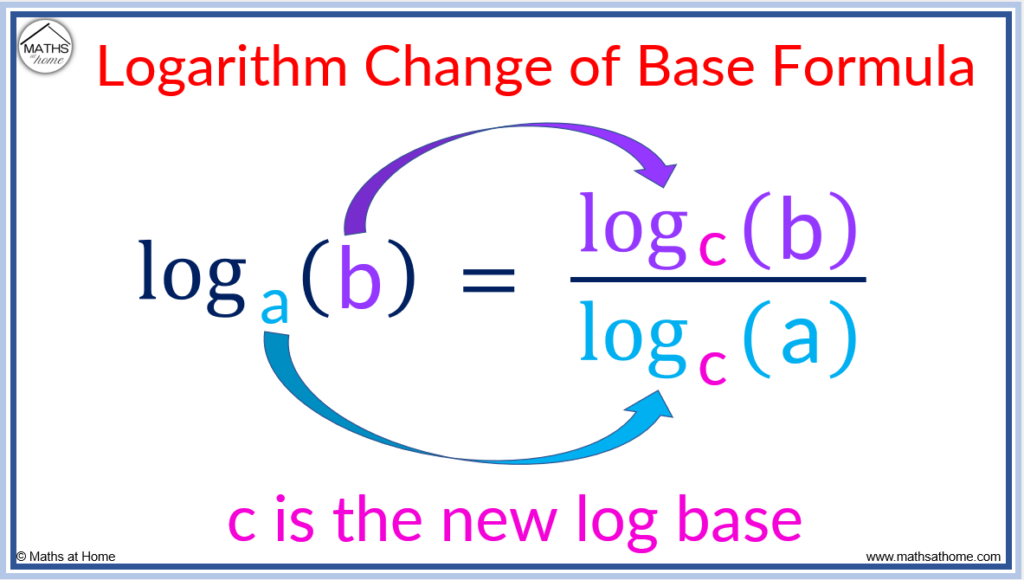
While Base 2 governs the hardware and “logic” side of tech, Base $e$ (the natural log) governs the “intelligence” side. Artificial Intelligence (AI) and Machine Learning (ML) rely heavily on calculus, where the natural logarithm is indispensable due to its unique derivative properties.
Logistic Regression and Neural Networks
In AI, we often need to map a wide range of input values into a probability between 0 and 1. This is achieved using the sigmoid function or the logistic function, both of which are deeply rooted in the natural logarithm. When a neural network “learns,” it calculates an error (loss) using a “Log Loss” or “Cross-Entropy Loss” function. These functions use the natural log because it penalizes incorrect predictions with high confidence much more severely, forcing the AI model to adjust its weights more effectively.
Gradient Descent and Continuous Growth
The natural log (Base $e$) is the only log base where the rate of change is proportional to the value itself. In the optimization process known as Gradient Descent, developers use these properties to find the “minimum” of a cost function. Without the natural log base, the mathematical computations required to train large-scale models like GPT-4 would be computationally expensive and significantly slower.
Information Theory and Digital Security
The concept of the logarithmic base also extends into how we secure data and measure the amount of information transmitted across a network. This field, known as Information Theory, was pioneered by Claude Shannon and relies on the log base to define the “bit.”
Entropy and Bit Manipulation
In information theory, entropy is a measure of uncertainty or randomness. The formula for entropy involves $log_2$, because it measures the minimum number of binary digits (bits) required to encode a message. When tech professionals optimize video streaming codecs (like H.264 or AV1) or file compression formats (like ZIP), they are essentially using logarithmic bases to strip away redundant information and maximize data density.
Logarithms in Cryptographic Complexity
The security of modern digital life—online banking, private messaging, and blockchain—relies on the “Discrete Logarithm Problem.” Modern cryptography, specifically Elliptic Curve Cryptography (ECC), relies on the fact that while it is easy to perform exponentiation in a finite field, it is computationally “hard” to find the logarithm (the exponent) when the base and the result are known. The difficulty of solving for the “log base” provides the wall that protects our data from hackers. If a quantum computer were ever to solve this logarithmic puzzle efficiently, the entirety of digital security would need to be rebuilt from scratch.
Practical Applications: Why Tech Professionals Must Master Log Bases
Understanding the base of a log isn’t just for theoretical physicists; it has daily practical applications for developers, system architects, and data analysts.
Data Scaling and Normalization
In data visualization and telemetry, we often encounter “long-tail” data—where a few values are massive and most are tiny (e.g., web traffic or wealth distribution). Plotting this on a linear scale makes the data unreadable. By using a logarithmic scale (often Base 10), tech professionals can normalize the data, making patterns visible. This is a standard feature in monitoring tools like Grafana or Datadog, where “log scales” allow engineers to see small fluctuations in server latency even when there are massive spikes in traffic.
Optimization of High-Frequency Trading Systems
In the fintech sector, high-frequency trading (HFT) platforms operate in nanoseconds. Every cycle counts. Developers often replace complex division operations with logarithmic subtraction ($ log(a/b) = log a – log b $) or multiplication with addition to save CPU cycles. Furthermore, log-normal distributions are used to model stock price volatility, allowing algorithms to make split-second decisions on risk management.

Summary of the Logarithmic Impact
The question “what is the base of log” serves as a gateway to understanding the efficiency of the digital world. Whether it is the Base 2 of a CPU’s binary logic, the Base $e$ of an AI’s neural pathway, or the Base 10 of a data scientist’s visualization, the logarithm is a fundamental tool for abstraction.
In conclusion, for anyone pursuing a career in technology, logarithms are more than just a memory from math class. They are a professional necessity. By understanding how different bases interact with data and hardware, tech professionals can write faster code, build more secure systems, and develop more “intelligent” software. The base of the log is, quite literally, the base of our modern technological advancement.
aViewFromTheCave is a participant in the Amazon Services LLC Associates Program, an affiliate advertising program designed to provide a means for sites to earn advertising fees by advertising and linking to Amazon.com. Amazon, the Amazon logo, AmazonSupply, and the AmazonSupply logo are trademarks of Amazon.com, Inc. or its affiliates. As an Amazon Associate we earn affiliate commissions from qualifying purchases.