
The term “bank” often conjures images of imposing buildings, secure vaults, or perhaps a mobile app on your smartphone. While these are certainly facets of modern banking, they barely scratch the surface of what a bank truly is. At its core, a bank is not merely a place or a piece of technology, but a sophisticated financial institution that serves as the bedrock of our global economy. It acts as an intermediary, a facilitator, and a vital guardian of wealth, connecting individuals, businesses, and governments in a complex web of financial transactions. Understanding “what is the bank” is not just an academic exercise; it is crucial for navigating personal finance, investing, business operations, and even comprehending national economic policies.
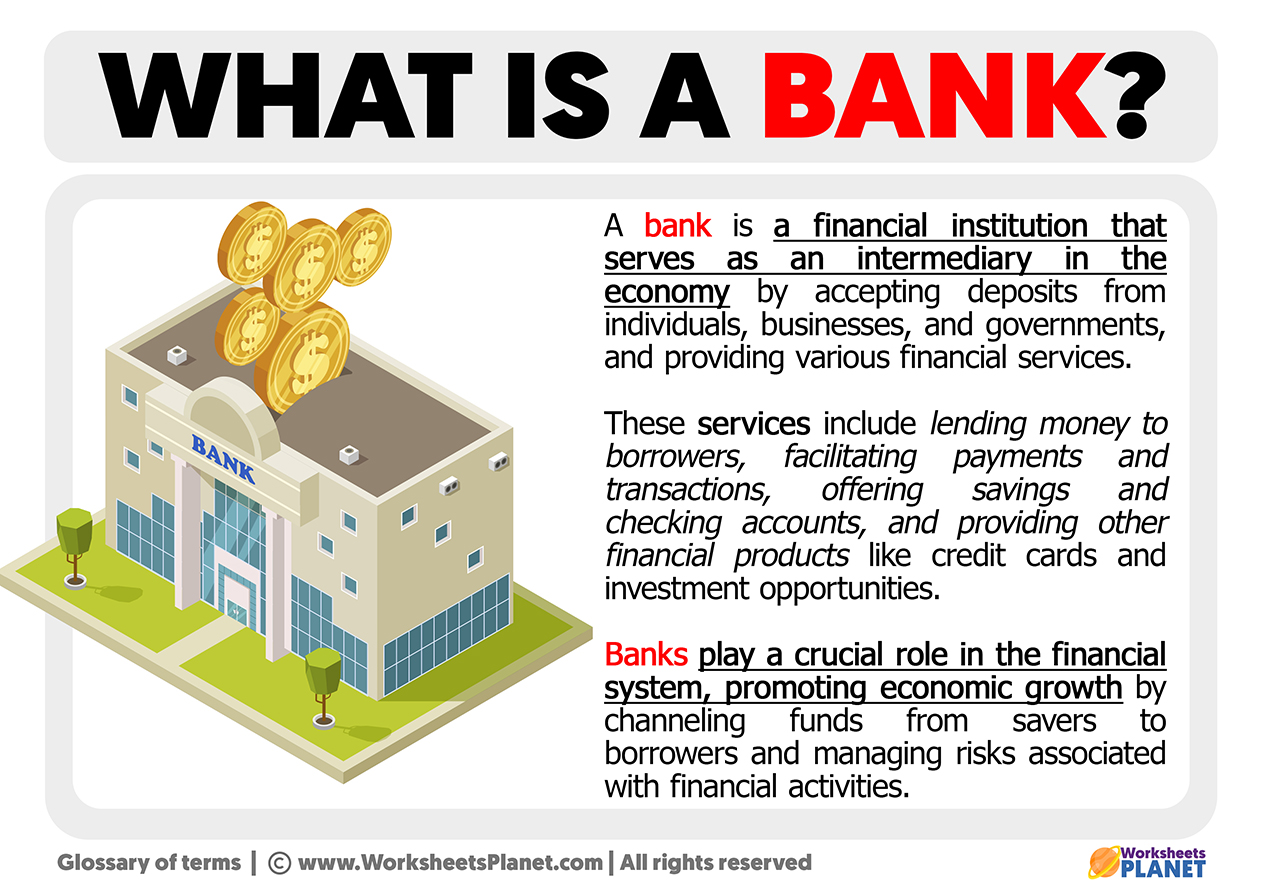
This exploration will delve into the multifaceted nature of banks, dissecting their core functions, identifying the diverse types that exist, examining their profound impact on the economy, and offering insights into how to choose the right banking partner for your specific financial journey. From safeguarding your savings to funding ambitious entrepreneurial ventures, banks are central to nearly every financial interaction in our lives.
The Core Functions of a Bank
At the heart of any banking operation lie several fundamental services that have remained largely consistent over centuries, albeit revolutionized by technology. These functions are designed to mobilize capital, facilitate transactions, and manage financial risk, creating a stable and dynamic economic environment.
Deposit-Taking (Safekeeping and Liquidity)
One of the most recognized functions of a bank is accepting deposits. This service provides a secure place for individuals and businesses to store their money, protecting it from theft, loss, and even the inflationary erosion that might occur if kept solely as cash. Beyond simple safekeeping, deposits offer liquidity, meaning funds can be accessed relatively easily when needed.
- Current Accounts (Checking Accounts): These are designed for day-to-day transactions. They allow account holders to make payments, receive income, and manage their immediate financial obligations through debit cards, checks, and electronic transfers. While they typically offer minimal or no interest, their primary value lies in convenience and transactional efficiency.
- Savings Accounts: Intended for accumulating funds, savings accounts typically offer a modest interest rate on the deposited money. They are ideal for emergency funds, short-to-medium-term financial goals (like a down payment or vacation), and for keeping money separate from daily spending. While generally liquid, some may have withdrawal limits or notice requirements.
- Fixed Deposits (Certificates of Deposit – CDs): These accounts offer higher interest rates in exchange for a commitment to keep the money deposited for a predetermined period (e.g., 6 months, 1 year, 5 years). Withdrawals before maturity often incur penalties, making them less liquid but more rewarding for funds not needed in the short term. They are a common tool for conservative wealth growth.
Lending (Capital Allocation)
Perhaps the most critical function of a bank is its role as a lender. Banks take the aggregated deposits from savers and lend them out to borrowers, effectively acting as an engine for economic growth. This capital allocation is vital for individuals to make significant purchases and for businesses to expand, innovate, and create jobs.
- Personal Loans: Banks provide various types of loans to individuals for personal needs. This includes mortgages for home purchases, typically the largest loan most people will take; auto loans for vehicle financing; student loans to fund education; and general personal loans for debt consolidation, home improvements, or other significant expenses. These loans are structured with specific interest rates and repayment schedules.
- Business Loans: Businesses, from startups to multinational corporations, rely on banks for capital. This can include working capital loans to cover day-to-day operational costs, equipment financing for machinery and technology, real estate loans for commercial properties, and lines of credit that offer flexible access to funds up to a certain limit. These loans are instrumental in fostering entrepreneurship and economic expansion.
- Credit Cards: While often seen as a consumer tool, credit cards are a form of revolving credit offered by banks. They allow individuals to borrow money up to a pre-set limit, repay it, and then borrow again. They provide flexibility and can be a useful financial tool when managed responsibly, offering convenience and potentially building credit history.
Payment Processing and Transaction Facilitation
Beyond holding and lending money, banks are central to the seamless flow of funds within an economy and across borders. They process an immense volume of transactions daily, making modern commerce possible.
- Electronic Fund Transfers: Banks facilitate instantaneous or near-instantaneous transfers of money through systems like Automated Clearing House (ACH) for direct deposits and bill payments, wire transfers for larger, urgent sums, and real-time payment systems. This infrastructure supports everything from payroll processing to online shopping.
- Debit and Credit Card Networks: Banks issue cards that operate on vast global networks, enabling cashless transactions at millions of merchants worldwide. This convenience has fundamentally reshaped consumer spending habits and retail operations.
- International Transactions: For businesses engaged in global trade and individuals sending money across borders, banks provide services for foreign exchange and international money transfers, navigating complex regulatory frameworks and currency conversions.
Types of Banks and Their Specializations
The banking landscape is diverse, with various institutions specializing in different services and client segments. While they all share core functions, their focus can vary significantly.
Retail Banks (Commercial Banks)
These are the most common type of bank, serving individuals and small to medium-sized businesses (SMEs). Their focus is on consumer-facing services, including checking and savings accounts, personal loans, mortgages, debit and credit cards, and basic business banking services. Examples include large national banks and smaller community banks. They form the backbone of everyday financial interactions for the general public.
Investment Banks
In contrast to retail banks, investment banks primarily serve corporations, governments, and institutional investors. Their services are more specialized and include:
- Underwriting: Helping companies raise capital by issuing stocks (IPOs) or bonds.
- Mergers & Acquisitions (M&A): Advising companies on buying or selling other businesses.
- Trading: Facilitating the buying and selling of securities on financial markets.
- Asset Management: Managing investment portfolios for institutions and high-net-worth individuals.
They play a critical role in capital markets and corporate finance.
Central Banks
A country’s central bank (e.g., the Federal Reserve in the U.S., the European Central Bank, the Bank of England) is a governmental or quasi-governmental institution that oversees the monetary system. Their primary responsibilities include:
- Monetary Policy: Controlling the money supply and credit conditions, primarily through setting interest rates, to achieve macroeconomic goals like price stability and full employment.
- Financial Stability: Supervising and regulating commercial banks to ensure the health and stability of the financial system.
- Lender of Last Resort: Providing liquidity to commercial banks during times of crisis to prevent systemic collapse.
- Issuing Currency: Producing and distributing the national currency.
Central banks are not typically accessed by the general public but exert immense influence over the entire financial system.

Credit Unions
Credit unions are distinct in that they are member-owned, non-profit financial cooperatives. Instead of being driven by shareholder profits, they operate to serve their members. This structure often translates into lower fees, higher savings rates, and more favorable loan rates compared to traditional commercial banks. Membership is typically based on a common bond, such as employment, geographic location, or organizational affiliation.
Online Banks (Neobanks)
The digital age has ushered in the rise of online-only banks, often referred to as neobanks or challenger banks. These institutions operate without physical branches, relying entirely on digital platforms for customer interaction and service delivery. Their lower overheads often allow them to offer highly competitive interest rates, lower fees, and innovative mobile-first financial tools. While they may not provide every service a traditional bank does (e.g., in-person cash deposits), they cater to a growing segment of tech-savvy consumers seeking convenience and cost-effectiveness.
The Bank’s Role in the Economy
Beyond individual services, banks are integral to the functioning and health of the broader economy. Their influence permeates various sectors, acting as a crucial lubricant for economic activity.
Economic Growth and Capital Formation
Banks are vital intermediaries in the process of capital formation. By pooling the savings of countless individuals and entities, they create a vast reservoir of capital. This capital is then channeled towards productive investments through lending. Businesses use these loans to expand operations, innovate, purchase new equipment, and hire employees, all of which contribute directly to economic growth and job creation. Without this intermediation, matching savers with borrowers would be far less efficient, hindering investment and development.
Financial Stability and Risk Management
The banking system plays a critical role in maintaining financial stability. By assessing the creditworthiness of borrowers and diversifying their loan portfolios, banks manage risk, reducing the likelihood of widespread defaults. Regulatory bodies, often in conjunction with central banks, implement stringent rules (like capital requirements and stress tests) to ensure banks operate prudently and can withstand economic shocks. Furthermore, deposit insurance schemes (like the FDIC in the U.S.) protect depositors’ money up to certain limits, instilling confidence in the banking system and preventing bank runs.
Monetary Policy Transmission
Commercial banks are the conduits through which a central bank’s monetary policy is transmitted to the wider economy. When a central bank adjusts its key interest rates, it directly influences the cost of borrowing for commercial banks. These banks, in turn, adjust the interest rates they offer on loans and deposits to their customers. This mechanism affects consumer spending, business investment, inflation, and economic output, demonstrating the profound link between central banking decisions and the day-to-day financial lives of individuals and businesses.
Choosing the Right Bank for Your Financial Journey
With such a diverse banking landscape, selecting the right financial partner is a decision that can significantly impact your financial well-being. It requires careful consideration of your individual or business needs and goals.
Personal Needs and Goals
For individuals, the choice of a bank often hinges on a balance of services, costs, and convenience.
- Fees and Interest Rates: Compare monthly maintenance fees, ATM fees, overdraft fees, and the interest rates offered on savings accounts and loans.
- Customer Service: Evaluate the quality and accessibility of customer support, whether through in-person branches, phone, or digital channels.
- Branch Access vs. Online Convenience: Decide if you require physical branch locations for in-person transactions and advice, or if a fully digital experience with robust online and mobile banking tools suffices.
- Specific Financial Products: If you anticipate needing a mortgage, investment services, or international banking, ensure your chosen bank offers competitive products and expertise in these areas.
Business Banking Considerations
Businesses have a distinct set of banking needs that go beyond standard personal accounts.
- Merchant Services: If your business accepts credit or debit card payments, you’ll need robust merchant processing services.
- Lines of Credit and Loans: Access to working capital, equipment financing, and other business loans is crucial for growth and liquidity.
- Payroll Services: Many banks offer integrated payroll solutions, streamlining employee compensation.
- International Banking: Businesses engaged in import/export or cross-border operations require specialized foreign exchange services, international wire transfers, and trade finance.
- Industry Specialization: Some banks cater specifically to certain industries, offering tailored products and knowledgeable advisors.
The Rise of Digital Banking and Financial Tools
The digital revolution has brought about a paradigm shift in how we interact with our money. Modern banks, whether traditional or online-only, increasingly offer sophisticated digital tools:
- Mobile Apps: Allow for account monitoring, bill payments, fund transfers, and even mobile check deposits on the go.
- Budgeting Tools: Many banking apps integrate features that help track spending, categorize expenses, and set financial goals.
- Robo-Advisors: Some banks now offer automated investment platforms, making investing more accessible and affordable.
When choosing a bank, consider the robustness and user-friendliness of its digital offerings, as these are increasingly becoming the primary interface for managing finances.
Conclusion
“What is the bank?” is a question that reveals a complex and essential institution at the heart of our economic lives. From the simple act of securing deposits to the intricate mechanisms of monetary policy, banks are indispensable. They facilitate commerce, drive investment, foster economic growth, and provide the infrastructure for individuals and businesses to manage their financial resources effectively.
As the financial landscape continues to evolve, embracing new technologies and business models, the fundamental role of banks remains steadfast. They are not just service providers but critical partners in achieving financial stability and prosperity. Understanding their functions, types, and economic impact empowers you to make informed decisions, choose the right banking relationships, and ultimately navigate your financial journey with greater confidence and success. Engaging proactively with your banking needs is not just about transactions; it’s about harnessing a powerful tool for your personal and professional growth.
aViewFromTheCave is a participant in the Amazon Services LLC Associates Program, an affiliate advertising program designed to provide a means for sites to earn advertising fees by advertising and linking to Amazon.com. Amazon, the Amazon logo, AmazonSupply, and the AmazonSupply logo are trademarks of Amazon.com, Inc. or its affiliates. As an Amazon Associate we earn affiliate commissions from qualifying purchases.