
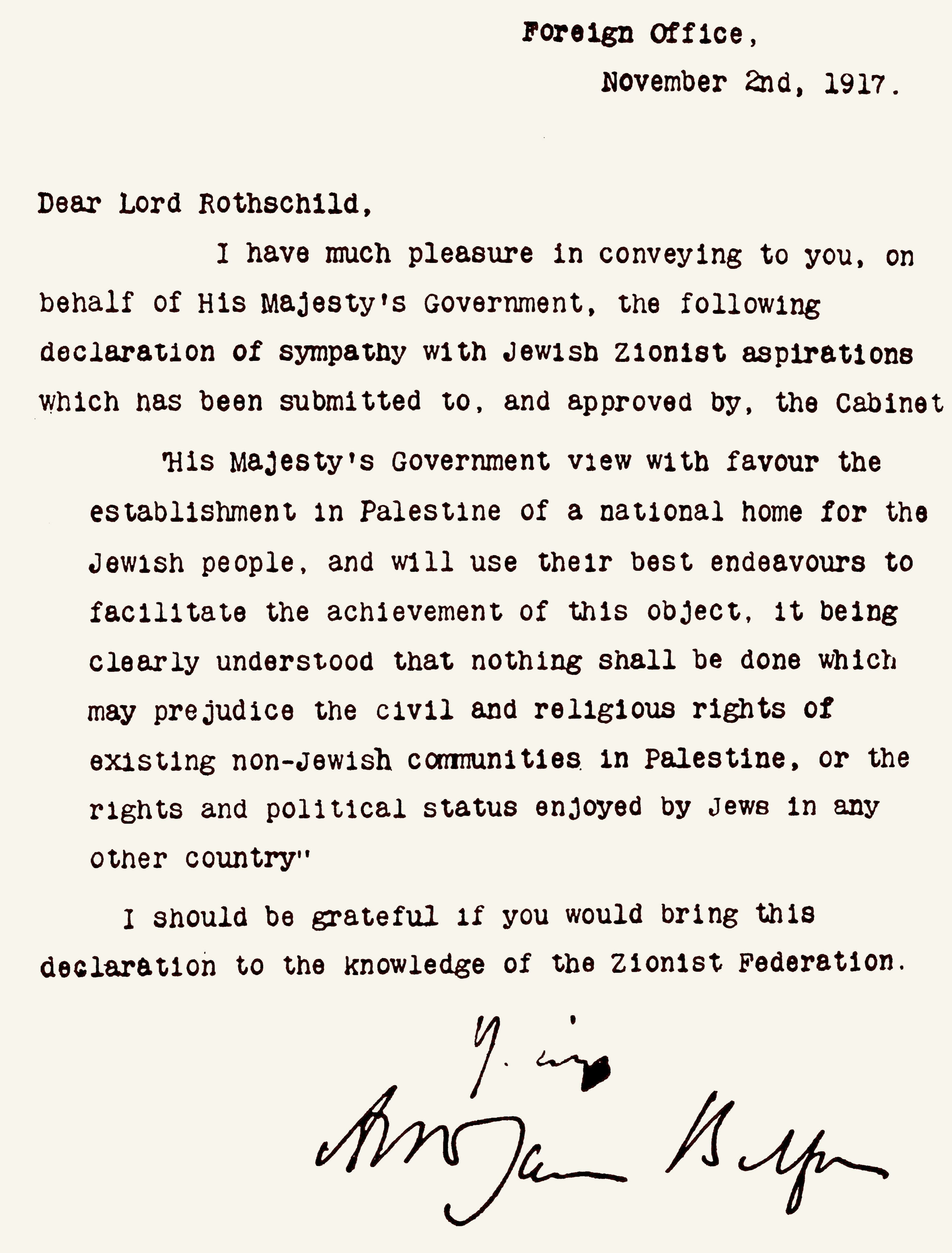
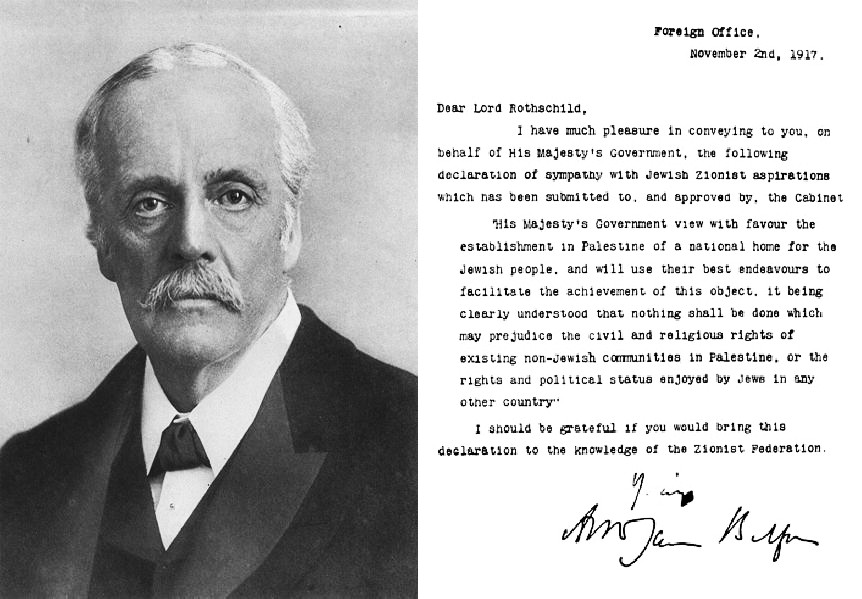
In the annals of history, certain declarations transcend their immediate context, evolving into foundational statements that shape global narratives, establish enduring identities, and influence the “branding” of nations and movements for generations. The Balfour Declaration, a brief letter penned in 1917 by Arthur Balfour, then British Foreign Secretary, to Lord Rothschild, a prominent leader of the British Jewish community, is one such document. While widely understood as a pivotal moment in geopolitical history, its enduring impact can also be analyzed through the lens of modern brand strategy: as a concise, yet immensely powerful, “mission statement” that sought to establish an identity, articulate a vision, and manage the perceptions of multiple stakeholders on the world stage.
The Declaration as a Foundational Brand Statement
At its core, any brand statement aims to define purpose, articulate values, and project a specific image. The Balfour Declaration, though not a commercial endeavor, functioned as an unprecedented act of “declarative branding” by a global superpower. It was a strategic communication designed to align various interests and set a future course.
Crafting a National Identity Through Pronouncement
The central tenet of the Balfour Declaration stated: “His Majesty’s Government view with favour the establishment in Palestine of a national home for the Jewish people, and will use their best endeavours to facilitate the achievement of this object.” This single sentence, laden with diplomatic ambiguity and aspirational intent, served as an early blueprint for a national “brand identity.” It wasn’t merely a political promise; it was an attempt to articulate the idea of a national home, thereby beginning the process of branding a future entity before its physical manifestation. For the Zionist movement, this declaration offered an official endorsement that provided credibility and legitimacy, essential components for building any successful brand. It transformed an abstract aspiration into a tangible, if still conditional, “brand promise” backed by a major world power. This gave the nascent “brand” of a Jewish national home a significant boost in perceived value and potential.
The British ‘Brand’ and International Diplomacy
For the British Empire, issuing the Balfour Declaration was also an act of strategic self-branding on the international stage. Britain, at the height of World War I, was navigating complex alliances and seeking to consolidate influence in the Middle East. By endorsing the Zionist cause, Britain projected an image of a benevolent global actor, a protector of minorities, and a facilitator of national self-determination – all elements that reinforced its desired “brand identity” as a moral and powerful empire. This move aimed to garner support from Jewish communities worldwide, particularly in the United States and Russia, influencing their respective governments’ war efforts. It was a sophisticated diplomatic maneuver, positioning Britain as a key player in shaping the post-war global order, demonstrating its foresight and leadership. The declaration thus became a part of the broader British “corporate identity” in a period of intense geopolitical competition.
Messaging, Perception, and Stakeholder Branding
Effective branding hinges on clear messaging and careful management of stakeholder perceptions. The Balfour Declaration, despite its brevity, was a masterclass in layered communication, intentionally crafted with nuances that allowed for various interpretations, aiming to appeal to different audiences while also carrying inherent risks of misinterpretation and conflict.
Shaping the Narrative for a Future ‘Home’
The phrase “national home for the Jewish people” was deliberately chosen over “Jewish state.” This ambiguity was a strategic element of the messaging. It allowed for future flexibility while still conveying a significant commitment. For Jewish communities globally, it offered a powerful narrative of return and self-determination, a vision that resonated deeply and mobilized support. It created a compelling “brand story” around resilience, hope, and the fulfillment of a long-held dream. This narrative was instrumental in garnering sustained commitment and advocacy, fueling what would become a formidable “brand loyalty” among its primary stakeholders. The declaration provided a central theme around which the Zionist movement could build its entire communications strategy, articulating its mission to a global audience.
Diverse Interpretations and Competing Brand Visions
However, the Balfour Declaration also contained a crucial caveat: “it being clearly understood that nothing shall be done which may prejudice the civil and religious rights of existing non-Jewish communities in Palestine.” This clause, intended to manage expectations and appease other stakeholders, introduced significant complexity. For the Arab communities in Palestine, who constituted the vast majority of the population, the declaration was perceived as a direct threat to their existing rights and national aspirations. They interpreted it not as a benevolent act but as an imposition of an external “brand vision” that conflicted with their own established identity and claims to the land. This fundamental divergence in perception created an immediate challenge in “brand management,” leading to competing narratives and fostering long-term conflicts over the “ownership” and “identity” of Palestine. The declaration inadvertently established a clash of deeply held national “brands,” each with legitimate claims and passionate advocates.
Long-Term Brand Impact and Legacy
The true measure of a powerful brand statement lies in its longevity and the enduring impact it has on the entities it seeks to define. The Balfour Declaration, despite its age, continues to be a central reference point in the branding and identity of the State of Israel, the Palestinian people, and the broader Middle East.
The Enduring Power of a Seminal ‘Mission Statement’
The Balfour Declaration has functioned as an foundational “mission statement” for the Zionist project, providing a historical anchor and a legitimizing document for the State of Israel’s establishment in 1948. Its very existence is invoked to justify the “brand identity” of Israel as the fulfillment of an international promise. This demonstrates the incredible power of a carefully crafted, high-level declaration to shape perceptions and direct actions over decades, even a century later. The declaration’s brevity and the weight of the issuing authority (the British Empire) gave it a quasi-sacred status in the narrative of Israeli nation-building, cementing its place as an integral part of the nation’s “brand story” and origin myth. It continues to be a powerful piece of “legacy branding.”
Challenges in Brand Management and Global Relations
For brand strategists, the legacy of the Balfour Declaration offers a profound case study in the challenges of “global brand management.” The inherent ambiguities and conflicting promises within the declaration have led to persistent disputes, demonstrating how initial messaging can create long-term “brand perception gaps” that are incredibly difficult to bridge. The “brand equity” of both Israel and Palestine in the international arena is continually influenced by this historical document, with supporters and detractors of each side referencing it to bolster their arguments. The declaration’s initial promise, intended to reconcile disparate interests, instead became a source of ongoing “brand conflict,” highlighting the unforeseen consequences when a “foundational statement” fails to adequately address the concerns of all key stakeholders. The resulting narratives have become deeply entrenched, making reconciliation not just a political challenge, but a “brand perception” challenge of immense proportions.
Lessons in Declarative Branding for Modern Entities
Analyzing the Balfour Declaration through a branding lens offers valuable insights for any modern organization or nation crafting its own foundational statements, whether they be mission statements, manifestos, or strategic visions.
Clarity vs. Ambiguity in Brand Messaging
The Balfour Declaration’s ambiguous phrasing was a double-edged sword. While it provided initial diplomatic flexibility, it also sowed the seeds of future conflict. For modern entities, this underscores the critical tension between crafting a “brand message” that is inclusive and adaptable versus one that is precise and unambiguous. While flexibility can be useful in early stages, sustained brand clarity is often essential for avoiding misinterpretation and building trust. Organizations must weigh the benefits of broad appeal against the risks of diluted or conflicting meanings. A “brand promise” should ideally be clear enough to guide action, yet flexible enough to adapt to changing circumstances, without creating deep-seated animosity among its stakeholders.

The Unforeseen Consequences of Foundational Statements
Perhaps the most crucial lesson is the profound, often unforeseen, long-term impact of foundational “brand statements.” What may seem like a tactical diplomatic move in the short term can resonate for a century, shaping identities, fueling conflicts, and defining geopolitical “brand landscapes.” Leaders and strategists must consider the full spectrum of potential interpretations, stakeholder reactions, and historical ramifications when crafting any declaration that aims to define an identity or set a future course. The Balfour Declaration stands as a powerful reminder that “declarative branding” carries immense responsibility. Once unleashed, a foundational statement takes on a life of its own, becoming a permanent part of the global narrative, influencing perceptions, and shaping the “corporate identity” of nations and movements for generations to come. Understanding its “brand legacy” is not just a historical exercise, but a vital insight into the enduring power of words to shape our world.
aViewFromTheCave is a participant in the Amazon Services LLC Associates Program, an affiliate advertising program designed to provide a means for sites to earn advertising fees by advertising and linking to Amazon.com. Amazon, the Amazon logo, AmazonSupply, and the AmazonSupply logo are trademarks of Amazon.com, Inc. or its affiliates. As an Amazon Associate we earn affiliate commissions from qualifying purchases.