
The Roth IRA stands as a cornerstone of modern retirement planning, cherished for its unique tax advantages: contributions are made with after-tax dollars, but qualified withdrawals in retirement—including all earnings—are completely tax-free. This characteristic makes it an incredibly powerful tool for long-term wealth accumulation, especially for those who anticipate being in a higher tax bracket during their retirement years. However, a common question for new and seasoned investors alike is: “What is the average return on a Roth IRA?” The answer, while seemingly straightforward, is actually nuanced and depends heavily on a multitude of factors, as a Roth IRA is not an investment itself but rather a tax-advantaged account wrapper that holds your investments. Understanding these nuances is crucial for setting realistic expectations and optimizing your retirement savings strategy.
Understanding Roth IRA Mechanics and Investment Flexibility
To truly grasp what dictates the return on a Roth IRA, it’s essential to understand its fundamental structure and how it differs from a traditional investment vehicle.
The Core Advantage: Tax-Free Growth and Withdrawals
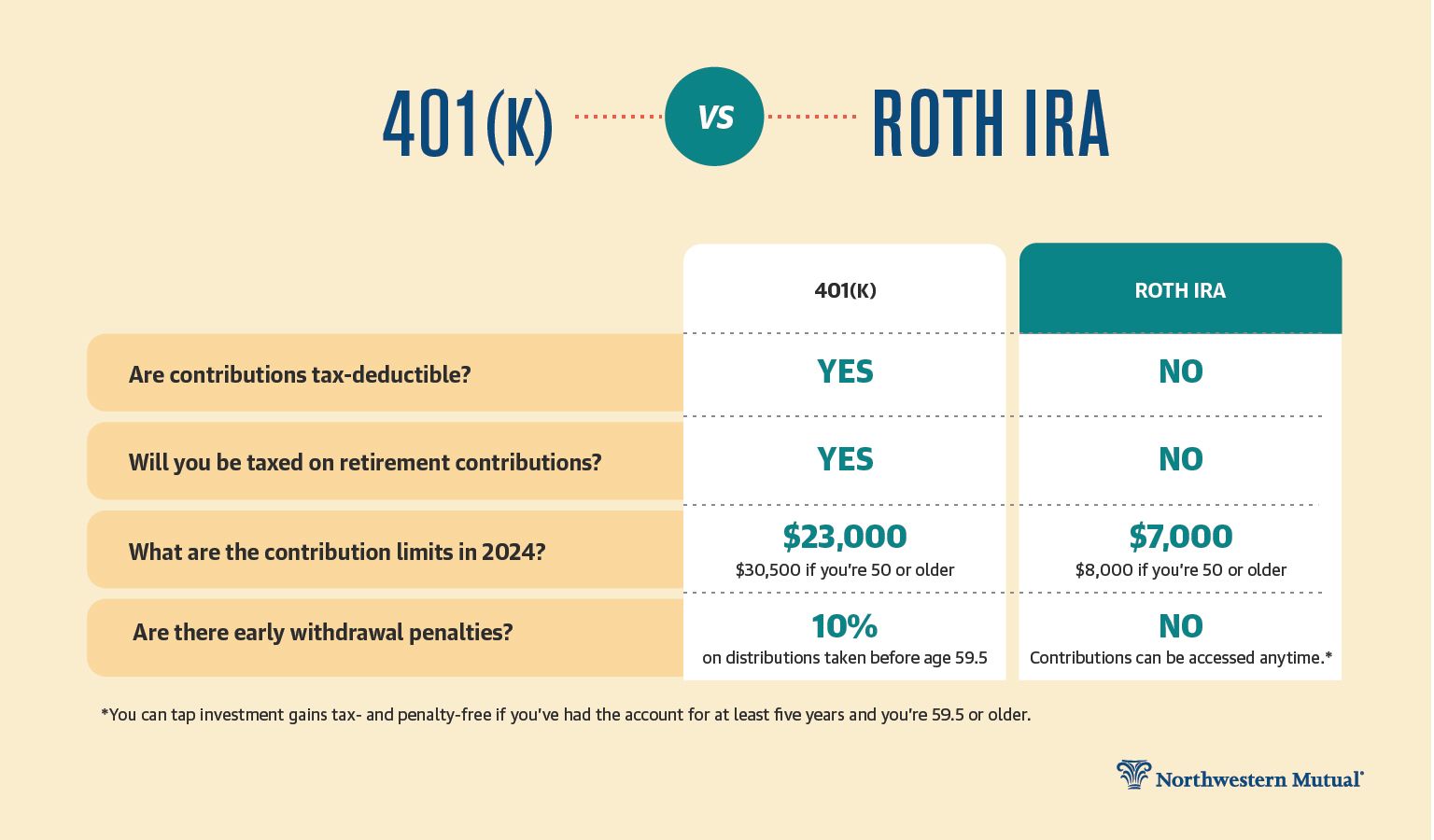
A Roth IRA operates on a simple yet profound principle: you contribute money that has already been taxed. In return for this upfront tax payment, every dollar your investments earn within the Roth IRA grows tax-free. When you reach age 59½ and have held the account for at least five years, all withdrawals—both your original contributions and all accumulated earnings—are entirely tax-free. This offers immense predictability and savings in retirement, insulating your future income from unknown tax rates. This contrasts sharply with traditional IRAs or 401(k)s, where contributions are often tax-deductible, but withdrawals in retirement are taxed as ordinary income. The “average return” discussion must always be framed within this context of significant tax benefits.
You Choose the Investments
This is perhaps the most critical point: a Roth IRA is merely the account type, not the investment itself. Imagine it as a special kind of basket. What you put into that basket—whether it’s stocks, bonds, mutual funds, exchange-traded funds (ETFs), or even real estate (through a self-directed Roth IRA)—is entirely up to you. This means there isn’t a single, universally applicable “average return” for a Roth IRA, unlike a certificate of deposit (CD) or a savings account which offers a fixed interest rate. Your Roth IRA’s performance is a direct reflection of the underlying assets you choose, their performance, and how you manage them. This inherent flexibility is both its greatest strength and the reason why pinpointing an “average” return requires a deeper dive into investment strategy.
Deconstructing “Average Return” in the Context of a Roth IRA
Since the Roth IRA itself doesn’t have a fixed return, how can we even begin to discuss an “average”? The concept needs to be approached by looking at the performance of typical investment strategies housed within these accounts.
No Single, Guaranteed Average
It bears repeating: there is no single, guaranteed average return for a Roth IRA. Any figure quoted must be understood as an average of market performance over certain periods, assuming specific investment choices. For instance, if you invest exclusively in a money market fund within your Roth IRA, your returns will be very low (typically 0.5% – 2% annually, depending on interest rates). Conversely, if you invest entirely in high-growth technology stocks, your returns could be significantly higher (or lower) and far more volatile. Therefore, when people ask about the average Roth IRA return, they are typically trying to gauge the historical performance of a well-diversified portfolio suitable for long-term retirement savings.
Benchmarking Against Broad Market Indices
A practical way to conceptualize the “average return” for a Roth IRA, assuming a growth-oriented strategy, is to look at the performance of broad market indices. The S&P 500, which tracks the performance of 500 of the largest U.S. companies, is a commonly cited benchmark for diversified equity portfolios. Historically, the S&P 500 has delivered an average annual return of approximately 10% to 12% over very long periods (e.g., several decades), including dividends and accounting for inflation.
It’s crucial to understand that this is an average and includes both bull and bear markets. Individual years can see returns ranging from significant losses (e.g., -37% in 2008) to substantial gains (e.g., +32.3% in 2013). An investor who primarily holds a low-cost S&P 500 index fund within their Roth IRA can reasonably expect their long-term average returns to hover around this historical benchmark, albeit with significant short-term fluctuations.
The Impact of Asset Allocation
Your personal “average return” will largely depend on your asset allocation—the mix of different investment types in your portfolio.
- Aggressive Portfolios: Heavily weighted towards stocks (e.g., 80-100% equities) tend to have the highest potential for long-term growth and, consequently, a higher potential “average return” over decades. However, they also come with the highest short-term volatility and risk.
- Moderate Portfolios: A balanced mix (e.g., 60% stocks, 40% bonds) aims for growth while mitigating some risk. Their average returns will typically be lower than aggressive portfolios but also less volatile.
- Conservative Portfolios: Primarily invested in bonds, cash equivalents, or fixed-income assets (e.g., 20-40% stocks, 60-80% bonds) prioritize capital preservation and income over growth. These portfolios will have the lowest long-term average returns but also the lowest risk.
Your chosen allocation, which should align with your risk tolerance and time horizon, directly impacts the average return you can expect from your Roth IRA.
Factors Influencing Your Roth IRA Returns
Beyond broad market movements, several specific elements directly influence the actual returns you realize in your Roth IRA.
Investment Choices
The specific funds or securities you select are paramount.
- Stocks/Equity Funds: Historically offer the highest returns over the long run but come with higher volatility. Growth stocks, value stocks, small-caps, large-caps, domestic vs. international equities each have different risk-reward profiles.
- Bonds/Bond Funds: Generally less volatile than stocks, offering more predictable income but lower growth potential. They serve to stabilize a portfolio during market downturns.
- Mutual Funds and ETFs: These pooled investment vehicles allow for diversification. Their returns are determined by the underlying assets they hold and the expertise of the fund manager (for actively managed funds) or the index they track (for passively managed index funds/ETFs).
Time Horizon
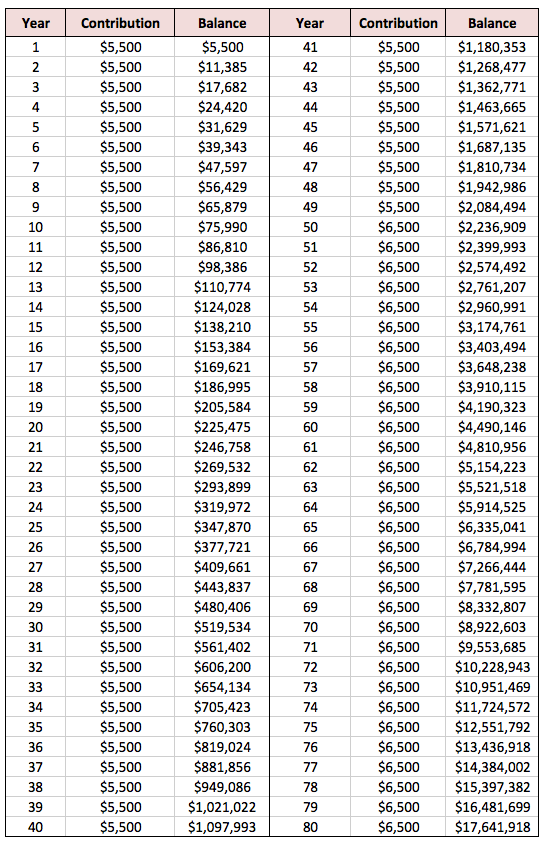
The duration of your investment plays a monumental role. The longer your money is invested, the greater the opportunity for compounding—earning returns on your previous returns. This exponential growth is why early investing in a Roth IRA is so powerful. Short time horizons increase the risk of locking in losses due to market downturns, while long horizons allow time to recover from such dips and benefit from the market’s overall upward trend.
Market Conditions and Economic Cycles
Returns are not linear. Bull markets (periods of sustained growth) drive higher returns, while bear markets (periods of decline) can lead to temporary losses. Economic factors such as inflation, interest rates, geopolitical events, and corporate earnings all contribute to market sentiment and, by extension, the performance of your investments. Acknowledging these cycles is vital for understanding that “average” doesn’t mean “consistent every year.”
Fees and Expenses
Even seemingly small fees can significantly erode your long-term returns.
- Expense Ratios: The annual percentage charged by mutual funds and ETFs to cover operating costs. A fund with a 1% expense ratio will yield 1% less per year than an identical fund with 0% expenses. Over decades, this difference can amount to tens or hundreds of thousands of dollars.
- Trading Fees: Charges for buying or selling investments (though many brokerages now offer commission-free trading for stocks and ETFs).
- Advisory Fees: If you use a financial advisor who charges a percentage of assets under management (e.g., 0.5% – 1% annually), this also reduces your net return.
Opting for low-cost index funds and ETFs is a common strategy to maximize the money that stays invested and growing for you.
Investor Behavior
Perhaps one of the most underestimated factors is the investor’s own behavior. Panic selling during market downturns, attempting to “time the market” (buying low and selling high, which is notoriously difficult to do consistently), or failing to stick to a well-thought-out investment plan can severely depress actual returns, even if the underlying investments perform well historically. Emotional decisions often lead to suboptimal outcomes.
Maximizing Your Roth IRA’s Growth Potential
Given that the “average return” is largely within your control, focusing on best practices can significantly enhance your Roth IRA’s long-term performance.
Consistent Contributions
Regularly contributing to your Roth IRA, ideally maxing it out each year, ensures that you are constantly putting more capital to work. This not only benefits from compounding but also employs dollar-cost averaging, where you buy more shares when prices are low and fewer when prices are high, smoothing out your average purchase price over time.
Diversification Across Asset Classes
Don’t put all your eggs in one basket. Diversifying your investments across different asset classes (stocks, bonds), sectors, company sizes, and geographies can help mitigate risk. If one segment of the market performs poorly, others may perform well, balancing out your overall portfolio and providing more consistent growth. Target-date funds are a popular choice for Roth IRAs as they offer instant diversification and automatically adjust their asset allocation as you approach retirement.
Rebalancing Your Portfolio
Periodically (e.g., once a year) reviewing and rebalancing your portfolio back to your target asset allocation is crucial. If stocks have performed exceptionally well, your portfolio might become overweight in equities. Rebalancing means selling some of the outperformers and buying more of the underperformers (or just adjusting new contributions) to maintain your desired risk level and exposure.
Embracing a Long-Term Perspective
The most powerful advantage of a Roth IRA is its long-term nature. Resist the urge to react to short-term market fluctuations. Focus on your long-term goals, trust in the power of compounding, and maintain a disciplined investment strategy. History shows that resilient investors who stay the course during market volatility are often rewarded with substantial long-term gains.

Utilizing Professional Guidance
For those who find managing their investments daunting, consulting a fee-only financial advisor can be invaluable. They can help you determine your risk tolerance, set realistic goals, construct a diversified portfolio, and create a comprehensive financial plan that includes your Roth IRA, ensuring your strategy aligns with your overall financial picture.
In conclusion, the “average return” on a Roth IRA is not a fixed number but a dynamic outcome of your investment choices, market conditions, and personal discipline. While historical market averages can provide a useful benchmark (often around 10-12% annually for a diversified stock-heavy portfolio), your individual experience will vary. The true power of the Roth IRA lies not just in its potential for strong returns, but in the unparalleled advantage of tax-free growth and withdrawals, making it an indispensable tool for securing a financially independent retirement. By understanding its mechanics, making informed investment decisions, and maintaining a long-term perspective, you can effectively harness your Roth IRA’s potential to build substantial wealth.
aViewFromTheCave is a participant in the Amazon Services LLC Associates Program, an affiliate advertising program designed to provide a means for sites to earn advertising fees by advertising and linking to Amazon.com. Amazon, the Amazon logo, AmazonSupply, and the AmazonSupply logo are trademarks of Amazon.com, Inc. or its affiliates. As an Amazon Associate we earn affiliate commissions from qualifying purchases.