
In the fast-paced landscape of modern technology, speed is the ultimate currency. Whether it is the time it takes for a webpage to load, the delay between a button press and an on-screen action, or the speed at which a user responds to a notification, “reaction time” is a foundational metric. While we often think of reaction time as a purely biological trait, in the context of the tech industry, it represents the critical intersection between human physiology and digital infrastructure.
Understanding the average reaction time is no longer just a concern for neurologists or professional athletes; it has become a vital benchmark for software developers, hardware engineers, and UI/UX designers. As we push the boundaries of what is possible with artificial intelligence, high-frequency computing, and ultra-responsive displays, the limiting factor is increasingly the human element. This article explores the nuances of average reaction time through a technological lens, examining how hardware, software, and human biology converge in the digital era.

Understanding Human Reaction Time in a Tech-Driven World
To understand how technology can optimize our interactions, we must first establish the biological baseline. Reaction time is the measure of how quickly an organism responds to a stimulus. In a digital environment, this usually involves a visual or auditory cue—such as a flash on a screen or a “ping” notification—followed by a physical response, like clicking a mouse or tapping a touchscreen.
The Biological Baseline: How Humans Process Information
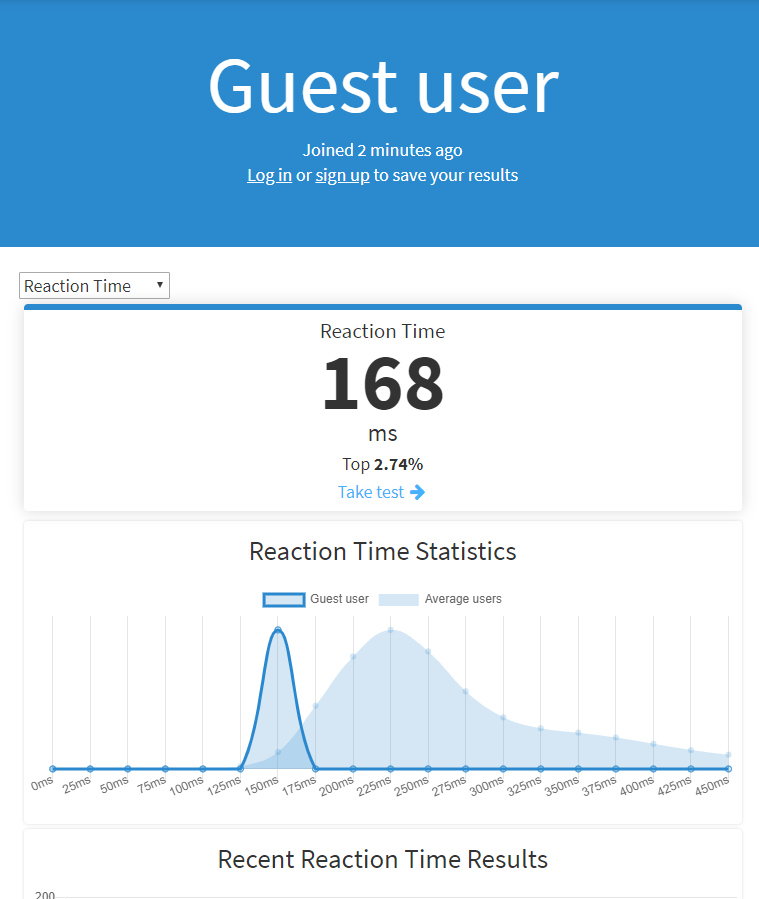
The average human reaction time for a visual stimulus is approximately 250 milliseconds (0.25 seconds). For auditory stimuli, the average is slightly faster, at about 170 milliseconds. These numbers, however, represent the “raw” speed of the nervous system. In a technological context, this process involves several stages: the perception of the stimulus by the eye or ear, the transmission of that signal to the brain, the cognitive processing required to decide on an action, and finally, the motor command sent to the muscles.
Tech platforms like “Human Benchmark” have turned the measurement of these milliseconds into a global data set. By analyzing millions of users, we see that while the mean sits around 270ms for the general population, factors such as age, fatigue, and even the type of device being used can shift this average significantly. For tech developers, these 250–300 milliseconds represent the “latency of the soul”—the unavoidable delay that software must account for to feel intuitive.
Visual vs. Auditory Stimuli in Digital Environments
In software engineering and app design, understanding the difference between visual and auditory reaction times is crucial. Because humans process sound faster than sight, critical alerts in high-stakes environments—such as server room alarms or cybersecurity breach notifications—often utilize sound to shave those vital 80 milliseconds off the user’s reaction time. In contrast, visual interfaces rely on high-contrast cues and motion to trigger the fastest possible visual processing, aiming to keep the user within that 250ms window of peak engagement.
The Role of Latency: Why Hardware and Software Matter
While biology provides the baseline, technology often introduces “artificial latency.” Even if a human has a world-class reaction time of 150ms, their effective reaction time will be much slower if their hardware is sluggish. This is where the tech industry focuses its most intense engineering efforts: reducing the “input-to-pixel” delay.
Input Lag and Peripheral Performance
Input lag is the delay between a physical movement (like moving a mouse) and the corresponding movement of the cursor on the screen. For a casual user, a few milliseconds of lag are imperceptible. However, for power users and tech enthusiasts, input lag is the enemy of productivity.
Modern peripherals, such as mechanical keyboards and high-polling-rate mice, are designed to minimize this. A standard office mouse might poll the computer at 125Hz (every 8ms), whereas a high-end gaming mouse polls at 8,000Hz (every 0.125ms). By increasing the frequency at which the hardware talks to the software, tech manufacturers ensure that the hardware is never the bottleneck in the human-machine feedback loop.
The Impact of Refresh Rates and Display Technology
The display is the final link in the chain of reaction time. Traditional 60Hz monitors refresh the image every 16.7 milliseconds. If a stimulus appears just after a refresh, the user has to wait nearly 17ms just to see it. The tech industry has countered this with high-refresh-rate displays—144Hz, 240Hz, and even 540Hz.
At 360Hz, the delay between frames drops to a mere 2.8ms. This reduction in “system latency” allows the user’s brain to receive information faster, effectively lowering their real-world reaction time. Furthermore, technologies like OLED (Organic Light Emitting Diode) offer near-instantaneous pixel response times (0.03ms), ensuring that ghosting and motion blur do not interfere with the user’s ability to process visual information.
Reaction Time in Professional Gaming and eSports
Nowhere is the measurement of reaction time more scrutinized than in the eSports industry. In competitive gaming, the difference between a 150ms reaction and a 200ms reaction is often the difference between winning and losing. This has spurred a specialized niche of “Reaction Tech.”
The Competitive Advantage of Milliseconds
Professional gamers often exhibit reaction times significantly faster than the general population, frequently dipping into the 160ms to 180ms range. To support this, software giants like NVIDIA have developed tools such as “NVIDIA Reflex.” This technology optimizes the CPU and GPU pipeline to reduce system latency, ensuring that the moment a player clicks, the action is registered by the game engine and displayed on the screen with the absolute minimum delay. In this context, “average reaction time” is a moving target that tech companies are constantly trying to lower through algorithmic optimization.
Training and Optimization Through Specialized Software
The tech world has also produced a suite of “Aim Trainers” and reaction-time software (e.g., KovaaK’s or Aim Lab). These tools use data analytics to break down a user’s reaction time into segments: detection time, flick time, and micro-correction time. By using these apps, users can utilize neuroplasticity to “overclock” their biological reaction times, proving that while the average is set by biology, it can be refined by technology.
Enhancing UX: Designing for the Human Response Window
For the broader tech industry, reaction time isn’t just about speed; it’s about the perception of speed. User Experience (UX) designers use reaction time data to create interfaces that feel “snappy” and “fluid.”
The 100ms Rule in Software Design
In the world of UI/UX, there is a golden rule: any system response that occurs within 100 milliseconds is perceived as instantaneous. If a mobile app takes 300ms to respond to a touch, the user begins to feel a “drag.” This is because 300ms exceeds the average human reaction time, making the delay noticeable to the conscious mind. To combat this, developers use “optimistic UI” techniques—displaying the result of an action (like a “like” heart appearing) before the server has even confirmed it—to keep the experience within that 100ms window.
Bridging the Gap with AI and Predictive Algorithms
The latest frontier in tech reaction time is predictive interaction. By using AI and machine learning, software can now predict where a user is likely to move their cursor or what app they are likely to open next. This “pre-loading” of data effectively reduces the reaction time to zero, or even into negative values, where the technology anticipates the human. As AI becomes more integrated into operating systems, the goal is to eliminate the “waiting” phase entirely, aligning the machine’s reaction time perfectly with the human’s thought process.
Future Frontiers: Neural Interfaces and Zero-Latency Interaction
As we look toward the future, the tech industry is aiming to bypass the slowest part of the reaction time chain: the physical body.
The End of the Physical Interface
Traditional reaction time involves a physical movement—a finger pressing a key. Brain-Computer Interfaces (BCI), such as those being developed by Neuralink and Synchron, aim to capture the “intent” to move directly from the motor cortex. By translating neural signals into digital commands, we can bypass the milliseconds lost to nerve conduction and muscle contraction.
In a BCI-driven world, the average reaction time could drop by 50ms to 100ms, effectively making humans “faster” than their biological constraints allow. This would revolutionize everything from assistive technology for the disabled to high-speed data management and digital communication.

Conclusion: The Millisecond Marathon
The “average reaction time” of 250ms is a biological constant, but in the realm of technology, it is a challenge to be met and mastered. From the hardware in our monitors to the AI in our software, the tech industry is in a perpetual race to shave off every possible millisecond of latency. By understanding the limits of human perception and building systems that operate at the edge of those limits, we create a digital world that feels less like a tool and more like an extension of our own minds. In the end, the evolution of technology is not just about making machines faster; it is about making our interactions with them as seamless and instantaneous as thought itself.
aViewFromTheCave is a participant in the Amazon Services LLC Associates Program, an affiliate advertising program designed to provide a means for sites to earn advertising fees by advertising and linking to Amazon.com. Amazon, the Amazon logo, AmazonSupply, and the AmazonSupply logo are trademarks of Amazon.com, Inc. or its affiliates. As an Amazon Associate we earn affiliate commissions from qualifying purchases.