
In the contemporary landscape of personal maintenance and professional branding, aesthetic procedures have transitioned from luxury indulgences to recurring line items in the average person’s budget. Among these, Botox (onabotulinumtoxinA) remains the undisputed leader of the market. However, for those looking to integrate this procedure into their financial planning, the question of “average price” is rarely met with a straightforward answer. The cost of Botox is influenced by a complex interplay of geographic economic variables, provider expertise, and the specific unit economics of the product itself.
Understanding the average price of Botox requires more than a simple quote; it necessitates a deep dive into how the aesthetic industry prices its services and how consumers can strategically budget for these recurring expenses without compromising their broader financial health.

Understanding the Unit Economics of Botox
To grasp the financial commitment of Botox, one must first understand the fundamental pricing model used by most reputable clinics: the “price per unit.” Botox is a biological product sold to practitioners in vials, which are then reconstituted for patient use.
Unit vs. Area Pricing Models
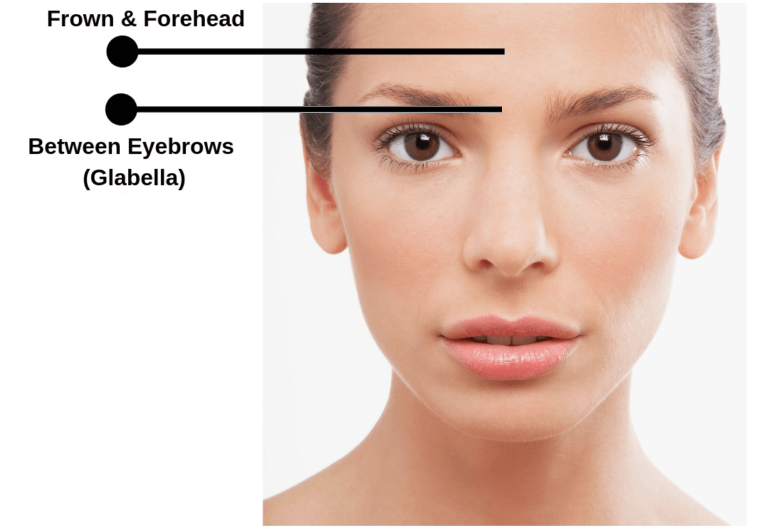
Most high-end clinics and medical spas price their services between $10 and $25 per unit. A standard treatment for a single area—such as the glabellar lines (the “11s” between the eyebrows)—typically requires 20 to 30 units. Consequently, a consumer is looking at a base cost of $200 to $750 for one area.
Some practitioners utilize “area pricing,” where they charge a flat fee for a specific zone (e.g., the forehead). From a financial planning perspective, unit pricing is often more transparent. Area pricing can sometimes obscure the actual volume of product being used, making it difficult for the consumer to compare value across different providers. For a budget-conscious individual, unit pricing allows for granular control over the total expenditure per visit.
The Variance in Dosage Requirements
The average price is also highly sensitive to individual biological needs. A patient with stronger facial musculature may require 50 units to achieve the same result that another patient achieves with 20. When calculating your personal average price, it is essential to factor in a 15-20% margin for dosage fluctuations. Over a fiscal year, these fluctuations can represent a difference of several hundred dollars, impacting the overall efficacy of your personal maintenance budget.
Regional Volatility: Why Geography Dictates Your Bill
In personal finance, “location, location, location” applies as much to aesthetic services as it does to real estate. The average price of Botox is heavily dictated by the cost of living and the competitive density of the local market.
Urban vs. Rural Market Dynamics
In major metropolitan hubs like New York City, Los Angeles, or London, the average price per unit often hovers at the top end of the spectrum, ranging from $18 to $25. This is not necessarily a reflection of a higher profit margin for the provider, but rather a reflection of significantly higher overhead costs, including commercial rent, specialized malpractice insurance, and competitive wages for skilled medical staff.
Conversely, in suburban or rural markets, prices may drop to $10 or $12 per unit. While this represents a significant saving, the consumer must weigh the financial benefit against the potential travel costs and the density of high-volume providers. In the aesthetic industry, high-volume injectors often have better “buying power” with pharmaceutical companies, which can sometimes lead to more competitive pricing for the end-user.
The Influence of Market Saturation
Interestingly, in markets with extreme saturation—such as Miami or Scottsdale—consumers may find “price wars” where units are advertised as low as $8 or $9. From a financial strategy standpoint, these outliers require caution. Extremely low pricing often serves as a “loss leader” to attract clients for more expensive procedures like dermal fillers or laser resurfacing. When analyzing the average price, it is fiscally prudent to discard these statistical outliers to find a sustainable “market rate” that ensures provider quality and product authenticity.
Strategic Budgeting: Managing Botox as a Recurring Line Item
Unlike a one-time surgical intervention, Botox is a recurring expense. The effects typically last between three and four months, meaning a consistent aesthetic result requires three to four treatments per year. When viewing this through the lens of personal finance, it should be categorized as a fixed-variable expense, much like a gym membership or a utility bill.

Calculating the Annual Cost of Maintenance
If the average treatment costs $400 and is required every four months, the annual investment is $1,200. For a high-frequency user receiving treatments every 90 days at a premium clinic ($600 per visit), the annual cost climbs to $2,400.
To manage this without disrupting long-term savings goals, financial advisors often recommend the “sinking fund” strategy. By setting aside $100 to $200 per month into a dedicated “personal maintenance” high-yield savings account, the consumer avoids the “sticker shock” of a quarterly $600 bill. This approach treats the expense as a manageable monthly commitment rather than a sporadic financial burden.
The ROI of Professional Appearance
While it is difficult to quantify, many professionals in high-visibility industries (finance, law, tech sales) view the cost of Botox as an investment in their personal brand. In these sectors, maintaining a rested and rejuvenated appearance is often perceived as a sign of vitality and professional competence. While this shouldn’t justify reckless spending, it does frame the average price of Botox as a strategic business expense for those whose career progression relies heavily on interpersonal perception and personal branding.
The Business Side: Why Your Provider Charges What They Do
To understand why the average price remains relatively high despite the product’s longevity on the market, one must look at the business finance of an aesthetic clinic. The price a consumer pays covers far more than just the liquid in the syringe.
Overhead and Specialized Labor
Botox must be administered by a licensed medical professional—typically a doctor, physician assistant, or nurse practitioner. The labor cost for these professionals is high. Furthermore, the storage requirements for botulinum toxins (cold chain management) and the regulatory compliance involved in handling controlled substances add significant layers of operational expense.
Brand Loyalty and Reward Programs
From a marketing and brand strategy perspective, the manufacturer of Botox (Allergan/AbbVie) utilizes a sophisticated loyalty program called “Alli.” This program allows consumers to earn points on every treatment, which can then be converted into discounts for future sessions. When calculating the average price, savvy consumers factor in these rewards, which can effectively lower the per-unit cost by 5% to 10% over the long term. This is a classic example of corporate brand strategy aimed at increasing “customer lifetime value” (CLV) and ensuring brand stickiness in a competitive market.
Cost vs. Value: Avoiding the Financial Trap of “Discount” Procedures
In the realm of personal finance, the cheapest option is rarely the most cost-effective. This is especially true for medical aesthetics. The “hidden costs” of seeking the lowest possible price for Botox can be devastating to both your face and your wallet.
The High Price of Corrective Work
If an inexperienced injector provides a sub-optimal result—such as ptosis (eyelid drooping) or facial asymmetry—the financial cost to “fix” the issue or the professional cost of dealing with the side effects for three months far outweighs the $100 saved on the initial treatment. In financial terms, this is an “asymmetric risk”: the potential downside (medical complications and social embarrassment) far outweighs the limited upside (saving a small percentage on the unit price).
Evaluating Provider Credentials
A professional financial approach to Botox involves vetting providers based on their “value proposition” rather than their price point. A provider who charges $15 per unit but has a 10-year track record and specialized training offers a much higher “risk-adjusted return” on your investment than a startup med-spa charging $9 per unit.
When interviewing a provider, ask about their “re-touch” policy. Reputable clinics often include a minor follow-up within two weeks to ensure the dosage was correct. This added value is a crucial component of the “average price” that is often overlooked by consumers who only focus on the initial quote.
Conclusion: Mastering the Aesthetics Budget
The average price of Botox is a fluid figure, typically landing between $300 and $600 per treatment session for the average consumer. However, by understanding the unit economics, accounting for regional market variances, and employing strategic budgeting techniques like sinking funds and loyalty programs, individuals can manage this expense with professional-grade financial precision.
Ultimately, Botox should be viewed as a component of one’s broader financial and personal branding strategy. By prioritizing value and provider expertise over the lowest possible price, consumers ensure that their investment yields the desired aesthetic return without incurring unnecessary financial or physical risk. In the business of self-presentation, the most successful strategy is one that balances fiscal responsibility with a commitment to quality and consistency.
aViewFromTheCave is a participant in the Amazon Services LLC Associates Program, an affiliate advertising program designed to provide a means for sites to earn advertising fees by advertising and linking to Amazon.com. Amazon, the Amazon logo, AmazonSupply, and the AmazonSupply logo are trademarks of Amazon.com, Inc. or its affiliates. As an Amazon Associate we earn affiliate commissions from qualifying purchases.