
In the modern landscape of the global economy, human capital is often cited as the most valuable asset a nation possesses. While “human capital” encompasses education, experience, and health, one of the most frequently discussed—and often debated—metrics used to quantify cognitive potential is the Intelligence Quotient (IQ). When we ask, “What is the average IQ in the USA?” we are not merely asking for a statistical figure; we are exploring a data point that has profound implications for personal finance, national productivity, and the long-term wealth-building capabilities of the American workforce.
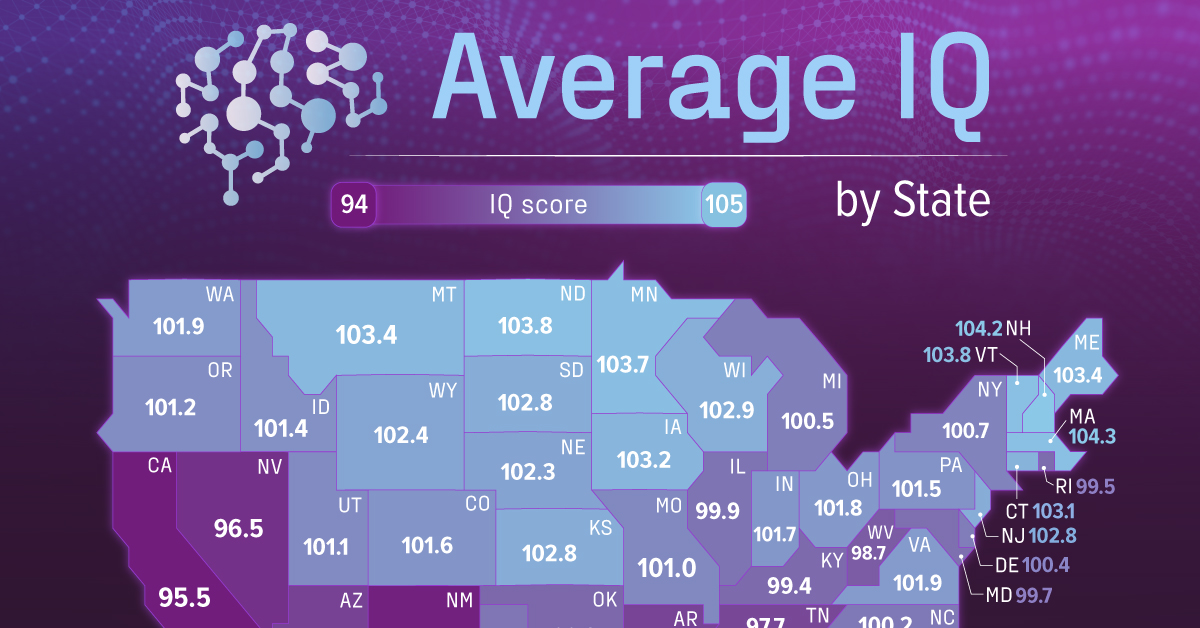
Currently, the average IQ in the United States is generally cited as being approximately 98. This figure places the U.S. within the top tier of global cognitive performance, though it sits slightly behind several East Asian and European nations. However, in the realm of money and finance, the absolute number is less important than what that number represents: the collective ability of a population to solve complex problems, manage risk, and innovate in an increasingly digital economy.
Understanding the Metric: What is the Average IQ in the USA?
To understand how intelligence intersects with money, we must first define the baseline. The IQ scale is designed so that the median score of a population is set at 100. In the United States, standardized testing across various demographics consistently yields an average between 97 and 99.
The Standardized Baseline and the Flynn Effect
The concept of the “average” is a moving target. Historically, the United States has benefited from the “Flynn Effect,” a phenomenon where IQ scores rose significantly throughout the 20th century due to better nutrition, improved schooling, and increased environmental stimulation. From a financial perspective, this rise in cognitive scores correlated directly with the post-WWII economic boom. As the average IQ shifted upward, the complexity of the American economy expanded, moving from manufacturing toward high-value service and technology sectors.
Demographic and Regional Variations
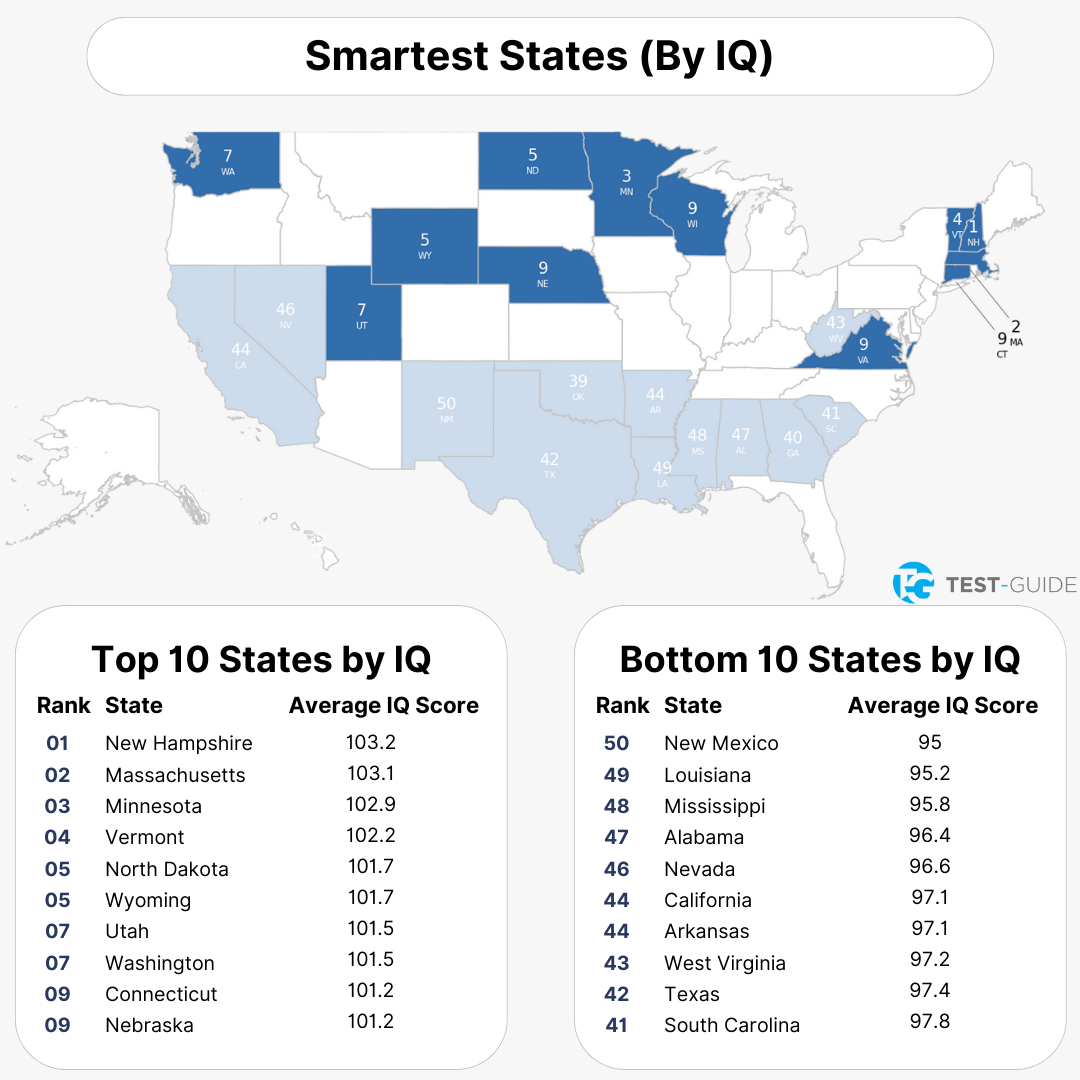
The “average” often masks significant nuances. Data suggests that cognitive scores can vary based on access to quality education and socio-economic status. In the context of personal finance, this creates a feedback loop: higher cognitive scores often lead to higher income, which in turn provides better resources for the next generation to achieve high cognitive performance. Understanding these variations is essential for policymakers and investors who are looking at regional economic growth patterns across the United States.
The Correlation Between IQ and Earning Potential
There is a robust body of economic research suggesting a positive correlation between cognitive ability and lifetime earnings. While IQ is certainly not the only determinant of wealth—factors like grit, social intelligence, and luck play massive roles—it serves as a strong predictor of an individual’s capacity to navigate high-complexity financial environments.
Human Capital as a Financial Asset
In professional finance, we view an individual’s skills and intelligence as “Human Capital.” For the average American, their ability to process information quickly and accurately is their primary engine for wealth creation. High-IQ individuals tend to gravitate toward fields that require abstract reasoning, such as quantitative finance, software engineering, and specialized medicine. These sectors offer the highest “return on investment” for one’s cognitive efforts, leading to a higher concentration of wealth among those who fall above the average IQ threshold.
Cognitive Skills and High-Income Career Paths
As the U.S. economy becomes more automated, the “cognitive premium”—the extra pay workers receive for their mental agility—is increasing. Those with above-average IQs are often better equipped to handle the “knowledge work” that the 21st-century economy demands. This discrepancy is a driving force behind wealth inequality; as routine tasks are handed off to AI and robotics, the financial rewards are increasingly concentrated in roles that require complex decision-making and high-level problem-solving—traits measured by IQ tests.
Financial Literacy and Cognitive Performance
While earning money is one side of the coin, managing it is another. Research indicates that cognitive ability is closely linked to financial literacy—the ability to understand and effectively use various financial skills, including personal financial management, budgeting, and investing.
Managing Risk and Investment Portfolios
Investing is essentially an exercise in probability and logic. The ability to calculate risk-adjusted returns, understand compound interest, and remain rational during market volatility requires a high degree of cognitive control. Individuals with scores around or above the average IQ in the USA are statistically more likely to participate in the stock market and hold diversified portfolios. This “cognitive advantage” in investing allows for better long-term capital appreciation, widening the gap between those who understand the “money game” and those who do not.
The Role of Analytical Thinking in Wealth Retention
Wealth retention is often more difficult than wealth creation. Analytical thinking helps individuals avoid predatory lending, high-interest consumer debt, and “get-rich-quick” schemes that target those with lower financial literacy. By applying the logical frameworks inherent in high IQ scores, savvy consumers can optimize their tax strategies, utilize insurance products effectively, and ensure their net worth grows steadily over time. In this sense, a higher-than-average IQ acts as a defensive shield for one’s personal balance sheet.
Macroeconomic Implications: IQ and the American GDP
If we zoom out from the individual to the nation, the average IQ in the USA becomes a significant indicator of macroeconomic health. A nation’s Gross Domestic Product (GDP) is effectively the sum of its citizens’ productivity, and that productivity is increasingly tied to “brain power” rather than “muscle power.”
Innovation as an Economic Engine
The United States has long been a global leader in innovation, from the silicon chip to the latest breakthroughs in biotechnology. This is largely driven by the “Right Tail” of the IQ distribution—the small percentage of the population with exceptionally high cognitive scores. However, the average IQ is what sustains the ecosystem. You need a highly capable workforce to implement, sell, and maintain the technologies created by the innovators. The financial health of the U.S. depends on maintaining an average IQ that is high enough to support a sophisticated, tech-driven economy.
Productivity Trends in the Information Economy
In the 1950s, a worker with an average IQ could earn a middle-class living through manual labor. In today’s economy, the “Information Age” demands higher cognitive thresholds for the same level of relative financial security. If the average IQ in the USA were to stagnate while the complexity of the global financial system increases, the U.S. could face a “productivity gap.” To maintain its status as the world’s leading economy, the U.S. must continue to invest in systems—like nutrition and education—that maximize the cognitive potential of its population.
Beyond the Score: Building Financial Intelligence
While the average IQ in the USA is a fixed statistical snapshot, “Financial Intelligence” (FQ) is a plastic attribute that can be developed. Even for those whose IQ falls at or below the average, there are clear strategies to improve financial outcomes.
The Modern Economic Challenges
We are currently entering an era where cognitive ability is being challenged by “information overload.” In a world of 24-hour news cycles and complex crypto-assets, even those with high IQs can fall prey to cognitive biases. The challenge for the average American is not necessarily their raw intelligence, but the application of that intelligence to modern financial tools. Discipline, patience, and emotional intelligence (EQ) often trump IQ when it comes to long-term retirement planning.

Strategies for Boosting Financial IQ
To bridge the gap between cognitive potential and financial success, individuals must focus on “applied intelligence.” This includes:
- Automation: Using technology to remove the need for constant decision-making (e.g., automated 401k contributions).
- Continuous Education: Recognizing that in a “Money” context, specific knowledge about tax codes and investment vehicles is more valuable than general logic.
- Outsourcing Complexity: Utilizing financial advisors or AI-driven tools to augment one’s own cognitive limitations.
In conclusion, while the average IQ in the USA sits at approximately 98, its relevance to the world of money cannot be overstated. Intelligence is the raw material of the modern economy. By understanding the link between cognitive metrics and financial behavior, we can better appreciate the importance of human capital in driving both personal wealth and national prosperity. Whether through higher earnings, smarter investing, or more efficient economic production, the “IQ factor” remains a cornerstone of the American financial narrative.
aViewFromTheCave is a participant in the Amazon Services LLC Associates Program, an affiliate advertising program designed to provide a means for sites to earn advertising fees by advertising and linking to Amazon.com. Amazon, the Amazon logo, AmazonSupply, and the AmazonSupply logo are trademarks of Amazon.com, Inc. or its affiliates. As an Amazon Associate we earn affiliate commissions from qualifying purchases.