
Understanding the average income in Georgia is a critical step for anyone considering a move to the Peach State, evaluating a job offer, or simply benchmarking their personal financial progress. Georgia has emerged as a powerhouse of the Southeast, boasting a diverse economy that ranges from traditional agriculture to a burgeoning film industry and a massive technology hub in Atlanta. However, “average income” is a multifaceted figure that varies significantly based on geography, industry, and educational attainment. To truly understand the financial landscape of Georgia, one must look beyond a single number and examine the underlying economic drivers that dictate earning potential in this dynamic state.

Understanding the Income Landscape in Georgia
When discussing the average income in Georgia, it is important to distinguish between “per capita income” and “median household income.” These two metrics provide different perspectives on the state’s economic health. According to recent data from the U.S. Census Bureau and the Bureau of Economic Analysis, the median household income in Georgia typically hovers around $71,000 to $73,000. This figure represents the “middle” of the road—half of Georgia households earn more, and half earn less.
Statewide Averages vs. Median Household Income
While the median household income provides a snapshot of what a typical family might earn, the per capita income (the average income per person) is often lower, frequently cited around $37,000 to $40,000. This discrepancy exists because household figures include multiple earners and various sources of income, such as investments and social security. For a personal finance enthusiast or a professional looking to negotiate a salary, the median income is often the more reliable benchmark for “average” living standards.
Impact of Inflation and Cost of Living
Earning $70,000 in Georgia does not carry the same weight as it did five years ago. Like the rest of the nation, Georgia has experienced the pressures of inflation, particularly in housing and energy costs. However, Georgia remains a relatively affordable state compared to coastal hubs like New York or California. The cost of living index in Georgia is generally below the national average, though this is rapidly changing in high-demand areas. When evaluating the average income, one must consider the “real” value of that income—how much it can actually buy in terms of local real estate, groceries, and services.
Factors Influencing Individual Earning Potential
The “average” in Georgia is heavily skewed by several demographic and professional factors. To understand where you fall on the financial spectrum, it is necessary to look at the variables that create the widest gaps in income.
Geographic Disparities: Metro Atlanta vs. Rural Georgia
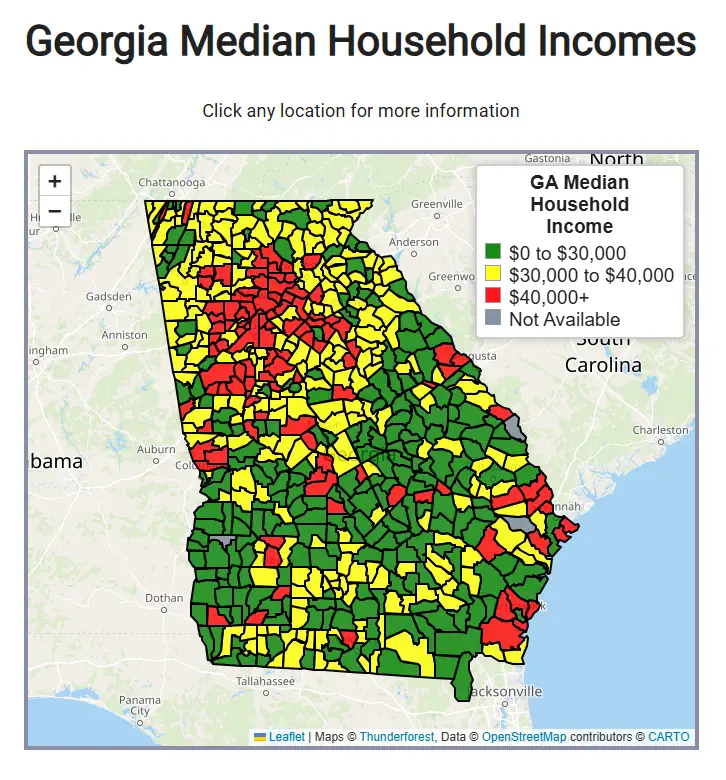
Geography is perhaps the most significant determinant of income in the state. The Atlanta-Sandy Springs-Alpharetta metropolitan area is the state’s economic engine. In affluent suburbs like Milton or Johns Creek, median household incomes can soar well above $120,000. Conversely, in rural counties in South Georgia, where the economy is primarily driven by agriculture, the median income can drop significantly, sometimes falling below $40,000. This “two Georgias” phenomenon means that an average income figure for the entire state can be misleading if not contextualized by location.
Educational Attainment and Specialized Skills
Education remains a powerful lever for income growth in Georgia. Individuals with a bachelor’s degree or higher in Georgia earn significantly more than those with only a high school diploma. The state has invested heavily in its university system, and the presence of institutions like Georgia Tech and Emory University ensures a steady stream of high-earning graduates into the local economy. In recent years, there has also been a surge in income for those with specialized technical certifications or “new-collar” skills in cybersecurity, software development, and advanced manufacturing.
The Role of Experience and Seniority
As with any market, seniority plays a major role. In Georgia’s corporate sectors—headquartered by giants like Delta Air Lines, The Home Depot, and UPS—entry-level salaries may align with the state average, but mid-to-upper management roles frequently command six-figure salaries plus bonuses. The “income ceiling” in Georgia is quite high for those in corporate leadership or specialized professional services such as law and consulting.
Top-Paying Industries and Career Paths in Georgia
The diversification of Georgia’s economy has created several high-income “lanes.” Understanding which industries are booming can help professionals pivot toward higher-earning opportunities.
The Technology and FinTech Boom
Atlanta has earned the nickname “Transaction Alley” because it handles more than 70% of all credit card swipes and electronic payments in the United States. This concentration of FinTech companies means that roles in software engineering, data science, and financial analysis often pay well above the state average. Entry-level tech roles in the Atlanta metro area often start at $80,000, with senior roles easily eclipsing $150,000.
Logistics and Supply Chain Management
Home to the Port of Savannah—one of the fastest-growing container ports in the country—and Hartsfield-Jackson International Airport, Georgia is a global logistics hub. This sector provides a wide range of income levels, but for those in supply chain management, logistics technology, and international trade, the income potential is substantial. The average income for a supply chain manager in Georgia often exceeds $95,000, reflecting the critical nature of the industry to the state’s GDP.
The “Hollywood of the South”
Georgia’s generous tax incentives for film and television production have turned it into a global hub for entertainment. While much of the “average” income in this sector is derived from hourly crew work, the sheer volume of production has created a new class of high-earning residents. From specialized technicians to production accountants, the film industry has infused billions of dollars into the local economy, raising the average wage in counties like Fayette and Gwinnett.
Managing Your Income: Financial Planning for Georgians
Earning the average income is only the first step; managing that income within the specific legal and economic framework of Georgia is what builds long-term wealth.
Tax Implications: The Transition to a Flat Tax
Georgia’s tax structure is currently undergoing a significant shift. The state has moved toward a flat tax system, which simplifies the tax code and, for many middle-to-high earners, reduces the overall tax burden compared to a graduated system. For 2024 and beyond, the state has implemented a flat income tax rate of 5.49%, with plans to lower it further in subsequent years. For a resident earning the average income, this transparency helps in more accurate budgeting and tax planning.
Budgeting for the Georgia Real Estate Market
Housing is the largest expense for most Georgia households. While the average income has grown, home prices in the Atlanta metro area have grown faster. Financial experts often suggest that housing costs should not exceed 30% of gross income. For someone earning the state median of $71,000, that equates to a monthly housing budget of roughly $1,775. In popular areas like Midtown Atlanta or the Beltline, this budget may only cover a one-bedroom apartment, whereas in the suburbs or mid-sized cities like Augusta or Columbus, it could support a mortgage for a single-family home.
Wealth Building and Local Investment Opportunities
For those earning above the average, Georgia offers unique investment opportunities. The state’s growth makes real estate a perennial favorite for local investors. Furthermore, Georgia’s business-friendly environment has led to a rise in angel investing and venture capital opportunities, particularly in the tech and health-tech sectors. Utilizing tax-advantaged accounts like 401(k)s (offered by many of the state’s Fortune 500 employers) and Georgia’s 529 College Savings Plan is essential for turning an average income into lasting family wealth.
The Future of the Georgia Economy
The average income in Georgia is projected to continue its upward trajectory as the state attracts more high-value industries. The shift toward a digital and green economy is already visible in the massive investments being made in electric vehicle (EV) manufacturing and battery plants across the state.
Remote Work and the “Peach State” Migration
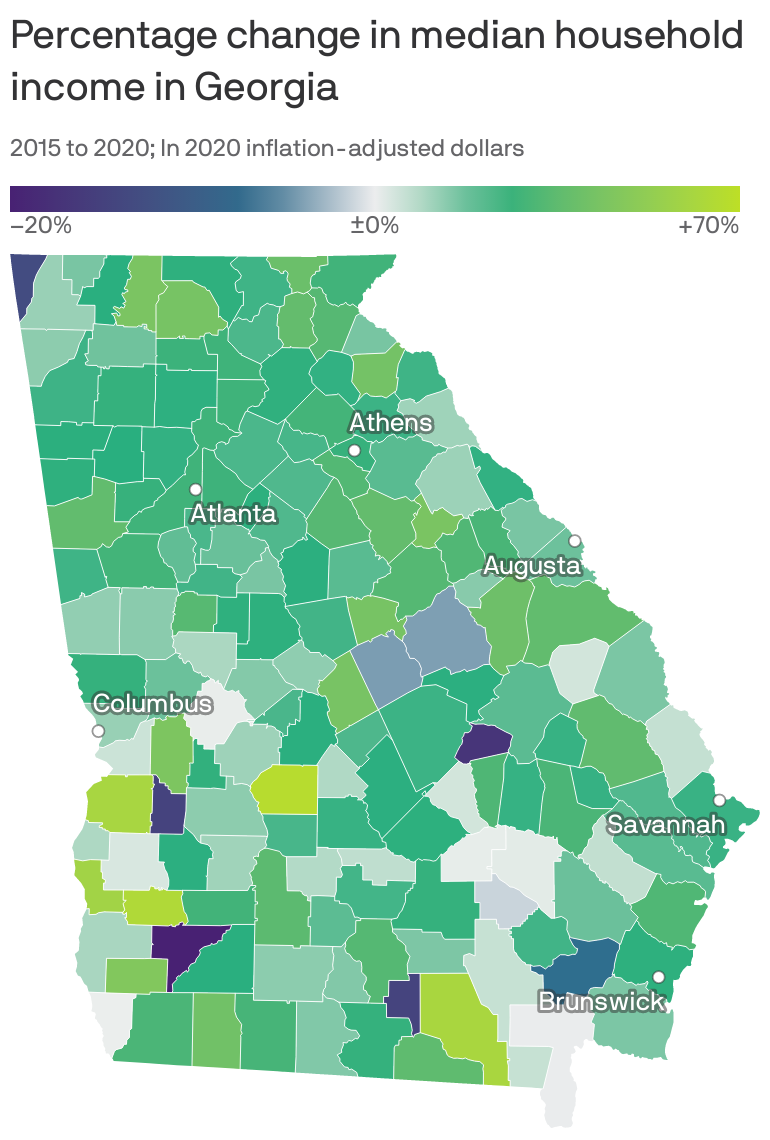
The rise of remote work has allowed many professionals to keep high salaries from “high-cost” states while living in Georgia. This influx of “digital migrants” has helped push the average income upward, particularly in scenic areas like the Blue Ridge Mountains or the coastal regions near St. Simons Island. This trend has also forced local employers to increase wages to remain competitive with national remote-work standards.
Projected Wage Growth and Economic Diversification
As Georgia continues to diversify its economic base, the volatility of the average income decreases. By not being overly dependent on a single sector, the state remains resilient against industry-specific downturns. The continued expansion of the Savannah port, the growth of the cybersecurity hub in Augusta, and the tech expansion in Atlanta suggest that Georgia will remain a top destination for those looking to maximize their earning potential in the American South.
In summary, the average income in Georgia is a story of growth and geographic diversity. While the numbers suggest a comfortable middle-class existence for many, the true financial opportunity lies in the state’s high-growth sectors and its evolving tax and business environment. Whether you are a resident or a prospective newcomer, understanding these nuances is key to making informed financial decisions in the Peach State.
aViewFromTheCave is a participant in the Amazon Services LLC Associates Program, an affiliate advertising program designed to provide a means for sites to earn advertising fees by advertising and linking to Amazon.com. Amazon, the Amazon logo, AmazonSupply, and the AmazonSupply logo are trademarks of Amazon.com, Inc. or its affiliates. As an Amazon Associate we earn affiliate commissions from qualifying purchases.