
For the majority of individuals, a home is the most significant investment they will ever make. Central to this investment is the mortgage—the financial engine that powers homeownership. Among the various products available, the fixed-rate mortgage remains the gold standard for stability and long-term financial planning. However, when prospective buyers ask, “What is the average fixed-rate mortgage?” they are often met with a moving target. Mortgage rates fluctuate daily, influenced by a complex web of global economic shifts, central bank policies, and individual financial profiles.
Understanding what constitutes an “average” rate requires more than looking at a single percentage point on a news ticker. It involves understanding the mechanics of the lending market, the historical context of interest rates, and the strategic maneuvers a borrower can take to secure a rate that positions them for long-term wealth accumulation.
The Mechanics of Fixed-Rate Mortgages and Market Stability
To understand the average rate, one must first define the instrument itself. A fixed-rate mortgage is a home loan with an interest rate that remains constant throughout the entire term of the loan. Whether the loan lasts 15, 20, or 30 years, the principal and interest portion of the monthly payment never changes. This predictability is the primary draw for the “Money” conscious consumer, as it provides a hedge against inflation and rising interest rates in the broader economy.
The Predictability Factor in Personal Finance
The primary benefit of a fixed-rate mortgage is the protection it offers against market volatility. Unlike Adjustable-Rate Mortgages (ARMs), which can see payments spike after an initial teaser period, a fixed-rate loan locks in the cost of borrowing. In a rising interest rate environment, a homeowner with a 4% fixed-rate mortgage is essentially “making money” relative to new buyers who might be facing 7% or 8% rates. This stability allows for precise long-term budgeting, enabling families to allocate funds toward other investment vehicles, such as retirement accounts or college savings, without the fear of a ballooning housing payment.
How Lenders Determine the Baseline “Average”
The national average for fixed-rate mortgages is not a number pulled out of thin air by banks. It is largely influenced by the secondary mortgage market. When a bank issues you a mortgage, they often sell that debt to investors in the form of Mortgage-Backed Securities (MBS). To attract investors, these securities must offer a yield that is competitive with other “safe” investments, primarily U.S. Treasury bonds. Consequently, mortgage rates typically track the movement of the 10-year Treasury yield. When Treasury yields rise, mortgage rates follow suit to remain attractive to global investors.
Macroeconomic Influences on Mortgage Rate Averages
While the individual borrower’s financial health is vital, the “average” rate is dictated by forces far beyond any one person’s control. Understanding these macro-forces is essential for timing a home purchase or a refinance.
The Role of the Federal Reserve and Monetary Policy
A common misconception is that the Federal Reserve sets mortgage rates directly. In reality, the Fed sets the “Federal Funds Rate,” which is the interest rate banks charge each other for overnight loans. However, the Fed’s actions signal the direction of the economy. If the Fed raises rates to combat inflation, the cost of borrowing across the board increases, pushing the average fixed-rate mortgage higher. Conversely, when the Fed lowers rates to stimulate a sluggish economy, mortgage rates generally trend downward.
Inflationary Pressures and the Value of the Dollar
Inflation is the natural enemy of fixed-income investors. Because a mortgage is a long-term contract where the lender receives a fixed payment, inflation erodes the purchasing power of those future dollars. If inflation is high, lenders demand higher interest rates upfront to compensate for the fact that the money they are paid back in 20 years will be worth significantly less than it is today. Therefore, the average mortgage rate often serves as a barometer for the market’s long-term inflation expectations.
Global Economic Stability and the “Safe Haven” Effect
In times of global political or economic turmoil, international investors often flock to U.S. Treasuries, which are considered the safest assets in the world. This high demand for bonds drives their prices up and their yields down. Because mortgage rates are tied to these yields, global instability can paradoxically lead to a drop in the average fixed-rate mortgage in the United States, providing a window of opportunity for domestic borrowers.
Comparing the 15-Year vs. 30-Year Fixed-Rate Averages
When looking at averages, it is important to distinguish between the two most popular terms: the 30-year and the 15-year fixed-rate mortgage. The averages for these two products move in tandem but are rarely the same.
The 30-Year Fixed: The Standard for Affordability
The 30-year fixed-rate mortgage is the most popular choice in the United States. Its primary advantage is affordability; by stretching the repayment over three decades, the monthly payment is kept lower, allowing buyers to qualify for more expensive homes. However, the “average” rate for a 30-year loan is typically 0.5% to 1% higher than its 15-year counterpart. This is because the lender is taking on more risk over a longer period.
The 15-Year Fixed: The Wealth-Building Accelerator
For those focused on rapid equity growth and minimizing interest expenses, the 15-year fixed-rate mortgage is a powerful tool. The average rate is consistently lower than the 30-year rate, and because the principal is paid down much faster, the total interest paid over the life of the loan is drastically reduced. While the monthly payments are higher, the long-term financial gain is substantial, often saving the borrower hundreds of thousands of dollars in interest.
Individual Factors That Influence Your Personal Rate
The “national average” is a benchmark, but very few borrowers receive that exact number. Your personal financial profile determines whether you fall above or below the mean.
Credit Scores and Risk Tiers
Lenders use credit scores to categorize borrowers into risk tiers. Those with “Excellent” credit (740+) are rewarded with rates below the national average. Those with “Fair” or “Poor” credit may find themselves paying 1% to 2% more than the average. In the world of finance, interest is the price of risk; the more reliable you appear as a borrower, the lower that price becomes.
The Impact of the Down Payment (Loan-to-Value)
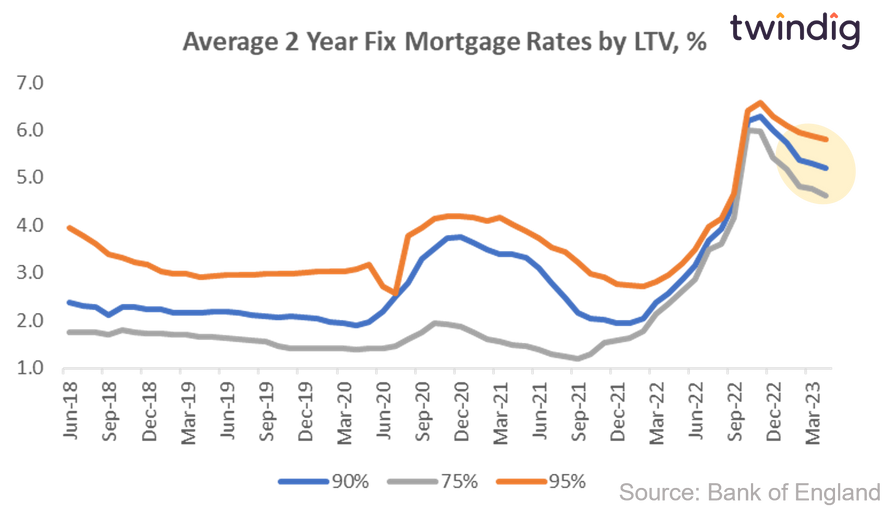
The amount of “skin in the game” you have matters. A borrower putting down 20% or more represents a lower risk to the lender than someone putting down 3.5%. If you have less than 20% equity, you will likely be required to pay Private Mortgage Insurance (PMI), which increases your effective interest rate and monthly cost. Furthermore, borrowers with high Loan-to-Value (LTV) ratios are often charged a premium on their interest rate to offset the increased risk of default.
Debt-to-Income (DTI) Ratios
Lenders also look at your DTI ratio—the percentage of your gross monthly income that goes toward paying debts. A lower DTI suggests you have the financial “breathing room” to handle a mortgage payment. Even if your credit score is high, a high DTI can result in a higher-than-average interest rate offer, as the lender perceives a higher likelihood that a financial hiccup could lead to a missed payment.
Strategies to Beat the Average Rate
Securing a mortgage rate even a fraction of a percentage point below the average can result in massive savings over time. Savvy investors and homebuyers employ several strategies to optimize their borrowing costs.
Mortgage Points: Buying Down the Rate
One common tactic is the purchase of “discount points.” One point typically costs 1% of the total loan amount and reduces your interest rate by a predetermined amount (often 0.25%). This is essentially paying interest upfront to secure a lower rate for the duration of the loan. From a financial perspective, this makes sense if you plan to stay in the home long enough to reach the “break-even point,” where the monthly savings exceed the initial cost of the points.
The Importance of Comparison Shopping
Rates can vary significantly from one lender to another. Large national banks, local credit unions, and online mortgage brokers all have different overhead costs and risk appetites. By obtaining Loan Estimates from at least three different lenders, borrowers can leverage these offers against each other. In many cases, a lender will match or beat a competitor’s rate to earn your business.
Timing the Market and Locking the Rate
Because mortgage rates are volatile, “locking” your rate is a critical step. Once you find a rate you are comfortable with—especially if it is at or below the current average—you can lock it in for a period of 30 to 60 days while your loan is processed. This protects you from any sudden market spikes that could occur before your closing date.
Conclusion: The Long-Term Value of the Fixed-Rate Mortgage
The “average” fixed-rate mortgage is more than just a statistic; it is a reflection of the current economic climate and a baseline for personal financial planning. While it is easy to get discouraged when averages rise, it is important to view the mortgage in the context of a total financial portfolio.
A fixed-rate mortgage provides a unique advantage in the world of finance: it allows a borrower to use leverage to acquire a diagnostic asset while keeping the cost of that leverage capped. Over 30 years, as inflation rises and the value of currency fluctuates, the homeowner’s payment remains a vestige of the past—a frozen cost in a warming economy. By understanding the factors that drive the average and taking proactive steps to optimize their financial profile, homebuyers can secure a mortgage that serves as a foundation for lifelong financial security and wealth creation.
aViewFromTheCave is a participant in the Amazon Services LLC Associates Program, an affiliate advertising program designed to provide a means for sites to earn advertising fees by advertising and linking to Amazon.com. Amazon, the Amazon logo, AmazonSupply, and the AmazonSupply logo are trademarks of Amazon.com, Inc. or its affiliates. As an Amazon Associate we earn affiliate commissions from qualifying purchases.