
The question “What is the average child support payment?” is frequently asked by parents navigating separation, divorce, or co-parenting arrangements. While seemingly straightforward, the answer is anything but simple. There isn’t a single, universally applicable “average” figure for child support across the United States, let alone globally. This article delves into the intricate factors that determine child support obligations, shedding light on why a specific average is elusive and how payments are actually calculated. Understanding these complexities is crucial for anyone involved in a child support arrangement, whether as a payer or a recipient.
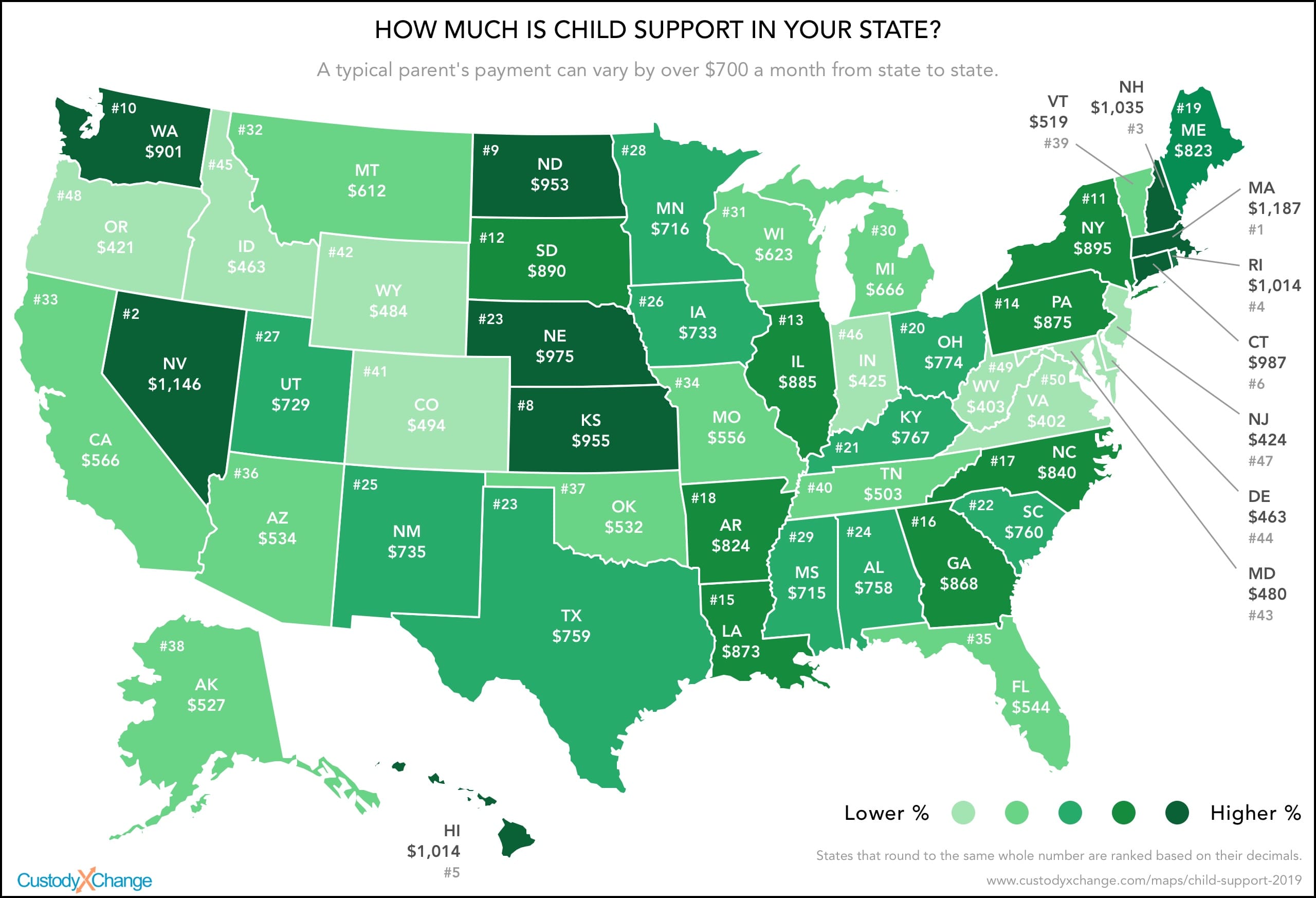
Child support is a legal obligation for parents to provide financial assistance for the care and upbringing of their children, regardless of their marital status or living arrangements. The primary goal is to ensure that children maintain a similar standard of living to what they would have enjoyed had their parents remained together and to share the financial responsibilities of raising them equitably. However, the exact amount is highly individualized, depending on a myriad of financial, legal, and personal circumstances.
Deconstructing the “Average”: Why a Single Number is Elusive
The concept of an “average” implies a consistent benchmark, but child support is inherently inconsistent across different jurisdictions and personal situations. The variance stems from a combination of state-specific guidelines, individual financial capacities, and the unique needs of each child.
State-Specific Guidelines and Formulas
The most significant reason there’s no national average is that child support laws are determined at the state level, not federally. Each of the 50 U.S. states, along with the District of Columbia, has its own unique set of guidelines and formulas for calculating child support. These guidelines aim to ensure fairness and consistency within each state, but they differ substantially from one state to another.
Broadly, states typically employ one of three main models:
- Income Shares Model: This is the most common model, used by the majority of states. It’s based on the premise that children should receive the same proportion of parental income they would have received if their parents lived together. The parents’ combined adjusted net income is determined, and a basic support obligation is calculated from a schedule. This obligation is then divided proportionally between the parents based on their individual contributions to the combined income.
- Percentage of Obligor’s Income Model: Used by a smaller number of states, this model calculates child support as a fixed percentage of the non-custodial parent’s (obligor’s) income. The percentage may vary based on the number of children needing support. Some states use a “flat percentage” regardless of the obligor’s income, while others use a “varying percentage” that might decrease as income increases.
- Melson Formula: A more complex variation of the income shares model, used by a few states (like Delaware, Hawaii, and Montana). It starts by ensuring that each parent’s basic needs are met before calculating child support, then calculates a primary support allowance for the children, and finally considers additional expenses.
Income as the Primary Driver
Regardless of the model used, parents’ income is almost always the most critical factor in determining child support. This usually includes wages, salaries, bonuses, commissions, self-employment income, disability benefits, unemployment benefits, and even investment income. Both parents’ incomes are considered, though their weights may differ depending on the state’s formula. Deductions for taxes, health insurance premiums, union dues, and other mandatory contributions are often applied to arrive at a net income figure for calculation purposes. The higher the combined income, generally the higher the child support obligation.
Number of Children and Custody Arrangements
The number of children for whom support is being calculated directly impacts the total amount. Logically, more children require more financial resources, leading to a higher support order. However, the increase is not always linear (e.g., two children might not mean exactly double the support of one child).
Custody arrangements, particularly the amount of time each parent spends with the children (often referred to as “parenting time” or “overnights”), also play a significant role. In situations where parents share physical custody more equally (e.g., 50/50), the child support calculation often takes into account the expenses incurred by both parents during their respective parenting times, potentially leading to a lower payment from one parent to the other, or even no payment if incomes are comparable. Conversely, if one parent has sole physical custody and the other has limited visitation, the support obligation for the non-custodial parent is typically higher.
Additional Expenses and Special Needs
Beyond basic needs, courts often consider additional expenses essential for a child’s well-being and development. These can significantly increase the total support obligation. Such expenses might include:
- Childcare costs: Daycare, after-school care, summer camps.
- Healthcare costs: Health insurance premiums attributable to the child, uninsured medical expenses (co-pays, deductibles).
- Educational expenses: Tuition for private schools, special educational needs, tutoring.
- Extracurricular activities: Sports, music lessons, clubs.
- Special needs: Costs associated with a child’s disability, chronic illness, or unique therapeutic requirements.
These “add-on” expenses are typically shared between parents, often in proportion to their respective incomes, on top of the basic support amount.
Key Factors Influencing Child Support Calculations
Understanding the general framework is one thing; appreciating the granular details that influence the final number is another. Several specific factors are meticulously examined during child support calculations.
Parental Income and Earning Capacity
As mentioned, income is paramount. Courts look at gross income, which includes virtually all sources of income. However, they also consider “net income” after certain deductions. A crucial aspect is “earning capacity.” If a parent is voluntarily unemployed or underemployed to avoid paying child support, a court may impute income to them—meaning they will calculate child support as if that parent were earning what they could reasonably earn based on their education, skills, and past work history. This prevents parents from deliberately lowering their income to reduce their child support obligation.
Childcare Costs
For many families, childcare is one of the most substantial ongoing expenses. Courts almost universally include reasonable and necessary childcare costs incurred by a parent due to employment or job searching. These costs are often added to the basic child support obligation and allocated between parents based on their proportional incomes. This ensures that the parent providing primary care is not solely burdened by these essential expenses.
Health Insurance Premiums
The cost of health insurance for the child is another critical factor. The parent who carries the health insurance for the child often receives a credit or adjustment in the child support calculation for the portion of the premium specifically covering the child. If the child is not insured, the court will typically order one parent to obtain health insurance for the child, and the cost will be factored into the support order. Uninsured medical expenses, such as co-pays and deductibles, are usually shared between parents proportionally.
Extraordinary Expenses
These are expenses that are not regular or recurring and are above and beyond the “normal” costs of raising a child, as presumed by the basic support guidelines. Examples include significant medical treatments not covered by insurance, therapy, specialized educational programs, or expenses related to a child’s exceptional talent (e.g., competitive sports, arts programs). Courts typically address these on a case-by-case basis, often ordering parents to share them according to their income proportions.
Existing Support Obligations
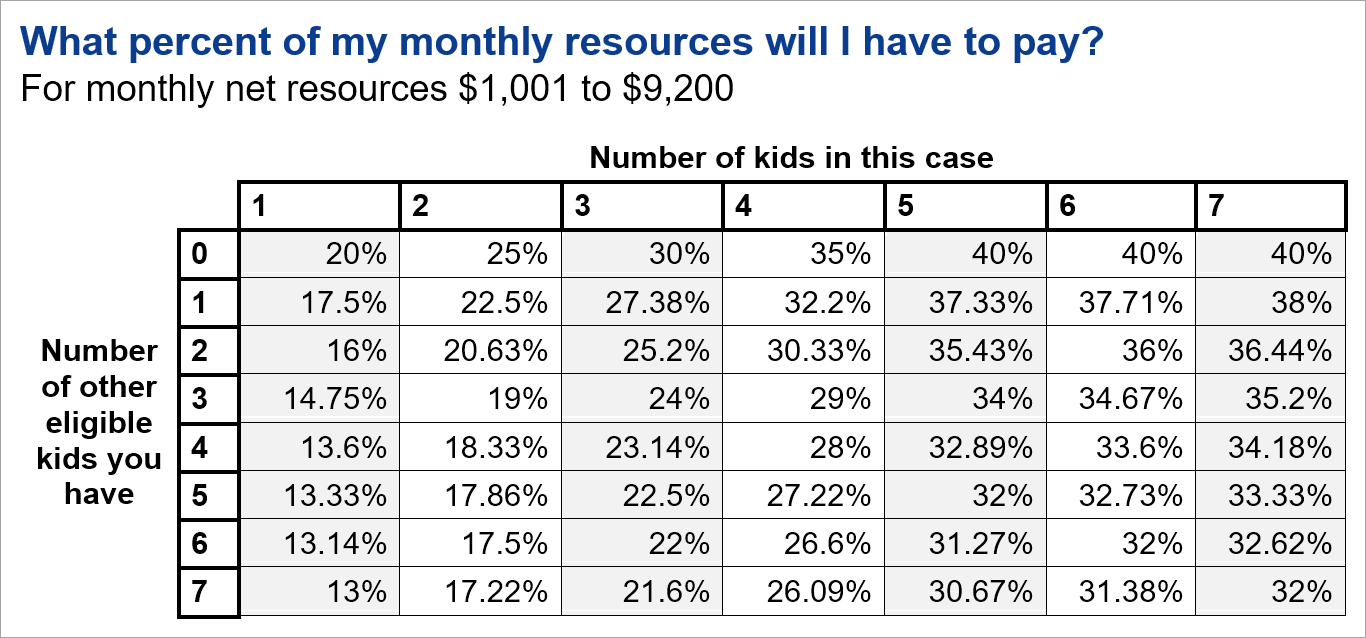
If a parent is already paying child support for other children from a previous relationship or is supporting other children living in their household, this might be considered when calculating a new child support order. Many state guidelines allow for deductions or adjustments to a parent’s income for existing child support or alimony payments, recognizing that these reduce the income available for the current child support obligation. This helps ensure that parents are not overburdened and that all children receive some level of support.
The Calculation Process: From Petition to Order
The journey to a child support order typically involves several steps, from initial filing to judicial enforcement.
Initial Filing and Information Gathering
The process usually begins when one parent files a petition for child support with the appropriate state court or child support agency. This petition often requires basic information about both parents and the children. Following the filing, an official process server will typically serve the other parent with the petition and summons, notifying them of the legal action and requiring their response.
Financial Disclosure and Documentation
Both parents are required to provide comprehensive financial disclosures. This involves submitting detailed documentation of income, expenses, assets, and debts. Common documents requested include recent pay stubs, tax returns, bank statements, profit and loss statements (for self-employed individuals), health insurance statements, and proof of childcare expenses. Accurate and complete disclosure is critical, as any misrepresentation can lead to serious legal consequences.
Mediation and Negotiation
Before a judge makes a final decision, many jurisdictions encourage or even mandate mediation or settlement conferences. During these sessions, parents, often with their attorneys, attempt to negotiate a mutually agreeable child support arrangement. A mediator, a neutral third party, facilitates the discussion, helping parents communicate and explore solutions. Reaching an agreement through negotiation can be more efficient, less adversarial, and result in an order that both parents are more likely to comply with willingly.
Court Orders and Enforcement
If parents cannot reach an agreement through negotiation or mediation, the case proceeds to a hearing or trial. A judge reviews all submitted evidence, financial disclosures, and arguments from both sides before issuing a formal child support order. This order is legally binding. Once an order is in place, state child support enforcement agencies are responsible for collecting and distributing payments. Enforcement mechanisms can include wage garnishment, interception of tax refunds, suspension of driver’s licenses, and even contempt of court proceedings for non-payment.
Modifying Child Support Orders
Child support orders are not set in stone indefinitely. Life circumstances change, and the legal system recognizes that initial orders may need adjustments over time.
Substantial Change in Circumstances
To modify an existing child support order, a parent must typically demonstrate that there has been a “substantial change in circumstances” since the last order was established. What constitutes a “substantial change” varies by state but commonly includes:
- Significant income change: A substantial increase or decrease in either parent’s income (e.g., job loss, promotion, disability).
- Change in parenting time: A significant alteration in the custody schedule that affects the number of overnights.
- Change in a child’s needs: The emergence of new medical conditions, special educational needs, or increased costs for extracurricular activities.
- Change in childcare or healthcare costs: A significant increase or decrease in these expenses.
- Incarceration of a parent: While complex, this can be grounds for review.
Most states also have a “review and adjustment” period, often every three years, where parents can request a review of their order even without a substantial change, simply to ensure it aligns with current guidelines and financial information.
The Modification Process
To initiate a modification, one parent files a petition with the court, detailing the changes in circumstances and requesting a review of the existing order. Both parents will again be required to submit current financial documentation. Similar to the initial process, mediation might be encouraged, and if no agreement is reached, a judge will ultimately decide whether to modify the order and what the new support amount will be. It’s crucial not to unilaterally stop or alter payments without a court-approved modification, as this can lead to serious legal repercussions.
The Broader Financial and Emotional Impact of Child Support
Beyond the legal and financial calculations, child support profoundly impacts the lives of parents and, most importantly, children.
For the Custodial Parent
For the parent primarily caring for the children, child support provides crucial financial stability. It helps cover the essential costs of housing, food, clothing, education, healthcare, and extracurricular activities. Consistent and adequate child support can alleviate financial stress, allowing the custodial parent to focus more on the children’s well-being and less on financial struggles. It reinforces the principle that both parents share responsibility for their children’s financial needs.
For the Non-Custodial Parent
Child support represents a significant financial commitment for the non-custodial parent. Understanding that these payments directly benefit their children’s upbringing can help foster a sense of purpose and responsibility. It requires careful budgeting and financial planning to ensure timely payments. While some non-custodial parents may feel the burden, viewing it as an investment in their children’s future can shift perspective. It’s essential for non-custodial parents to communicate any financial difficulties proactively with the court or child support agency rather than falling behind on payments.
The Child’s Well-being
Ultimately, child support is about the children. Consistent and sufficient financial support contributes to a more stable and secure environment for them. It helps minimize the financial disparity that can arise from parental separation, allowing children to maintain, as much as possible, the standard of living they enjoyed before the parents separated. This financial stability can positively impact a child’s emotional, educational, and social development, reducing stress and providing opportunities for growth and enrichment.

Conclusion
The quest for a definitive “average child support payment” will inevitably lead to frustration, as such a figure doesn’t genuinely exist in a meaningful way. Child support is a highly individualized financial obligation, meticulously calculated based on specific state laws, both parents’ incomes, the number of children, custody arrangements, and a host of other relevant expenses.
Rather than fixating on a non-existent average, parents should focus on understanding the specific guidelines in their state, accurately disclosing their financial information, and working towards an equitable arrangement that prioritizes the children’s best interests. Given the complexity of child support laws and calculations, seeking advice from an experienced family law attorney is always recommended. A legal professional can provide tailored guidance, help navigate the intricate process, and ensure that the child support order is fair, legally sound, and reflective of both parents’ capacities and the children’s needs. The ultimate goal is not just a number, but ensuring children receive the consistent financial backing necessary to thrive.
aViewFromTheCave is a participant in the Amazon Services LLC Associates Program, an affiliate advertising program designed to provide a means for sites to earn advertising fees by advertising and linking to Amazon.com. Amazon, the Amazon logo, AmazonSupply, and the AmazonSupply logo are trademarks of Amazon.com, Inc. or its affiliates. As an Amazon Associate we earn affiliate commissions from qualifying purchases.