
The automotive industry remains one of the most significant sectors of the global economy, and at the heart of its retail operations lies the car salesperson. For those considering a career in the field or curious about the financial mechanics of a dealership, understanding the commission structure is vital. Unlike standard salaried positions, the income of a car salesperson is largely tied to performance, profit margins, and volume. This financial model creates a high-stakes environment where the “average” income can be deceptive, as it spans a wide spectrum from entry-level earnings to high-six-figure salaries for top-tier professionals.

In this guide, we will break down the complex financial architecture of car sales commissions, explore the variables that dictate earning potential, and analyze how modern dealership models are shifting the way sales professionals are compensated.
The Financial Mechanics of Car Sales Commissions
To understand what a car salesperson earns, one must first understand how a dealership generates profit. Commission is rarely a simple percentage of the total sticker price. Instead, it is usually a percentage of the “gross profit” made on the vehicle.
Front-End vs. Back-End Profits
The commission structure is typically divided into two categories: front-end and back-end.
- Front-End Profit: This is the difference between the “invoice price” (what the dealer paid for the car) and the “selling price” (what the customer pays), minus any “pack.” The “pack” is an internal dealership fee used to cover overhead costs like detailing, advertising, and administrative expenses. A typical front-end commission ranges from 20% to 30% of the remaining gross profit.
- Back-End Profit: This refers to the revenue generated after the sale of the vehicle itself. This includes financing interest (the “reserve”), extended warranties, gap insurance, and paint protection packages. While the Finance and Insurance (F&I) manager usually handles these, many dealerships offer sales representatives a small percentage or a flat fee for “referring” the customer to these products.
The Percentage Breakdown: Mini-Commissions vs. Gross Profit
Not every car sale results in a significant profit. In a highly competitive market, dealerships often sell cars at or near invoice price to move inventory. In these “slim” deals, 25% of a $200 profit would only net the salesperson $50. To ensure the salesperson is compensated for their time, dealerships implement a “Mini-Commission” or “Mini.” This is a flat minimum fee (usually ranging from $100 to $250) paid to the salesperson regardless of how little profit was made on the deal. Conversely, on a “gross” deal—often seen with used cars or high-demand luxury vehicles—a salesperson could walk away with $1,000 or more from a single transaction.
Variables That Influence Your Earning Potential
The “average” commission is a moving target because it is influenced by internal dealership policies and the specific inventory being sold. Professional sales consultants must navigate these variables to maximize their monthly take-home pay.
Volume-Based Bonuses and Tiers
Most modern dealerships utilize a “unit-based” bonus structure to incentivize high-volume selling. A salesperson might have a base commission of 20% of the gross profit, but if they hit a specific “tier”—such as 10, 15, or 20 cars in a calendar month—their commission percentage may retroactively increase for every car sold that month.
For example, a salesperson who sells 8 cars might stay at a 20% commission rate. However, if they hit their 12th car, the dealership might “bump” their commission to 25% for all 12 vehicles. This creates a massive financial incentive to close deals toward the end of the month, even if the individual profit on the final car is low.
New vs. Used Inventory Compensation
From a financial perspective, used cars are often more lucrative for the salesperson than new cars. New cars have transparent pricing; consumers can easily find the invoice price online, leading to tighter margins. Used cars, however, are bought at trade-in value or auction prices, which are often significantly lower than their resale value.
Because the “spread” or gross profit is typically higher on a used vehicle, a salesperson earning a percentage-based commission will prioritize used inventory to maximize their earnings. Furthermore, dealerships often offer “spiffs”—immediate cash bonuses—for selling aged inventory that has been sitting on the lot for more than 60 or 90 days.
Calculating the Average Annual Income for Sales Professionals
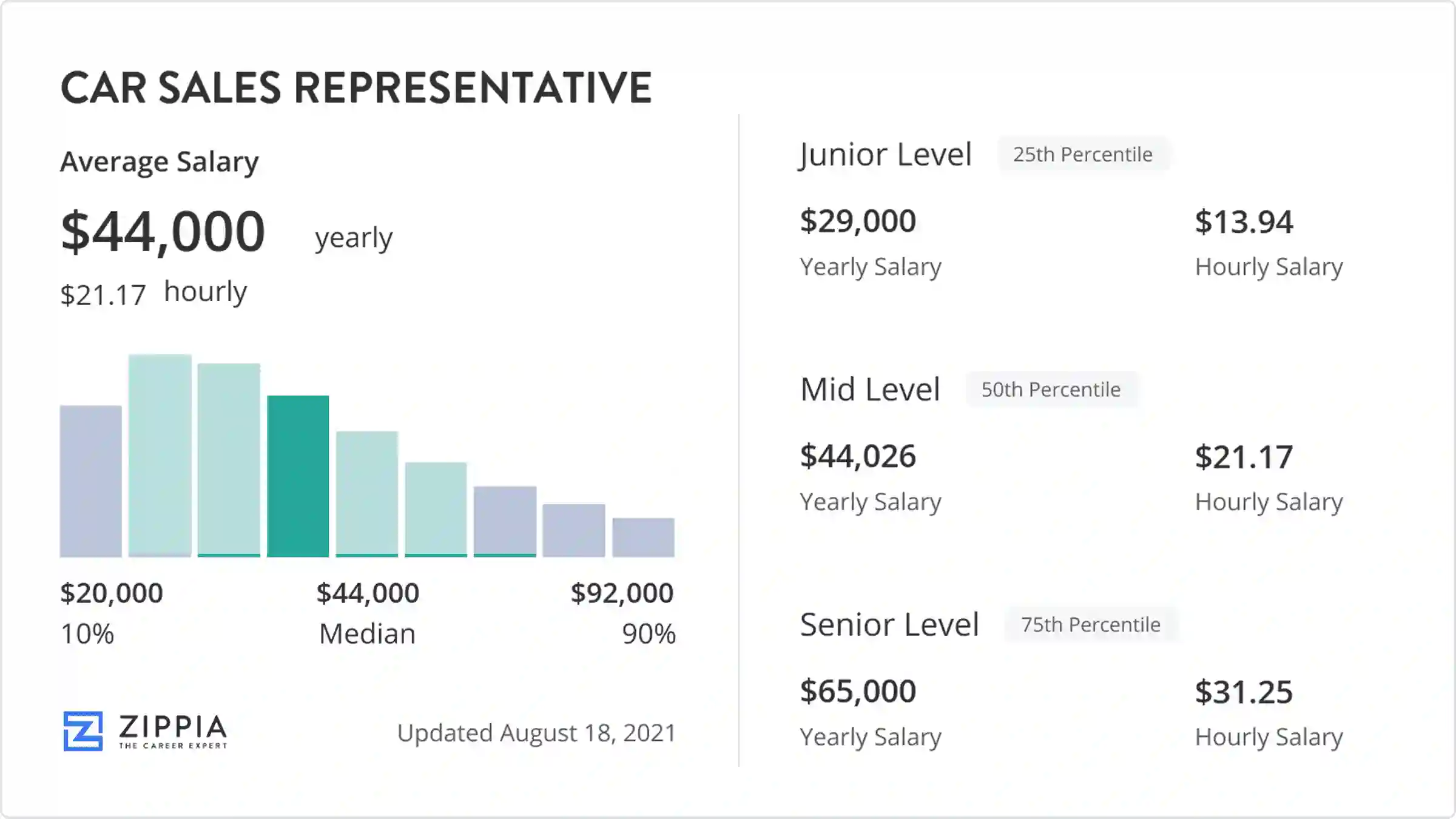
When looking at the “money” side of the industry, the data suggests a wide variance. According to national labor statistics and industry reports, the average car salesperson in the United States earns between $40,000 and $70,000 per year. However, this average is heavily skewed by high-turnover entry-level positions.
National Averages and Geographic Disparities
Location plays a critical role in commission potential. A salesperson in a high-cost-of-living area like New York or California may see higher gross profits per vehicle due to higher MSRPs and dealer markups, leading to an average closer to $80,000. Conversely, in rural areas with lower volume and lower-priced inventory, the average might hover around $35,000 to $45,000.
It is also important to consider the “Draw” system. Many car sales positions are “commission-only,” but state laws often require a “draw against commission.” This is essentially an advance on future earnings. If a salesperson has a $2,000 monthly draw and only earns $1,500 in commissions, they are paid $2,000, but they “owe” the dealership $500 from the next month’s earnings. This financial pressure is why the industry sees high turnover, but it also rewards those with strong closing skills.
The Impact of Dealership Type: Luxury vs. Economy
The brand a salesperson represents dictates their financial ceiling.
- Economy Brands (Toyota, Honda, Ford): These are volume-driven. Salespeople earn their money by selling 15–25 units a month. The profit per car might be lower, but the consistent foot traffic provides more opportunities to earn “minis” and volume bonuses.
- Luxury Brands (Porsche, BMW, Mercedes-Benz): These are profit-driven. A salesperson might only sell 8–10 cars a month, but the gross profit on a $120,000 vehicle can be substantial. In the luxury segment, it is not uncommon for seasoned professionals to earn well over $150,000 per year through high-margin commissions and exceptional manufacturer-direct bonuses (often called “spin money”).
Strategies to Maximize Commission and Career Longevity
For those looking at car sales as a long-term financial path, relying solely on “walk-in” traffic is a recipe for mediocrity. The highest earners treat their desk like a private business within the dealership.
Building a Referral Network and “Book of Business”
The most successful sales professionals eventually stop taking “up” (new walk-in) customers. Instead, they build a CRM (Customer Relationship Management) database. By maintaining contact with previous buyers, they generate “repeat and referral” business.
Financially, this is the most efficient way to work. A referral customer is far more likely to buy and less likely to haggle over every dollar of profit, leading to higher gross-profit commissions. Furthermore, many dealerships pay a higher commission percentage for self-generated leads compared to floor leads provided by the house.
Mastering the “Add-Ons” and Finance Office Upsells
While the salesperson’s primary job is selling the car, their secondary job is “setting the stage” for the Finance and Insurance (F&I) office. A salesperson who can explain the value of a service contract or a protection package before the customer enters the finance office is a valuable asset to the dealership.
Many compensation plans include “PVR” (Per Vehicle Retail) bonuses. If the average back-end profit on a salesperson’s deals exceeds a certain threshold (e.g., $1,200 PVR), the dealership may reward them with a monthly bonus. Mastering the financial literacy of the entire deal—not just the car’s price—is what separates the average earners from the top 5% of the industry.
The Future of Car Sales Compensation
The landscape of car sales is changing. With the rise of “no-haggle” pricing and direct-to-consumer models (like Tesla or Rivian), some traditional commission structures are being replaced by flat-rate-per-unit models or higher base salaries with smaller bonuses. However, for the majority of the franchise dealership world, the commission-based system remains the standard.
For the financially motivated individual, car sales offers a unique opportunity where income is directly proportional to skill, work ethic, and financial savvy. While the “average” commission provides a baseline, the true potential is limited only by the number of deals one can close and the profit margins they can maintain. Understanding these financial levers is the first step toward a lucrative career in automotive sales.
aViewFromTheCave is a participant in the Amazon Services LLC Associates Program, an affiliate advertising program designed to provide a means for sites to earn advertising fees by advertising and linking to Amazon.com. Amazon, the Amazon logo, AmazonSupply, and the AmazonSupply logo are trademarks of Amazon.com, Inc. or its affiliates. As an Amazon Associate we earn affiliate commissions from qualifying purchases.