
When discussing the financial landscape of the Southern Hemisphere, one currency stands out for its resilience, technological innovation, and significant role in global foreign exchange markets: the Australian dollar. Often referred to by its ISO code, AUD, or simply the “Aussie” in trading circles, the Australian dollar is more than just a medium of exchange for the people of Australia; it is a critical pillar of the global financial system.
Understanding what the Australian dollar is called and how it functions requires a deep dive into its nomenclature, its historical transition from colonial roots to modern independence, and its status as one of the most traded currencies in the world. For investors, business owners, and those interested in personal finance, the AUD represents a unique intersection of commodity-backed strength and advanced monetary policy.

The Official Name and Symbolic Identity of the Australian Currency
The official name of the currency used throughout the Commonwealth of Australia is the Australian dollar. While it shares the “dollar” name with several other nations, most notably the United States, Canada, and New Zealand, it maintains a distinct identity in international finance.
The AUD and the $ Symbol
In domestic settings, the currency is represented by the symbol “$”. However, to distinguish it from other dollar-denominated currencies in international markets, the prefix “A” or “AU” is often added, resulting in “A$” or “AU$”. In the banking and professional trading sectors, the currency is exclusively referred to by its three-letter ISO 4217 code: AUD.
External Territories and Other Nations
The Australian dollar is not limited to the mainland. It serves as the official currency for several external territories, including Christmas Island, the Cocos (Keeling) Islands, and Norfolk Island. Furthermore, it is the official currency of three independent Pacific Island states: Kiribati, Nauru, and Tuvalu. This regional dominance highlights the AUD’s role as a stabilizing force in the Oceania economic zone.
Colloquialisms and Market Slang
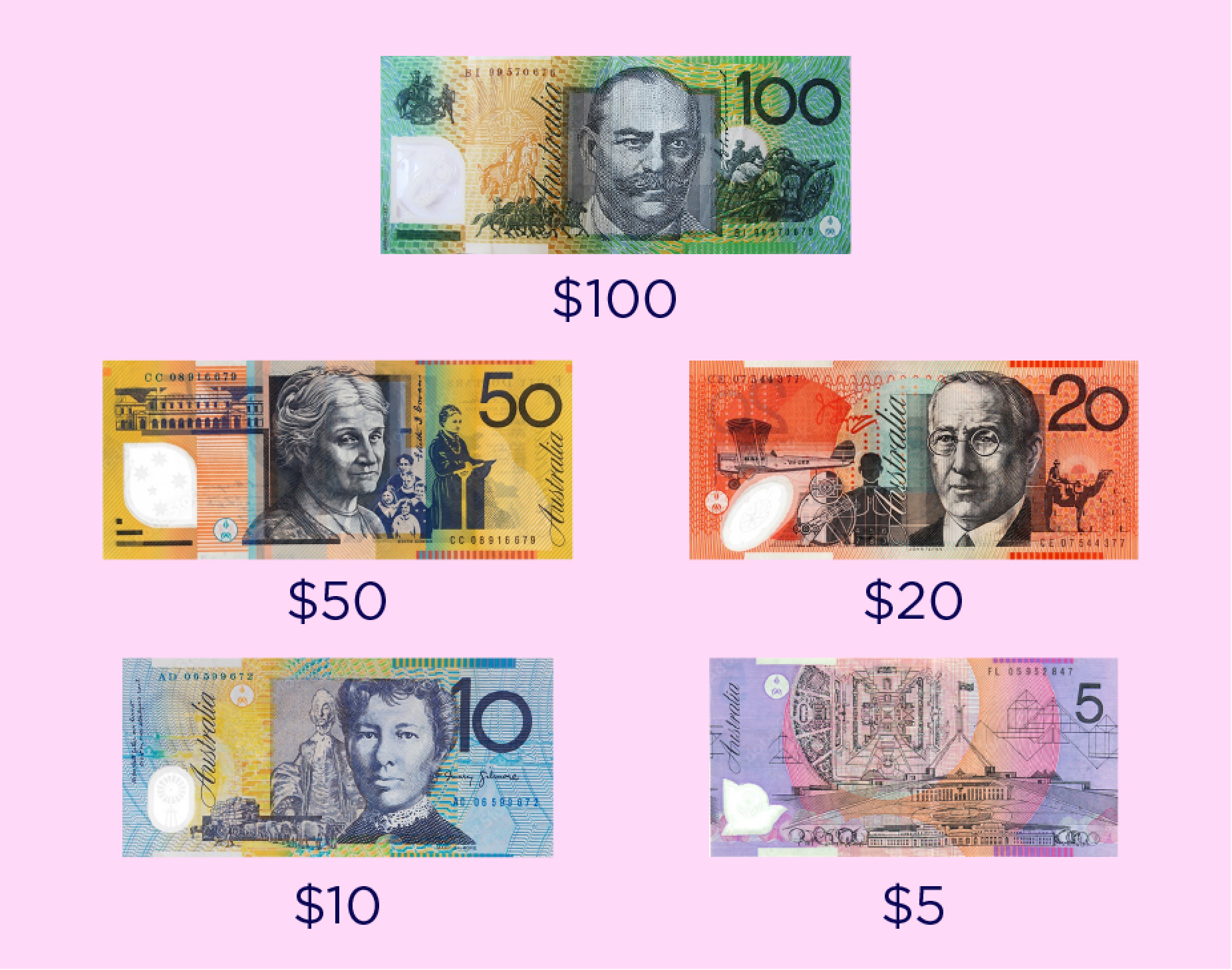
In the fast-paced world of foreign exchange (Forex), the Australian dollar is almost universally referred to as the “Aussie.” This nickname is used by traders, economists, and news anchors alike. Domestically, Australians might use slang terms such as “bucks” or “dough,” and historically, various denominations have earned their own nicknames—such as “bluey” for the ten-dollar note or “pineapple” for the yellow fifty-dollar note—reflecting the vibrant colors of the country’s polymer currency.
The Historical Evolution: From Pounds to Decimals
The journey to the Australian dollar was a pivotal moment in the nation’s financial history. Prior to 1966, Australia utilized the Australian pound, a system inherited from the British colonial era that relied on non-decimal divisions (pounds, shillings, and pence).
The Great Decimalisation Debate
The transition to a decimal system was not merely a matter of convenience; it was a move toward modernizing the Australian economy and aligning it with global financial trends. In the early 1960s, the government held a public competition to name the new currency. Proposals included the “Austral,” the “Boomer,” the “Roo,” and even the “Royal.”
Initially, the government favored the “Royal,” but the name faced significant public backlash. Australians wanted a name that felt more egalitarian and less tied to the monarchy. Eventually, the “dollar” was chosen, and on February 14, 1966, the Australian dollar officially replaced the pound at a rate of two dollars to one pound.
A World Leader in Polymer Technology
One cannot discuss the Australian dollar without mentioning its physical composition. In 1988, Australia became the first country in the world to introduce polymer (plastic) banknotes. Developed by the Reserve Bank of Australia (RBA) and the Commonwealth Scientific and Industrial Research Organisation (CSIRO), these notes were designed to be more durable and far more difficult to counterfeit than traditional paper notes.
Today, Australia’s banknote technology is a major export. The country produces polymer substrate for dozens of other nations, marking a unique niche where the currency itself—not just its value—is a driver of business income.
The AUD as a Major Player in Global Finance
The Australian dollar consistently ranks as the fifth or sixth most traded currency in the world, following the US dollar, the Euro, the Japanese Yen, and the British Pound. For a country with a relatively small population, this level of liquidity is remarkable and is driven by several key financial factors.

The “Commodity Currency” Status
In the world of investing, the AUD is frequently categorized as a “commodity currency.” This is because Australia is a leading exporter of raw materials, including iron ore, coal, gold, and liquefied natural gas (LNG).
When global demand for these resources rises, the value of the Australian dollar typically increases. Investors often use the AUD as a proxy for global growth or as a way to gain exposure to the mining and energy sectors without buying individual stocks. For those involved in online income or international business, monitoring commodity price trends is essential for predicting AUD fluctuations.
Interest Rate Differentials and Carry Trades
The Australian dollar has historically been a favorite for “carry trades.” This financial strategy involves borrowing money in a currency with low interest rates (like the Yen) and investing it in a currency with higher interest rates (like the AUD).
While the Reserve Bank of Australia (RBA) adjusts rates to manage domestic inflation and employment, these decisions have ripples across the globe. Higher interest rates in Australia attract foreign capital, driving up demand for the dollar. Conversely, when the RBA cuts rates, the AUD may face downward pressure as the “carry” becomes less attractive to international investors.
Relationship with the Chinese Economy
Australia’s proximity to Asia and its role as a primary supplier to China make the AUD a barometer for Chinese economic health. Because China is Australia’s largest trading partner, any shift in Chinese industrial production or fiscal policy is immediately reflected in the AUD’s exchange rate. Professional traders often look at Chinese manufacturing data as a leading indicator for how the “Aussie” will perform in the coming sessions.
Managing and Investing in the Australian Dollar
For individuals focusing on personal finance and wealth creation, the Australian dollar offers various avenues for strategic management. Whether you are an expat, a digital nomad, or a domestic investor, understanding the AUD’s behavior is vital for protecting your purchasing power.
Foreign Exchange (Forex) Opportunities
The high liquidity of the AUD makes it an excellent candidate for Forex trading. Because it reacts predictably to specific triggers—such as RBA announcements or changes in gold prices—it allows traders to develop data-driven strategies. However, the currency’s sensitivity to global risk sentiment means it is often labeled a “risk-on” currency; it tends to rise when the global markets are optimistic and fall during times of geopolitical or economic uncertainty.
Hedging Against Inflation and Volatility
For business owners operating in Australia or dealing with Australian suppliers, currency volatility is a significant risk. Financial tools such as forward contracts or currency options are often used to “lock in” exchange rates, ensuring that the cost of goods remains stable even if the AUD fluctuates. On a personal level, maintaining a diversified portfolio that includes AUD-denominated assets alongside international holdings can help balance the risks associated with any single currency’s performance.
The Role of the Reserve Bank of Australia (RBA)
The RBA is the central bank responsible for maintaining the stability of the currency. Its primary mandate is to keep inflation within a target range of 2–3%. For anyone interested in business finance, the RBA’s monthly board meetings are “must-watch” events. The commentary provided by the RBA Governor offers deep insights into the health of the Australian economy, influencing everything from mortgage rates to the strength of the dollar on the world stage.
The Future of the Australian Dollar: Digital and Beyond
As the world moves toward a more digitized financial ecosystem, the Australian dollar is undergoing another transformation. The concept of what the currency is “called” may soon expand to include digital iterations.
Central Bank Digital Currency (CBDC)
The Reserve Bank of Australia has been actively researching and piloting a Central Bank Digital Currency, often referred to as the “eAUD.” Unlike decentralized cryptocurrencies like Bitcoin, an eAUD would be a digital form of the national currency, backed by the central bank. This could revolutionize the way wholesale and retail transactions are conducted, potentially reducing costs and increasing the speed of cross-border settlements.
The Shift Toward a Cashless Society
Australia is currently one of the world leaders in the transition toward a cashless society. With the ubiquity of “tap-and-go” payments and the New Payments Platform (NPP), physical banknotes are becoming less common in daily transactions. While the “Australian dollar” will remain the name of the unit of account, its primary existence is increasingly becoming a digital entry in a ledger rather than a polymer note in a wallet.
Sustainability and Financial Security
Looking forward, the Australian dollar continues to set standards in financial security. The latest “Next Generation Banknotes” series features world-leading security elements, such as top-to-bottom clear windows and holographic images that change color when tilted. These innovations ensure that the AUD remains a trusted store of value in an era where financial fraud is becoming increasingly sophisticated.
In conclusion, the Australian dollar is much more than a simple currency name. It is a technologically advanced, commodity-linked, and highly liquid financial instrument that plays a disproportionately large role in the global economy. From its birth in 1966 to its current status as the “Aussie” on trading floors worldwide, the AUD represents Australia’s economic sovereignty and its integration into the global financial fabric. Whether you are tracking it for investment purposes, using it for business finance, or simply curious about its origins, the Australian dollar remains one of the most fascinating and influential currencies in the modern world.
aViewFromTheCave is a participant in the Amazon Services LLC Associates Program, an affiliate advertising program designed to provide a means for sites to earn advertising fees by advertising and linking to Amazon.com. Amazon, the Amazon logo, AmazonSupply, and the AmazonSupply logo are trademarks of Amazon.com, Inc. or its affiliates. As an Amazon Associate we earn affiliate commissions from qualifying purchases.