
In the realm of mathematics, the area of a right triangle is often one of the first geometric principles we encounter. Defined by its 90-degree angle, the right triangle is a fundamental building block of spatial reasoning. However, in the 21st century, this calculation has moved far beyond the chalkboard. From the rendering engines of high-end video games to the spatial mapping algorithms used by autonomous vehicles, understanding how to calculate and implement the area of a right triangle is a cornerstone of modern technology.
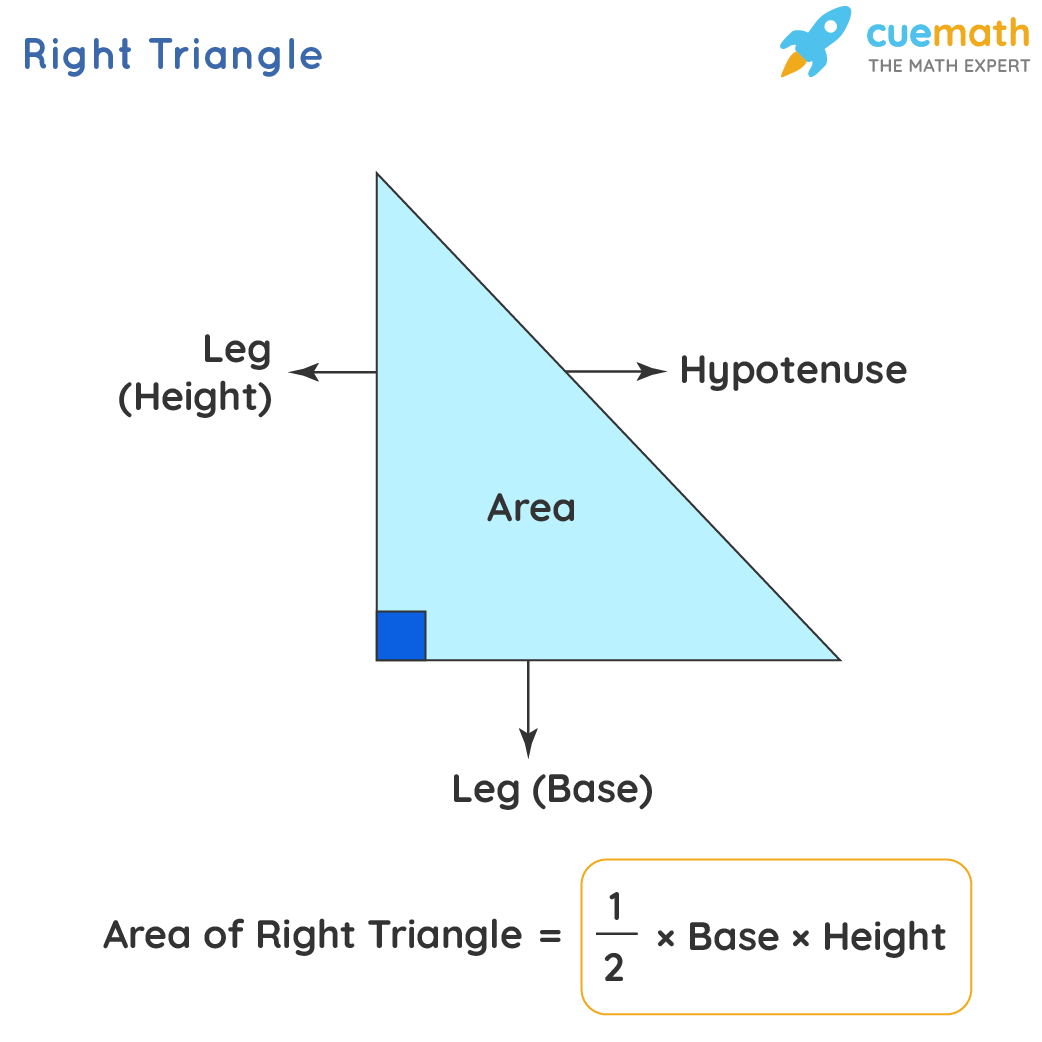
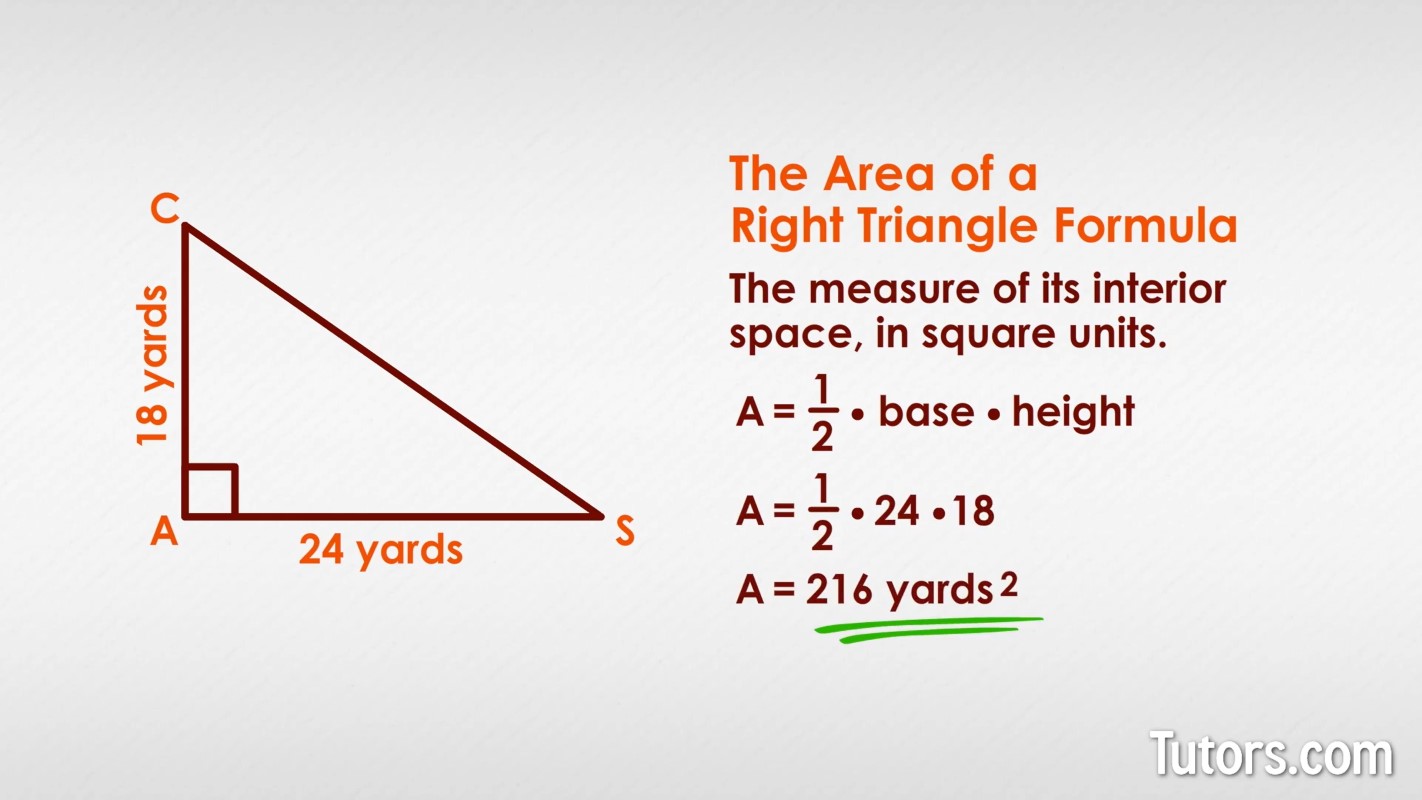
In this deep dive, we explore the intersection of classical geometry and cutting-edge software engineering, detailing how the simple formula $A = frac{1}{2} times text{base} times text{height}$ fuels the digital world.
1. Computational Geometry: Translating Math into Machine Logic
At its core, calculating the area of a right triangle is an exercise in logic. For a software developer or a data scientist, the formula represents more than just a spatial measurement; it is a computational instruction that must be executed with precision and efficiency.
The Basic Formula in Software Development
In any programming language, from Python to C++, the calculation is straightforward. A function designed to return the area takes two parameters—the base and the height—and applies the arithmetic operation. However, in a professional tech environment, developers must consider “edge cases.” What happens if the input is a negative number? What if the “base” is an irrational number that requires specific rounding? In tech, the formula is the starting point, but the implementation requires robust error handling and type-checking to ensure the application doesn’t crash during complex calculations.
Floating Point Precision and Arithmetic Limitations
One of the most significant challenges in tech-based geometry is floating-point arithmetic. Computers represent real numbers in binary, which can sometimes lead to minute inaccuracies (e.g., $0.1 + 0.2$ not equaling exactly $0.3$). When calculating the area of millions of tiny right triangles—a process common in 3D rendering—these small errors can accumulate. Engineers must use specific data types, such as “doubles” or “decimals,” to maintain the high level of precision required for architectural software or aerospace simulations.
Algorithmic Efficiency and Big O Notation
In large-scale data processing, it isn’t just about how you calculate the area, but how fast you can do it across billions of data points. When a GIS (Geographic Information System) processes topographical maps, it treats segments of terrain as triangles. Using optimized algorithms ensures that these calculations occur in “constant time” ($O(1)$), allowing for real-time updates in GPS navigation and satellite imaging.
2. Implementing Geometry in Modern Programming Frameworks
Modern technology relies on specialized libraries and frameworks that abstract the basic math of a right triangle into powerful tools for developers. Whether you are building a website or a physics engine, the way you interact with geometry depends on your tech stack.
Python for Data Science and Prototyping
Python is the leading language for AI and data analysis. Libraries like NumPy and SciPy allow users to perform vectorized operations. This means a developer can calculate the areas of a million right triangles simultaneously using a single line of code. In the context of “Big Data,” this efficiency is vital for analyzing spatial trends or structural integrity in civil engineering simulations.
C++ and the Power of Graphics Engines
When we look at the breathtaking visuals of modern gaming, we are essentially looking at millions of right triangles (often referred to as “polys” or polygons). C++ is the industry standard for game engines like Unreal Engine and Unity because it allows for direct memory management. These engines use the area of triangles to determine “hit-boxes,” lighting (ray tracing), and collision detection. If an object in a game hits a wall, the engine calculates the intersection of vectors, often breaking surfaces down into right triangles to determine exactly where and how the impact occurred.
JavaScript and CSS: Geometry in Web Layouts
Even the web browser you are using right now utilizes geometric principles. Frontend developers use CSS shapes and the HTML5 Canvas API to draw complex UI elements. When a designer creates a slanted header or a triangular “play” button, the browser’s rendering engine calculates the area and coordinates of that shape to ensure it scales correctly across different screen resolutions, from smartphones to 4K monitors.
3. The Role of Geometry in AI and Machine Learning
Artificial Intelligence has transformed how we interpret visual data. At the heart of this transformation is the ability of a machine to “see” and “measure” shapes within an image.
Computer Vision and Object Detection
In the field of Computer Vision (CV), algorithms like YOLO (You Only Look Once) identify objects by drawing “bounding boxes” around them. Often, to analyze the orientation of an object—such as a street sign or a pedestrian—the AI decomposes these boxes into right triangles. By calculating the area and the angles within these triangles, the AI can determine the distance of the object from the camera and its trajectory. This is the foundational tech behind Tesla’s Autopilot and Waymo’s self-driving sensors.
Vector Space and Spatial Analysis
Machine learning models often operate in “vector space.” When a model compares two pieces of data, it looks at the “distance” between them. This distance is frequently calculated using the Pythagorean theorem ($a^2 + b^2 = c^2$), which is inextricably linked to the right triangle. By understanding the relationship between the legs and the hypotenuse, AI can categorize data, recommend movies on Netflix, or detect fraudulent credit card transactions based on “distance” from normal spending patterns.
Neural Networks and Mesh Grids
Advanced AI models used in medical imaging (like MRI analysis) create a “mesh” over an organ to detect abnormalities. These meshes are composed of thousands of triangles. The software calculates the area of each triangle to ensure the mesh is airtight and accurate. If the area of a specific section of the mesh changes over time, the AI can alert doctors to the growth of a tumor or the swelling of an artery.
4. Real-World Tech Applications: Beyond the Classroom
The question “what is the area of a right triangle” finds its most practical answers in high-stakes professional industries.
Building Information Modeling (BIM)
In the construction tech industry, BIM software like Autodesk Revit uses geometric calculations to estimate material costs. If a roof is designed with a specific pitch, the software calculates the area of the triangular sections to determine exactly how many shingles or how much insulation is required. This integration of geometry and “FinTech” (Financial Technology) prevents waste and optimizes supply chains.
Telecommunications and Signal Triangulation
Your smartphone stays connected to the network through a process called triangulation. Cell towers use the properties of right triangles to pinpoint your location. By measuring the time it takes for a signal to travel from your phone to three different towers, the system creates a series of triangles. Calculating the area and intersections of these shapes allows the network to provide you with high-speed data and accurate emergency location services.
Aerospace and Satellite Deployment
In aerospace engineering, calculating the area of triangular sails or solar panels is a matter of life and death. Satellites orbiting the Earth must be positioned with extreme precision. Engineers use right-angle trigonometry and area calculations to determine the “footprint” of a satellite’s signal on the Earth’s surface. A slight miscalculation in the base or height of that geometric projection could result in a total loss of communication for an entire continent.
5. Future-Proofing Geometry: Quantum Computing and Advanced Algorithms
As we move toward the era of quantum computing, the way we handle geometric data is set to evolve once again.
Quantum Computational Geometry
Traditional computers process bits (0s and 1s), but quantum computers use qubits, which can exist in multiple states. This allows for “Quantum Computational Geometry,” where complex area calculations that would take a traditional supercomputer years could be solved in seconds. This will have massive implications for cryptography and the simulation of molecular structures, which rely on the geometric arrangement of atoms.
Procedural Generation and the Metaverse
In the developing “Metaverse,” environments are often generated procedurally—meaning they are created by algorithms rather than hand-drawn by artists. These algorithms rely heavily on “Delaunay Triangulation,” a method for creating a mesh of triangles. By automatically calculating the area and distribution of these triangles, tech companies can create infinite, sprawling digital worlds that feel real and react to the user’s presence in real-time.
Automation and the No-Code Revolution
Finally, the “No-Code” movement is making these complex geometric calculations accessible to everyone. Tools like Bubble or Webflow allow users to build sophisticated apps without writing a single line of C++ or Python. Behind the scenes, however, these platforms are still running the same fundamental math. When a user drags a triangular element onto a screen, the “No-Code” engine is instantly calculating the area, the pixel density, and the responsive grid coordinates, proving that the right triangle remains a vital pillar of the digital experience.
Conclusion
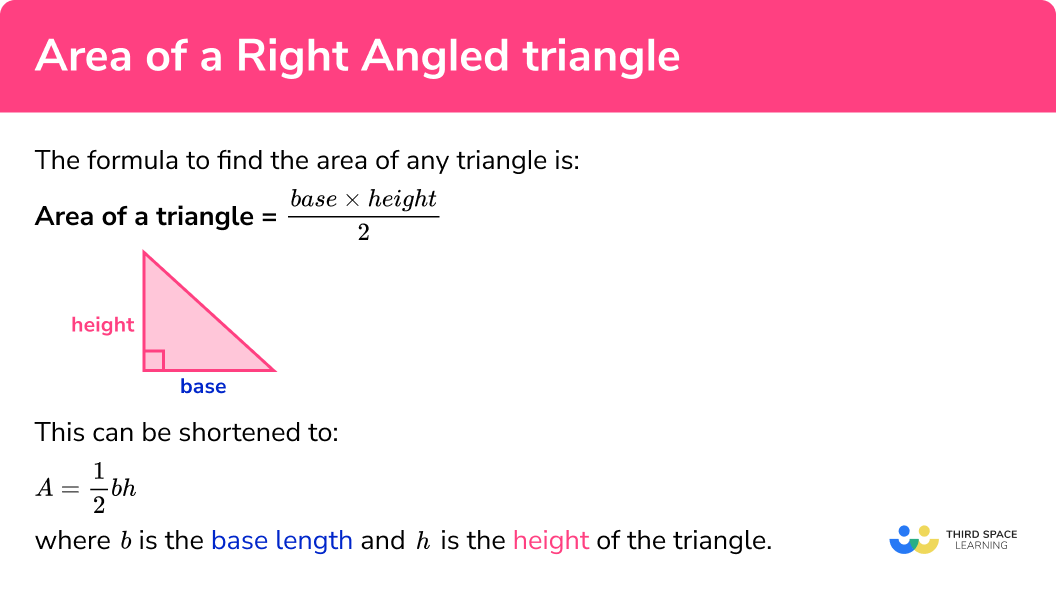
What is the area of a right triangle? In a textbook, it is a simple equation. In the world of technology, it is the fundamental logic that enables us to map the globe, render virtual realities, and drive cars without human intervention. As we have seen, the transition from $A = frac{1}{2}bh$ to a fully realized digital product involves a complex web of programming, AI integration, and hardware optimization.
For the modern tech professional, geometry is not just a subject from the past—it is the language of the future. Whether you are coding the next great app or designing a satellite, the humble right triangle remains your most reliable tool.
aViewFromTheCave is a participant in the Amazon Services LLC Associates Program, an affiliate advertising program designed to provide a means for sites to earn advertising fees by advertising and linking to Amazon.com. Amazon, the Amazon logo, AmazonSupply, and the AmazonSupply logo are trademarks of Amazon.com, Inc. or its affiliates. As an Amazon Associate we earn affiliate commissions from qualifying purchases.