
When prospective homebuyers begin the journey toward property ownership, the first number they typically focus on is the interest rate. It is the headline figure advertised on bank windows and digital banners. However, seasoned investors and financially savvy borrowers know that the interest rate only tells half the story. To understand the true cost of borrowing money in today’s economic climate, one must look at the Annual Percentage Rate (APR).
The APR represents a more comprehensive view of the cost of a mortgage, incorporating not just the base interest rate but also the various fees and costs associated with securing the loan. In a fluctuating market where the Federal Reserve’s policies and inflationary pressures dictate the movement of capital, understanding how the APR is calculated and why it matters is essential for anyone looking to optimize their personal finances and long-term wealth.
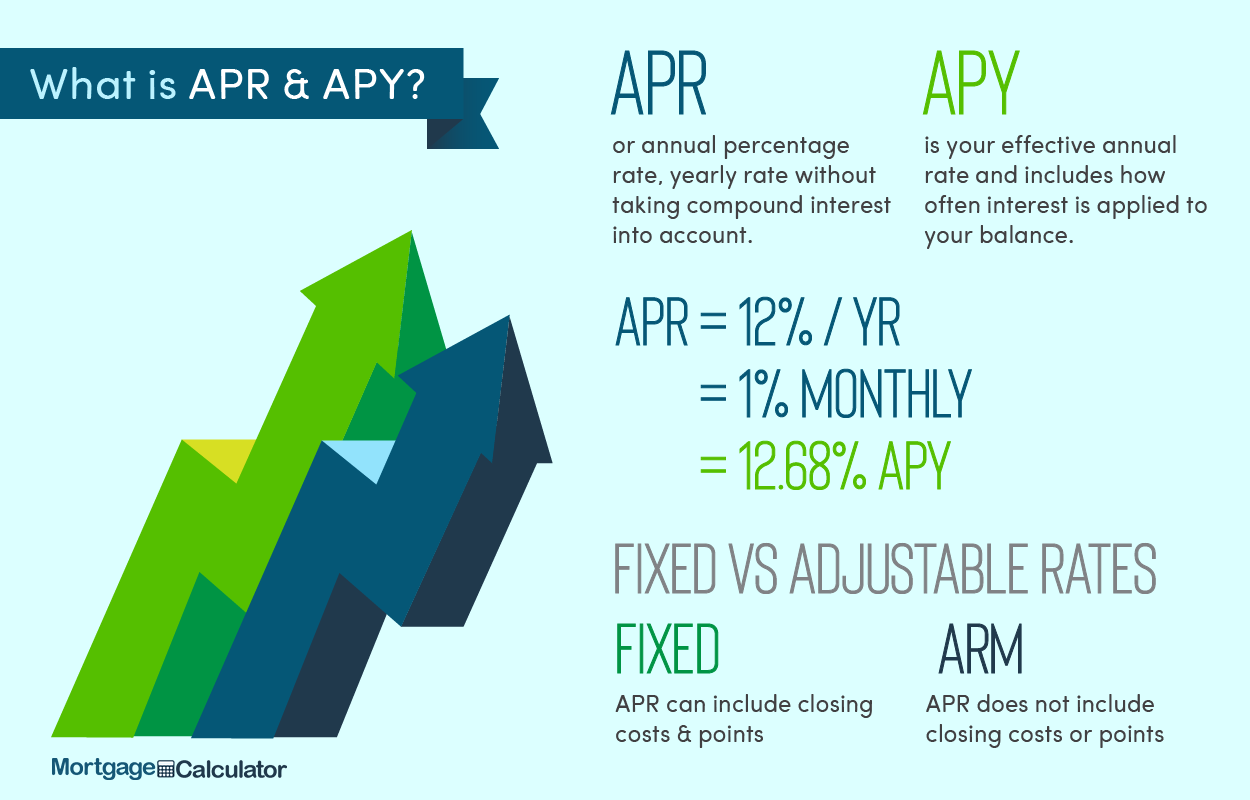
The Essential Difference Between Interest Rates and APR
To navigate the mortgage market effectively, one must first distinguish between the nominal interest rate (often called the “note rate”) and the APR. While they are related, they serve different purposes in your financial planning.
Breaking Down the Components of APR
The interest rate is the percentage of the principal amount charged by the lender for the use of its money. It determines your monthly principal and interest payment. The APR, however, is a broader measure. Under the Truth in Lending Act, lenders are required to disclose the APR to ensure consumers can compare the total cost of credit between different loan products.
The APR typically includes the following:
-
The Interest Rate: The base cost of the loan.
-
Points: Prepaid interest (discount points) paid at closing to lower the interest rate over the life of the loan.
-
Loan Origination Fees: The administrative costs charged by the lender for processing the application.
-
Mortgage Insurance: Costs associated with Private Mortgage Insurance (PMI) or FHA mortgage insurance premiums, if applicable.
-
Closing Costs: Specific fees such as underwriting fees, document preparation fees, and certain types of closing agent fees.
Why the APR is Usually Higher Than the Note Rate
In almost every scenario, the APR will be higher than the interest rate. This gap represents the “hidden” costs of borrowing. For example, if a lender offers a 6.5% interest rate but charges significant upfront fees, the APR might climb to 6.8% or 6.9%. If another lender offers a 6.6% interest rate with zero fees, their APR might remain closer to the note rate.
By looking at the APR, you are effectively seeing the “effective” interest rate you are paying when all the one-time costs are amortized over the life of the loan. This makes it the most reliable metric for comparing the true affordability of different mortgage offers.
Factors Influencing Today’s Mortgage APRs
Mortgage rates and their subsequent APRs are not static; they are influenced by a complex interplay of global economic trends, domestic fiscal policy, and your personal financial profile.
The Role of the Federal Reserve and Economic Indicators
While the Federal Reserve does not directly set mortgage rates, its influence on the federal funds rate creates a ripple effect throughout the bond market. Specifically, mortgage rates tend to track the yield on the 10-Year Treasury Note. When investors are concerned about inflation, they demand higher yields on bonds, which causes mortgage rates to rise.
In the current economic landscape, volatility is the norm. Inflation reports, employment data, and GDP growth figures all contribute to the daily movement of mortgage APRs. If the market senses that the central bank will keep rates “higher for longer” to combat rising prices, APRs will reflect that anticipation. Conversely, signs of a cooling economy often lead to a decrease in rates as investors seek the safety of government-backed mortgage bonds.
Personal Financial Health: Credit Scores and Debt-to-Income Ratios
Beyond the macroeconomics of the bond market, your individual “borrower profile” dictates the APR you are offered. Lenders use risk-based pricing, meaning those who pose a higher risk of default are charged higher rates.
-
Credit Score: This is perhaps the single most influential factor in determining your APR. A borrower with a score of 800+ will access significantly lower rates than someone with a score of 620.
-
Loan-to-Value (LTV) Ratio: The size of your down payment matters. A 20% down payment reduces the lender’s risk and often eliminates the need for mortgage insurance, which directly lowers the APR.
-
Debt-to-Income (DTI) Ratio: Lenders want to ensure you have the cash flow to sustain mortgage payments alongside your other obligations. A high DTI may lead to higher pricing or the requirement of additional insurance products that inflate the APR.
How to Compare Mortgage Offers Using the APR

When you receive a Loan Estimate from a bank or mortgage broker, the APR is your primary tool for “apples-to-apples” comparison. However, using it correctly requires an understanding of your own timeline.
The APR as a Comparison Tool
Imagine you have two offers. Bank A offers a 6.25% interest rate with $5,000 in closing costs. Bank B offers a 6.5% interest rate with $1,000 in closing costs. On the surface, Bank A looks cheaper because of the lower monthly payment. However, once you factor in the $5,000 upfront cost, the APR for Bank A might actually be higher than Bank B.
If you plan to stay in the home for the full 30 years, the lower interest rate (Bank A) is usually the better deal because the long-term savings on interest will eventually outweigh the initial $5,000 fee. But if you plan to sell or refinance within five years, Bank B—the one with the higher interest rate but lower APR/closing costs—is likely the more financially sound choice.
When the APR Might Be Misleading
While the APR is a powerful tool, it has limitations. Most notably, the APR calculation assumes you will keep the mortgage for its entire term (e.g., 30 years). In reality, the average homeowner keeps their mortgage for less than ten years before selling or refinancing.
Because the upfront costs are “spread out” over 30 years in the APR calculation, the APR can understate the impact of high closing costs if you plan to move quickly. For short-term homeowners, looking at the “break-even point”—the moment where the monthly savings from a lower interest rate finally cover the upfront costs—is often more useful than the APR alone.
Strategies to Secure a Lower Mortgage APR
Securing a competitive APR is a proactive process. It requires more than just checking a website; it requires negotiation and strategic financial positioning.
Shopping Around and Negotiating Lender Fees
The mortgage market is highly competitive. Rates can vary significantly from one institution to another, even on the same day for the same borrower. Studies have shown that borrowers who obtain at least three to five quotes can save thousands of dollars over the life of their loan.
When you receive a quote, don’t be afraid to negotiate the “Lender Fees” section of the closing costs. While third-party fees (like government taxes and appraisal fees) are usually fixed, origination and underwriting fees are often negotiable. If one lender offers a lower APR but another offers better service, ask the latter to match the APR of the former.
Buying Down the Rate with Points
In today’s higher-rate environment, many borrowers are choosing to “buy down” their interest rate using discount points. One point typically costs 1% of the loan amount and reduces your interest rate by a predetermined amount (often 0.25%).
This strategy will increase your APR in the short term because of the higher upfront costs, but it will lower your monthly payment and total interest paid over time. This is an excellent move for those who have extra cash at closing and plan to hold the property for a decade or more.

The Long-Term Impact of APR on Your Wealth Building
A mortgage is likely the largest financial liability you will ever take on. Consequently, even a minor difference in your APR can have a staggering impact on your net worth over time.
For example, on a $400,000 mortgage, the difference between an APR of 6.5% and 7.5% is roughly $260 per month. Over 30 years, that equates to over $93,000 in additional interest payments. For a wealth-builder, that $93,000 represents missed opportunity costs; if that same money were invested in a diversified portfolio, it could grow into several hundred thousand dollars by retirement.
Furthermore, a lower APR increases your “rate of equity buildup.” When more of your monthly payment goes toward the principal rather than interest, you own more of your home sooner. This equity can later be leveraged for home equity lines of credit (HELOCs) to fund further investments, education, or business ventures.
In conclusion, “what the APR on a mortgage is today” is a question that depends heavily on both the global economy and your personal financial standing. By focusing on the APR rather than just the interest rate, you gain a transparent view of the costs involved. This clarity allows you to make informed decisions that protect your cash flow today and maximize your wealth-building potential for the future. Whether you are a first-time buyer or a seasoned real estate investor, the APR remains the ultimate metric for measuring the efficiency of your mortgage debt.
aViewFromTheCave is a participant in the Amazon Services LLC Associates Program, an affiliate advertising program designed to provide a means for sites to earn advertising fees by advertising and linking to Amazon.com. Amazon, the Amazon logo, AmazonSupply, and the AmazonSupply logo are trademarks of Amazon.com, Inc. or its affiliates. As an Amazon Associate we earn affiliate commissions from qualifying purchases.