
The world of mathematics, often perceived as a realm of abstract concepts and dry calculations, is surprisingly rich with specialized terminology. While we readily understand terms like “addition” and “subtraction,” the specific nomenclature for the outcomes of other operations can be less universally known. This is particularly true for multiplication. When we pose a multiplication problem, such as 5 multiplied by 4, the resulting value, 20, has a distinct name that sets it apart from the answers to other arithmetic operations. Understanding this terminology is not merely an academic exercise; it can enhance clarity in mathematical discussions, improve the precision of communication in technical fields, and even aid in the effective use of digital tools and software that rely on mathematical operations.

This article delves into the specific term used to denote the answer to a multiplication problem. We will explore its etymology, its practical applications in the digital age, and how a solid grasp of such fundamental mathematical vocabulary contributes to a more proficient and insightful engagement with technology.
The Product: Defining the Core Terminology
At its heart, mathematics is a language. Like any language, it possesses a lexicon that allows for precise and unambiguous communication. In the context of arithmetic, each of the four basic operations – addition, subtraction, multiplication, and division – has a corresponding term for its result.
The Sum of Addition
When we combine two or more numbers through addition, the resulting value is known as the sum. For instance, in the equation 7 + 3 = 10, the number 10 is the sum. This term is widely recognized and understood, forming a foundational element of basic arithmetic. The concept of a sum is fundamental across various disciplines, from accounting to scientific data analysis, where aggregating values is a common task.
The Difference in Subtraction
Subtraction, the operation of taking one number away from another, yields a result termed the difference. Consider the problem 15 – 6 = 9. Here, 9 represents the difference between 15 and 6. The difference quantifies the amount by which one number exceeds or falls short of another, providing crucial insights into relative quantities.
The Product of Multiplication
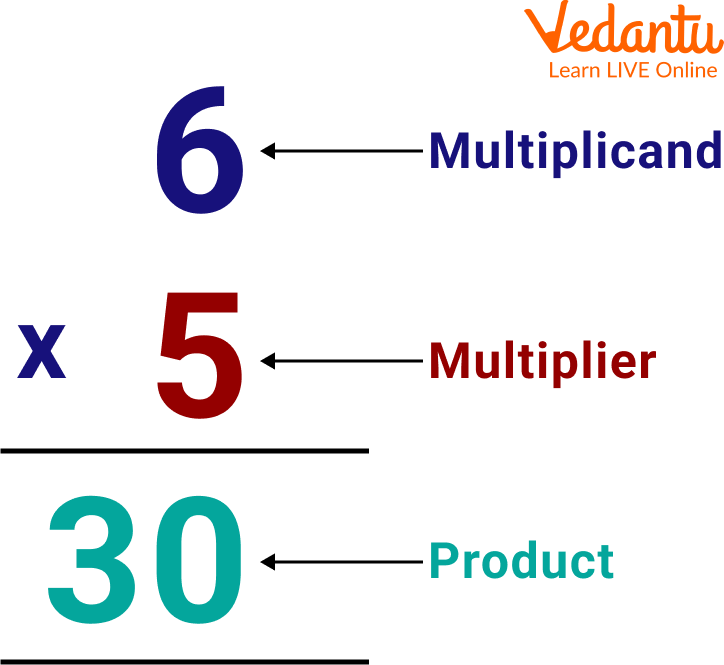
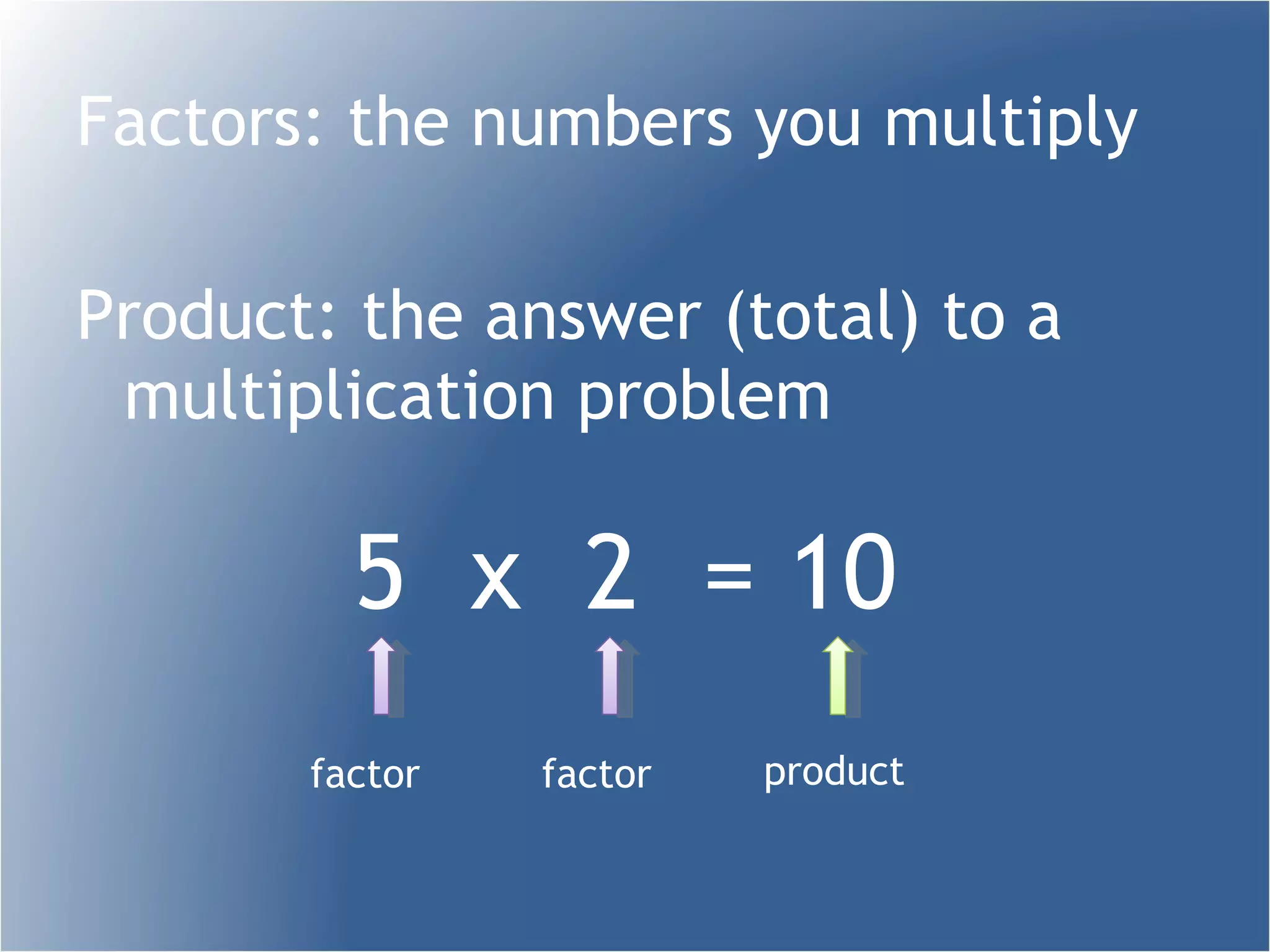
Now, we arrive at the focal point of our discussion. When two or more numbers are multiplied together, the result is called the product. This is the specific term that answers the question posed by our title. For example, in the equation 5 × 4 = 20, the number 20 is the product. The term “product” stems from the Latin word “producere,” meaning “to bring forth” or “to produce.” This etymology aptly reflects how multiplication “produces” a new value from the initial numbers.
The factors in a multiplication problem are the numbers being multiplied. In our example, 5 and 4 are the factors, and their product is 20. Understanding this distinction between factors and product is crucial for comprehending the mechanics of multiplication and its role in more complex mathematical operations.
The Quotient of Division
Finally, when one number is divided by another, the result is known as the quotient. For instance, in the equation 20 ÷ 5 = 4, the number 4 is the quotient. The quotient indicates how many times one number is contained within another.
The Significance of Precise Mathematical Terminology in a Digital World
The digital landscape is intrinsically built upon mathematical principles and operations. From the algorithms that power search engines to the data analysis performed by artificial intelligence, a precise understanding of mathematical terminology is not just beneficial; it is often essential for effective interaction with technology.
Algorithmic Understanding and Software Development
Software developers, data scientists, and engineers constantly work with multiplication and its resulting products. When writing code for financial modeling, physics simulations, or even simple data manipulation, the correct identification and use of the “product” are paramount. Misunderstanding this term could lead to logical errors in algorithms, flawed calculations, and ultimately, malfunctioning software. For instance, an algorithm designed to calculate compound interest relies heavily on repeated multiplication. Developers need to correctly identify and manipulate the intermediate and final products to ensure accurate financial projections.
Data Analysis and Interpretation with AI Tools
The rise of Artificial Intelligence (AI) and sophisticated data analysis tools has amplified the importance of clear mathematical communication. AI models process vast datasets, often performing billions of multiplications to identify patterns, make predictions, and draw conclusions. When interacting with these tools, whether through natural language processing interfaces or command-line arguments, using the correct terminology ensures that the AI interprets your requests accurately.
For example, imagine using an AI tool to analyze sales figures. You might instruct the AI to “calculate the total revenue by multiplying the units sold by the price per unit for each product.” The AI would then perform these multiplications, and the results would be referred to as products. If you were to misinterpret or misuse the term, you might inadvertently ask the AI to find a “sum” when you meant “product,” leading to entirely different and incorrect results. Furthermore, when interpreting the output of these AI tools, understanding that a certain figure represents a “product” from a specific calculation allows for a more nuanced and accurate interpretation of the data.
The Role of Mathematical Vocabulary in Digital Literacy
Beyond professional applications, a solid grasp of fundamental mathematical terms enhances overall digital literacy. When engaging with online educational platforms, tutorials on software usage, or even understanding technical specifications of gadgets, mathematical language often appears. Being able to correctly identify the “product” in a multiplication context, rather than a “sum” or “difference,” ensures you are accurately processing the information being presented. This precision in understanding fosters confidence and competence when navigating the increasingly complex digital environment.
Applications in Various Tech Niches
The understanding of “product” as the answer to a multiplication problem finds practical relevance across a spectrum of technology-focused domains.
Tech Trends and Software Development
In the realm of software development, from game engines to operating systems, multiplication is a fundamental operation. The performance of a graphics rendering engine, for example, often involves matrix multiplication, where the results are meticulously tracked as products. Developers use these products to determine transformations, lighting, and object positions within a virtual environment. Similarly, in the development of financial software, calculating interest, profit margins, or tax liabilities all rely on multiplication and the resulting products. Debugging code often involves tracing the flow of calculations, and correctly identifying these “products” is a critical step in pinpointing errors. The efficiency of algorithms, particularly those involving large datasets or intensive computations, is directly tied to how effectively they manage and utilize the products of multiplication.
AI Tools and Machine Learning
The field of Artificial Intelligence is heavily reliant on mathematical operations, with multiplication being a cornerstone. In machine learning, neural networks, for instance, perform extensive matrix multiplications as part of their training and inference processes. The output of each layer in a neural network is essentially a series of products derived from the weighted sums of inputs. Understanding that these values are “products” allows practitioners to better grasp the internal workings of AI models. When developing or deploying AI tools for tasks like image recognition, natural language processing, or predictive analytics, the accurate calculation and interpretation of these products are crucial for the model’s performance and reliability. For example, in a recommendation engine, the “product” of a user’s preference score and an item’s popularity score might contribute to a final ranking, illustrating the practical application of this term.
Gadgets and Hardware
Even in the physical world of gadgets, the underlying principles often involve multiplication. The processing power of a CPU is measured in operations per second, many of which are multiplications. Understanding how these operations contribute to the overall functionality of a device, from a smartphone to a complex server, involves appreciating the role of products in calculations. For example, the clock speed of a processor, measured in Hertz (Hz), represents cycles per second. Within these cycles, numerous multiplications are performed to execute instructions. The performance metrics of specialized hardware, like GPUs, are often derived from the cumulative “products” of parallel processing units. Furthermore, in embedded systems, where computational resources are often constrained, developers must be acutely aware of the efficiency of multiplication operations and the resulting products to optimize performance and power consumption.
Conclusion: Mastering the Language of Mathematics for Technological Proficiency
The question “what is the answer to multiplication problem called” may seem elementary, but its answer – the product – is a fundamental piece of mathematical vocabulary with far-reaching implications, particularly in the technologically driven world we inhabit. Recognizing that the result of multiplying two or more numbers is a product, rather than a sum, difference, or quotient, is more than just rote memorization. It signifies an understanding of the distinct nature of multiplication as an operation.
This precise terminology is not confined to textbooks; it is an active component of the language used in software development, data science, AI engineering, and the design of the very gadgets we use daily. By mastering such fundamental mathematical terms, we equip ourselves with the tools for clearer communication, more accurate problem-solving, and a deeper comprehension of the technologies that shape our lives. In an era where digital fluency is paramount, understanding the specific terms that define mathematical operations is a vital step towards becoming a more informed and capable participant in the technological landscape. Whether you are a budding programmer, a data analyst, or simply a curious user of digital tools, appreciating the “product” of multiplication is a small, yet significant, key to unlocking a greater understanding of the digital world.
aViewFromTheCave is a participant in the Amazon Services LLC Associates Program, an affiliate advertising program designed to provide a means for sites to earn advertising fees by advertising and linking to Amazon.com. Amazon, the Amazon logo, AmazonSupply, and the AmazonSupply logo are trademarks of Amazon.com, Inc. or its affiliates. As an Amazon Associate we earn affiliate commissions from qualifying purchases.