
In the realm of global economics and personal finance, few frameworks have had as profound an impact as the “American System.” Originally conceived in the early 19th century, this economic philosophy was designed to harmonize the diverse interests of agriculture, commerce, and manufacturing. Today, while the term may sound like a historical footnote, its principles continue to dictate how capital flows through the United States, how businesses scale, and how the federal government interacts with the private sector. For investors, business owners, and financial enthusiasts, understanding the American System is essential for grasping the underlying structure of American wealth and its enduring influence on modern market dynamics.
The Three Pillars of the American System
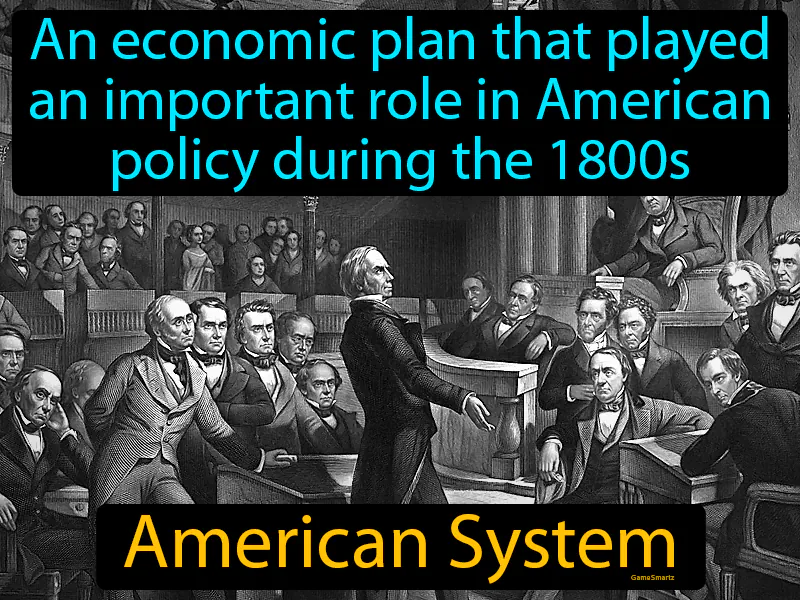
The American System was popularized by statesman Henry Clay, who envisioned a self-sufficient nation that did not rely on European imports. This system was built upon three foundational pillars of business finance and macroeconomics. Each pillar was designed to feed into the other, creating a circular flow of wealth that prioritized domestic growth over international dependency.
The Implementation of Protective Tariffs
The first pillar of the American System was the imposition of protective tariffs. In the context of business finance, a tariff is a tax on imported goods. During the 19th century, these tariffs were designed to protect fledgling American industries from being undercut by established European competitors. By making foreign goods more expensive, the American System incentivized consumers to buy domestic products, thereby funneling capital into American manufacturing. Today, we see echoes of this in modern trade wars and industrial policies that prioritize domestic supply chains, particularly in sectors like semiconductors and renewable energy.
A Strengthened National Bank
For any economy to flourish, there must be a stable medium of exchange and reliable access to credit. The second pillar was the re-establishment of a National Bank. This institution was tasked with regulating the currency and providing the financial infrastructure necessary for large-scale investment. In modern financial terms, this was the precursor to the Federal Reserve. A centralized banking system allowed for more predictable interest rates and ensured that the government could manage its debt effectively while providing the liquidity needed for businesses to expand.
Federal Subsidies for Internal Improvements
The third pillar focused on infrastructure—what Clay called “Internal Improvements.” This involved using the revenue generated from tariffs to fund the construction of roads, canals, and later, railroads. From a modern investment perspective, this was one of the earliest examples of large-scale public-private partnerships. By reducing the cost of transporting goods, the government essentially lowered the barrier to entry for businesses across the continent. This connectivity increased the velocity of money, allowing goods and capital to move more efficiently between the rural interior and the urban coasts.
The Modern Manifestation: Industrial Policy and Strategic Investment
While the original American System focused on coal, iron, and canals, its logic is alive and well in the 21st-century financial landscape. The “New American System” is characterized by strategic government intervention in the economy to secure global leadership in technology and energy.
The CHIPS Act and Tech-Sector Incentives
One of the clearest modern examples of the American System in action is the CHIPS and Science Act. By providing billions of dollars in subsidies and tax credits for domestic semiconductor manufacturing, the federal government is using a 21st-century version of Henry Clay’s “Internal Improvements.” For investors, this represents a massive shift in how capital is allocated. It signals that certain sectors are “too strategic to fail,” leading to a concentration of institutional investment in companies that align with national economic goals.
The Transition to Green Energy Finance
Similarly, the Inflation Reduction Act (IRA) serves as a modern protective and stimulative framework. By offering financial incentives for American-made electric vehicles and solar panels, the government is effectively creating a “moat” around domestic green-tech industries. This is “Money” management on a national scale—directing private capital toward specific outcomes through the use of tax codes and direct subsidies. Understanding these policy shifts is crucial for any modern portfolio manager, as they dictate which industries will enjoy legislative tailwinds for the next decade.
The Resurgence of Onshoring and Supply Chain Security
The global disruptions of recent years have led to a renewed interest in “onshoring”—bringing manufacturing back to American soil. This is a direct callback to the American System’s goal of economic self-sufficiency. From a business finance perspective, this involves a trade-off: higher labor costs in exchange for lower logistical risks and more predictable lead times. Companies are increasingly prioritizing “resilience” over “just-in-time” efficiency, a shift that is fundamentally changing the balance sheets of major American corporations.
Navigating the Financial Implications for Investors and Businesses
The American System is not just a theory; it is a roadmap for how wealth is created and protected in the U.S. economy. For those focused on personal finance and business strategy, these principles offer several key takeaways.
Identifying Sectors with Federal Backing
One of the most effective strategies in wealth management is “following the money.” When the government adopts an American System-style approach, it identifies specific sectors as national priorities. Historically, these were railroads and steel; today, they are artificial intelligence, biotech, and aerospace. Investors who recognize these patterns can align their portfolios with the massive influx of government-directed capital, often resulting in long-term capital appreciation that outpaces the broader market.
Understanding the Impact of Interest Rates and Central Banking
The second pillar of the American System—the National Bank—has evolved into the complex machinery of the Federal Reserve. For anyone involved in business finance, the “Fed’s” decisions on interest rates are the single most important factor in determining the cost of capital. A thorough understanding of how the central bank manages inflation and employment allows business owners to time their debt acquisition and expansion plans more effectively. In the spirit of the American System, a stable currency remains the bedrock of a healthy investment environment.
Leveraging Infrastructure for Business Growth
Just as the canals of the 1820s opened new markets, today’s digital and physical infrastructure provides the platform for modern wealth creation. Whether it is high-speed internet, modernized ports, or a robust power grid, these public goods reduce the overhead for private businesses. Companies that can leverage these improvements—such as e-commerce giants utilizing updated logistics networks—often see the highest returns on equity. For the entrepreneur, the lesson is clear: business success is often tied to the quality of the surrounding economic ecosystem.
The Future of the American Economic Model
As we look toward the future, the American System faces new challenges, particularly in the realm of digital finance and global competition. The principles of the system are being tested by the rise of decentralized finance (DeFi) and the shifting landscape of international trade.
Centralized Stability vs. Decentralized Innovation
The American System has always favored a degree of centralization to ensure stability. However, the rise of blockchain technology and decentralized financial tools presents a new paradigm. The challenge for the modern American financial system is to integrate these innovations without compromising the stability provided by traditional banking institutions. For those in the “Money” niche, watching how the U.S. government regulates digital assets will be the next great chapter in the evolution of this economic blueprint.
Maintaining Global Competitiveness in a Multipolar World
The original American System was designed to help a young nation compete with the giants of Europe. Today, the U.S. faces similar competition from emerging global economies. The future of American wealth will depend on whether the nation can continue to innovate within the framework of the American System—balancing open-market capitalism with the strategic government support necessary to lead in the industries of tomorrow.

The Enduring Legacy of Economic Nationalism
Ultimately, the American System is a testament to the idea that a nation’s wealth is not accidental. It is the result of deliberate choices regarding trade, banking, and infrastructure. For the modern individual looking to build a side hustle, manage a corporate budget, or plan for retirement, the American System provides a framework for understanding the macro-forces at play. By recognizing that the U.S. economy is a structured environment designed to foster certain types of growth, we can make more informed financial decisions and better navigate the complexities of the global market.
In conclusion, the American System remains a vital part of our financial vocabulary. It is a philosophy that prioritizes the health of the domestic economy through a combination of protection, regulation, and investment. By studying its history and its modern applications, we gain a clearer picture of where the money is going and how we can best position ourselves to benefit from the next wave of American economic expansion. Whether through the lens of a historical tariff or a modern tech subsidy, the goal remains the same: the creation of a robust, self-sustaining, and prosperous financial future.
aViewFromTheCave is a participant in the Amazon Services LLC Associates Program, an affiliate advertising program designed to provide a means for sites to earn advertising fees by advertising and linking to Amazon.com. Amazon, the Amazon logo, AmazonSupply, and the AmazonSupply logo are trademarks of Amazon.com, Inc. or its affiliates. As an Amazon Associate we earn affiliate commissions from qualifying purchases.