
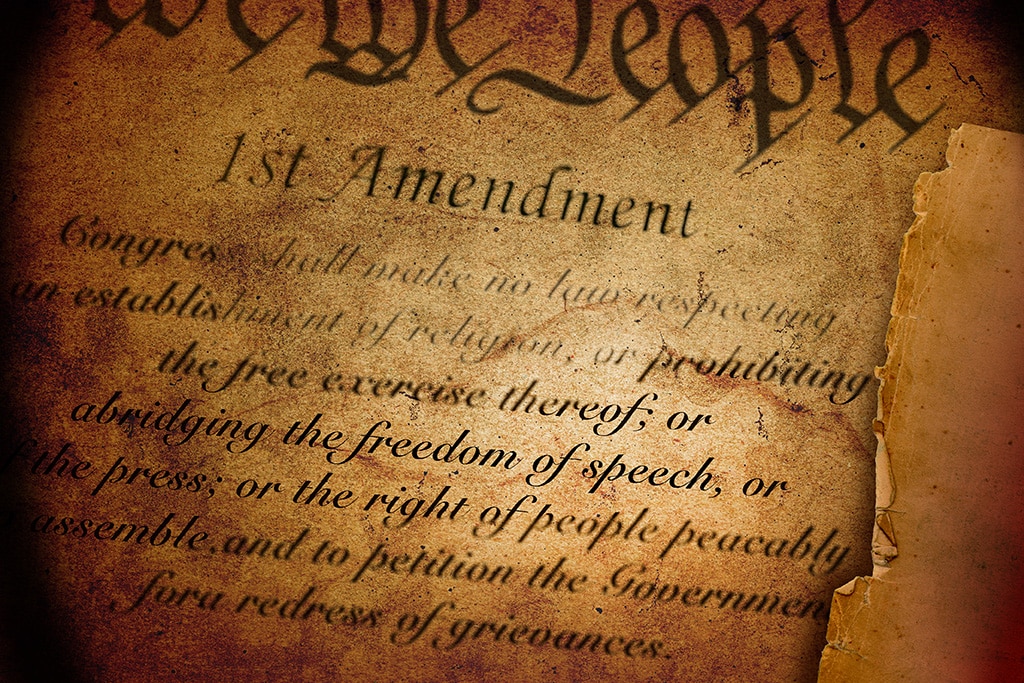
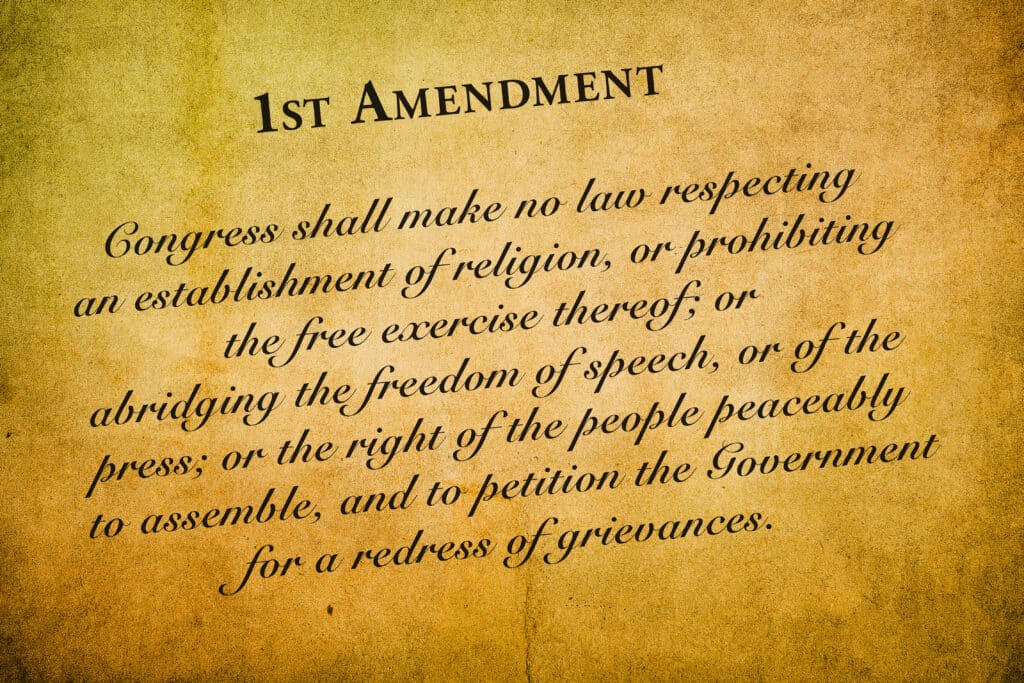
The First Amendment of the United States Constitution stands as a foundational pillar of democratic society, asserting that “Congress shall make no law… abridging the freedom of speech, or of the press.” While these words were penned in an era of parchment and printing presses, their application has been radically transformed by the advent of the digital age. In the contemporary landscape, “freedom of speech” is no longer just a legal concept debated in courtrooms; it is a technical challenge negotiated through algorithms, server protocols, and software architectures.

To understand the amendment’s freedom of speech today, one must look beyond the text of the Constitution and into the codebases of global technology platforms. The transition from physical town squares to digital ecosystems has created a complex intersection where constitutional law meets terms of service, and where the right to speak is often mediated by the private entities that own the infrastructure of modern communication.
Silicon Public Squares: Redefining the First Amendment
The primary tension in the modern interpretation of the First Amendment lies in the distinction between public and private spaces. Historically, the amendment serves as a restraint on government power, not the actions of private individuals or corporations. However, as the majority of global discourse has migrated to platforms like X (formerly Twitter), Meta, and YouTube, the line between a private company and a “digital public square” has blurred significantly.
The Private Platform Dilemma and State Action
Under the current legal framework, tech giants are private actors. This means that, unlike the government, they are generally not bound by the First Amendment’s prohibitions. A platform can choose to ban a user or remove content that it deems offensive or contrary to its community guidelines without violating the user’s constitutional rights. This “State Action Doctrine” remains a cornerstone of digital law, yet it faces increasing scrutiny as these platforms become the primary medium for political campaign cycles, social movements, and news dissemination.
Technologically, this manifests in the “Terms of Service” (ToS)—a digital contract that governs speech more directly than the Bill of Rights for most internet users. When a developer writes code for a moderation bot, they are effectively enforcing a private legal code that supersedes constitutional protections within that digital silo.
Digital Gatekeeping and the Modern Town Square
The Supreme Court case Packingham v. North Carolina (2017) marked a pivotal moment in recognizing the digital landscape’s importance. The Court described social media as the “modern public square,” suggesting that access to these platforms is essential for exercising First Amendment rights. While this does not legally compel private companies to host all speech, it highlights the technical reality that being “deplatformed” is equivalent to being silenced in the modern world. For software developers and tech architects, this places an immense ethical burden on the design of banning mechanisms and shadowbanning algorithms.
Section 230: The Technological Shield of Free Expression
Any discussion of free speech in technology is incomplete without addressing Section 230 of the Communications Decency Act. Often referred to as “the twenty-six words that created the internet,” Section 230 provides a legal shield for tech companies, stating that “No provider or user of an interactive computer service shall be treated as the publisher or speaker of any information provided by another information content provider.”
The Legal Framework of Liability
Section 230 is the reason why social media, review sites, and comment sections exist. It protects the creators of software and platforms from being held legally responsible for the speech of their users. From a tech perspective, this allows for the development of open-ended platforms where information can be shared in real-time without every post requiring a legal review. Without this protection, the technical cost of monitoring every byte of data would be prohibitive, likely leading to a “walled garden” approach where only pre-approved content is allowed.
The Debate Over Algorithmic Responsibility
The current technological debate centers on whether Section 230 should still apply when an algorithm—rather than a human—decides to amplify certain speech. Critics argue that when a platform’s AI promotes controversial content to increase engagement, the platform is no longer a neutral conduit but an active “publisher.” This has led to calls for software transparency, requiring companies to disclose how their recommendation engines prioritize speech. For engineers, this could mean a shift toward “interpretable AI,” where the logic behind content distribution must be legally defensible.
Algorithms, Shadowbanning, and the Ghost of Censorship
As the volume of digital content has scaled beyond human capacity, the enforcement of speech policies has been delegated to Artificial Intelligence. This shift from human moderation to algorithmic governance introduces a new layer of complexity to the concept of free speech.
Algorithmic Amplification and Suppression
In the digital world, the right to speak does not necessarily include the “right to be heard.” This is the distinction between “freedom of speech” and “freedom of reach.” Tech companies use complex machine learning models to determine which posts appear at the top of a user’s feed. When an algorithm suppresses content—a process often called “shadowbanning”—it technically allows the speech to exist on the server but renders it invisible to the audience.
From a software engineering perspective, these algorithms are trained on vast datasets to identify hate speech, misinformation, or “borderline content.” However, the “black box” nature of these tools often leads to accidental censorship or bias. The challenge for modern AI tools is to balance the protection of a safe user experience with the preservation of diverse viewpoints, a task that requires both technical precision and philosophical nuance.
The Rise of Content Moderation Software
The industry of Trust and Safety has birthed a massive ecosystem of software tools designed to scan images, text, and video for policy violations. Technologies such as hashing (to identify known prohibited images) and Natural Language Processing (to detect sentiment and intent) are the digital front lines of speech regulation. These tools must operate at millisecond speeds, making split-second decisions on whether a piece of content survives. The “free speech” of the user is thus dependent on the accuracy of the software’s training data and the threshold settings determined by the platform’s engineers.
Cybersecurity and the Protection of Digital Dissent
While much of the conversation focuses on social media, the First Amendment’s freedom of speech is also deeply tied to digital security and privacy. In the tech world, the ability to speak freely often depends on the ability to speak anonymously or securely.
Encryption as a Tool for Speech
End-to-end encryption (E2EE) is perhaps the most powerful technological tool for protecting speech. By ensuring that only the sender and recipient can read a message, encryption prevents government surveillance and corporate overreach from chilling free expression. In many parts of the world, “free speech” is only possible through the use of encrypted apps like Signal or Telegram and secure browsers like Tor.
However, tech companies face pressure to build “backdoors” for law enforcement, a move that many digital rights advocates argue would fundamentally undermine the First Amendment. From a digital security standpoint, the integrity of the code is the ultimate guardian of the speaker’s rights.
Fighting Surveillance with Technology
As facial recognition and data harvesting become more sophisticated, the “freedom to speak” is increasingly threatened by the “freedom to watch.” Software that masks IP addresses (VPNs) or obfuscates metadata is essential for journalists, whistleblowers, and activists. In this context, the amendment is not just a legal shield but a technological race: developers create tools to protect identity, while other technologies are built to unmask it. The future of free speech may depend on which side of this digital arms race remains more innovative.
The Decentralized Frontier: Web3 and the Future of Expression
The frustrations with centralized “Big Tech” moderation have sparked a movement toward decentralized technology, often categorized under the umbrella of Web3. This represents a paradigm shift in how we think about the freedom of speech in a digital context.
Web3 and Peer-to-Peer Networks
Decentralized social protocols, such as Mastodon, Nostr, and various blockchain-based platforms, aim to remove the central authority from the communication equation. In these systems, there is no CEO or board of directors to decide what speech is allowed. Instead, the “law” is written into the protocol itself, often using smart contracts.
From a technical standpoint, this means that content is hosted across a distributed network of nodes rather than a central server. This makes the speech “censorship-resistant,” as no single entity can delete a post or ban a user. While this offers the purest technological realization of the First Amendment, it also creates significant challenges regarding the management of illegal content and harassment.
Challenges of Governance in Decentralized Tech
The move toward decentralized speech platforms shifts the responsibility from a corporation to the community. Developers in this space are currently experimenting with “DAO” (Decentralized Autonomous Organization) governance, where users vote on moderation rules. This is a fascinating merger of software engineering and democratic theory, essentially building a digital republic from the ground up.
As we look toward the future, the “Amendment Freedom of Speech” will continue to be defined by the tools we build. Whether through the refinement of Section 230, the transparency of AI moderation, the strength of encryption, or the rise of decentralized networks, technology remains the primary medium through which our constitutional rights are either realized or restricted. In the digital age, code is law, and the preservation of free speech requires a commitment to building a technological infrastructure that values open inquiry as much as it values security and efficiency.
aViewFromTheCave is a participant in the Amazon Services LLC Associates Program, an affiliate advertising program designed to provide a means for sites to earn advertising fees by advertising and linking to Amazon.com. Amazon, the Amazon logo, AmazonSupply, and the AmazonSupply logo are trademarks of Amazon.com, Inc. or its affiliates. As an Amazon Associate we earn affiliate commissions from qualifying purchases.