
The Dow Jones Industrial Average (DJIA), often simply called “the Dow,” stands as one of the most venerable and widely quoted stock market indices in the world. For over a century, it has served as a critical barometer for the health of the American economy and the performance of its leading industrial companies. Investors, economists, and the general public alike frequently track its movements, particularly when it approaches or surpasses significant milestones, such as its all-time high. Understanding this peak not only reveals the market’s historical trajectory but also offers insights into economic cycles, investor sentiment, and the enduring power of corporate growth.

An all-time high for the DJIA is more than just a number; it represents a pinnacle of collective market value achieved by its constituent companies, reflecting periods of strong economic growth, corporate profitability, and investor confidence. This article will delve into the nature of the DJIA, pinpoint its current (as of the last significant market movement) all-time high, explore the factors contributing to such market peaks, and discuss the implications for investors navigating a market at or near its historical maximum.
Understanding the Dow Jones Industrial Average (DJIA)
To truly appreciate the significance of the DJIA’s all-time high, one must first grasp what this iconic index represents and how it functions. Unlike broader, market-capitalization-weighted indices, the Dow has a unique history and methodology that shapes its movements.
A Century of Industrial Barometers
The Dow Jones Industrial Average was created by Charles Dow in 1896, initially comprising just 12 prominent American industrial companies. Its inception aimed to provide a clear and concise snapshot of the overall health of the U.S. stock market. Over the decades, the index expanded to 30 companies and evolved from a simple average to a more complex, price-weighted average adjusted by a “Dow Divisor” to account for stock splits and other corporate actions. Despite its name, which harks back to an era dominated by heavy industry, today’s DJIA components include a diverse array of companies spanning technology, finance, healthcare, consumer goods, and more, making it a proxy for the broader economy rather than just industrial output. Its enduring presence for over 125 years speaks to its historical significance and continued relevance as a gauge of blue-chip performance.
How the DJIA is Calculated and What it Represents
The DJIA is a price-weighted index, meaning stocks with higher share prices have a greater influence on the index’s value than those with lower share prices, regardless of their market capitalization. This contrasts with market-cap-weighted indices like the S&P 500, where larger companies inherently carry more weight. The index’s value is calculated by summing the prices of the 30 component stocks and then dividing by the Dow Divisor. This divisor is adjusted regularly to ensure that stock splits, dividends, and other structural changes do not distort the index’s continuity. While some critics argue that its price-weighted nature gives undue influence to high-priced stocks and that 30 companies are too few to represent the entire market, its long history and visibility make it a crucial indicator for gauging market sentiment and the performance of established large-cap companies.
Key Components and Their Influence
The 30 companies that constitute the DJIA are selected by a committee, not based on rigid quantitative rules, but rather on criteria such as reputation, sustained growth, investor interest, and sector representation. Changes to the index components are relatively infrequent, occurring only when a company’s business is no longer representative of the current economy, or due to mergers and acquisitions. Notable components often include household names like Apple, Microsoft, Johnson & Johnson, Walmart, and JPMorgan Chase. The performance of these individual giants can significantly sway the Dow’s overall movement. When several of these high-priced, influential stocks perform well, they can propel the entire index towards new highs, illustrating the concentrated impact of its unique weighting methodology.
The Journey to New Peaks: A Historical Perspective
The path to new all-time highs for the DJIA is rarely linear. It’s a dynamic journey marked by periods of robust growth, sharp corrections, economic shifts, and technological revolutions. Understanding this historical context is vital for appreciating the milestones achieved.
Major Market Milestones and Corrections
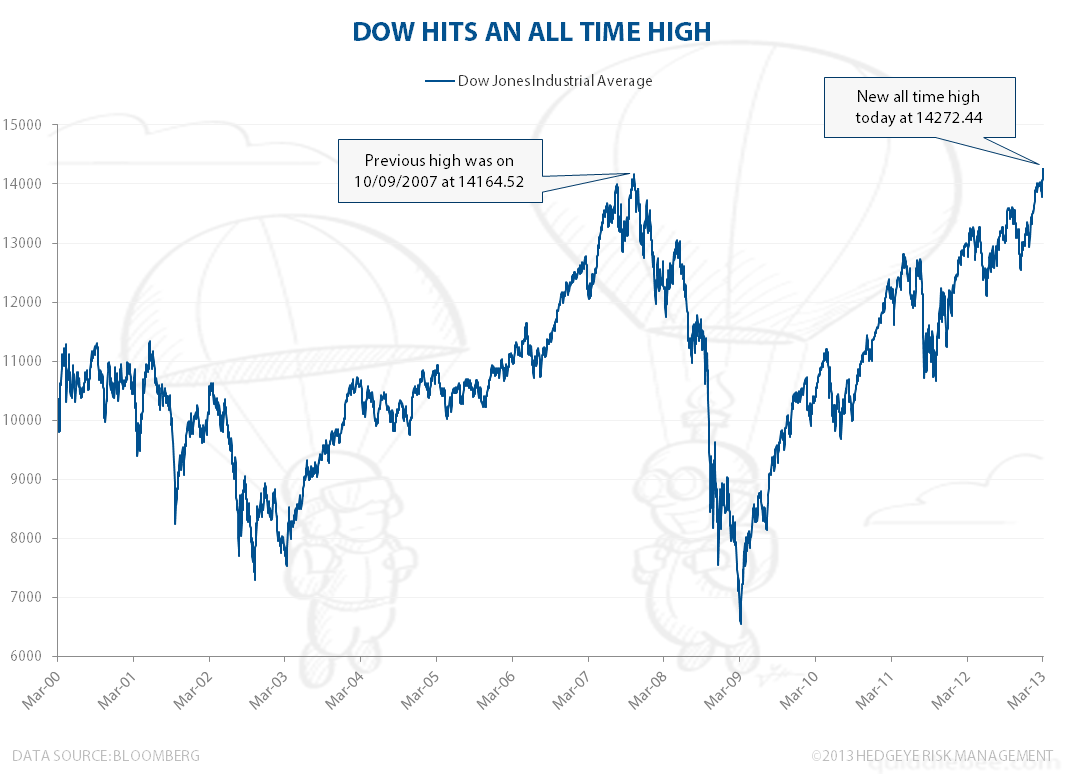
Throughout its history, the DJIA has charted numerous significant milestones, from breaking 1,000 points in 1972 to surpassing 10,000 in 1999, and more recently, breaching 30,000 and 40,000. Each of these thresholds represented a new era of economic expansion and investor optimism. However, these ascents were frequently interrupted by significant market corrections and bear markets. Events like the Great Depression of the 1930s, the “Black Monday” crash of 1987, the Dot-com bubble burst of 2000, the 2008 financial crisis, and the brief but sharp COVID-19-induced downturn in 2020 all tested the resilience of the Dow and the broader market. Yet, consistently, the index has recovered, demonstrating the long-term upward bias of equities and the innovative spirit of American enterprise. These periods of decline are not merely setbacks but are integral to the market’s long-term cycle, often setting the stage for subsequent rallies to new highs as inefficiencies are corrected and new growth opportunities emerge.
Factors Driving Bull Markets
Several recurring themes contribute to the sustained bull markets that ultimately drive the DJIA to new all-time highs. Robust corporate earnings, driven by innovation, increased productivity, and global market expansion, are paramount. Favorable monetary policy, characterized by low interest rates and accommodative central bank actions, often provides a tailwind, making borrowing cheaper for businesses and encouraging investment. Fiscal policies, such as tax cuts or infrastructure spending, can also stimulate economic activity. Beyond these fundamental drivers, investor psychology plays a crucial role. Periods of sustained optimism, often fueled by technological advancements (like the internet boom or the AI revolution), geopolitical stability, and strong consumer confidence, can lead to increased capital allocation into equities, pushing valuations higher.
The Impact of Economic Cycles and Geopolitics
The performance of the DJIA is inextricably linked to broader economic cycles. During expansionary phases, businesses thrive, unemployment falls, and consumer spending increases, all of which typically translate into higher stock prices. Conversely, recessions and slowdowns exert downward pressure. Geopolitical events also cast long shadows over market performance. Wars, trade disputes, energy crises, and pandemics can introduce significant uncertainty, triggering market volatility and pulling the index down from its peaks. Conversely, periods of geopolitical stability and international cooperation can foster an environment conducive to global trade and investment, supporting market growth. The interplay of these forces creates a complex tapestry, constantly influencing the Dow’s trajectory towards, or away from, its all-time high.
Pinpointing the DJIA’s All-Time High
Identifying the exact all-time high for the DJIA is a dynamic exercise, as the market is constantly fluctuating. However, we can highlight recent significant peaks that exemplify its historical achievements.
Identifying the Record-Breaking Number

As of early to mid-2024, the Dow Jones Industrial Average has reached significant new milestones, consistently pushing its all-time high into uncharted territory. In May 2024, for instance, the DJIA surged past the 40,000-point mark for the first time in its history. This momentous occasion, while not the absolute final peak as the market continues to trade, represents its most recent and significant all-time high at the time of writing. Reaching 40,000 points was a psychological and historical triumph, underscoring a period of sustained market strength despite various economic headwinds and inflationary pressures. It’s crucial to remember that “all-time high” is a constantly moving target; the exact number will always be the highest point recorded during active trading up to that precise moment.
The Context of the Current Market Environment
The recent achievement of breaking 40,000 points for the DJIA occurred amidst a complex and evolving economic landscape. Factors contributing to this rally included robust corporate earnings from several large-cap companies, particularly in the technology sector, even if these are not direct DJIA components but reflect broader market optimism. Expectations of potential interest rate cuts by the Federal Reserve, improving inflation data, and resilient consumer spending also played significant roles. Furthermore, a growing sense of economic stability following post-pandemic recovery efforts and advancements in areas like artificial intelligence fostered a positive outlook among investors. This confluence of improving economic indicators and positive sentiment provided the impetus for the Dow to continue its upward trajectory, setting new records.
What an All-Time High Truly Signifies for Investors
For investors, an all-time high in the DJIA carries multiple layers of significance. On one hand, it’s a tangible representation of capital appreciation for those invested in the underlying stocks or related funds. It signifies that companies, on average, are valued higher than ever before, reflecting growth in earnings, assets, or future potential. This can boost investor confidence and create a “wealth effect.” On the other hand, reaching new highs can also spark caution. Some investors may see it as a signal that the market is “overbought” or “expensive,” potentially increasing the risk of a correction. For long-term investors, however, an all-time high is often just another data point in the continuous upward march of the market, reinforcing the principle that time in the market tends to outperform timing the market. It’s a testament to the compounding power of economic growth and innovation over decades.
Beyond the Peak: Implications and Investor Strategies
While celebrating new all-time highs, prudent investors must look beyond the immediate headline and consider the broader implications for their strategies. A market at its peak presents both opportunities and potential pitfalls.
Market Sentiment and Psychological Impact
An all-time high can significantly influence market sentiment. For existing investors, it can foster a sense of vindication and confidence, encouraging them to hold or even increase their positions. For those on the sidelines, it might trigger “fear of missing out” (FOMO), drawing new capital into the market. However, it can also lead to a degree of complacency, where investors become less vigilant about risk. Conversely, an all-time high can also make some investors nervous, believing that a correction is imminent because “what goes up must come down.” Understanding these psychological biases is critical, as emotional decision-making often leads to suboptimal investment outcomes. A professional approach emphasizes discipline over emotion, regardless of market levels.
Navigating a Market at Its High
Investing when the DJIA is at an all-time high requires a balanced and strategic approach. It’s generally not advisable to make drastic changes based solely on the market reaching a new peak. Instead, investors should re-evaluate their portfolios in the context of their long-term financial goals, risk tolerance, and asset allocation. This might involve rebalancing to maintain desired proportions of stocks, bonds, and other assets, or taking some profits from overperforming sectors to reinvest in undervalued areas. Diversification remains crucial, as does holding a strong cash position for potential future opportunities or to cushion against downturns. Focus on the fundamentals of the companies you’re invested in rather than getting swept up by market momentum alone.
Long-Term vs. Short-Term Investment Outlooks
For short-term traders, an all-time high might present opportunities for momentum plays or, conversely, signals to take profits and prepare for a pull-back. Their strategies are often focused on technical analysis and rapid market movements. However, for the vast majority of individual investors with a long-term outlook, an all-time high reinforces the benefits of a buy-and-hold strategy. Over decades, the DJIA, despite its periodic downturns, has consistently trended upwards. This historical perspective suggests that while corrections are inevitable, they are often temporary interruptions in a longer-term growth trajectory. Long-term investors prioritize time in the market, dollar-cost averaging, and focusing on quality assets that can weather various economic conditions.
The Future of the DJIA and Sustained Growth
The DJIA’s journey is far from over. As the global economy continues to evolve, so too will the composition and performance of this venerable index. Looking ahead involves considering both the engines of future growth and potential roadblocks.
Evolving Economic Landscape and Sector Shifts
The future performance of the DJIA will largely be shaped by the ongoing evolution of the global economy. We are witnessing significant sector shifts, with technology, healthcare, and sustainable energy playing increasingly dominant roles. The index, while slower to adapt than some others, will continue to reflect these changes by periodically adjusting its components. Innovation, particularly in areas like artificial intelligence, biotechnology, and advanced manufacturing, will be key drivers of corporate profitability and, by extension, market growth. As new industries emerge and old ones transform, the Dow will need to adapt its representation to remain a relevant barometer of economic leadership.
The Role of Innovation and Global Trade
Innovation remains the lifeblood of economic growth and a primary catalyst for new market highs. Companies that successfully innovate and adapt to changing consumer demands and technological advancements are those that drive the market forward. Simultaneously, global trade and interconnectedness play a critical role. As DJIA components increasingly operate on a global scale, their earnings are influenced by international markets, geopolitical stability, and trade agreements. A robust global economy with open trade channels provides fertile ground for sustained corporate growth and, consequently, new records for the Dow.
Potential Headwinds and Tailwinds for Future Records
While the long-term trend for equities remains upward, the path to future all-time highs will undoubtedly encounter both headwinds and tailwinds. Potential headwinds include persistent inflation, rising interest rates, geopolitical conflicts, regulatory changes, and environmental challenges. These factors can dampen corporate earnings and investor enthusiasm. Conversely, tailwinds such as continued technological breakthroughs, expanding emerging markets, demographic shifts (e.g., aging populations requiring new healthcare solutions), and effective government policies fostering economic stability and growth could provide the impetus for the DJIA to breach even higher thresholds in the years to come.
In conclusion, the all-time high for the DJIA is not merely a number but a dynamic reflection of economic progress, corporate resilience, and investor confidence. As the index continues its journey, marked by both triumphs and challenges, understanding its historical context, methodology, and the broader economic forces at play remains crucial for any astute investor navigating the complexities of the financial markets.
aViewFromTheCave is a participant in the Amazon Services LLC Associates Program, an affiliate advertising program designed to provide a means for sites to earn advertising fees by advertising and linking to Amazon.com. Amazon, the Amazon logo, AmazonSupply, and the AmazonSupply logo are trademarks of Amazon.com, Inc. or its affiliates. As an Amazon Associate we earn affiliate commissions from qualifying purchases.