
In the landscape of modern telecommunications, the area code serves as more than just a geographic marker; it is a fundamental component of the global routing infrastructure. Among the hundreds of codes currently active within the North American Numbering Plan (NANP), the 404 area code stands as one of the most historically significant and technically foundational identifiers. Originally serving the entire state of Georgia, it now defines the digital core of Atlanta. However, understanding the 404 area code requires looking beyond a three-digit prefix and examining the complex evolution of switching technology, digital numbering protocols, and the transition from analog copper to cloud-based VoIP systems.

The Evolution of the North American Numbering Plan (NANP)
The 404 area code was not an arbitrary selection. Its origins are rooted in the mid-20th-century technical requirements of the Bell System. Established in 1947, the North American Numbering Plan was designed to simplify the routing of long-distance calls, which previously required manual intervention from switchboard operators.
The Origins of the 404 Code and Analog Routing
When the NANP was first implemented, the technology of the day was the mechanical rotary phone. This physical constraint dictated the assignment of area codes. Areas with the highest call volumes were assigned codes that were “fast” to dial on a rotary wheel. Because “0” and “1” were used as systemic signals (1 for long distance, 0 for operator), the second digit of an area code was always a 0 or a 1. A “0” indicated that the code covered an entire state, while a “1” indicated a split state.
Atlanta, as a burgeoning hub of commerce in the Southeast, was assigned 404—a “low-pulse” number that was efficient for the mechanical switches of the era to process. This efficiency was vital for the early electromechanical crossbar switches that bridged connections across thousands of miles of copper wire.
How Rotary Technology Shaped Area Code Assignment
The technical logic behind 404 was purely mathematical. In a rotary system, dialing a “9” took significantly longer than dialing a “2.” By assigning 404 to a major metropolitan center like Atlanta, the Bell System reduced the physical wear on central office equipment and decreased the time required for a pulse-dialed signal to register across the network. This legacy of efficiency remains a testament to the era of hardware-driven telecommunications, even as we have transitioned into a world of instantaneous digital packets.
The Technical Infrastructure Behind the 404 Area Code
While we perceive a phone call as a seamless audio stream, the 404 area code operates within a highly structured hierarchy of switching and signaling. The “404” acts as the primary routing instruction for the Public Switched Telephone Network (PSTN), telling the system exactly which regional gateway to target.
Central Office Codes and Line Numbers
Every 404 number follows the standard E.164 format: +1 (Country Code) – 404 (NPA) – XXX (NXX/Central Office Code) – XXXX (Line Number). The NXX code is the technical heart of the system. It identifies the specific central office switch—historically a physical building, but now often a virtualized server—responsible for a particular neighborhood or business district.
When a call is placed to a 404 number, the originating switch queries a Home Location Register (HLR) or a similar database to determine the current “owner” of that number. In the modern era, this involves complex Local Number Portability (LNP) lookups, ensuring that if a user has moved their 404 number from a legacy landline to a mobile carrier or a VoIP provider, the call is routed to the correct IP address or cellular tower.
From Copper Wires to Fiber Optics and VoIP
The infrastructure supporting the 404 area code has undergone a total transformation. In the 20th century, a 404 number was physically tied to a “local loop”—a pair of copper wires running from a central office to a specific physical address. Today, the 404 area code is largely “de-coupled” from physical hardware.
Modern 404 numbers often travel via Session Initiation Protocol (SIP) trunks over fiber-optic backbones. When you dial a 404 number today, your voice is digitized into small data packets, routed via the internet or private data networks, and reassembled at the destination. This transition from circuit-switched networks to packet-switched networks allows for the high-definition voice quality and multi-channel communication (voice, video, and text) that modern tech users expect.
Digital Identity and Number Portability in the Modern Era
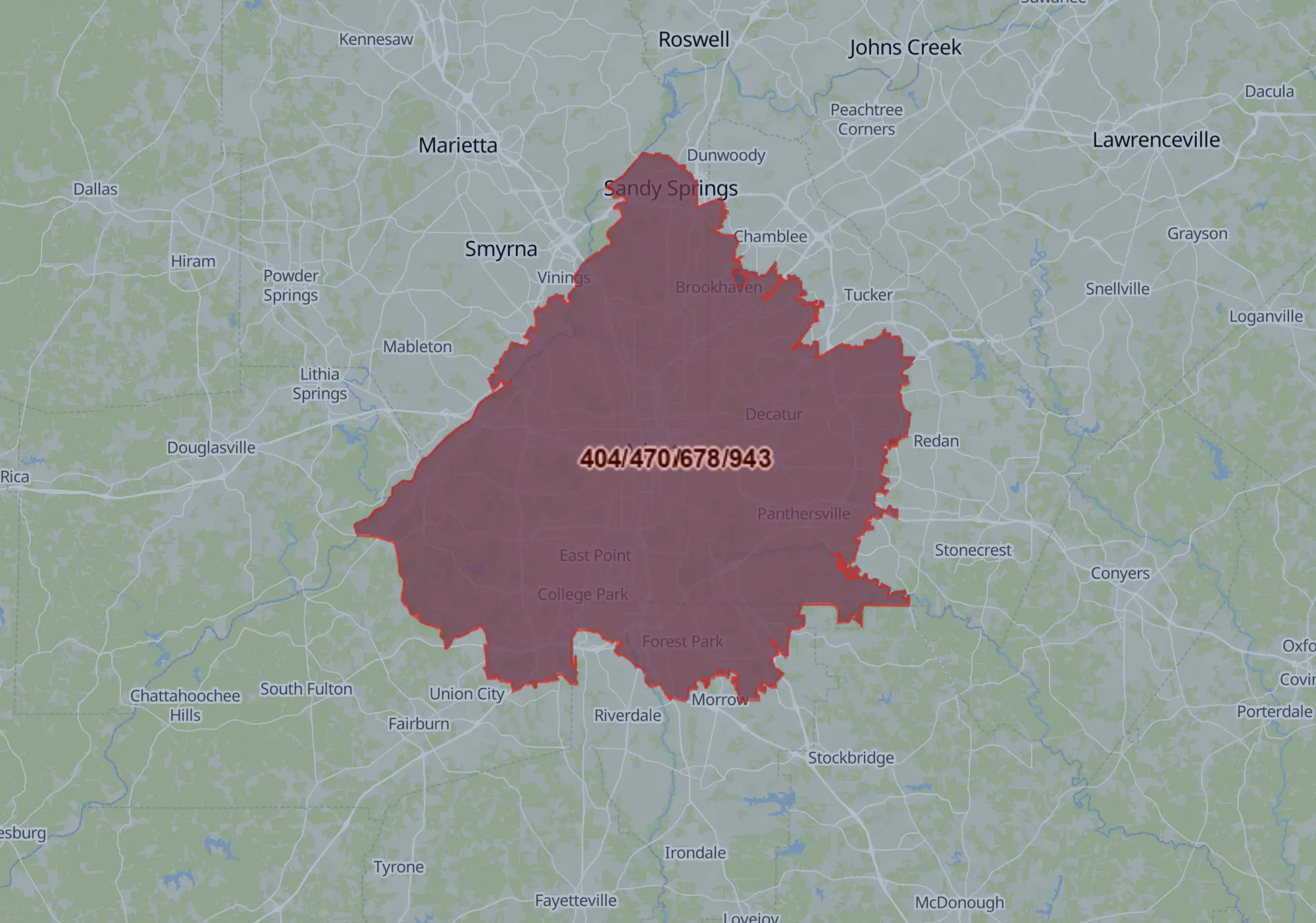
In the early 1990s, the 404 area code faced a technical crisis: number exhaustion. With the explosion of fax machines, pagers, and early cellular phones, the available pool of 404 numbers—roughly 7.9 million unique combinations—was rapidly depleting.
Number Exhaustion and the Role of Overlays
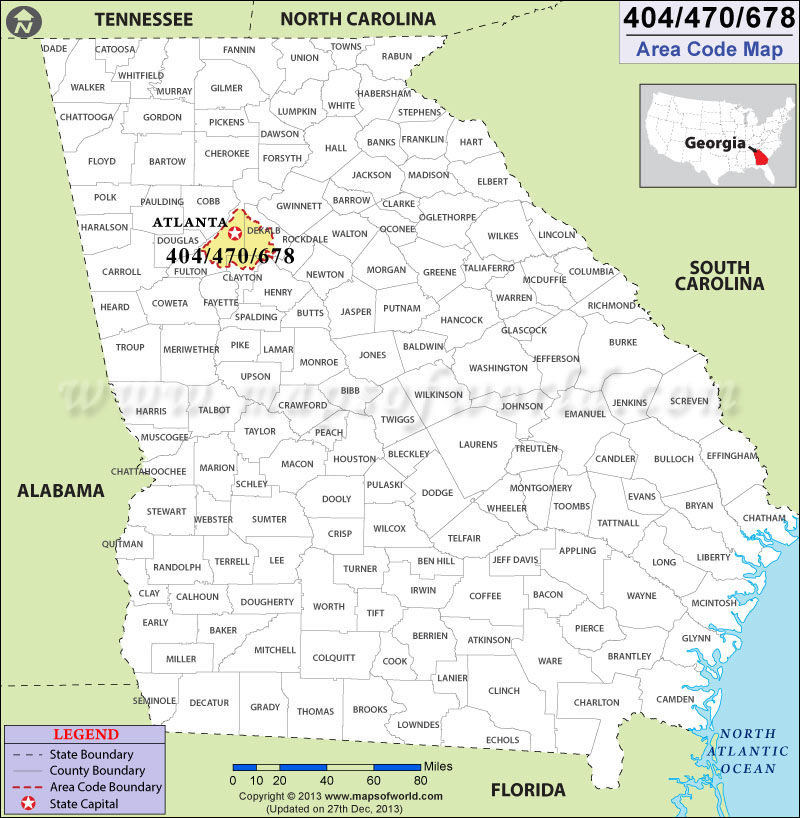
To solve the exhaustion of 404 numbers, telecommunications engineers implemented “overlays” and “splits.” Initially, the 770 and 678 codes were introduced to handle the overflow from the Atlanta metro area. From a technical standpoint, this required a fundamental change in how users interacted with the network: the implementation of 10-digit dialing.
Before the overlay, a local caller didn’t need to dial the 404 prefix. However, as 404, 770, and later 470 were layered over the same geographic footprint, the central office switches required the full 10-digit string to distinguish between identical NXX codes across different area codes. This transition marked a shift in telephony where the area code became an inseparable part of the digital identity, rather than just a long-distance prefix.
The Rise of Cloud-Based Telephony
Today, the 404 area code is a prime commodity in the world of Unified Communications as a Service (UCaaS). Tech companies and startups often prefer 404 numbers because of their legacy status, but they no longer need a physical office in Atlanta to obtain one.
Through cloud-based telephony, a developer in San Francisco or a customer support team in London can utilize a 404 area code via a Virtual Private Branch Exchange (VPBX). This is achieved through “DID” (Direct Inward Dialing) technology, where a service provider maps a 404 number to an IP-based endpoint. This allows for massive scalability, as a single 404 number can be programmed to ring hundreds of devices simultaneously or be routed through AI-driven IVR (Interactive Voice Response) systems.
Cybersecurity and Communications Security in the 404 Region
As the 404 area code remains a highly recognizable and “trusted” prefix, it has become a frequent target for digital exploitation. The technical community has had to develop robust protocols to protect the integrity of communication within this numbering space.
Caller ID Spoofing and Social Engineering
“Neighbor spoofing” is a common technique where malicious actors use software to manipulate the “From” field in a SIP header to display a 404 area code. The goal is to exploit the recipient’s trust in a local number. Technically, this is possible because the legacy PSTN was built on a foundation of trust, where the originating switch’s claim about the caller’s identity was accepted without verification.
Implementing STIR/SHAKEN Protocols
To combat the spoofing of 404 and other high-value area codes, the tech industry has implemented the STIR/SHAKEN framework.
- STIR (Secure Telephone Identity Revisited): A set of technical standards that allow for the addition of a digital certificate to the SIP header of a call.
- SHAKEN (Signature-based Handling of Asserted information using toKENS): The operational procedures for service providers to implement STIR.
When a 404 call is initiated today, it is “signed” with a cryptographic token. The receiving carrier verifies this token against a public key. If the signature is valid, the call is marked as “Verified” on the user’s smartphone. This shift toward a “Zero Trust” model in telecommunications is essential for maintaining the utility of geographic area codes in an age of automated botnets.
The Future of Geographic Numbering in a Virtual World
As we look toward the future of the 404 area code, the very concept of “geographic” numbering is being challenged by the rise of IP-based communication and decentralized identities.
The Transition to IP-Based Communication
We are currently witnessing the “Sunset of the PSTN.” Major carriers are decommissioning old copper-based switches in favor of end-to-end IP networks. In this environment, a phone number is essentially just a pointer to a Uniform Resource Identifier (URI). The 404 area code, while still useful for legacy compatibility, is increasingly being supplemented by non-geographic identifiers, such as email addresses for FaceTime or usernames for Discord and Slack.
Is the Geographic Area Code Becoming Obsolete?
From a purely technical perspective, the 404 area code is no longer a necessity for routing; we have the bandwidth and processing power to route calls based on much more complex identifiers. However, the 404 code persists because of its integration into the global “directory” of human interaction.
The future likely holds a hybrid model. The 404 area code will remain a vital “legacy wrapper” for digital identity, providing a bridge between the traditional telephone network and the next generation of Web3 and AI-integrated communication tools. Whether routed through a 5G tower, a satellite link, or a fiber-optic cable, the “404” will continue to serve as a digital handshake, signaling a connection to the technological heart of the American South.
aViewFromTheCave is a participant in the Amazon Services LLC Associates Program, an affiliate advertising program designed to provide a means for sites to earn advertising fees by advertising and linking to Amazon.com. Amazon, the Amazon logo, AmazonSupply, and the AmazonSupply logo are trademarks of Amazon.com, Inc. or its affiliates. As an Amazon Associate we earn affiliate commissions from qualifying purchases.