
Tesla, Inc. (TSLA) is more than just an automotive company; it’s a phenomenon that has captivated investors, innovators, and the public alike. For many, understanding “what is Tesla’s stock” goes beyond merely identifying a ticker symbol; it’s about grasping the complexities of a volatile yet potentially lucrative investment, a bellwether for the future of sustainable energy and autonomous technology, and a significant component of many investment portfolios. This article will delve into what Tesla’s stock represents from a financial perspective, exploring its characteristics, the factors influencing its value, and the considerations for investors looking to participate in its journey.

Understanding Tesla (TSLA) as an Investment Vehicle
At its core, Tesla’s stock, traded under the ticker symbol TSLA on the NASDAQ exchange, represents fractional ownership in Tesla, Inc. When you buy TSLA stock, you are purchasing a share of the company’s future earnings, assets, and growth potential. However, Tesla is not just any stock; it embodies the intersection of disruptive technology, ambitious vision, and a passionate, sometimes polarizing, leadership.
The Basics of TSLA: Symbol and Shares
The ticker symbol “TSLA” is the shorthand identifier for Tesla, Inc. on stock exchanges, allowing investors to buy and sell shares. These shares are units of ownership, and their price fluctuates based on supply and demand in the market, driven by a multitude of factors ranging from company performance to investor sentiment and broader economic conditions. Tesla has, at times, been one of the most actively traded stocks, reflecting intense investor interest and liquidity. It has also undergone stock splits, making shares more accessible to a wider range of investors by lowering the per-share price while increasing the number of outstanding shares proportionally, without altering the company’s overall market capitalization.
Tesla’s Core Business & Market Dominance
From an investor’s perspective, understanding Tesla’s core business is paramount. While famously known for its electric vehicles (EVs) like the Model S, 3, X, Y, and the upcoming Cybertruck, Tesla’s business extends into significant energy generation and storage solutions (Solar Roof, Powerwall, Megapack) and cutting-edge artificial intelligence, particularly in autonomous driving (Full Self-Driving, or FSD). This diversified portfolio positions Tesla not just as a car manufacturer, but as a holistic clean energy and technology company. Its market dominance in EVs has been built on early mover advantage, proprietary battery technology, a robust charging infrastructure (Supercharger network), and strong brand loyalty, all contributing to its perceived value by investors.
From Startup to S&P 500 Giant: A Growth Stock Phenomenon
Tesla’s journey from a niche startup to one of the most valuable companies in the world has been nothing short of extraordinary. For years, it was considered a quintessential “growth stock”—a company with revenues and earnings that are expected to grow at a faster rate than the overall market. This growth trajectory led to its inclusion in the prestigious S&P 500 index, a move that significantly bolstered its legitimacy and attracted even more institutional investment. Its high valuation often reflects not just current performance, but aggressive future growth projections, placing it in a category of companies where investor expectations are consistently high and closely scrutinized.
Key Factors Driving TSLA Stock Performance
Investing in Tesla stock means navigating a landscape influenced by a complex interplay of financial metrics, technological advancements, market sentiment, and macroeconomic forces. Understanding these drivers is crucial for any potential or current investor.
Financial Performance and Deliveries: The Fundamentals
At the heart of any stock’s valuation are the company’s financial fundamentals. For Tesla, key metrics include quarterly vehicle deliveries, production numbers, revenue growth, profit margins, and free cash flow. Investors closely watch these figures for signs of operational efficiency, scaling capabilities, and profitability. Exceeding or missing delivery targets, for instance, can trigger significant stock price movements. The company’s ability to reduce production costs, increase battery efficiency, and expand manufacturing capacity are critical indicators of its fundamental strength and future potential in a competitive global market.
Innovation and Future Prospects: Beyond EVs
Tesla’s stock price is heavily influenced by its reputation as an innovator. Beyond its electric vehicles, the market places significant value on Tesla’s ventures into artificial intelligence, particularly its advancements in autonomous driving. The promise of “robotaxis” and fully autonomous vehicles represents a massive potential revenue stream that goes far beyond traditional car sales. Similarly, its energy storage solutions and expansion into grid-scale energy projects are viewed as significant growth vectors. News or updates on these innovative projects, whether it’s a new battery chemistry, a software update for FSD, or a major energy project win, can profoundly impact investor perception and, consequently, the stock price.
Market Sentiment, Elon Musk, and Media Influence
Perhaps more than any other major company, Tesla’s stock is highly susceptible to market sentiment and the influence of its enigmatic CEO, Elon Musk. Musk’s public statements, tweets, and interviews often generate significant media coverage, which can, in turn, sway investor confidence and spark volatility. Positive news about new factory openings, product launches, or even a casual remark from Musk can send shares soaring, while controversies, production delays, or negative market perceptions can lead to sharp declines. This makes TSLA a stock where fundamental analysis must often be balanced with an understanding of behavioral economics and the power of narrative.
Macroeconomic Trends and Competitive Landscape
No stock exists in a vacuum. Tesla’s performance is also influenced by broader macroeconomic trends, such as interest rates (which affect the cost of borrowing for both the company and consumers buying its vehicles), inflation, consumer spending habits, and overall economic growth. A robust economy might encourage more luxury purchases like Teslas, while a downturn could dampen demand. Furthermore, the competitive landscape is rapidly evolving. As traditional automakers and new startups introduce their own EVs and sustainable energy solutions, Tesla faces increasing competition, which could impact its market share and pricing power, and thus its stock valuation. Geopolitical events, supply chain disruptions, and raw material prices also play a crucial role.
Investing in Tesla Stock: Strategies and Considerations
Investing in a high-growth, high-volatility stock like Tesla requires careful consideration, a clear understanding of personal financial goals, and a strategy for managing risk. It’s not a “set it and forget it” investment for the faint of heart.
How to Buy TSLA Shares: A Step-by-Step Guide for New Investors
For those looking to invest in Tesla, the process is straightforward:
- Open a Brokerage Account: Choose a reputable online brokerage firm (e.g., Fidelity, Charles Schwab, Robinhood, eToro). You’ll need to provide personal information and link a bank account.
- Fund Your Account: Transfer money from your bank account to your brokerage account.
- Research TSLA: Before buying, conduct your own due diligence. Understand the company’s financials, future prospects, and risk factors.
- Place an Order: Log into your brokerage account, search for “TSLA,” and place an order. You can typically choose between a “market order” (to buy immediately at the current market price) or a “limit order” (to buy at a specific price or better).
- Monitor Your Investment: Keep an eye on Tesla’s performance, company news, and market trends.
Many brokerages also offer the option to buy fractional shares, allowing investors to purchase a portion of a Tesla share with a smaller amount of capital, making high-priced stocks more accessible.
Analyzing Valuation: Growth Potential vs. Current Price
One of the perennial debates surrounding Tesla stock is its valuation. Critics often argue that its price-to-earnings (P/E) ratio and other traditional valuation metrics are excessively high compared to mature automakers, suggesting it’s overvalued. Proponents counter that traditional metrics don’t capture Tesla’s disruptive potential across multiple industries (EVs, AI, energy, robotics). Investors must weigh the company’s aggressive growth projections against its current market price. Is the current price already reflecting much of the future growth, or is there still significant upside potential not yet factored in? This requires a forward-looking analysis of revenue streams, profitability, and competitive advantage.
Understanding Volatility and Risk Management
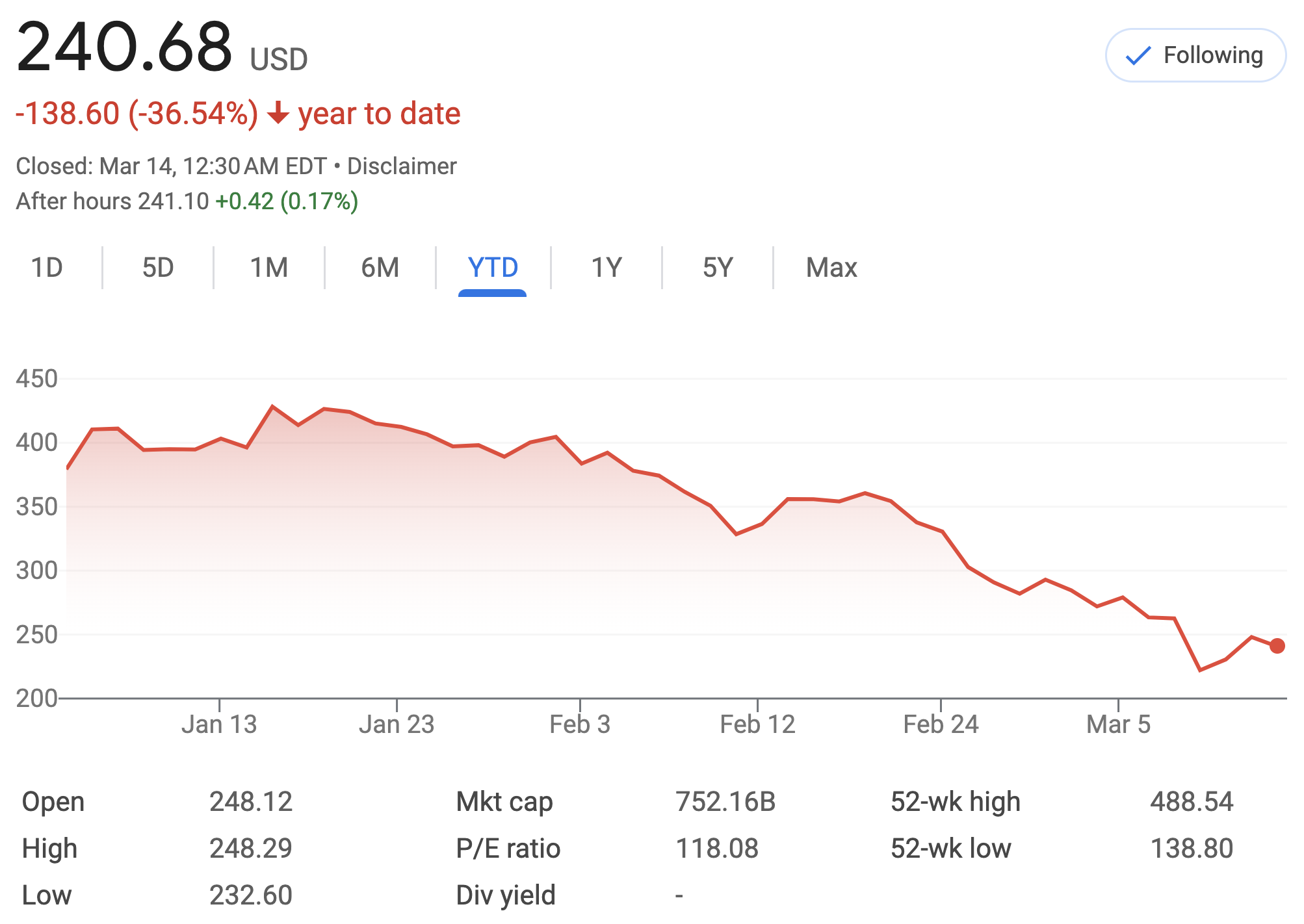
Tesla stock is known for its significant price swings. This volatility can present opportunities for savvy traders but also carries substantial risk, especially for short-term investors. A common risk management strategy is to only invest capital you can afford to lose. Diversification is another critical principle; don’t put all your investment eggs in one basket, even if that basket is Tesla. While TSLA might be a compelling investment, it should ideally be part of a broader, diversified portfolio that includes various asset classes, industries, and geographies to mitigate specific company risk.
Diversification and Portfolio Allocation
For most investors, Tesla stock should represent a component, not the entirety, of their investment portfolio. Strategic portfolio allocation involves deciding what percentage of your total investable assets to dedicate to growth stocks like TSLA, compared to value stocks, bonds, real estate, or other investments. The appropriate allocation depends heavily on individual risk tolerance, investment horizon, and financial goals. A younger investor with a long time horizon might allocate a larger portion to growth stocks, while an investor nearing retirement might opt for a more conservative approach.
The Long-Term Outlook and Broader Implications
Looking beyond immediate market fluctuations, Tesla’s stock also represents a stake in several profound long-term trends shaping the global economy and environment. Its trajectory has broader implications for sustainable investing, technological disruption, and global manufacturing.
Tesla’s Role in a Sustainable Investment Portfolio
For investors interested in Environmental, Social, and Governance (ESG) principles, Tesla presents an interesting case. On one hand, its mission to accelerate the world’s transition to sustainable energy aligns perfectly with environmental goals. On the other hand, it has faced scrutiny regarding governance practices and social aspects, such as labor relations or controversies surrounding executive compensation. Nevertheless, its core product offerings position it as a leader in the green economy, making it a relevant consideration for portfolios aiming for both financial returns and positive societal impact, especially those focused on climate change mitigation.
Regulatory Environment and Geopolitical Factors
Tesla’s future, and thus its stock performance, will also be influenced by the evolving global regulatory environment. Government incentives for EV adoption, emissions standards, energy policies, and regulations surrounding autonomous driving technology can all significantly impact Tesla’s market opportunities and operational costs. Geopolitical factors, such as trade relations between the U.S. and China (a critical market and manufacturing base for Tesla), supply chain vulnerabilities for crucial raw materials like lithium and nickel, and international tensions, can introduce significant uncertainty and risk. Investors must be aware of these external forces that lie beyond the company’s direct control.

The Future of Mobility and Energy: Tesla’s Enduring Vision
Ultimately, investing in Tesla’s stock is a bet on the future of mobility and energy. Tesla’s vision extends to a fully electric, autonomous, and sustainable world. Its continued innovation in battery technology, artificial intelligence, and manufacturing processes could cement its position as a transformative force for decades to come. As the world grapples with climate change and seeks more efficient transportation solutions, companies like Tesla are at the forefront of these transitions. For many investors, owning TSLA shares is not just about financial gain, but about being part of a movement that aims to reshape industries and contribute to a more sustainable planet.
In conclusion, “what is Tesla’s stock” is a complex question with multifaceted answers. It is a highly scrutinized financial instrument representing ownership in a company that is a leader in electric vehicles, battery technology, and artificial intelligence. Its value is influenced by a dynamic interplay of financial fundamentals, innovative breakthroughs, market sentiment, and macroeconomic trends. For investors, understanding these elements, along with a clear strategy for risk management and portfolio diversification, is essential when considering an investment in this pioneering, yet often volatile, company.
aViewFromTheCave is a participant in the Amazon Services LLC Associates Program, an affiliate advertising program designed to provide a means for sites to earn advertising fees by advertising and linking to Amazon.com. Amazon, the Amazon logo, AmazonSupply, and the AmazonSupply logo are trademarks of Amazon.com, Inc. or its affiliates. As an Amazon Associate we earn affiliate commissions from qualifying purchases.