
When an investor or a consumer asks “What is Tesla’s price?”, they are often looking for two very different answers that are inextricably linked by the same financial ecosystem. One is the sticker price of the latest Model 3 or Model Y, and the other—more complex and volatile—is the trading price of a single share of TSLA on the Nasdaq. In the world of personal finance and global investing, Tesla represents more than just a car company; it is a barometer for growth-oriented portfolios, a lightning rod for market sentiment, and a case study in how disruptive innovation dictates market valuation.

Understanding Tesla’s price requires a deep dive into the financial metrics that govern its stock, the macroeconomic factors influencing its consumer pricing, and the speculative value placed on its future as an artificial intelligence and robotics powerhouse. For the modern investor, the “price” of Tesla is a moving target that demands a sophisticated understanding of both technical analysis and fundamental business cycles.
The Financial Anatomy of TSLA: Decoding the Stock Price
For shareholders, the price of Tesla is a reflection of the company’s discounted future cash flows. Unlike traditional legacy automakers such as Ford or General Motors, which are often valued based on steady dividends and modest price-to-earnings (P/E) ratios, Tesla has historically commanded a “growth premium.” This premium exists because the market views Tesla not as a manufacturer of hardware, but as a software-centric technology firm.
Market Capitalization and the S&P 500
Tesla’s market capitalization—the total value of all its outstanding shares—has at times exceeded the combined value of several of its largest competitors. When Tesla was added to the S&P 500 in 2020, it fundamentally changed the “price” dynamics for institutional investors. Because so many mutual funds and ETFs track the S&P 500, a significant portion of Tesla’s price is now influenced by passive inflows. When the index rises, Tesla often rises with it; conversely, when the broader market undergoes a correction, Tesla’s high-beta nature often leads to more dramatic percentage drops.
Earnings Reports and Profit Margins
The most immediate catalyst for a change in Tesla’s price is its quarterly earnings report. Investors focus on three key figures: delivery numbers, gross margins, and free cash flow. In recent years, the “price” of the stock has been sensitive to the compression of margins. As Tesla lowered the retail prices of its vehicles to maintain market share amidst rising interest rates, its profit-per-vehicle decreased. For the value investor, this creates a dilemma: is the lower price an entry point for a long-term hold, or a sign that the company’s hyper-growth phase is cooling?
The Role of Institutional vs. Retail Investors
Tesla is unique in its high level of retail investor participation. Unlike many blue-chip stocks dominated by pension funds, Tesla has a massive “fanbase” of individual investors. This contributes to significant price volatility. Social media sentiment, CEO Elon Musk’s public statements, and retail “diamond-handing” often drive the price in ways that defy traditional financial modeling.
Macroeconomic Drivers: Why the Price Fluctuates
No asset exists in a vacuum, and Tesla’s price is particularly sensitive to the global economic environment. To understand why the price is what it is today, one must look at the broader financial landscape, specifically interest rates and commodity costs.
The Impact of Federal Reserve Policy
In a high-interest-rate environment, the “price” of growth stocks like Tesla typically faces downward pressure. There are two reasons for this. First, higher rates make future earnings less valuable when discounted back to the present. Second, most consumers finance their vehicles. When auto loan rates climb from 3% to 8%, the effective price of a Tesla increases for the buyer, even if the sticker price remains the same. This kills demand, which in turn scares off investors, leading to a lower stock price.
Supply Chain and Battery Commodities
The price of a Tesla—both the car and the stock—is heavily reliant on the cost of raw materials like lithium, nickel, and cobalt. When the price of lithium spikes due to supply shortages, Tesla’s manufacturing costs rise. While Tesla has more vertical integration than most, it is not immune to global commodity cycles. Savvy investors track the “Battery Metal Index” as a leading indicator for Tesla’s potential profitability.
Global Competition and Market Share
The entry of low-cost Chinese EV manufacturers and the electrification of European luxury brands have challenged Tesla’s dominance. The “price” of the stock reflects the market’s assessment of Tesla’s moat. If the market believes Tesla will maintain a 50% market share, the price stays high. If the market fears a price war will erode all profitability, the price adjusts downward to reflect a more competitive, lower-margin reality.
The Innovation Premium: Is Tesla a Tech or Auto Company?
The biggest debate surrounding Tesla’s price is its classification. If you value Tesla as a car company, its price often looks overvalued by a factor of ten. However, if you value it as an AI and robotics company, some argue the current price is a bargain.
Full Self-Driving (FSD) and Software-as-a-Service
A significant portion of Tesla’s valuation is tied to its FSD software. Tesla charges a premium for this feature, and it carries high-margin, software-like returns. The “price” of Tesla today includes a “speculative value” based on the assumption that Tesla will eventually solve Level 5 autonomy. If Tesla successfully launches a Robotaxi network, the revenue per vehicle could skyrocket, justifying a much higher stock price.
Energy Storage and the Grid
Tesla Energy (Powerwall, Megapack) is a growing segment of the business. As the world shifts toward renewable energy, the “price” of Tesla is increasingly influenced by its ability to act as a utility provider. Financial analysts are beginning to incorporate energy storage growth rates into their price targets, noting that this sector often grows faster than the automotive side during certain market cycles.
Robotics and AI: Optimus and Dojo
The long-term “price” of Tesla is also linked to its ventures in humanoid robotics (Optimus) and its supercomputing cluster (Dojo). While these projects currently burn cash rather than generate it, they represent the “lottery ticket” element of Tesla’s valuation. For the aggressive growth investor, the price of Tesla is an investment in the future of labor and computation.
Consumer Price Strategy: The Retail Perspective
For the person asking “What is Tesla’s price?” because they want to buy a car, the answer has become increasingly volatile. Tesla has pioneered a “dynamic pricing” model that mirrors the stock market more than the traditional dealership model.
The End of the MSRP Era
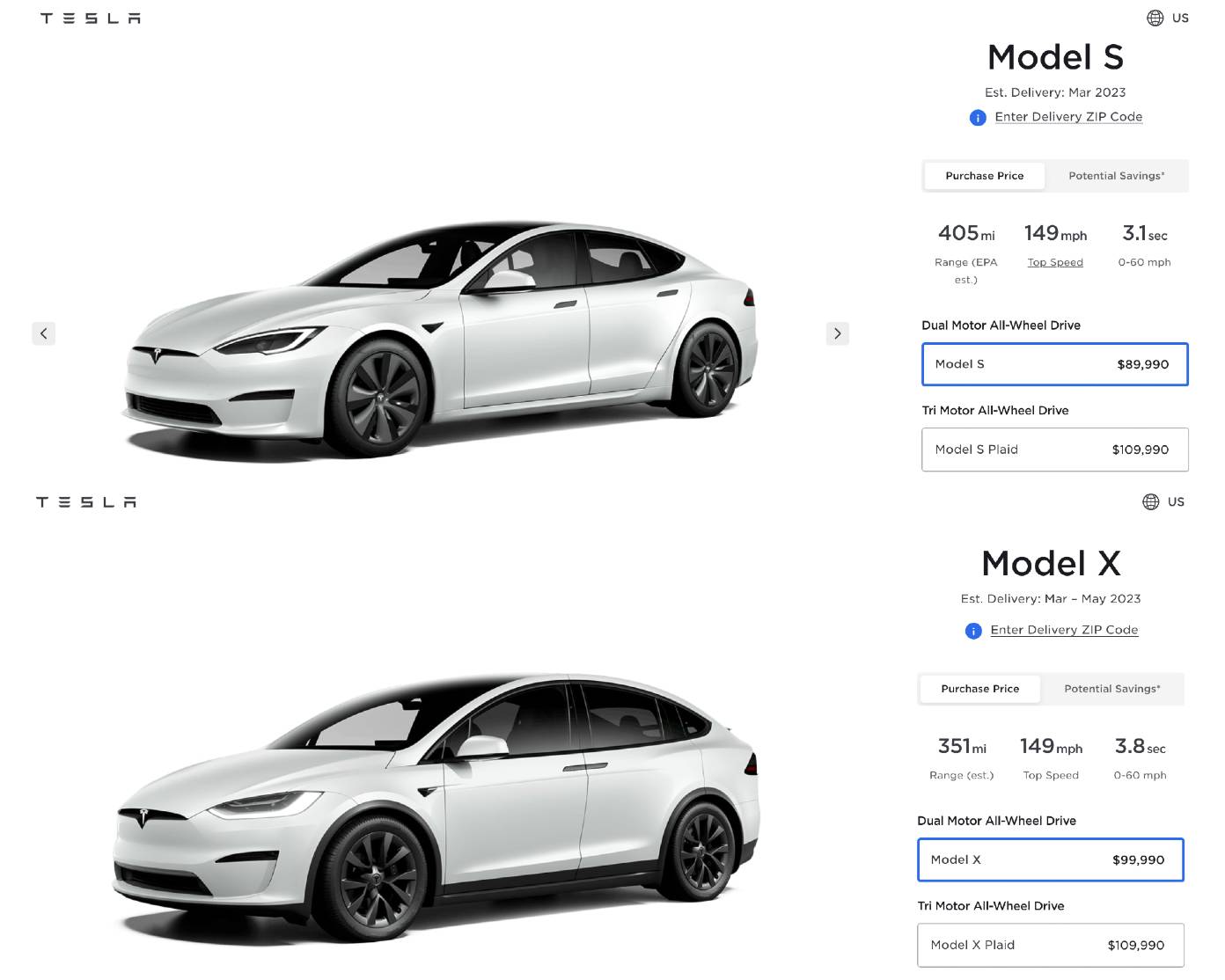
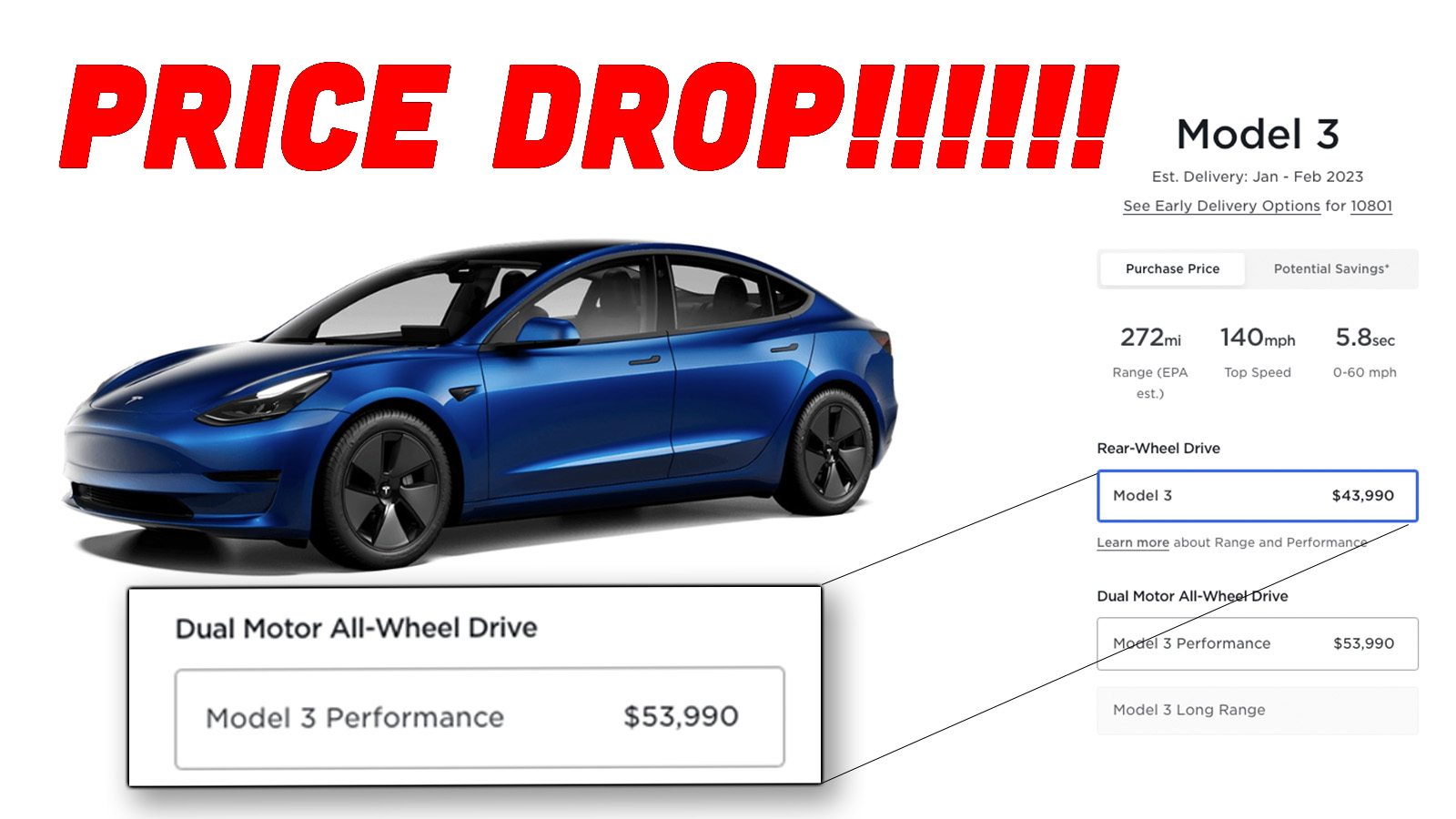
Tesla does not have franchised dealers, meaning the price you see on the website is the price you pay. However, Tesla adjusts these prices frequently based on real-time demand and inventory levels. In early 2023, Tesla implemented massive price cuts across its lineup. While this was great for new buyers, it hurt the resale value for existing owners, illustrating how the “price” of a Tesla is also a factor in its total cost of ownership (TCO).
Incentives and Tax Credits
In the United States, the federal EV tax credit (up to $7,500) plays a massive role in the effective price of a Tesla. The eligibility of different models changes based on battery sourcing and vehicle price caps. For a consumer, the “price” is a calculation of the sticker price minus federal credits, state rebates, and estimated fuel savings. From a finance perspective, these subsidies are a double-edged sword: they pull forward demand but make the company dependent on government policy.
The Investor’s Dilemma: Valuation vs. Price
“Price is what you pay; value is what you get.” This Benjamin Graham adage is perfectly applied to Tesla. Whether you are looking at the stock or the vehicle, the price is rarely static.
Technical Analysis vs. Fundamental Analysis
Traders often look at Tesla’s price through the lens of moving averages, support levels, and resistance zones. Because the stock is so liquid and popular, it often follows technical patterns. Fundamental investors, however, look at the debt-to-equity ratio and the P/E ratio. For much of its history, Tesla’s P/E ratio has been in the hundreds, leading critics to call it a bubble. Supporters argue that the “price” is justified by a 50% compounded annual growth rate (CAGR).
Risk Management in a Tesla-Heavy Portfolio
Because Tesla is a major component of many index funds and a favorite for individual stock pickers, its price movements have outsized effects on personal wealth. Diversification is key. An investor must decide if the current price offers an attractive “margin of safety.” Given the company’s volatility, many financial advisors suggest that while the price of Tesla can lead to massive gains, it should be balanced with more stable, dividend-paying assets to mitigate the “Tesla-specific” risk.
Conclusion: The Future of Tesla’s Price
As we look forward, the price of Tesla will continue to be a focal point of financial news. It will be driven by the convergence of manufacturing efficiency, AI breakthroughs, and global monetary policy. Whether you are tracking the ticker or the window sticker, understanding the “price” of Tesla requires looking beyond the number and analyzing the complex machine of innovation and finance that drives it. For the informed participant in the modern economy, the price of Tesla is not just a cost—it is a signal of where the global markets believe the future is headed.
aViewFromTheCave is a participant in the Amazon Services LLC Associates Program, an affiliate advertising program designed to provide a means for sites to earn advertising fees by advertising and linking to Amazon.com. Amazon, the Amazon logo, AmazonSupply, and the AmazonSupply logo are trademarks of Amazon.com, Inc. or its affiliates. As an Amazon Associate we earn affiliate commissions from qualifying purchases.