
In the landscape of automotive technology, few terms have shifted from pop-culture references to industry-standard benchmarks as rapidly as “Plaid.” When Tesla first introduced the Plaid powertrain for the Model S and Model X, it wasn’t merely releasing a faster version of an existing vehicle; it was unveiling a complete overhaul of electric propulsion technology. Plaid represents the current zenith of Tesla’s engineering, a high-performance tier that pushes the boundaries of physics, software integration, and battery management. To understand what Tesla Plaid is, one must look beyond the 0-60 mph statistics and examine the sophisticated hardware and software stack that makes such performance possible in a mass-produced consumer vehicle.
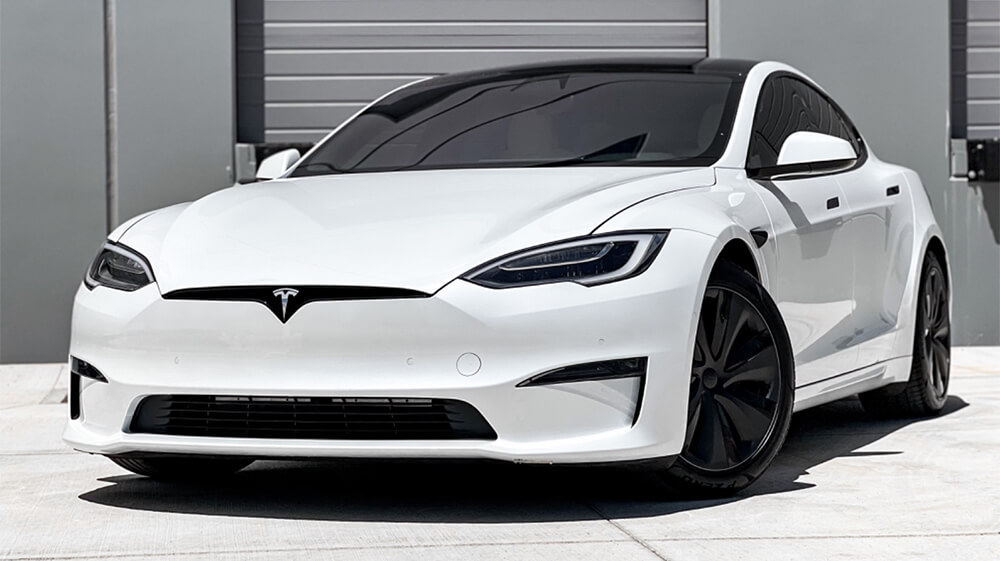
The Evolution of Speed: From Ludicrous to Plaid
The journey to Plaid began with the “Insane” and “Ludicrous” modes, terms famously borrowed from the 1987 Mel Brooks film Spaceballs. In the movie, “Plaid” is the only speed faster than Ludicrous. While the nomenclature is playful, the engineering required to achieve this leap was monumental. The transition from the dual-motor “Performance” trims to the tri-motor “Plaid” architecture required a fundamental reimagining of how energy is converted into kinetic force.
Redefining Electric Performance Metrics
The headline figure for the Tesla Model S Plaid is its 1,020 horsepower and a 0-60 mph acceleration time of 1.99 seconds (with rollout subtracted). However, the technological achievement lies in the power curve. In traditional internal combustion engines, and even in earlier electric vehicles, power often drops off as the vehicle reaches higher speeds. The Plaid platform is engineered to maintain peak power output all the way to its top speed of 200 mph. This sustained acceleration is made possible by an innovative motor design that addresses the inherent limitations of electromagnetic fields at high RPMs.
The Significance of the Tri-Motor Platform
Unlike the standard dual-motor setup, which features one motor for the front axle and one for the rear, the Plaid powertrain utilizes three independent electric motors. One motor powers the front wheels, while two separate motors power the rear wheels independently. This configuration allows for advanced torque vectoring. By digitally controlling the torque sent to each rear wheel, the onboard software can adjust the vehicle’s yaw and cornering stability in real-time, far more precisely than a mechanical differential or a traditional braking-based stability control system could ever manage.
The Tri-Motor Powertrain and Carbon-Sleeved Rotors
At the heart of the Plaid’s capability is a piece of hardware that was previously thought to be commercially unviable for mass production: the carbon-sleeved rotor. This is perhaps the most significant technological breakthrough in the Plaid’s motor assembly.
Overcoming Centrifugal Force at 20,000 RPM
In a conventional electric motor, the rotor—the part that spins—is made of copper and steel. As the motor reaches extreme speeds (up to 20,000 RPM in the Plaid), the centrifugal force is so intense that the copper starts to expand due to the heat and the rotational energy. If the rotor expands too much, it can make contact with the stator (the stationary part of the motor), leading to catastrophic failure. To prevent this, traditional motors are often limited in their top RPM.
Tesla’s solution was to wrap the rotor in a high-strength carbon fiber sleeve. Because carbon fiber has an incredibly high tensile strength and does not expand significantly under heat or stress, it holds the rotor together even at 20,000 RPM. Applying this sleeve is a complex mechanical process; the carbon is wound over the rotor with high tension, creating a pre-stressed state that keeps the internal components perfectly aligned regardless of speed. This allows the motor to be smaller, lighter, and more efficient while producing significantly more power than larger, unsleeved units.
Thermal Management and Silicon Carbide Inverters
High performance generates immense heat. To prevent the battery and motors from overheating during sustained high-speed driving or repeated launches, Tesla introduced a new thermal architecture. This includes a larger radiator and a more efficient heat pump system—originally debuted in the Model Y—which manages the temperature of the powertrain and the cabin simultaneously.
Furthermore, the Plaid utilizes advanced silicon carbide (SiC) inverters. The inverter is the “brain” that converts DC power from the battery into AC power for the motors. Silicon carbide is more efficient than standard silicon, losing less energy to heat and allowing for higher current flow. This efficiency is critical for delivering the massive bursts of energy required to hit 1,020 horsepower without melting the electrical components.
Software Architecture and the Digital Cockpit

Tesla has often been described as a software company that happens to build hardware. The Plaid models exemplify this philosophy, featuring a computing platform that rivals high-end gaming PCs.
The Tesla V11 Interface and Gaming Hardware
The Plaid interior is dominated by a 17-inch cinematic display with a resolution of 2250 x 1300. Beneath the surface, the infotainment system is powered by an AMD Ryzen processor and an AMD RDNA 2 GPU. This hardware provides up to 10 teraflops of processing power, which is roughly equivalent to a PlayStation 5.
This isn’t just for show; the “Tesla Theater” and “Arcade” allow users to play graphically demanding games like Cyberpunk 2077 or The Witcher 3 directly on the car’s screen. This level of integration showcases Tesla’s vision of the car as a mobile living space and a digital hub. The software also manages the “Plaid Mode” interface, which includes a drag-strip mode that pre-conditions the battery to the optimal temperature and initiates the “Cheetah Stance” (lowering the front suspension) for maximum launch grip.
Over-the-Air (OTA) Updates: Enhancing Performance Remotely
One of the most revolutionary aspects of the Plaid’s technology is its ability to evolve. Through Over-the-Air (OTA) updates, Tesla can modify the motor control algorithms, improve battery management logic, or even unlock higher top speeds. For example, the “Track Mode” update for the Model S Plaid significantly overhauled the car’s software to allow for manual adjustment of the cooling system, torque split, and regenerative braking strength. This means the car’s performance characteristics can be refined and improved years after it leaves the factory, a concept that is still relatively rare in the traditional automotive industry.
Aerodynamics and Structural Integration
To reach 200 mph safely and efficiently, a car needs more than just raw power; it needs to master the air. The Model S Plaid features one of the lowest drag coefficients of any production car in the world, measured at 0.208 Cd.
Achieving a 0.208 Drag Coefficient
Achieving such a low drag coefficient involved meticulous aerodynamic refining. Every surface, from the flush door handles to the smoothed underbody, is designed to minimize turbulence. The Plaid features a revised front splitter and a subtle rear spoiler that balances downforce with aerodynamic efficiency. This low drag is essential not just for top speed, but for range. At highway speeds, the majority of an EV’s energy is spent overcoming air resistance. By cutting through the air more cleanly, the Plaid maintains a competitive EPA-estimated range of 396 miles, despite its extreme performance.
The Significance of the Plaid Chassis and Suspension
The Plaid isn’t just about straight-line speed; it features a sophisticated air suspension system with adaptive damping. The car’s computer uses GPS data and sensor input to remember the road conditions. If it encounters a pothole or a steep driveway, it can automatically raise the ride height for future visits to that location. In high-performance scenarios, the suspension firms up and lowers the center of gravity, working in tandem with the tri-motor torque vectoring to provide a level of handling agility that belies the vehicle’s weight.
The Future of High-Performance EV Platforms
What Tesla Plaid represents is a blueprint for the future of the electric vehicle market. By solving the engineering challenges of high-RPM motors and high-density thermal management, Tesla has set a new baseline for what consumers expect from premium electric transport.
Scaling Plaid Technology to Other Models
While the “Plaid” badge is currently reserved for the Model S and Model X, the technological innovations developed for this platform are already trickling down. The lessons learned in carbon-sleeved rotor manufacturing and silicon carbide inverter efficiency are being applied to improve the efficiency and cost-effectiveness of the Model 3 and Model Y. Furthermore, the upcoming second-generation Tesla Roadster is expected to use an even more advanced version of the Plaid powertrain, potentially incorporating “cold-gas thrusters” to push performance into the realm of aerospace engineering.

Impact on the Global EV Market and Competition
The existence of the Plaid has forced the hand of legacy automakers and EV startups alike. Competitors such as Lucid Motors, with the Air Sapphire, and Porsche, with the Taycan Turbo GT, have had to develop their own tri-motor and advanced thermal systems to compete. This technological arms race benefits the consumer by accelerating the development of better battery chemistry, faster charging infrastructure (the Plaid supports 250kW V3 Supercharging), and more robust software ecosystems.
In conclusion, Tesla Plaid is more than a speed setting; it is a comprehensive suite of hardware and software innovations. From the carbon-fiber-wrapped rotors to the gaming-grade interior computers, it serves as a showcase of what is possible when modern computing power is applied to automotive engineering. It remains a definitive statement on the potential of electric propulsion, proving that sustainable transport can also be the highest-performing transport on the road today.
aViewFromTheCave is a participant in the Amazon Services LLC Associates Program, an affiliate advertising program designed to provide a means for sites to earn advertising fees by advertising and linking to Amazon.com. Amazon, the Amazon logo, AmazonSupply, and the AmazonSupply logo are trademarks of Amazon.com, Inc. or its affiliates. As an Amazon Associate we earn affiliate commissions from qualifying purchases.