
In the rapidly evolving landscape of data management and digital preservation, the Text Encoding Initiative (TEI) stands as one of the most critical, yet often invisible, pillars of the modern information age. While consumers interact with slick user interfaces and high-speed search engines, the underlying structure of complex textual data often relies on the rigorous standards established by the TEI. At its core, TEI is an international and interdisciplinary standard that enables libraries, museums, publishers, and individual scholars to represent machine-readable texts in a way that is both structurally sound and intellectually rich.
As we move deeper into the era of Big Data and Artificial Intelligence, the importance of standardized text representation has shifted from a niche academic concern to a fundamental requirement for high-quality machine learning and long-term digital sustainability. Understanding what TEI is, how it functions technically, and why it remains the gold standard for text encoding is essential for anyone involved in software development, data science, or digital archiving.
The Evolution and Purpose of TEI
The Text Encoding Initiative was born out of a necessity to solve the “Tower of Babel” problem in early digital humanities. Before the late 1980s, researchers and developers used disparate, proprietary formats to digitize texts. These formats were often incompatible, meaning that a digital version of a manuscript created on one system could rarely be read or analyzed by another.
In 1987, a group of scholars and technologists met at Vassar College to establish a common set of guidelines for the encoding of electronic texts. The result was the TEI, which eventually adopted the eXtensible Markup Language (XML) as its primary vehicle. Today, the TEI is maintained by a global consortium, ensuring that the guidelines evolve alongside advancements in computing technology.
From Print to Digital Preservation
The primary purpose of TEI is to provide a framework for “marking up” a text—adding tags to identify its various parts. Unlike HTML, which is primarily concerned with how a text looks on a screen (presentation), TEI is concerned with what the text is (semantics and structure). For instance, where HTML might use a <b> tag to make a word bold, TEI uses specific tags to identify whether that word is a person’s name, a geographic location, or a technical term.
This distinction is crucial for digital preservation. Because TEI focuses on the semantic content rather than the visual layout, TEI-encoded files are platform-independent. A file encoded in the 1990s using TEI standards remains readable and useful today, whereas many proprietary word-processing formats from that era have long since become obsolete.
The Core Philosophy of Structural Markup
The TEI philosophy is built on the idea that a text is not just a linear string of characters, but a “hierarchy of content objects” (OHCO). A book contains chapters, chapters contain paragraphs, and paragraphs contain sentences. By using a hierarchical structure, TEI allows developers to create complex databases of text that can be queried with extreme precision. This structural integrity is what allows a search engine to distinguish between “Washington” the city and “Washington” the person, provided the text has been appropriately encoded.
The Technical Architecture: How TEI Works
Technically, TEI is an application of XML. It provides a massive library of more than 500 tags designed to handle almost every imaginable textual feature, from basic prose and poetry to complex linguistic analysis and manuscript descriptions.
XML Integration and Schemas
TEI documents must be “well-formed” according to XML rules and “valid” according to the TEI schema. These schemas act as a rulebook, defining which tags are allowed to appear inside other tags. For example, the schema ensures that a <title> tag is placed within the <teiHeader>, maintaining the logical flow of information.
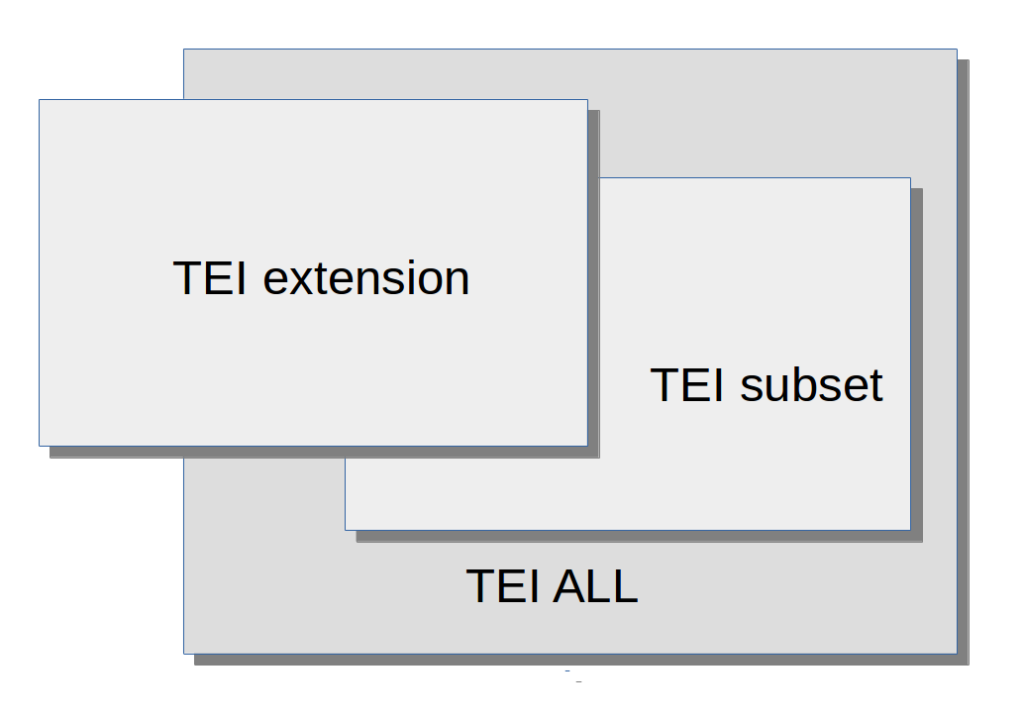
The flexibility of TEI comes from its modular design. Because no single project needs all 500+ tags, the TEI allows users to create “subsets” or customizations. A project focusing on digital dictionaries will use a different set of modules than a project digitizing 17th-century plays.
The TEI Header and Metadata Management
One of the most powerful features of a TEI document is the <teiHeader>. This section functions as the “brain” of the file, containing exhaustive metadata about the electronic text. It includes:
- File Description: Information about the electronic file itself, its title, and its publication history.
- Source Description: Detailed information about the original source material (e.g., the physical manuscript or the printed book).
- Encoding Description: A record of the technical choices made during the encoding process.
- Revision Description: A log of every change made to the file over time.
This metadata-heavy approach ensures that the data is self-documenting. A developer encountering a TEI file decades from now will have all the context necessary to understand what the data represents and how it was processed.
Modular Customization (The ODD System)
The TEI uses a unique system called “One Document Does-it-all” (ODD). This is a TEI-encoded file that describes the customization of the TEI schema itself. It allows developers to define which elements they are using, change the names of elements to suit local languages, or add constraints to specific data fields. The ODD system allows for the generation of both human-readable documentation and machine-readable schemas (like RelaxNG or XSD) from a single source.

TEI in the Modern Tech Landscape
While TEI originated in the academic world, its utility has expanded significantly into the broader technology sector, particularly in the realms of Natural Language Processing (NLP) and Artificial Intelligence.
Enhancing Machine Learning and NLP
The current surge in AI and Large Language Models (LLMs) relies on massive amounts of training data. However, not all data is created equal. “Dirty” data—text that is poorly structured, lacks context, or contains OCR (Optical Character Recognition) errors—can lead to biased or inaccurate models.
TEI provides a solution by offering high-fidelity, “clean” data. When researchers train NLP models on TEI-encoded corpora, the models benefit from the explicit tagging of entities, linguistic features, and structural boundaries. For instance, a model trained on TEI-encoded medical records or legal documents can achieve higher accuracy in Named Entity Recognition (NER) because the training data has already been verified by the structural tags provided by the encoding standard.
Interoperability and Long-term Data Sustainability
In software engineering, interoperability is the ability of different systems to exchange and use information. TEI is the ultimate interoperable format for text. Because it is an open standard, it is not tied to any specific software vendor.
Data silos are a major challenge for modern enterprises. When information is trapped in proprietary formats or unstructured PDFs, it is difficult to analyze. By converting critical textual assets into TEI, organizations ensure that their data can be ingested by any modern system, whether it is a web-based repository, a mobile application, or a sophisticated data analytics tool.
Implementing TEI: Tools and Best Practices
Implementing a TEI workflow requires a combination of specialized software and a deep understanding of data modeling.
Popular Editors and Transformation Engines
While any text editor can technically edit XML, specialized tools are preferred for TEI work. The Oxygen XML Editor is the industry standard, offering built-in support for TEI schemas, validation, and transformation.
Transformation is a key part of the TEI ecosystem. Raw TEI-XML is not intended to be read by end-users. Instead, it is transformed into other formats using XSLT (Extensible Stylesheet Language Transformations). A single TEI source file can be simultaneously transformed into a responsive website, a print-ready PDF, an EPUB for mobile devices, and a JSON file for API consumption. This “single source of truth” approach reduces errors and ensures consistency across all platforms.
Common Challenges in Large-Scale Encoding
Despite its power, TEI has a steep learning curve. The sheer number of elements can be overwhelming, and the process of manual encoding is time-consuming. To combat this, many modern tech workflows employ “semi-automated” encoding. This involves using machine learning tools to predict tags or perform initial OCR, followed by human editors who refine the TEI markup to ensure it meets the highest standards of accuracy.
Another challenge is the “overlapping hierarchy” problem. In XML, tags must be neatly nested. However, physical features (like page breaks) often overlap with logical features (like paragraphs). TEI offers sophisticated technical solutions for this, such as “milestone” tags or “fragmentation and reconstitution” techniques, though these require advanced technical knowledge to implement correctly.
The Future of TEI and Digital Literacy
As we look toward the future, the role of the Text Encoding Initiative is set to expand as the demand for structured data grows. In a world increasingly dominated by ephemeral digital content, the TEI offers a framework for permanence and precision.
The integration of TEI with Linked Open Data (LOD) is a particularly exciting frontier. By using TEI to identify entities and then linking those entities to global databases like Wikidata or Getty’s Art & Architecture Thesaurus, developers are creating a “Global Graph” of human knowledge. This allows for cross-repository searching where a user can find all documents related to a specific historical figure or scientific concept across hundreds of different digital libraries simultaneously.
Furthermore, as AI tools become more adept at generating content, the need for human-verified, structurally sound “seed data” becomes even more vital. TEI remains the most robust method for creating this high-value data. It is more than just a set of tags; it is a philosophy of data stewardship that prioritizes the longevity and integrity of information over the convenience of the moment.
For tech professionals, software architects, and data scientists, mastering the principles of TEI is not just about learning a markup language. It is about understanding how to model complex information in a way that is sustainable, interoperable, and ready for the next generation of computing. Whether it is used for preserving a 12th-century manuscript or structuring a massive dataset for a modern AI, TEI remains an indispensable tool in the global technological toolkit.
aViewFromTheCave is a participant in the Amazon Services LLC Associates Program, an affiliate advertising program designed to provide a means for sites to earn advertising fees by advertising and linking to Amazon.com. Amazon, the Amazon logo, AmazonSupply, and the AmazonSupply logo are trademarks of Amazon.com, Inc. or its affiliates. As an Amazon Associate we earn affiliate commissions from qualifying purchases.