
In the vast, interconnected tapestry of the digital world, where billions of devices communicate instantaneously across continents, a silent, powerful language orchestrates every interaction. This language is TCP/IP, or Transmission Control Protocol/Internet Protocol. Far more than just a couple of acronyms, TCP/IP is the foundational suite of communication protocols upon which the entire global internet, and indeed most modern networks, operate. Without it, the seamless browsing, emailing, streaming, and online collaboration we take for granted would be impossible. It is the architectural blueprint that defines how data is formatted, addressed, transmitted, routed, and received, ensuring that information sent from one point on the planet reliably reaches its intended destination. Understanding TCP/IP is akin to understanding the very circulatory system of the internet itself – a complex, yet elegantly designed system that ensures information flows efficiently and accurately, regardless of the underlying hardware or software. This article will demystify TCP/IP, exploring its core components, its layered structure, its indispensable role in modern technology, and its continuing evolution.

The Foundational Pillars: TCP and IP Demystified
At its heart, the TCP/IP suite comprises numerous protocols, but two stand out as the primary architects of reliable network communication: Transmission Control Protocol (TCP) and Internet Protocol (IP). While often uttered in the same breath, they each serve distinct yet complementary functions, working in tandem to deliver your digital messages.
Transmission Control Protocol (TCP): The Reliable Messenger
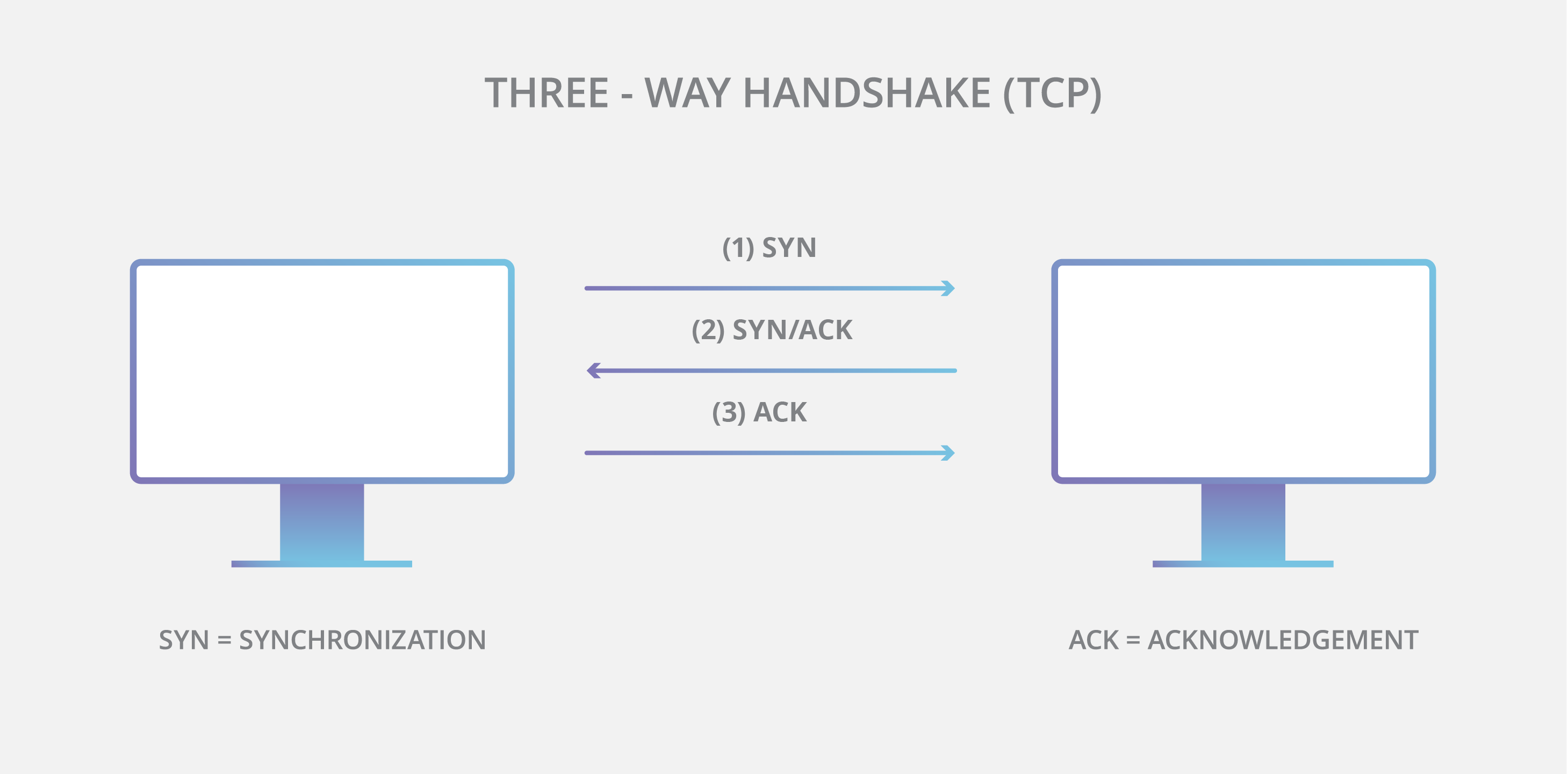
TCP is the workhorse of reliable data delivery. Imagine sending a lengthy, multi-page letter across the country. TCP acts like a meticulous postal service that not only ensures every page arrives but also checks if they arrive in the correct order, without any missing pages, and without any damage. If a page is lost or damaged, it politely requests a resend. This is why TCP is referred to as a “connection-oriented” protocol. Before any data transmission begins, TCP establishes a virtual connection between the sender and receiver through a process known as the “three-way handshake.” This handshake synchronizes both ends, confirming they are ready to communicate.
Once the connection is established, TCP breaks down larger messages into smaller, manageable segments. Each segment is assigned a sequence number, allowing the receiver to reassemble the data in the correct order, even if the segments arrive out of sequence due to different network paths. For every segment received, the receiver sends an acknowledgment (ACK) back to the sender. If an ACK isn’t received within a certain timeframe, TCP assumes the segment was lost and retransmits it. Furthermore, TCP incorporates flow control mechanisms to prevent a fast sender from overwhelming a slow receiver, and congestion control to manage network traffic and prevent bottlenecks. This robust set of features makes TCP ideal for applications where data integrity and complete delivery are paramount, such as web browsing (HTTP), email (SMTP), and file transfer (FTP).
Internet Protocol (IP): The Address System and Router
While TCP ensures the reliability of data within a session, IP is responsible for the actual delivery of data packets across different networks. If TCP is the meticulous postal service, IP is the universal addressing system and the network of roads and highways that connect all post offices. IP defines how data packets, or “datagrams,” are structured and addressed so they can be routed from the source network to the destination network.
Every device connected to the internet has a unique IP address – a numerical label that identifies it on the network. The most common version in use today is IPv4, which uses 32-bit addresses (e.g., 192.168.1.1), offering approximately 4.3 billion unique addresses. However, with the explosion of internet-connected devices, IPv4 addresses are rapidly depleting, leading to the adoption of IPv6, which uses 128-bit addresses (e.g., 2001:0db8:85a3:0000:0000:8a2e:0370:7334), providing a virtually inexhaustible supply.
When data segments from TCP arrive at the IP layer, IP adds its own header, which includes the source and destination IP addresses. This forms an IP packet. IP’s primary function is to route these packets across the internet. It doesn’t care about the content of the packet or whether it arrives reliably; its job is simply to get the packet closer to its destination. Routers, which are specialized network devices, use the destination IP address in the packet’s header to determine the best path to forward the packet. This “best-effort delivery” approach means IP is inherently “connectionless” and “unreliable” – it doesn’t establish a connection or guarantee delivery or order. It merely tries its best to send the packet. It relies on higher-layer protocols like TCP to handle reliability.
The TCP/IP Protocol Suite: A Layered Architecture
TCP/IP is not merely two protocols but an entire suite of protocols, often understood through a conceptual model that divides communication tasks into several distinct layers. This layered architecture is a powerful design principle that simplifies network design, allows for flexibility, and promotes interoperability. Each layer performs a specific function and relies on the services of the layer below it, while providing services to the layer above it.
Understanding the TCP/IP Model
The TCP/IP model is typically described with four or five layers, often compared to the more theoretical OSI (Open Systems Interconnection) model. We will primarily focus on the four-layer model, which is more commonly used in practical TCP/IP discussions:
-
Application Layer: This is the topmost layer, closest to the end-user. It provides network services to applications and handles the specifics of how data is presented to the user. Protocols at this layer include:
-
HTTP (Hypertext Transfer Protocol): For web browsing.
-
FTP (File Transfer Protocol): For transferring files.
-
SMTP (Simple Mail Transfer Protocol): For sending emails.
-
DNS (Domain Name System): For translating human-readable domain names (like google.com) into IP addresses.
-
SSH (Secure Shell): For secure remote access.
-
This layer is where user data originates or is ultimately consumed.
-
-
Transport Layer: This layer is responsible for end-to-end communication between applications on different hosts. It ensures that data from the application layer is successfully delivered to the correct application process on the destination machine. The two primary protocols here are:
-
TCP (Transmission Control Protocol): As discussed, provides reliable, connection-oriented data transmission.
-
UDP (User Datagram Protocol): Provides unreliable, connectionless, faster data transmission, suitable for applications where speed is more critical than absolute reliability (e.g., streaming video, online gaming, DNS queries).
-
-
Internet Layer (or Network Layer): This layer is the heart of TCP/IP, responsible for addressing and routing data packets across the internet. Its primary protocol is:
-
IP (Internet Protocol): Defines IP addresses and handles the routing of packets from source to destination, potentially across multiple interconnected networks.
-
ICMP (Internet Control Message Protocol): Used by network devices to send error messages and operational information (e.g.,
pingutility). -
ARP (Address Resolution Protocol): Maps IP addresses to physical MAC addresses on a local network.
-
-
Network Access Layer (or Link Layer/Data Link Layer): This is the lowest layer, responsible for the actual physical transmission of data frames over a specific network medium (e.g., Ethernet cable, Wi-Fi, fiber optic). It handles the physical addressing (MAC addresses), error detection (but not correction) within the local link, and access control to the shared physical medium. Protocols here include:
-
Ethernet: For wired local area networks.
-
Wi-Fi (IEEE 802.11): For wireless local area networks.
-
PPP (Point-to-Point Protocol): Used over dial-up or dedicated links.
-
This layer interfaces directly with network hardware.
-
How Data Travels Through the Layers (Encapsulation)
The beauty of the layered model lies in the process of encapsulation and decapsulation. When an application (e.g., your web browser) wants to send data, the data starts at the Application Layer and travels down the stack:
-
Application Layer: Your browser generates HTTP data (e.g., a request for a webpage).
-
Transport Layer: TCP takes the HTTP data, segments it, adds a TCP header (with port numbers, sequence numbers, etc.), creating a TCP segment.
-
Internet Layer: IP takes the TCP segment, adds an IP header (with source and destination IP addresses), creating an IP packet.
-
Network Access Layer: The Network Access layer takes the IP packet, adds a frame header and trailer (with MAC addresses, error-checking bits), creating a frame, and converts it into a bitstream for transmission over the physical medium.
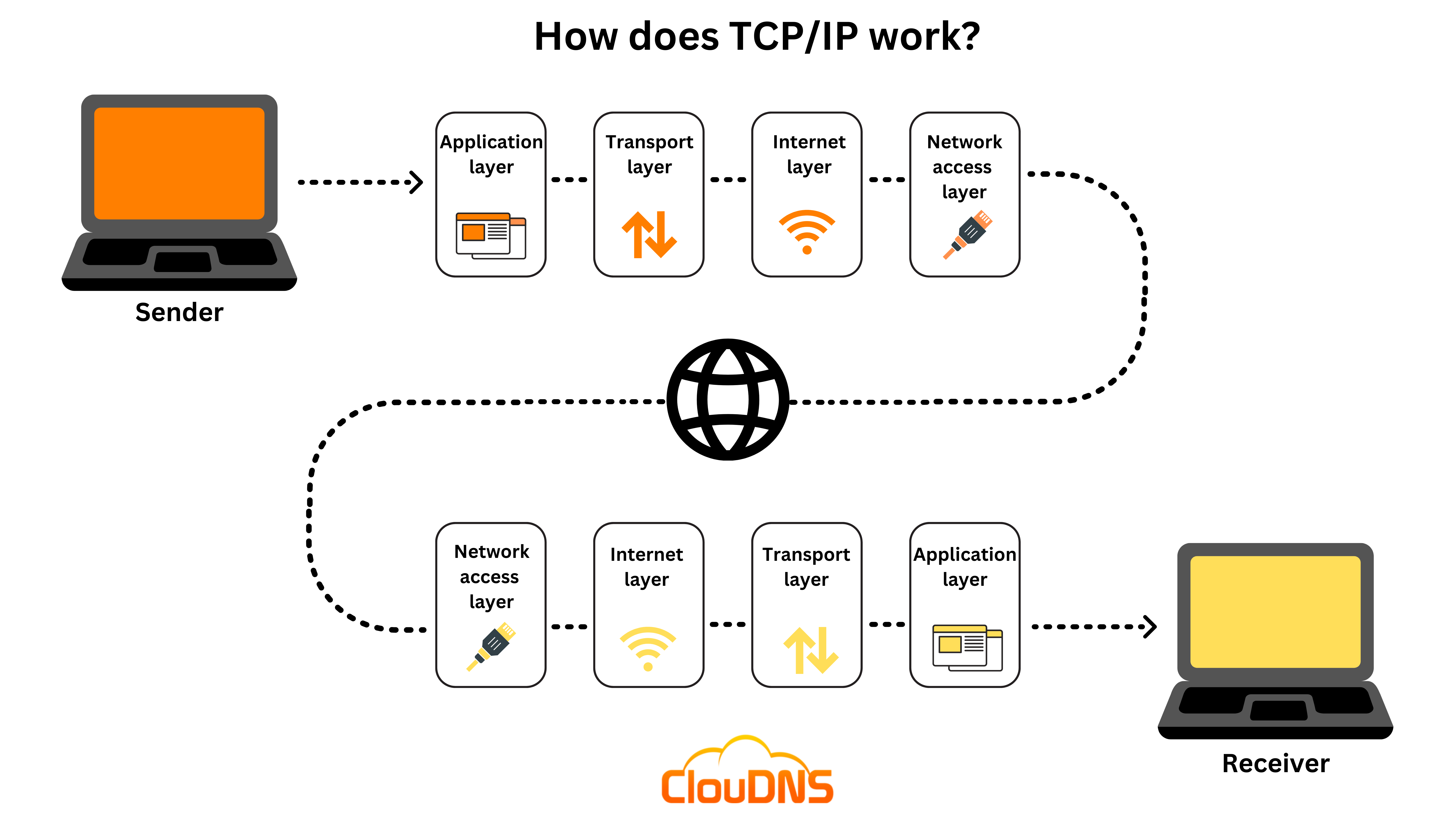
At the receiving end, this process is reversed: the data travels up the layers through decapsulation. Each layer strips off its corresponding header, processes the information, and passes the remaining data to the layer above, until the original HTTP data is delivered to the target application. This modular approach allows individual layers to be developed and optimized independently, as long as they adhere to the interface specifications with their adjacent layers.
The Indispensable Role of TCP/IP in Modern Networks
The impact of TCP/IP on the modern world cannot be overstated. It is not merely a technical specification; it is the fundamental operating system for global connectivity, enabling nearly every aspect of our digital lives.
The Internet’s Backbone
TCP/IP is quite literally the internet’s backbone. Its open, standardized nature allowed disparate networks – government research networks, university networks, corporate networks – to connect and communicate seamlessly. Before TCP/IP, different networks often used proprietary protocols, making cross-network communication difficult or impossible. TCP/IP provided a common language, a universal set of rules that enabled what was once a collection of isolated networks to evolve into the truly global network we know today. Every time you access a website, send an email, stream a video, or conduct an online transaction, TCP/IP is silently working behind the scenes, ensuring your data finds its way across potentially thousands of miles and numerous network hops. Its design promotes interoperability, allowing devices from different manufacturers, running different operating systems, to communicate effortlessly.
Beyond the Internet: Intranets, Extranets, and More
While most famously associated with the internet, TCP/IP’s utility extends far beyond the public realm. It is the de facto protocol suite for most private networks as well. Corporate intranets, for instance, are essentially private versions of the internet, using TCP/IP to facilitate internal communication, resource sharing, and application access within an organization. Extranets allow businesses to securely share parts of their intranet with external partners, suppliers, or customers, again leveraging TCP/IP’s robust framework.
Furthermore, the rise of cloud computing heavily relies on TCP/IP to connect virtual machines, storage, and services across vast data centers and to deliver these services to end-users globally. The burgeoning Internet of Things (IoT), with its myriad of smart devices, sensors, and actuators, also uses TCP/IP (or variations suitable for low-power devices) to enable these devices to communicate, collect data, and interact with cloud platforms. From smart homes to industrial automation, TCP/IP ensures that these diverse devices can speak the same language.
Enhancing Digital Security (Brief Mention)
While TCP/IP itself was not inherently designed with modern cybersecurity threats in mind, its robust and extensible architecture provides the necessary foundation upon which powerful security protocols and measures can be built. Protocols like SSL/TLS (Secure Sockets Layer/Transport Layer Security), which encrypt data communicated over TCP connections (e.g., for HTTPS), and VPNs (Virtual Private Networks), which create secure, encrypted tunnels over public IP networks, demonstrate how security can be layered on top of TCP/IP. The ability of IP to route packets consistently and for TCP to ensure reliable delivery makes these higher-level security implementations highly effective, safeguarding everything from personal banking to national infrastructure.
Alternatives and Future Directions
Despite its enduring dominance, the world of networking is constantly evolving. While TCP/IP remains central, other protocols exist, and the suite itself continues to adapt to new demands.
UDP: The Speed Demon (Brief Comparison to TCP)
Within the Transport Layer, User Datagram Protocol (UDP) stands as TCP’s leaner, faster counterpart. Unlike TCP, UDP is a connectionless protocol, meaning it doesn’t establish a handshake before sending data, nor does it guarantee delivery, order, or error checking. It simply sends “datagrams” (the UDP equivalent of segments) as quickly as possible. This makes UDP “unreliable” in the context of guaranteed delivery, but its minimal overhead makes it incredibly fast.
UDP is ideal for applications where speed and low latency are more critical than absolute data integrity or where a slight loss of data is acceptable. Examples include:
-
Live streaming: A dropped frame in a video stream is less disruptive than a frozen stream due to retransmissions.
-
Online gaming: Real-time action requires immediate packet delivery, even if a few packets are lost.
-
DNS (Domain Name System) lookups: Quick queries that are often retried if an initial response is not received.
Many applications today use a combination of TCP and UDP, leveraging TCP for critical data transfer and UDP for time-sensitive, loss-tolerant transmissions.
The Evolution of IP: From IPv4 to IPv6
The most significant evolution within the TCP/IP suite is the ongoing transition from IPv4 to IPv6. IPv4, with its 32-bit address space, provided approximately 4.3 billion unique addresses. While seemingly a large number when the internet was conceived, the explosive growth of connected devices – from smartphones and tablets to smart home appliances and industrial sensors – has led to the imminent exhaustion of IPv4 addresses.
IPv6 addresses this critical limitation with a vast 128-bit address space, yielding an astronomical number of unique addresses (approximately 3.4 x 10^38). Beyond simply providing more addresses, IPv6 brings several improvements:
-
Simplified Header: IPv6 headers are more efficient, allowing routers to process packets faster.
-
Enhanced Security: IPsec (Internet Protocol Security) is built directly into IPv6, providing native encryption and authentication capabilities.
-
Improved Mobility: Better support for mobile devices maintaining connectivity while moving between networks.
-
Auto-configuration: Devices can automatically configure their IPv6 addresses, simplifying network management.
The transition from IPv4 to IPv6 is a complex, ongoing process, involving a variety of coexistence mechanisms. However, the future of the internet, particularly with the proliferation of IoT devices and ever-increasing demand for connectivity, unequivocally rests on IPv6. It ensures the internet’s continued scalability and capacity to support billions more devices and innovations yet to come.
Conclusion
TCP/IP is far more than just a technical specification; it is the cornerstone of the modern digital age. It is the invisible language that empowers our global connections, transforming disparate networks into a unified, accessible internet. By meticulously segmenting, addressing, routing, and reassembling data, TCP and IP, alongside their suite of supporting protocols, ensure that information flows reliably and efficiently across the planet. Its layered architecture provides a robust, flexible, and scalable framework that has accommodated decades of technological advancement and continues to underpin new innovations, from cloud computing to the Internet of Things. As we navigate an increasingly interconnected world, understanding “what is TCP/IP” is to grasp the very essence of how our digital reality is constructed and sustained – a testament to an elegant design that continues to connect, empower, and shape our future.
aViewFromTheCave is a participant in the Amazon Services LLC Associates Program, an affiliate advertising program designed to provide a means for sites to earn advertising fees by advertising and linking to Amazon.com. Amazon, the Amazon logo, AmazonSupply, and the AmazonSupply logo are trademarks of Amazon.com, Inc. or its affiliates. As an Amazon Associate we earn affiliate commissions from qualifying purchases.