
Washington State occupies a unique position in the American fiscal landscape. For decades, it has been heralded as one of the few “tax havens” for high earners due to its lack of a personal state income tax. However, the reality of the Washington tax system is far more nuanced. While the absence of an income tax is a significant draw for professionals and entrepreneurs, the state recovers its revenue through a sophisticated web of sales taxes, gross receipts taxes for businesses, and recently implemented capital gains taxes.

Understanding the tax rate in Washington State is essential for anyone looking to manage their personal finances, scale a business, or invest in real estate within the Pacific Northwest. This guide provides a deep dive into the specific rates, structures, and financial implications of Washington’s tax regime.
The Foundation of Washington’s Revenue: Sales and Use Tax
In the absence of a state income tax, Washington relies heavily on consumption-based revenue. This makes the sales and use tax the primary driver of the state’s general fund. For the consumer and the small business owner, this is often the most visible tax encountered on a daily basis.
Understanding State vs. Local Rates
The baseline state sales tax rate in Washington is 6.5%. However, very few residents actually pay only 6.5%. Washington allows local jurisdictions—including cities, counties, and transit authorities—to levy additional sales taxes. As a result, the combined sales tax rate in many urban centers, such as Seattle or Bellevue, often exceeds 10%.
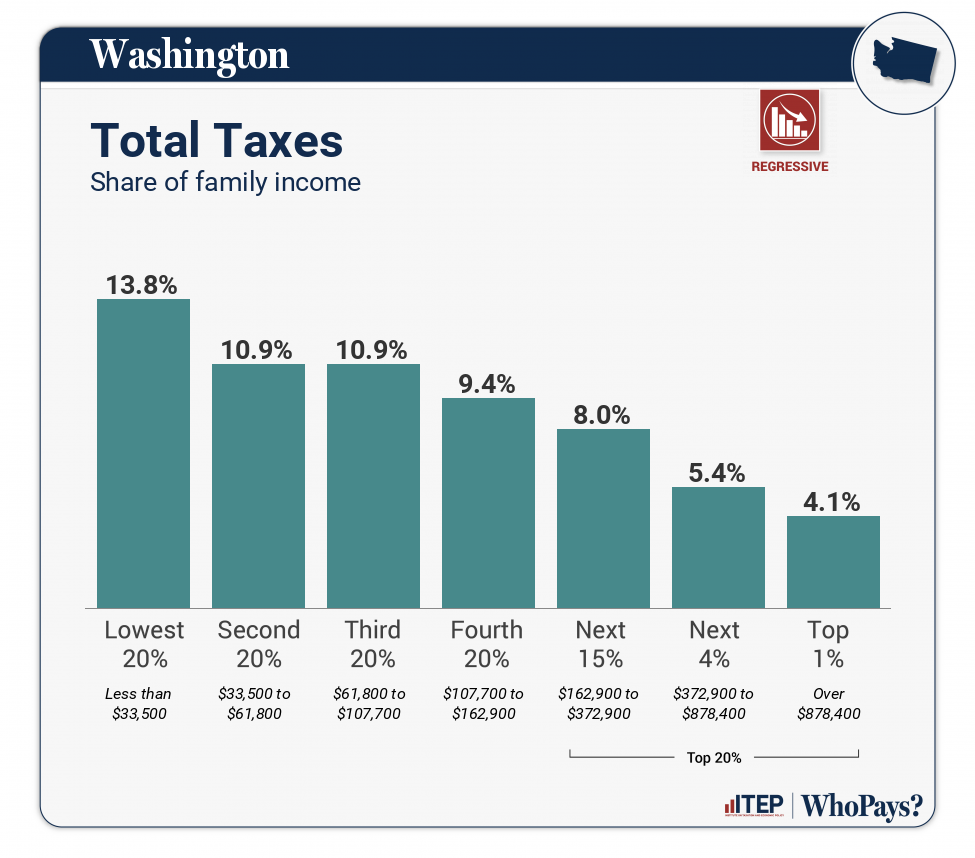
For financial planning, it is crucial to recognize that sales tax is “regressive.” This means it takes a larger percentage of income from low-to-middle-income earners who spend a higher proportion of their earnings on taxable goods. Conversely, for high-net-worth individuals moving from high-income-tax states like California or New York, the trade-off between a 10% sales tax and a 0% income tax often results in significant net savings.
Sales Tax Exemptions and Special Considerations
Not everything in Washington is subject to sales tax, which provides some relief for household budgeting. Most grocery items (unprepared food) are exempt, as are prescription drugs and certain medical devices. However, “use tax” is a critical component that many overlook. If you purchase an item online or out-of-state and do not pay sales tax at the time of purchase, you are technically required to remit a “use tax” at the same rate as your local sales tax when the item is brought into Washington for use. This is particularly relevant for high-value items like vehicles or luxury goods purchased across state lines.
Business and Occupation (B&O) Tax: The Corporate Alternative to Income Tax
For entrepreneurs and business leaders, the most significant “Money” topic in Washington is the Business and Occupation (B&O) tax. Unlike federal taxes or most other state taxes, the B&O tax is not based on net profit. Instead, it is a gross receipts tax.
How B&O Tax Differs from Federal Corporate Tax
In a traditional corporate tax system, a business is taxed on its “bottom line”—what remains after all expenses, salaries, and overhead are deducted. Washington’s B&O tax is applied to the “top line.” This means that even if a business is operating at a loss during its startup phase, it still owes tax to the state based on its total revenue.
From a business finance perspective, this requires a different approach to margin management. Low-margin industries, such as grocery retail or wholesale distribution, must be extremely disciplined with their pricing strategies to ensure that the B&O tax does not erase their slim profit margins.
Classification and Rate Structures
The B&O tax rate depends on the classification of the business activity. There are dozens of classifications, but the most common include:
- Retailing: 0.471%
- Wholesaling: 0.484%
- Manufacturing: 0.484%
- Service and Other Activities: 1.5% (for businesses with less than $1 million in revenue) or 1.75% (for larger entities).
The “Service and Other Activities” category covers professional services such as lawyers, accountants, and consultants. While these percentages may seem small compared to federal income tax rates, the fact that they apply to every dollar of revenue makes them a substantial factor in corporate financial modeling.
The Capital Gains Tax: A New Era for High-Net-Worth Individuals
For years, Washington’s lack of an income tax extended to investment income. However, as of 2022 (and upheld by the State Supreme Court in 2023), Washington implemented a 7% tax on long-term capital gains. This shift has massive implications for personal finance and investment strategy.
The Legal Framework and Implementation
The tax applies specifically to the sale or exchange of long-term capital assets, such as stocks, bonds, and business interests, held for more than one year. It is important to note that this is an “excise tax” rather than an income tax, a distinction that allowed it to pass constitutional muster in the state.
The 7% rate applies only to the portion of an individual’s capital gains that exceeds a standard deduction. As of the current tax year, this deduction is set at $262,000 (adjusted annually for inflation). This means that for the average retail investor, the tax may never be triggered. However, for those involved in the sale of a business or the liquidation of significant stock options—common in the state’s booming tech sector—this tax is a major financial consideration.
Exemptions and Financial Planning Strategies
The Washington capital gains tax is notable for its specific exemptions. Real estate sales are entirely exempt from this 7% tax (though they are subject to other taxes discussed later). Retirement accounts, such as 401(k)s and IRAs, are also exempt.
For those nearing a liquidity event, financial planning now involves calculating the impact of this 7% state levy alongside the federal capital gains tax. Some individuals may look toward charitable remainder trusts or other sophisticated financial instruments to mitigate the impact of this relatively new tax on their long-term wealth accumulation.
Property Taxes and Real Estate Excise Tax (REET)
Real estate is a cornerstone of personal wealth in Washington, and the state’s tax treatment of property is a critical “Money” topic for homeowners and investors alike.
Property Tax Assessment and Distribution
Property taxes in Washington are levied at the local level and vary significantly by county. These taxes fund essential services like schools, fire departments, and roads. The rate is typically expressed as a dollar amount per $1,000 of assessed value.
Because property values in areas like King County and Snohomish County have skyrocketed over the last decade, property tax bills have risen accordingly, even if the percentage rate remains stable. For those on fixed incomes or those managing rental properties, these annual increases must be factored into cash flow projections.
Graduated REET Rates for Property Sellers
When a property is sold in Washington, the seller is responsible for the Real Estate Excise Tax (REET). Historically, this was a flat rate. Today, Washington utilizes a graduated REET structure, meaning the more expensive the property, the higher the tax rate:
- 1.1% on the first $525,000 of the selling price.
- 1.28% on the portion between $525,000 and $1,525,000.
- 2.75% on the portion between $1,525,000 and $3,025,000.
- 3.0% on the portion above $3,025,000.
For real estate investors and luxury homeowners, this graduated scale significantly increases the “cost of exit.” Selling a $5 million commercial building or a high-end estate now requires a much larger tax outlay than it did just a few years ago.
Financial Implications: Why Washington is a Unique “Tax Haven” (Or Is It?)
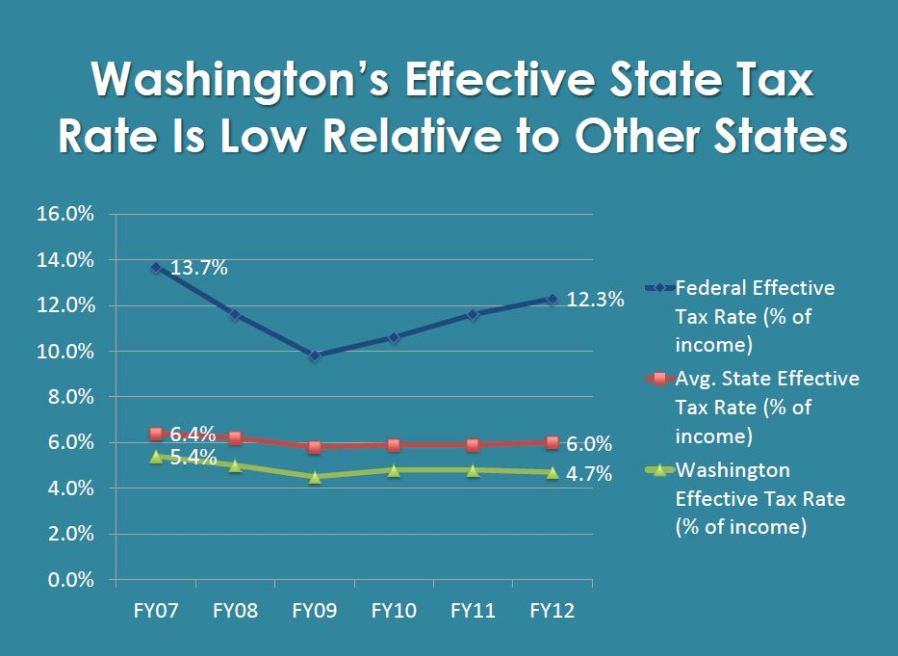
When evaluating the tax rate in Washington State, one must look at the “Total Tax Burden.” While the lack of a personal income tax is a massive benefit, the combination of high sales tax, B&O tax, and new capital gains taxes creates a complex environment for wealth management.
The Impact on High Earners and Retirees
For high-earning professionals—such as engineers, doctors, and executives—who do not have significant capital gains, Washington remains one of the most tax-efficient states in the country. The ability to take home a full paycheck without state withholding allows for aggressive reinvestment into retirement accounts or brokerage portfolios.
Retirees also find Washington attractive, as Social Security benefits and pension income are not taxed at the state level. However, they must be mindful of the high sales tax on their spending and the potential for capital gains taxes if they decide to sell off large portions of their investment portfolios to fund their lifestyle.
Comparing Washington to Other States
In the broader context of American finance, Washington is often compared to other no-income-tax states like Texas, Florida, and Nevada. Washington tends to have higher sales taxes than Florida but lower property taxes than Texas. For a business owner, Washington’s B&O tax is often more “expensive” than the franchise taxes found in other states because it ignores profitability.
Ultimately, the tax rate in Washington State is a double-edged sword. It rewards high earners and encourages business growth through the absence of income tax, but it demands a high price for consumption and business activity. For those navigating their personal or business finances, success in Washington requires a proactive approach to understanding these rates, leveraging exemptions, and planning for the long-term impact of a unique and evolving fiscal system.
aViewFromTheCave is a participant in the Amazon Services LLC Associates Program, an affiliate advertising program designed to provide a means for sites to earn advertising fees by advertising and linking to Amazon.com. Amazon, the Amazon logo, AmazonSupply, and the AmazonSupply logo are trademarks of Amazon.com, Inc. or its affiliates. As an Amazon Associate we earn affiliate commissions from qualifying purchases.