
In the realm of personal and business finance, understanding your tax class is fundamental to maintaining fiscal health and ensuring long-term wealth preservation. A tax class is essentially a designation or category assigned to a taxpayer—whether an individual or a business entity—that determines the specific rate at which they are taxed, the deductions they are eligible for, and the legal framework under which they must report their earnings.
Navigating these classifications is not merely an administrative hurdle; it is a critical strategic component of financial planning. From the solo freelancer launching a side hustle to the high-net-worth investor managing a diverse portfolio, the specific “class” you fall into dictates how much of your hard-earned money remains in your pocket versus how much is diverted to government coffers.
The Fundamentals of Personal Tax Classifications
For the average individual, the term “tax class” most often refers to their filing status. In progressive tax systems, such as those found in the United States and many Western economies, your classification acts as the primary filter for your tax liability. It determines your standard deduction—the flat dollar amount that reduces the income you’re taxed on—and the specific income brackets that apply to you.
Individual Filing Statuses as Tax Classes
Most taxpayers fall into one of several primary categories. The “Single” classification is the default for unmarried individuals, often carrying the highest relative tax burden due to lower thresholds for moving into higher tax brackets. Conversely, “Married Filing Jointly” is a classification that often provides a “marriage bonus,” effectively doubling the width of tax brackets and providing a higher standard deduction, which is particularly beneficial when one spouse earns significantly more than the other.
“Head of Household” is a nuanced classification designed for unmarried individuals who pay more than half the cost of keeping up a home for a qualifying person, such as a child or a dependent parent. This class offers more favorable tax rates and a higher standard deduction than the single status, recognizing the increased financial responsibility of supporting dependents.
The Impact of Life Changes on Your Tax Class
It is a common misconception that your tax class is static. In reality, it is a dynamic designation that shifts with your life stages. Significant milestones—getting married, finalizing a divorce, or the birth of a child—immediately alter your classification. From a financial management perspective, it is vital to anticipate these shifts. For instance, moving from “Single” to “Married Filing Jointly” might lower your effective tax rate, allowing for increased contributions to investment accounts or high-yield savings. Conversely, a change in status that increases your tax liability necessitates a recalibration of your monthly budget and withholding strategies.
Business Entities and Tax Classification Strategies
When transitioning from an employee to an entrepreneur or investor, the concept of “tax class” takes on a much more complex, and potentially lucrative, meaning. Here, the classification is determined by the legal structure of the business and how the revenue is treated by tax authorities.
Sole Proprietorships and Pass-Through Entities
For many starting a side hustle or an online income stream, the default classification is a Sole Proprietorship. In this class, the business and the individual are treated as a single entity for tax purposes. While this offers simplicity, it often subjects all business income to self-employment taxes, which can be a significant drain on cash flow.
As a business grows, many entrepreneurs opt for a Limited Liability Company (LLC) structure. The unique advantage of the LLC is its classification flexibility. By default, a single-member LLC is a “disregarded entity,” taxed much like a sole proprietorship. however, savvy business owners can elect to have their LLC classified as an S-Corporation for tax purposes.
The Strategic Shift to S-Corp and C-Corp Status
The S-Corp election is a powerful tool in business finance. Under this classification, the owner can be treated as an employee, paying themselves a “reasonable salary” subject to payroll taxes, while taking the remaining profit as a distribution. Because distributions are not subject to self-employment tax, this reclassification can save thousands of dollars annually, which can then be reinvested back into the business or into a diversified investment portfolio.
C-Corporations represent a distinct tax class where the entity is taxed separately from its owners. This leads to what is commonly known as “double taxation”—once at the corporate level and again on dividends paid to shareholders. However, with the implementation of lower corporate tax rates in recent years, the C-Corp classification has become increasingly attractive for businesses that intend to reinvest high levels of profit back into the company rather than distributing it to owners.
International Variations and the Global Context of Tax Classes
While the term “tax class” is often used interchangeably with filing status in the U.S., it has a very specific, codified meaning in other regions, most notably in Europe. Understanding these variations is essential for digital nomads, international investors, and companies with a global footprint.
The German Steuerklasse System
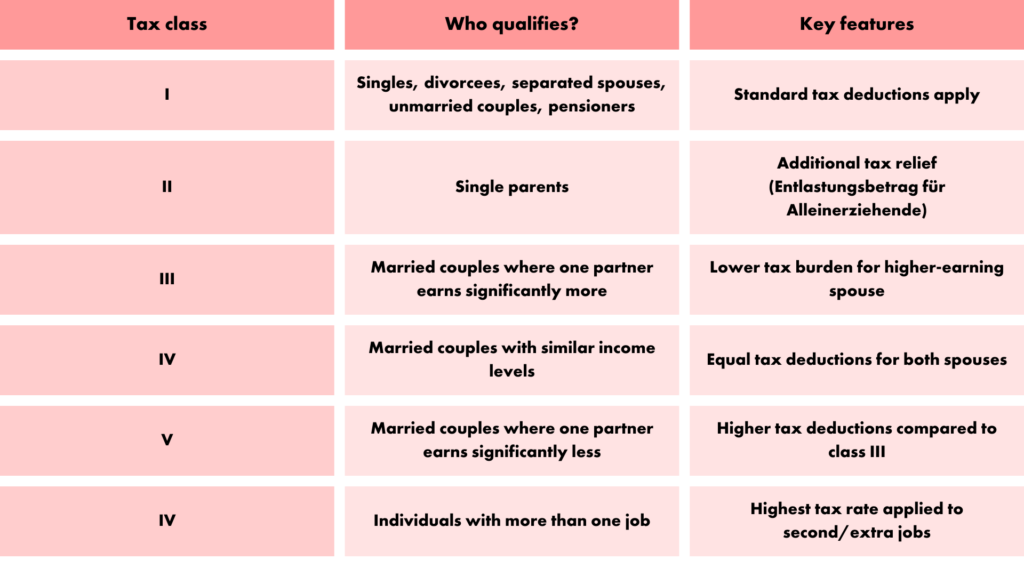
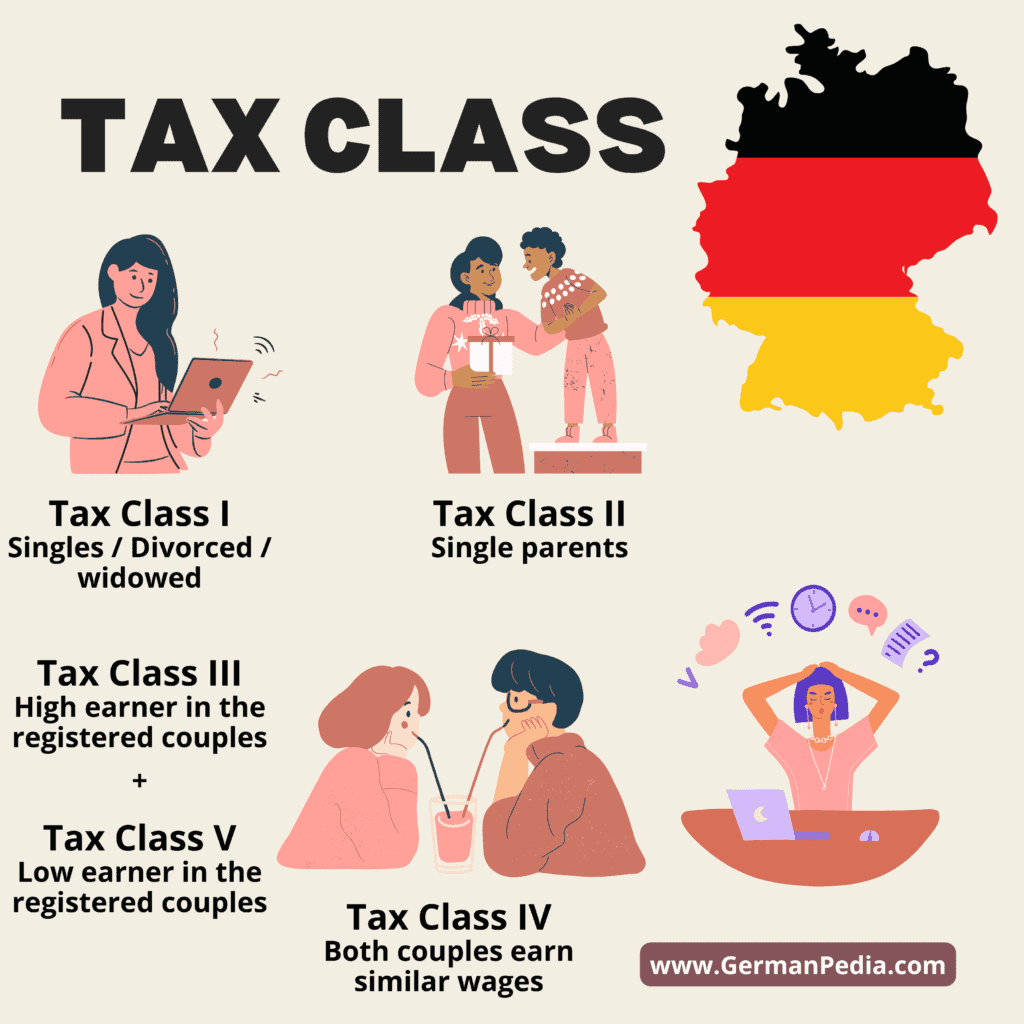
Germany provides one of the most structured examples of the tax class system, known as Steuerklasse. In this system, there are six distinct classes (I through VI) that dictate the amount of wage tax withheld from an employee’s paycheck.
- Class I: Reserved for single or divorced individuals.
- Class III and V: Often chosen by married couples where one spouse earns significantly more. The higher earner takes Class III (lower tax) and the lower earner takes Class V (higher tax), optimizing the couple’s immediate take-home pay.
- Class VI: Applied when an individual has a second job, often resulting in the highest rate of withholding.
For those earning online income across borders, being aware of such systems is crucial. It highlights how different governments use classifications to manage cash flow and incentivize certain social structures, such as marriage or the support of dependents.
Tax Classification for Real Estate and Investments
Beyond income, tax classes also apply to assets. In real estate, properties are often classified as residential, commercial, or industrial. These classifications determine property tax rates and the eligibility for certain tax credits. From an investment perspective, understanding the property tax class is a prerequisite for calculating the potential Return on Investment (ROI) of a real estate asset. An incorrect classification can lead to unexpected overhead that erodes the profitability of a rental property.
Similarly, investment income is often classified into categories like “Ordinary Income” (short-term gains) and “Capital Gains” (long-term gains). The tax class of your profit depends on how long you held the asset. This classification is the cornerstone of tax-loss harvesting and other advanced portfolio management techniques.
Optimizing Your Position within Tax Classes
The goal of any sophisticated financial strategy is not just to understand your tax class, but to optimize your position within it. This involves proactive legal and financial structuring to ensure you are categorized in the most favorable way possible.
Utilizing Tax-Advantaged Accounts
One of the most effective ways to “shift” your effective tax class is through the use of tax-deferred or tax-exempt accounts. By contributing to a 401(k) or a traditional IRA, you are effectively lowering your taxable income. For some, this reduction can be enough to drop them into a lower tax bracket (or “class”), significantly reducing their overall liability. For those generating online income or running small businesses, SEP IRAs and Solo 401(k)s offer even higher contribution limits, providing a robust mechanism for adjusting one’s tax classification.
Professional Guidance and Financial Tools
Given the complexity of tax codes, relying on professional guidance is often an investment rather than an expense. Tax professionals and sophisticated financial software can run simulations to determine the impact of changing your tax classification. For example, they can calculate the “break-even” point where the administrative costs of maintaining an S-Corp are outweighed by the tax savings generated by the classification.
Furthermore, digital financial tools now allow individuals to track their income in real-time, providing alerts when they are approaching the threshold of a higher tax bracket. This allows for end-of-year maneuvers—such as accelerating business expenses or delaying invoices—to stay within a more favorable tax class for that calendar year.

The Long-Term Perspective
Ultimately, your tax class is a reflection of your financial identity in the eyes of the law. As you move through different stages of your career and life, your classification will evolve. By viewing “tax class” not as a static label but as a strategic variable, you can make more informed decisions about how you earn, invest, and protect your wealth. Whether you are navigating the nuances of filing statuses, choosing a business entity, or managing international income, a deep understanding of tax classes is an indispensable tool in the modern financial toolkit.
aViewFromTheCave is a participant in the Amazon Services LLC Associates Program, an affiliate advertising program designed to provide a means for sites to earn advertising fees by advertising and linking to Amazon.com. Amazon, the Amazon logo, AmazonSupply, and the AmazonSupply logo are trademarks of Amazon.com, Inc. or its affiliates. As an Amazon Associate we earn affiliate commissions from qualifying purchases.