
In the rapidly evolving landscape of consumer packaged goods (CPG) and the broader culinary industry, the traditional methods of market research—focus groups, retroactive surveys, and manual trend tracking—are becoming relics of the past. As consumer preferences shift at the speed of a viral TikTok video, the industry has turned toward high-performance computing and artificial intelligence to stay relevant. At the forefront of this digital transformation is Tastewise, a specialized AI platform designed to decode the complex world of food and beverage through data.
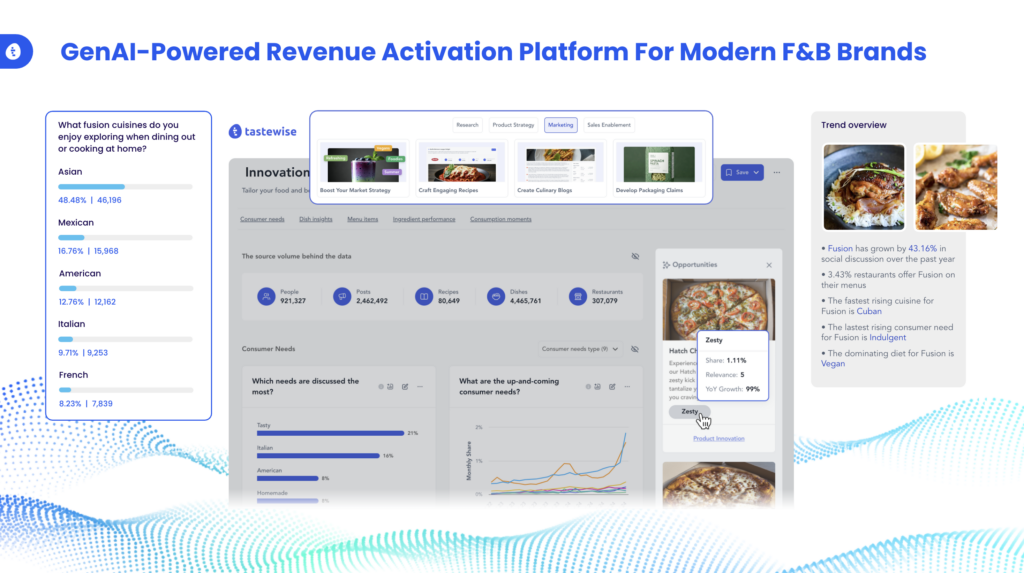
Tastewise is not merely a search engine for recipes; it is a sophisticated Generative AI and big data analytics platform that provides real-time insights into what people are eating, drinking, and why. By leveraging advanced machine learning algorithms, it processes billions of data points across the digital ecosystem to help brands predict the next major food trend before it hits the mainstream.
The Architecture of Modern Flavor: How Tastewise Leverages Big Data
At its core, Tastewise operates as a massive data ingestion engine. To understand “what is Tastewise,” one must first understand the technological infrastructure that powers its insights. Unlike traditional market research firms that rely on small sample sizes, Tastewise utilizes “social listening” and web-scale data collection on an unprecedented scale.
Real-Time Social Listening and Web Crawling
The platform’s algorithms continuously crawl the web, indexing millions of restaurant menus, social media posts, and online recipes. This is not a simple keyword search. The technology is designed to identify patterns in consumer behavior. For instance, if there is a sudden spike in home cooks using “miso” in non-traditional ways on Instagram, Tastewise’s neural networks flag this as a potential trend. By aggregating data from diverse sources, the software provides a holistic view of the culinary landscape, from fine dining menus to the average person’s kitchen table.
The Semantic Layer: Understanding Context Beyond Keywords
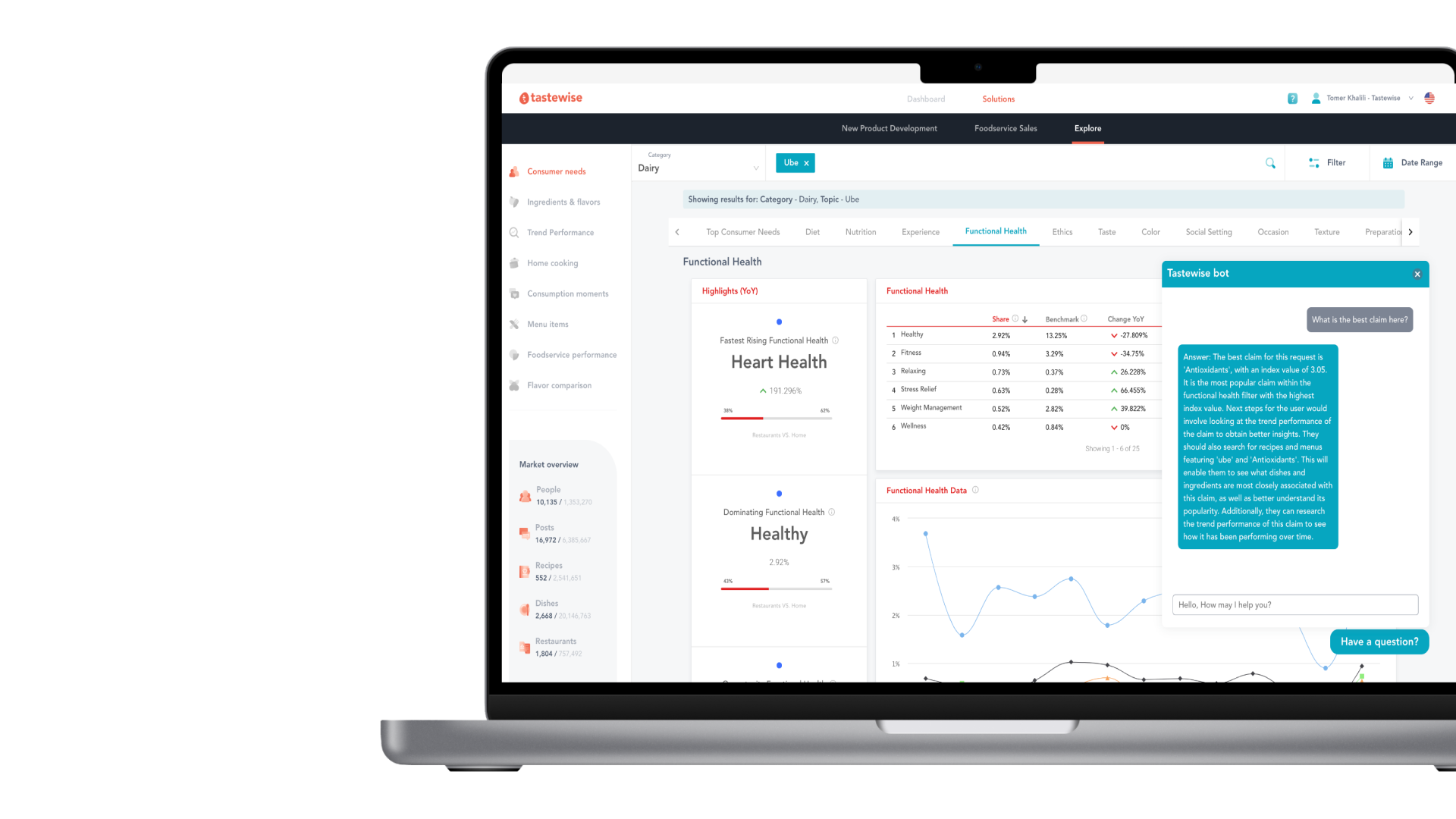
One of the most impressive technical feats of Tastewise is its semantic understanding of food. In data science, “context is king.” A traditional algorithm might see the word “orange” and struggle to differentiate between the fruit, the color, or a brand name. Tastewise utilizes a proprietary food-specific Knowledge Graph. This allows the AI to understand the relationships between ingredients, nutritional benefits, and consumer motivations. It can distinguish between someone eating a salad for “weight loss” versus someone eating it for “gut health,” providing deep granular data that was previously inaccessible to tech platforms.
Generative AI and the Transformation of R&D
The introduction of “TasteGPT” marked a significant milestone in the integration of Generative AI within the food industry. By utilizing Large Language Models (LLMs) specifically trained on culinary data, Tastewise has moved beyond descriptive analytics (what is happening) into prescriptive and generative analytics (what should we do next).
From Concept to Consumer: Accelerating the Product Lifecycle
In the traditional CPG world, bringing a new product to market can take 12 to 24 months. By the time a product hits the shelves, the trend may have already passed. Tastewise’s generative tools allow R&D teams to prototype concepts digitally. Using the platform, a developer can ask, “Generate a concept for a low-sugar energy drink using adaptogens that appeals to Gen Z in the UK.” Within seconds, the AI provides ingredient suggestions, flavor profiles, and even marketing angles based on real-time demand data. This tech-driven approach reduces the time-to-market and minimizes the financial risk of product failure.
Predictive Analytics: Modeling the Next Viral Ingredient
While many tools can tell you what is popular today, Tastewise uses predictive modeling to forecast the future. The software analyzes the lifecycle of a trend—moving from “Early Adopter” (niche restaurants) to “Mainstream” (grocery stores). By calculating the “growth velocity” of specific ingredients or dietary preferences (like keto or veganism), the platform provides a “Trend Forecast Score.” This allows tech-forward companies to invest in supply chains for specific ingredients years before they become household names.

The Tech Stack Behind Global Food Trends
To process billions of images and text entries, Tastewise employs a multi-layered tech stack that includes some of the most advanced fields of modern computer science: Natural Language Processing (NLP) and Computer Vision.
Natural Language Processing (NLP) in Culinary Contexts
The food industry has its own lexicon, often filled with slang, cultural nuances, and regional variations. Tastewise’s NLP engines are fine-tuned to recognize these nuances. Whether it’s decoding a menu in French or understanding the latest wellness buzzwords on a health blog, the NLP layer translates unstructured text into structured data. This enables the platform to quantify “sentiment,” helping brands understand not just that people are talking about a product, but whether they actually like it and what specific attributes (texture, price, sustainability) they are praising or criticizing.
Computer Vision and Visual Trend Analysis
A significant portion of food culture is visual. We eat with our eyes first, especially in the era of social media. Tastewise utilizes Computer Vision to analyze millions of images. The AI can identify specific ingredients in a photo, the setting (e.g., a picnic vs. a formal dinner), and even the “mood” of the image. This visual intelligence allows brands to see how their products are being used in the real world. For example, a beverage brand might discover through visual AI that their “morning” juice is actually being used as a mixer for evening cocktails, prompting a shift in their digital marketing strategy.
Digital Security and Data Privacy in Enterprise AI
As a B2B SaaS (Software as a Service) platform, Tastewise handles sensitive data for some of the world’s largest food conglomerates, including Nestlé and PepsiCo. In the tech world, the utility of a tool is only as good as its security and its ability to integrate into existing workflows.
Managing Proprietary Brand Data
When enterprise clients use Tastewise, they often want to blend the platform’s public data with their own internal, proprietary research. Tastewise provides secure environments where brands can upload their private data to be analyzed by the AI without the risk of that data “leaking” into the public model. This “walled garden” approach is essential for maintaining a competitive advantage in the high-stakes world of corporate innovation.
Scalability and Integration in SaaS Environments
Tastewise is built on a scalable cloud infrastructure, allowing it to serve thousands of users simultaneously across different geographies. For the modern CTO, the value of Tastewise lies in its integration capabilities. Through API access, the insights generated by Tastewise can be fed directly into a company’s existing Business Intelligence (BI) tools, such as Tableau or PowerBI. This ensures that data-driven decision-making isn’t siloed within the marketing department but is accessible across the entire organizational tech stack.
The Future of Food Tech: Toward Autonomous Innovation
As we look toward the future of technology in the food sector, platforms like Tastewise are moving toward a model of “autonomous innovation.” We are approaching a point where AI won’t just suggest a flavor; it will be able to simulate how that flavor interacts with other ingredients at a molecular level.
Bridging the Gap Between Digital Data and Physical Kitchens
The ultimate goal of food tech is to bridge the gap between digital insights and physical production. Tastewise is increasingly being used to inform the digital twins of manufacturing processes. By understanding exactly what consumers want, companies can calibrate their production lines for smaller, more personalized batches, reducing food waste and increasing efficiency.
In conclusion, Tastewise represents the “Tech” category at its most impactful. It is a prime example of how niche-specific AI—in this case, “Culinary AI”—can outperform general-purpose models by providing deeper, more contextualized insights. For the technologist, Tastewise is a masterclass in how big data, NLP, and Generative AI can be synthesized to solve real-world industrial challenges. As the platform continues to refine its algorithms, it will not only predict the trends of tomorrow but will actively participate in the creation of the future of food.
aViewFromTheCave is a participant in the Amazon Services LLC Associates Program, an affiliate advertising program designed to provide a means for sites to earn advertising fees by advertising and linking to Amazon.com. Amazon, the Amazon logo, AmazonSupply, and the AmazonSupply logo are trademarks of Amazon.com, Inc. or its affiliates. As an Amazon Associate we earn affiliate commissions from qualifying purchases.