
In common parlance, the word “tarmac” is often used as a catch-all term for any paved area of an airport where aircraft operate. From news reports describing passengers “waiting on the tarmac” to travelers looking out at the vast stretches of black and gray pathways, the term has become synonymous with the ground infrastructure of aviation. However, from a technical and engineering perspective, “tarmac” refers to a specific material and a specific era of civil engineering that has largely been superseded by more advanced technology.
In the modern high-tech aviation environment, the surfaces that support multi-hundred-ton aircraft are masterpieces of materials science and structural engineering. Understanding what is commonly called “tarmac” requires looking beyond the surface to the sophisticated layers of technology that ensure safety, durability, and efficiency in global logistics.

The Evolution of Airport Surfaces: From Macadam to Polymer-Modified Bitumen
To understand modern airport surfaces, one must first understand the origins of the technology. The term “tarmac” is a contraction of “Tarmacadam.” This was a paving technology patented by Edgar Purnell Hooley in 1902, which improved upon the 19th-century “macadam” process developed by John Loudon McAdam. While McAdam used crushed stone for drainage, Hooley introduced coal tar as a binder to reduce dust and improve structural integrity.
The Chemical Shift in Aviation Materials
Today, the aviation industry has largely moved away from coal tar due to its sensitivity to temperature and its tendency to degrade when exposed to fuel spills. In the contemporary technological landscape, “tarmac” has been replaced by Asphalt Concrete (bituminous-based) or Portland Cement Concrete (PCC).
Modern asphalt used in airports is not a simple mixture of stone and oil. It is a highly engineered product often utilizing Polymer-Modified Bitumen (PMB). By adding elastomers like Styrene-Butadiene-Styrene (SBS), engineers can create a surface that is both flexible and resilient. This chemical engineering allows the pavement to resist “rutting” under the immense weight of a taxiing Boeing 777 while remaining flexible enough to withstand thermal expansion and contraction in extreme climates.
Technical Terminology: Aprons, Taxiways, and Runways
In the professional aviation and engineering sectors, the word “tarmac” is rarely used. Instead, the area is categorized by its functional technology:
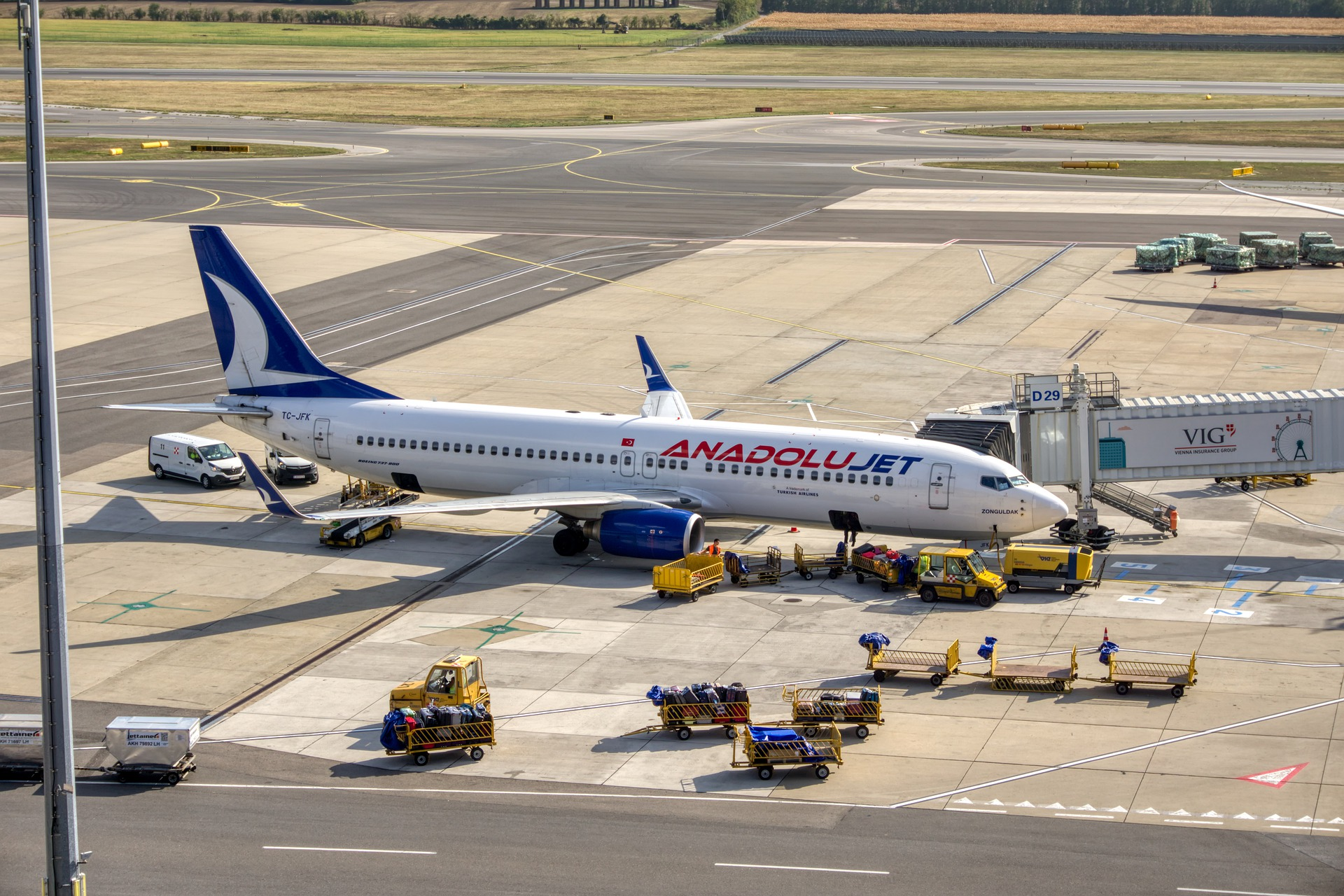
- The Apron (or Ramp): This is the area where aircraft are parked, unloaded, fueled, and boarded. This area requires high resistance to chemical spills (fuel and hydraulic fluid), leading to the frequent use of rigid concrete rather than flexible asphalt.
- Taxiways: The arterial paths that connect runways to aprons. These are engineered for “slow-roll” loads, which actually put more stress on the pavement than high-speed landings.
- Runways: The high-speed landing and takeoff zones. These require specific frictional characteristics and advanced drainage technology.
The Technology of Durability: Engineering for Extreme Loads
The engineering requirements for an airport surface are exponentially higher than those for a standard highway. A heavy commercial aircraft can exert a ground pressure of over 200 psi. To manage this, airport “tarmac” is designed as a multi-layered system of structural technology.
Flexible vs. Rigid Pavement Technology
The “Tech” of airport surfaces is divided into two primary philosophies: flexible and rigid.
Flexible Pavement (Asphalt): This technology relies on a series of layers to distribute the load. The top “wearing course” is followed by a binder course, a base layer of crushed aggregate, and a sub-base. The tech here lies in the “viscoelastic” properties of the asphalt. It behaves like a solid under quick loads (landings) but can flow slightly over long periods, preventing the catastrophic cracking seen in brittle materials.
Rigid Pavement (Concrete): This is high-strength technology usually found at the ends of runways and at gate positions. These slabs are often reinforced with steel and utilize load-transfer devices called “dowel bars” at the joints. The engineering goal here is to distribute the aircraft’s weight over a very wide area of the subgrade.
Pavement Classification Number (PCN)
A critical piece of data technology in aviation is the Pavement Classification Number (PCN). This is a standardized international rating system used to report the strength of airport pavements. It works in tandem with the Aircraft Classification Number (ACN). Through this digital and mathematical framework, airport operators can use software to calculate whether a specific aircraft can land on a specific surface without causing structural fatigue. This is a vital component of airport safety management systems, preventing “pavement blowouts” or subsurface collapses.

Smart Infrastructure: The Integration of IoT and Sensors
As we move further into the 21st century, the “tarmac” is becoming “smart.” Modern airport infrastructure is increasingly integrated with Internet of Things (IoT) sensors and diagnostic technology to monitor the health of the pavement in real-time.
Embedded Structural Health Monitoring
Engineers are now embedding fiber-optic sensors and vibrating wire strain gauges directly into the layers of the runway during construction. These sensors provide a continuous stream of data regarding:
- Strain and Deformation: Detecting when the sub-base is beginning to fail before a pothole appears on the surface.
- Temperature Gradients: Monitoring how heat moves through the pavement layers to predict and prevent thermal cracking.
- Moisture Content: Using humidity sensors to ensure that the drainage systems are functioning and that the subgrade is not becoming saturated, which would lead to a loss of load-bearing capacity.
Automated Foreign Object Debris (FOD) Detection
One of the greatest technological challenges on an airport surface is “FOD”—any object that does not belong on the pavement, such as a stray bolt or a piece of luggage hardware. FOD can be sucked into jet engines with catastrophic results.
To solve this, modern “tarmac” is often monitored by high-frequency radar and electro-optical sensors mounted along the runway edges. These systems use AI-driven image processing to identify objects as small as a coin in real-time, alerting ground crews immediately. This represents a significant technological leap from manual “FOD walks” where personnel would physically scan the pavement.
Environmental Technology and Sustainable Surfaces
The technology of airport surfaces is also evolving to meet the demands of sustainability. The massive surface area of an airport acts as a “heat island,” and the runoff from these surfaces can carry pollutants into local water systems.
Carbon-Neutral Paving and Recycled Materials
Innovations in chemical engineering have led to “Green Asphalt.” This tech involves using recycled plastic polymers or reclaimed rubber from old aircraft tires to modify the bitumen binder. Furthermore, Cold Mix Asphalt (CMA) technology is being developed to allow for runway repairs without the massive energy consumption required to heat traditional asphalt to 150°C. This reduces the carbon footprint of airport maintenance significantly.
Permeable Pavement and Water Management
Advanced drainage technology is built into the geometry of the runway. High-tech “grooving” machines use diamond-tipped blades to cut precise channels into the surface. This allows water to be forced out from under aircraft tires at high speeds, preventing hydroplaning. Additionally, some airports are experimenting with permeable pavement technology in non-load-bearing areas to allow rainwater to filter directly into the ground, reducing the burden on industrial drainage systems and preventing local flooding.
The Future of Airport Ground Tech: Self-Healing and Electrification
Looking forward, the technology of the airport surface is set for a radical transformation. We are moving away from passive slabs of stone and oil toward active, responsive infrastructure.
Self-Healing Materials
One of the most exciting trends in materials science is the development of self-healing asphalt and concrete. By embedding micro-capsules of epoxy or using bacteria that can secrete limestone, engineers are creating surfaces that can “heal” their own cracks. When a crack begins to form, the capsules break or the bacteria activate, filling the void and restoring structural integrity. This technology has the potential to double the lifespan of airport surfaces, reducing the need for disruptive closures and expensive repairs.
Electrified Taxiways and Wireless Charging
As the aviation industry moves toward electric aircraft (eCTOL and eVTOL), the “tarmac” will need to function as a charging station. Research is currently underway into inductive charging technology embedded within the taxiway surfaces. This would allow electric aircraft to charge their batteries while taxiing from the runway to the gate, maximizing operational efficiency. This requires a complete rethink of the electromagnetic shielding and conductivity of the paving materials.
Digital Twins and Predictive Maintenance
The future of airport surface management lies in the “Digital Twin” technology. By creating a 1:1 digital replica of the airport’s physical infrastructure, powered by the sensors mentioned earlier, airport tech teams can run simulations to predict how the surface will react to new aircraft models or extreme weather events. This shift from reactive maintenance (fixing a hole) to predictive maintenance (reinforcing a section before it fails) is the hallmark of the modern tech-driven airport.
In conclusion, while the average traveler may still refer to the ground beneath the plane as “tarmac,” that surface is actually a high-performance, technologically dense engineering system. From the molecular modification of bitumen to the AI-powered debris detection systems, the ground infrastructure of an airport is as sophisticated as the aircraft that land upon it. The “tarmac” is no longer just a path; it is a critical component of the global technological network.
aViewFromTheCave is a participant in the Amazon Services LLC Associates Program, an affiliate advertising program designed to provide a means for sites to earn advertising fees by advertising and linking to Amazon.com. Amazon, the Amazon logo, AmazonSupply, and the AmazonSupply logo are trademarks of Amazon.com, Inc. or its affiliates. As an Amazon Associate we earn affiliate commissions from qualifying purchases.