
In the rapidly evolving landscape of telecommunications, the transition from traditional wired infrastructure to wireless solutions has accelerated significantly. T-Mobile has been at the forefront of this shift with its Fixed Wireless Access (FWA) offerings. While their flagship “Unlimited” plan has garnered much attention, a specific tier known as T-Mobile Home Internet Lite has emerged as a critical component of their service portfolio. To understand what this service is, one must look beyond the marketing and into the technical mechanics of 5G spectrum management, network capacity, and the hardware that makes cellular-based home broadband possible.
T-Mobile Home Internet Lite is a professional-grade wireless broadband service designed for households located in areas where the carrier’s network capacity is currently constrained. Unlike the unlimited version, the Lite plan is defined by specific data allocations. However, the technology powering it—leveraging the same 5G and 4G LTE signals that power smartphones—remains a sophisticated feat of modern engineering.
The Underlying Technology: Fixed Wireless Access (FWA)
At its core, T-Mobile Home Internet Lite is a Fixed Wireless Access (FWA) service. Unlike mobile data, which is designed for devices moving between cell towers, FWA is engineered for a stationary location. This technical distinction allows the network to optimize signal delivery to a specific point, often providing a more stable connection than a mobile hotspot.
Understanding the 5G Spectrum Layers
The efficacy of T-Mobile’s Lite service relies on its “Layer Cake” spectrum strategy. The service primarily utilizes the 600MHz (Low-band) and 2.5GHz (Mid-band) spectrums. The Low-band spectrum provides the foundational coverage, capable of penetrating walls and traveling long distances, which is essential for rural or suburban Lite users. The Mid-band spectrum, often referred to as “Ultra Capacity 5G,” provides the throughput necessary for high-definition streaming and multi-device connectivity. When a user connects to the Lite service, the gateway intelligently switches between these bands to maintain the most stable link available.
The Role of Sector Capacity
The reason the “Lite” version exists at all is a matter of network engineering known as sector capacity. Every cell tower has a finite amount of bandwidth it can broadcast to a specific geographical area (a “sector”). In regions where the sector is nearing its maximum load, T-Mobile cannot technically guarantee an “unlimited” experience without degrading the service for mobile phone users. By implementing the Lite plan, the network uses software-defined constraints to allow more households to connect to the 5G backbone without overtaxing the local infrastructure.
Signal Propagation and MIMO Technology
To maximize the performance of the Lite service, T-Mobile utilizes Massive MIMO (Multiple Input, Multiple Output) technology. This involves using multiple antennas at both the cell site and the home gateway to send and receive multiple data signals simultaneously. This spatial multiplexing increases the spectral efficiency, allowing the Lite plan to deliver usable speeds even in environments where signal interference might otherwise be a factor.
Hardware and Gateway Specifications
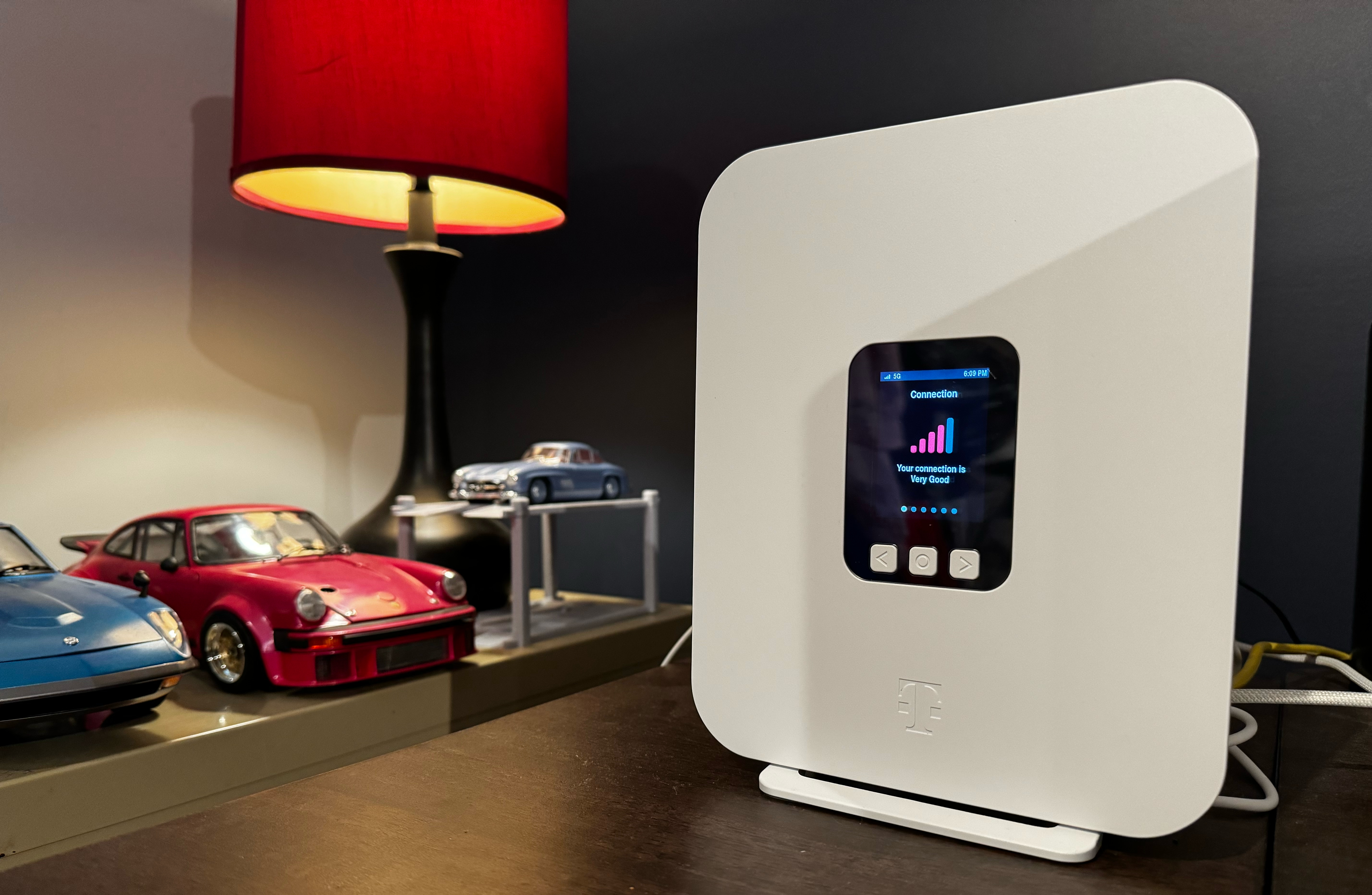
The technical backbone of the T-Mobile Home Internet Lite experience is the proprietary gateway provided to subscribers. This device is not merely a modem or a router; it is a sophisticated 5G-to-Wi-Fi bridge that handles complex signal processing in real-time.
Wi-Fi 6 Integration
The gateways issued for the Lite plan typically support Wi-Fi 6 (802.11ax). This is a crucial technical inclusion because Wi-Fi 6 is designed to handle high-density environments. Even if the Lite plan limits the total data consumed, the Wi-Fi 6 standard ensures that the internal home network remains efficient, reducing latency between the gateway and local devices like smart TVs, laptops, and IoT sensors.
Internal Antenna Array
Inside the gateway lies a high-gain antenna array. These antennas are tuned specifically to T-Mobile’s 5G frequencies. The device utilizes beamforming technology—a signal processing technique that directs the wireless signal toward the specific direction of the cell tower rather than broadcasting it in every direction. This technical precision is what allows the Lite service to maintain a “fixed” connection quality that exceeds what a standard mobile phone hotspot can offer.
Placement and Signal Metrics
Technically proficient users can access the gateway’s internal software to view specific signal metrics such as RSRP (Reference Signal Received Power), RSRQ (Reference Signal Received Quality), and SINR (Signal-to-Interference-plus-Noise Ratio). These metrics are the heartbeat of the Lite service. A high RSRP indicates a strong raw signal, but a high SINR is what actually determines the speed and stability of the connection. For Lite users, optimizing the physical placement of the gateway based on these technical readings is often the difference between a mediocre and a high-performance connection.
Data Management and Network Priority
The defining characteristic of T-Mobile Home Internet Lite is its tiered data structure. This is not just a billing preference but a method of technical load balancing. Lite plans are typically offered in buckets, such as 100GB, 150GB, 200GB, or 300GB.
Throttling vs. Deprioritization
It is vital to distinguish between the two for a technical understanding of the service. On the Lite plan, once the data cap is reached, the service is throttled. This means the network hardware actively restricts the transmission speed to a lower kilobit-per-second (kbps) rate. This is different from “deprioritization,” where a user might see slower speeds only when the tower is busy. On Lite, the throttle is a hard limit enforced by the network’s policy controller until the next billing cycle.
Quality of Service (QoS) Protocols
T-Mobile employs various QoS protocols to manage how data packets are handled within the Lite service. During peak hours, the network’s packet core prioritizes essential signaling to ensure the connection remains “alive,” even if the available bandwidth for heavy downloads is reduced. This ensures that even on a data-capped plan, the “heartbeat” of the internet connection remains steady, preventing the frequent disconnects often seen in older satellite or DSL technologies.
Data Compression and Optimization
While T-Mobile does not overtly compress all user data, the network is optimized for different types of traffic. For Lite users, who must be mindful of their data consumption, the network’s ability to efficiently hand off packets between 5G and LTE is critical. The “Dual Connectivity” (EN-DC) feature allows the gateway to pull data from both 4G and 5G bands simultaneously, maximizing the efficiency of every megabyte consumed.
Comparing Lite to Traditional Broadband Technologies
To truly grasp the technical value of T-Mobile Home Internet Lite, one must compare it to the technologies it seeks to replace, such as DSL (Digital Subscriber Line) and traditional Satellite internet.
Latency and the “Ping” Factor
One of the greatest technical advantages of the Lite service over Satellite (like older Geo-stationary systems) is latency. Satellite internet often suffers from pings of 600ms or higher due to the distance the signal must travel to space and back. Because T-Mobile Lite utilizes terrestrial cell towers, its latency is often between 20ms and 60ms. This makes it technically viable for real-time applications like video conferencing (Zoom/Teams) and light gaming, provided the data cap has not been exceeded.
Overcoming the DSL “Last Mile” Problem
DSL technology is limited by the physical quality of copper telephone lines and the distance from the central office. Signal degradation occurs rapidly over distance. T-Mobile Home Internet Lite bypasses this “last mile” bottleneck entirely. By using high-frequency radio waves, it can deliver speeds that frequently exceed the 25 Mbps “broadband” definition, which many aging DSL lines fail to meet.
Stability and Environmental Interference
While fiber is the gold standard, the Lite service offers a unique technical flexibility. It is not susceptible to the same physical disruptions as wired lines—such as a downed pole or a cut cable during construction. However, it is susceptible to “foliage attenuation” and “rain fade,” where physical objects or heavy weather can disrupt the radio waves. The Lite gateway compensates for this by using sophisticated error-correction algorithms (Forward Error Correction) to ensure that data packets arrive intact even if the signal environment is noisy.

Conclusion: The Technical Future of Managed Connectivity
T-Mobile Home Internet Lite represents a pragmatic bridge in the digital divide. From a technical standpoint, it is a masterclass in resource management. It allows a carrier to offer high-speed, low-latency connectivity to areas where a “total unlimited” service would break the network’s efficiency.
By utilizing Wi-Fi 6 gateways, Massive MIMO, and a strategic mix of 5G spectrum, T-Mobile has created a product that serves as a viable alternative for those in underserved markets. While the data caps may seem restrictive to power users, the underlying tech ensures that the data provided is delivered with a level of stability and speed that was previously impossible for wireless home solutions. As T-Mobile continues to densify its towers and increase its backhaul capacity, many of these “Lite” areas will eventually transition to “Unlimited” status, marking the next phase in the evolution of cellular-first home networking.
aViewFromTheCave is a participant in the Amazon Services LLC Associates Program, an affiliate advertising program designed to provide a means for sites to earn advertising fees by advertising and linking to Amazon.com. Amazon, the Amazon logo, AmazonSupply, and the AmazonSupply logo are trademarks of Amazon.com, Inc. or its affiliates. As an Amazon Associate we earn affiliate commissions from qualifying purchases.