
In the rapidly evolving landscape of information technology, the term “synopsis” has migrated from the realms of literature and cinema into the core of digital infrastructure. While a traditional synopsis provides a brief summary of a plot, a technical synopsis serves as a high-level architectural overview, a condensed data snapshot, or an AI-generated distillation of complex datasets. In an era defined by “Big Data” and “Information Overload,” the ability to create, process, and analyze a synopsis is no longer just a convenience—it is a functional necessity for software engineers, data scientists, and system architects.
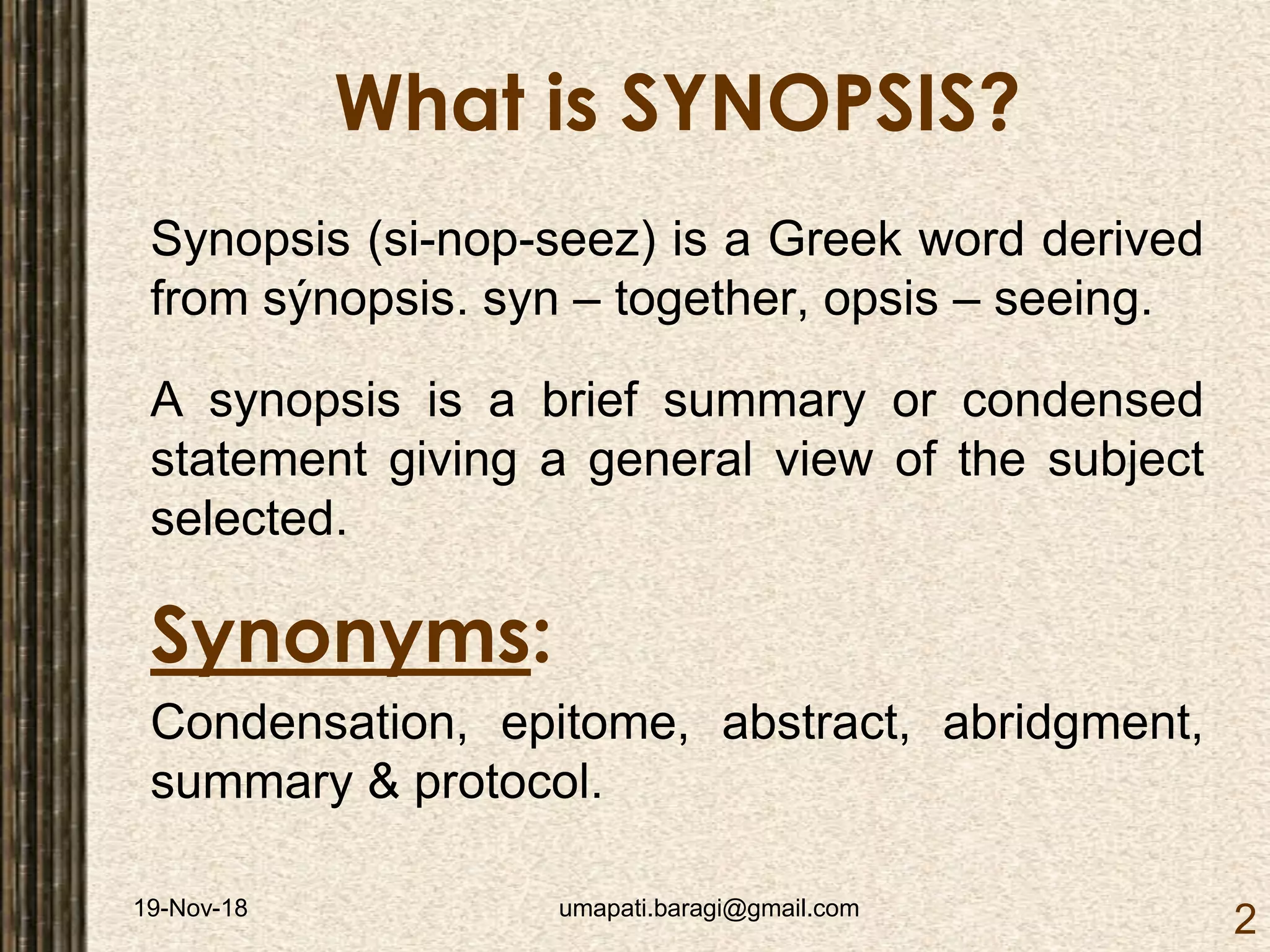
This article explores the multifaceted definition of a synopsis within the tech industry, ranging from documentation standards to the cutting-edge application of Natural Language Processing (NLP) and machine learning.
The Role of Synopsis in Software Development and Documentation
In software engineering, a synopsis is the bridge between conceptual design and granular execution. Before a single line of code is written, a technical synopsis acts as a high-level summary of a project’s functional requirements, intended tech stack, and architectural goals. Unlike a full-length Software Requirement Specification (SRS), a synopsis provides stakeholders with the “what” and the “why” without getting bogged down in the “how.”
Technical Documentation and API Overviews
When developers interact with a new library or API, the “Synopsis” section is often the first thing they encounter. In this context, a synopsis is a concise representation of a function’s syntax, parameters, and return types. For example, in Unix man pages or Perl documentation, the “SYNOPSIS” header provides a skeletal structure of how a command or module is invoked. This allows developers to understand the interface at a glance, facilitating faster integration and reducing the learning curve for complex frameworks.
Agile User Stories and Project Summaries
Within Agile methodologies, the concept of a synopsis appears in the form of refined user stories and epic summaries. A well-crafted synopsis of a feature allows Product Owners and Developers to align on the scope of a sprint. It acts as a single source of truth that prevents “scope creep” by defining the boundaries of a technical task. By distilling complex user needs into a functional synopsis, tech teams ensure that the development process remains lean and focused on delivering value.
AI-Driven Synopsis: The Evolution of Automated Summarization
The most significant tech advancement regarding synopses lies in the field of Artificial Intelligence. Natural Language Processing (NLP) has transformed how we view summaries, moving from manual human extraction to automated, intelligent distillation. AI-driven synopses are now integrated into productivity tools, search engines, and enterprise-level data platforms.
Large Language Models (LLMs) and Content Distillation
Tools like OpenAI’s GPT-4 or Google’s Gemini have redefined the “synopsis” as a dynamic output. These models can ingest thousands of pages of technical documentation or legal contracts and produce a 200-word synopsis that retains 95% of the core information. This process, known as “extractive” or “abstractive” summarization, allows professionals to consume vast amounts of information in seconds. For a tech lead managing multiple projects, an AI-generated synopsis of daily Slack communications or GitHub pull requests can provide a high-level overview of progress without requiring hours of reading.
Real-Time Data Synopses in Business Intelligence
In the world of Big Data, a synopsis is often a statistical summary of a massive dataset. Data engineers use “synopsis structures” (such as sketches or histograms) to represent data distributions without storing every individual data point. This is crucial for real-time analytics. For instance, a monitoring tool for a high-traffic e-commerce site might provide a synopsis of server latency trends over the last 24 hours. By looking at a summarized version of the telemetry data, engineers can identify anomalies and deploy fixes before a total system failure occurs.
The Architectural Synopsis: Mapping Complex Systems

Beyond documentation and data, a synopsis in tech refers to the “Architectural Synopsis”—a strategic map of how different components of a digital ecosystem interact. As organizations move toward microservices and cloud-native architectures, the complexity of these systems becomes difficult to visualize.
System Design and Flowcharts
A technical synopsis of a system architecture often takes the form of a high-level diagram accompanied by a brief narrative. This synopsis explains how the frontend communicates with the backend, how the database handles concurrency, and where the security layers (like firewalls or OAuth protocols) reside. This is essential for onboarding new engineers and for conducting security audits. Without a clear synopsis of the system’s “big picture,” teams risk creating “spaghetti code” or redundant infrastructure that increases technical debt.
Version Control and Change Logs
In the world of DevOps, every “commit” to a repository requires a message—essentially a synopsis of the changes made. A “Changelog” is a collection of these synopses that tells the story of a software’s evolution. For technical leads, reviewing these synopses is vital for understanding how a product has changed over time and for identifying which specific update might have introduced a bug. In this sense, a synopsis serves as a historical record of a product’s lifecycle, ensuring accountability and transparency in the development process.
Synopses in Cyber Security and Data Operations
In the niche of digital security, a synopsis is a critical tool for threat intelligence and incident response. Security Operation Centers (SOCs) are bombarded with thousands of alerts every day. A human cannot process every single log entry, making the “security synopsis” an essential filter.
Threat Intelligence Summaries
Cybersecurity platforms use machine learning to aggregate log data and generate a “threat synopsis.” This summary highlights suspicious patterns, such as a high volume of failed login attempts from a specific IP address or an unauthorized database export. By presenting a synopsis rather than a raw log, the software enables security analysts to prioritize their response based on the severity and context of the threat.
Log Aggregation and Observability
Modern observability tools like Datadog, Splunk, or New Relic rely on creating synopses of system performance. Instead of alerting an engineer for every minor fluctuation in CPU usage, these tools provide a synopsis of system health. They use “Anomalous Behavior Detection” to summarize thousands of metrics into a single status report. This allows IT teams to maintain “five nines” of uptime (99.999%) by focusing on the summarized indicators of system instability.
Future Trends: The Automated Synopsis Ecosystem
As we look toward the future, the concept of a synopsis in the tech sector will become even more integrated into our daily workflows. We are moving toward a “synopsis-first” digital environment where the primary interaction with data is through summarized layers.
Context-Aware Edge Computing
With the rise of the Internet of Things (IoT), devices at the “edge” (like smart cameras or industrial sensors) will be required to create synopses of the data they collect before sending it to the cloud. Sending raw high-definition video or massive sensor logs is bandwidth-intensive and expensive. Instead, edge devices will generate a metadata synopsis—for example, “Person detected at 10:00 PM”—and only upload the relevant segments. This “Synopsis at the Edge” approach will be fundamental to the scalability of smart cities and automated manufacturing.

Personalized Learning and Developer Onboarding
The future of tech education will likely rely on personalized synopses. Imagine an AI tutor that creates a synopsis of a 50-hour coding bootcamp tailored specifically to a student’s existing knowledge. By skipping the concepts the user already understands and providing a condensed overview of new technologies, the learning process becomes significantly more efficient. This same technology will be used by HR departments to generate “Company Tech Synopses” for new hires, summarizing the specific stack, coding standards, and project history of their new team.
In conclusion, a synopsis in the tech world is far more than a simple summary. It is a vital tool for documentation, an advanced application of AI, a strategic map for system architecture, and a protective shield in cybersecurity. As data continues to grow in volume and complexity, the ability to distill that information into an actionable, insightful synopsis remains one of the most important challenges—and opportunities—in modern technology. Whether it is a line of documentation or an AI-generated report, the synopsis is the key to clarity in a complex digital age.
aViewFromTheCave is a participant in the Amazon Services LLC Associates Program, an affiliate advertising program designed to provide a means for sites to earn advertising fees by advertising and linking to Amazon.com. Amazon, the Amazon logo, AmazonSupply, and the AmazonSupply logo are trademarks of Amazon.com, Inc. or its affiliates. As an Amazon Associate we earn affiliate commissions from qualifying purchases.